
This post may contain affiliate links. Please read our disclosure policy.
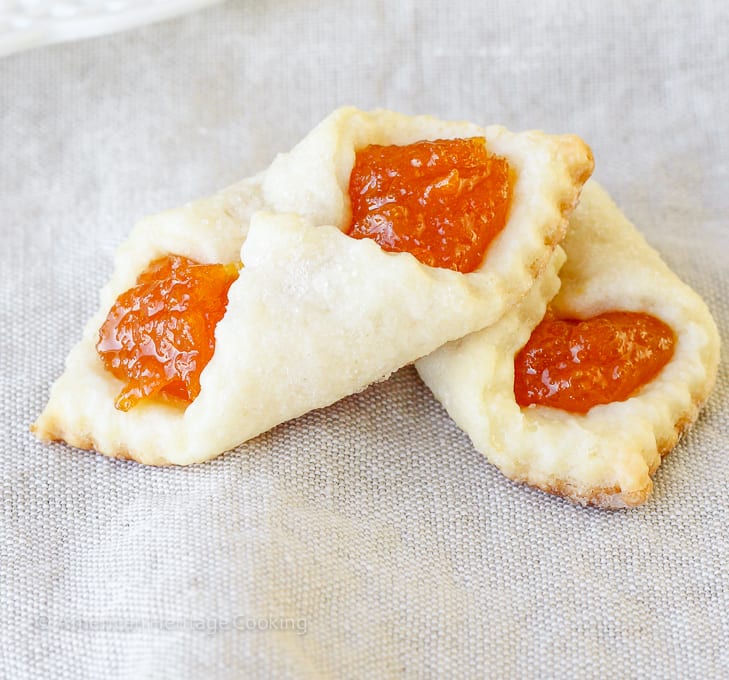
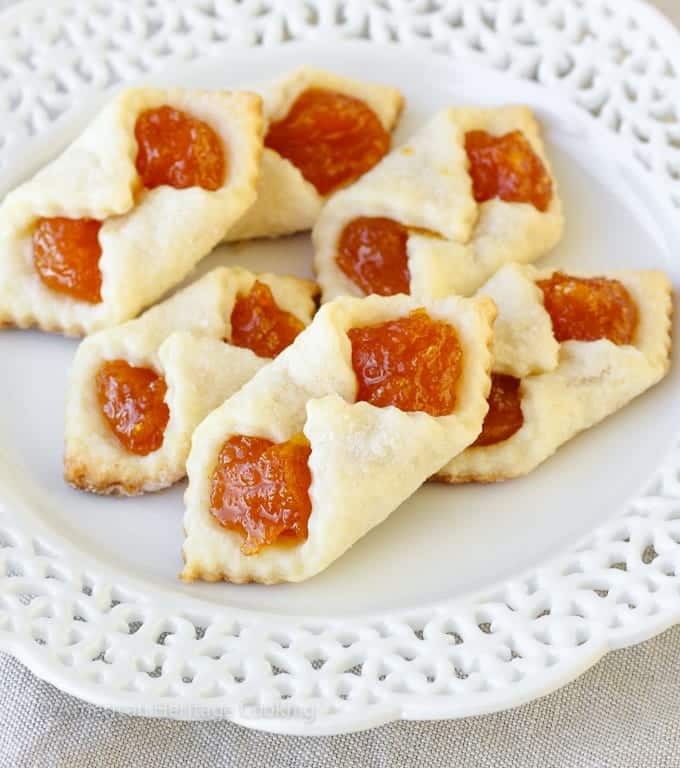
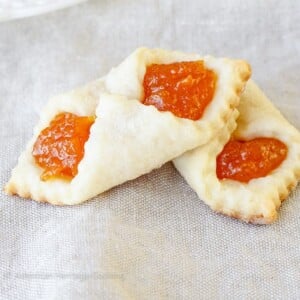
Apricot Kolacky Cookies (kiffles) have flakey cream cheese pastry dough wrapped around an easy apricot filling made from dried apricots! These two-bite cookies are buttery, crisp and addicting.
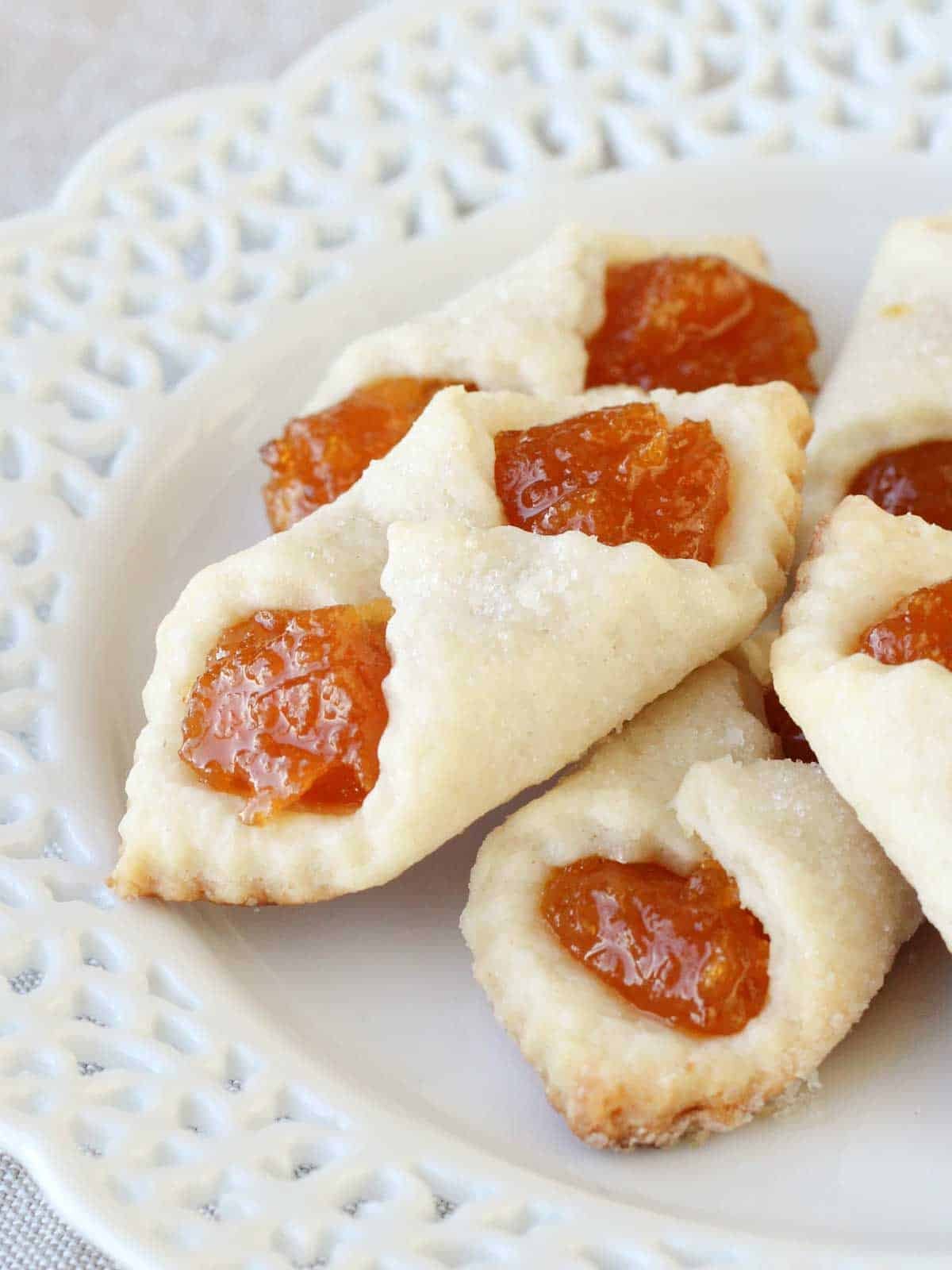
I first posted this kolacky recipe in 2013. I made and remade them until they were perfect! In this post you will find all my tips from back then and new ones I’ve learned as a professional pastry chef.
The cream cheese dough is tender, flakey and just a little bit tangy. There isn’t any sugar in the dough, so rolling it out in sugar adds a bit of sweetness and caramelizes in the oven for extra flavor! It is a technique that I also use in these nut roll cookies!
Table of Contents

Why you will love these apricot kiffles
- They have an easy crust with cream cheese that can be made in one bowl with a hand mixer. There is no additional moisture, which makes a very rich, tender pastry.
- The homemade apricot filling recipe is made from dried apricots and can be stored in the freezer for future cookie baking! I store mine in plastic piping bags.
- The dough is rolled out in granulated sugar, which creates a caramelized crust on the bottom and a crunchy, sweet coating on top. There is no sugar in the dough, so this is a welcome addition!
What are kolacky?
Kolacky are an Hungarian Christmas cookie. They are typically made with a cream cheese or yeasted pastry dough rolled thin, filled and folded. The most popular fillings are jam, nut filling or poppyseed filling.
Ingredients
- All-purpose flour: All-purpose flour has just the right amount of gluten to make a flakey, tender apricot kolaches.
- Kosher Salt: Kosher salt is lass salty than table salt and a teaspoon weighs less than other finer ground varieties. . It heightens the flavor here and will keep your pastries for tasting dull or flat.
- Cream Cheese: I use original Philadelphia Cream Cheese for all my baked goods. Working the cream cheese into the dough adds fat and a little bit of tang. I’m no stranger to cookies with cream cheese, and I can tell you that cream cheese does not behave the same as butter when baked and will create a soft, tender cookie.
- Butter: I use unsalted butter for baking, because you want to control the amount of salt you are adding. Every brand is different and it makes adjusting the recipe a challenge.
- Granulated Sugar: Rolling out the dough in granulated sugar will add a bit of sweetness and crunch but it will also caramelize on the baking sheet for added complexity of flavor.
- Dried Apricots: I use sulphered dried apricots because they have that beautiful color. Un-sulphered will be dark brown. I use Turkish Apricots because they are plump, sweet and generally have more retained moisture than other varieties.
- Granulated Sugar: Granulated sugar sweetens and thickens the filling. You could reduce it by half and still have success with these cookies. The sweet filling balances the savory pastry for the perfect bite.
Step by step Instructions
The below instructions will give you all the tips you need to make perfect apricot kolacky cookies from the very first time! Additional instructions and measurements can be found in the recipe card below.
Make the apricot filling:
Step 1: Place dried apricots in a small saucepan and pour in just enough water to cover the apricots. Boil until the apricots are soft. Do not let all the water evaporate. Add a little bit more to keep the filling from burning.
Step 2: Add the sugar and continue to cook until thick.
Make sure your filling is thick. Thin jams or fillings will run out of the cookie and burn on the baking sheet.
Step 3: Either puree in a food processor or with an immersion blender in a bowl. If the filling is too runny, return it to the sauce pot to continue to cook.
You can make the filling ahead of time and freeze it until you are ready to use it. Just thaw at room temperature when you are ready to use.
Make the dough:
Step 4: In a large bowl or in the bowl of a stand mixer fitted with the paddle attachment, beat together the cream cheese and butter until completely incorporated and creamy (approximately 3-5 minutes).
Step 5: Reduce the mixer to low and add the salt along with small additions of flour. Adding too much at one time will overwhelm the dough and take too long to mix it. This will create gluten and tough, shrinking cookies! The dough will be soft but not sticky.
Step 6: Divide the dough into 4 equal parts and flatten each to ¾” thick. Wrap in plastic wrap and refrigerate until hard, at least 2 hours.
The dough gets all its moisture from the cream cheese and butter, but you can still overwork it. Divide the dough with a knife or bench scraper rather than tearing it, and press it flat gently. Allow the dough to rest in the refrigerator before rolling or pressing too thin.
Assemble the cookies:
Step 7: Pre-heat the oven to 375°. Move the oven rack one setting higher than the center. Line two baking sheets with parchment paper.
Step 8: Take one of the disks of dough from the refrigerator and lightly flour both sides. Spread granulated sugar on your pastry board or work surface. Place the dough on top and roll out pastry to 1/16” thick or as thin as possible. The thinner the better. If you roll them too thick, the bottom will burn before the inside has a chance to fully cook and puff up.
Step 9: With a pastry wheel or sharp knife, trim the dough into a square and then cut the square into 16 smaller squares. My dough never rolled out into a perfect circle so I would just cut as many 1 1/2 “ squares a possible, saving the scraps for later.
Step 10: Place a dollop of filling in the center of each square. I used ½ teaspoon. Gently grab two opposite corners and fold one over the other, gently pressing down to try and seal them together. Move it to a parchment covered baking sheet, placing the Rolls no closer than 1” apart. You can offset them in a diagonal pattern to get more on a tray. Repeat with all remaining squares.
You can use a little bit of beaten egg or water to seal the corners together. This can help keep them from popping open in the oven.
Step 11: Sprinkle the middles of the rolls with just a touch of granulated sugar. Bake 12-14 minutes or until the bottom edges are a golden and you can smell them. They should puff up slightly in the middle. With experience you can see when the dough is cooked. Let cool slightly on the pan before moving them gently to a wire rack to cool completely.
Chef Lindsey’s Recipe Tip
Don’t chill the assembled cookies prior to baking them. This re-solidifies the butter in the dough and will cause them to puff too much. The extra puff will open the cookies!
The traditional Hungarian apricot filling is from the Paprikas Weiss Traditional Hungarian Cookbook and the cream cheese crust recipe is from June Meyer’s Authentic Hungarian Heirloom Recipes Cookbook with my technique tips.
Substitutions
- Cream Cheese: The cream cheese is the only moisture in this dough, so if you omit it or reduce it, add water to make a cohesive dough. This will change the consistency and texture of the final cookie. Reduced fat cream cheese can be used but not whipped. Be aware that these changes will affect the final results.
- Dried Fruit: You could certainly use a different dried fruit for the filling. You might need to adjust the amount of sugar or water you add in order to get the necessary consistency.
Variations
- Pastry Cutter: Use a fluted or a straight edged cutter for a different look. A fluted cutter makes a ruffled edge that is very festive without any additional work!
- Change the Size: You could make these apricot kiffles larger without much adjustment beyond the bake time. I would not suggest making them smaller, because the smaller the kolaches, the more likely to pop open.
- Change the filling: Apricot, cherry and poppyseed are three of the most popular traditional fillings. You could also make the walnut filling recipe from my Hungarian walnut rolls as well!
How to store kolacky?
Store baked, cooled cookies at room temperature layered between sheets of wax paper and then wrapped loosely in foil. I found that this will keep them as crisp as possible. You can also freeze them for up to three months.
The raw assembled cookies can also be frozen and then brought to room temperature prior to baking. I suggest freezing in a single layer then placing in a ziptop bag.
Freeze the dough packets and filling separately for later assembly.
Frequently Asked Questions:
Kolacky pop open in the oven when they have too much filling, the dough was chilled before baking, or they are not properly sealed. A firm press to seal should do the trick but others swear by a little bit of water or egg wash. This dough is flakey and if chilled, it will puff excessively like puff pastry in the oven. Sometimes this is desirable, but here we want those cookies to stay shut!
Apricot Kiffles and Apricot Kolaches are a cookie by many names. Multiple Eastern European cultures lay claim to these cookies and they each call them something different. In the Czech Republic and Slovakia kolaches are a type of sweet bread some of which are yeasted. Hungarian kolaches or kolachy are cookies made with a sweet pastry dough and a variety of fillings. In other parts of Eastern Europe and some parts of Hungry call these same cookies apricot kiffles. By any name they are delightful!
Yes! You can freeze fully baked apricot kolaches for up to three months. I layer mine between parchment paper or waxed paper inside a ziptop bag.
This dough is flakey and if chilled, it will puff excessively like puff pastry in the oven. Sometimes this is desirable, but here we want those cookies to stay shut! You do, however, want to chill the dough prior to rolling. This will allow the gluten to relax. It will keep the cookies from shrinking.
If you tried this recipe and loved it please leave a 🌟 star rating and let me know how it goes in the comments below. I love hearing from you; your comments make my day!
Apricot Kolacky Cookie (Kiffles)
Ingredients
For the Pastry:
- 2 ¼ cups all purpose flour
- ½ teaspoon kosher salt
- 8 oz cream cheese
- 1 cup unsalted butter softened
- ½ cup granulated sugar for rolling
For the Apricot Filling:
- 1 lb dried apricots sulfured for color
- 1 cup granulated sugar
Instructions
To make the Apricot Filling:
- Place dried apricots in a small saucepan and pour in just enough water to cover the apricots. Boil until the apricots are soft. Do not let all the water evaporate. Add a little bit more to keep the filling from burning.
- Add the sugar and continue to cook until thick.
- Either puree in a food processor or with an immersion blender in a bowl. If the filling is too runny, return it to the sauce pot to continue to cook.
- You can make the filling ahead of time and freeze it until you are ready to use it. Just thaw at room temperature when you are ready to use.
For the Pastry Dough:
- Whisk flour and salt together in a medium bowl and set aside.
- Beat the cream cheese and butter together with a stand mixer or a hand mixer until completely incorporated and creamy (3-5 minutes).
- Reduce the speed of the mixer and slowly add in the flour. I used 5 additions and completely mixed in the flour each time. The dough will be soft but not sticky.
- Divide the dough into 4 equal parts and flatten each to ¾” thick. Wrap in plastic wrap and refrigerate until hard, at least 2 hours.
Assembling the Kolaches:
- Pre-heat the oven to 375F. Move the oven rack one setting higher than the center.
- Take one of the disks of dough from the refrigerator and lightly flour both sides. Spread granulated sugar on your pastry board or work surface. Place the dough on top and roll out pastry to 1/16” to 1/8” thick. Most recipes say 1/8” but my Husband remembered them being thinner.
- With a pastry wheel or sharp knife, trim the dough into a square and then cut the square into 16 smaller squares. My dough never rolled out into a perfect circle so I would just cut as many 1 1/2 “ squares a possible, saving the scraps for later.
- Place a dollop of filling into the center of each square. I used ½ teaspoon to ¾ teaspoon for each.
- Gently grab two opposite corners and fold one over the other, gently pressing down to try and seal them together. Gently move it to a parchment covered baking sheet. Repeat with all remaining squares.
- Sprinkle the middles of the kolaches with just a touch of granulated sugar.
- Placing the kolaches no closer than 1” apart.
- Bake 12-14 minutes or until the bottom edges are a golden and you can smell them. Let cool slightly on the pan on a wire rack and then move them gently to a wire rack to cool completely.
- Repeat with all remaining dough. Refrigerate and re-roll your scraps. Amazing.
Video
Notes
Nutrition
Before you go!
Check out our other delicious, chef-developed cookie recipes!










I have made these for three Christmases in a row and I just cannot get them to work.
The dough ends up really sticky and I have to use so much flour to try and stop them sticking to the bench.
Then, when I cut them in to squares, I have to use a knife to try and unstick them from the bench to get them on the tray. I fold them over the jam and then they crack. (So the dough is sticky and crumbly at the same time… I didn’t even think this combination could exist!).
When I first get the dough out of the fridge, it is super hard and crumbly so I have to knead it to get it workable, and that’s when the stickiness recommences. Urgh! I always make half the biscuits and throw the rest of the raw batter in the bin in frustration. I don’t know what I’m doing wrong.
The biscuits tastes nice and the kids like what ugly biscuits I produce (since they are very ugly – not cute little folded shapes like in the pictures!), but I don’t think my confidence can handle a fourth failure next year!
Hi Naomi! How frustrating! Do you own a kitchen scale? Weighing everything might help and definitely work it into a cohesive dough in the mixer or with the hand mixer first. I did post a video on YouTube so you can see, if that helps. I’ll update the recipe with weights in grams so you can try that if you have any more try left in you! Cheers!
I have made this recipe it is near identical to my great grandmothers. Be sure your using room temperature softened unsalted butter, not microwaved and not melted and not margarine. The sugar creates stickiness so roll in smaller sections like 8 instead of four. It is an art.
Hi Stephanie! Thanks for commenting, happy to hear this recipe is like your Great Grandmother’s, Grandmothers sure know best. ?
I made these today. My first batch didn’t all stay overlapped, but I learned from what I’d done and my second batch was perfect! Love how tasty and simple the apricot filling is. The cookie is tender and flaky. Delicious!!
Happy to hear it, Susan! I think that is half the fun! Happy baking!
Thank you for this post! My husband is Hungarian, and I’ve been looking for a recipe for Kiffles that resembled my mother-in-law’s delicious recipe. This is it! This is the go-to cookie during the holidays! Yum!
I’m so happy! ENJOY!
Looks yummy!
Look yummy! One of my favorite Apricot Kolaches, nice to see your recipe, easy to follow, will cook this for family this weekend. Thanks you!
I made these and they were delicious. I followed your recipe and cut my dough into 1.5 inch squares like you said, and they were very small. I loved how cute they looked and it made A LOT of tiny little cookies. I was only able to use a heaping 1/4 teaspoon of filling in one though. Did I make them too small?
I did make small ones but you could certainly make them larger. Sometimes the dough does shrink and so perhaps they were a bit smaller than intended.
I made this recipe many times, and it’s absolutely amazing! It worked every time! But my cookies open up no matter how much I try to fold them… They taste wonderful, but about half of them or more open up… Any tricks to prevent that from happening? I don’t feel like I do anything special to some of them. 😀
That is the question on all of our minds! Some people swear by water, but not too much; some swear by egg wash, but not too much; but I just squish the two together and don’t overstuff them. There will always be some rebels that pop open, but I just claim those for myself 😉
You are so funny, Lindsey!! Yeah, I may be overstuffing them. I can’t wait to make them again and try your suggestions. Thank you so much for your reply!! <3 <3 <3
You are most welcome, Claudia! Happy baking!
Thank you for the lovely recipe. Can these be frozen after baking? Do they freeze well?
They do freeze well! Happy baking Alexandra!