
This post may contain affiliate links. Please read our disclosure policy.
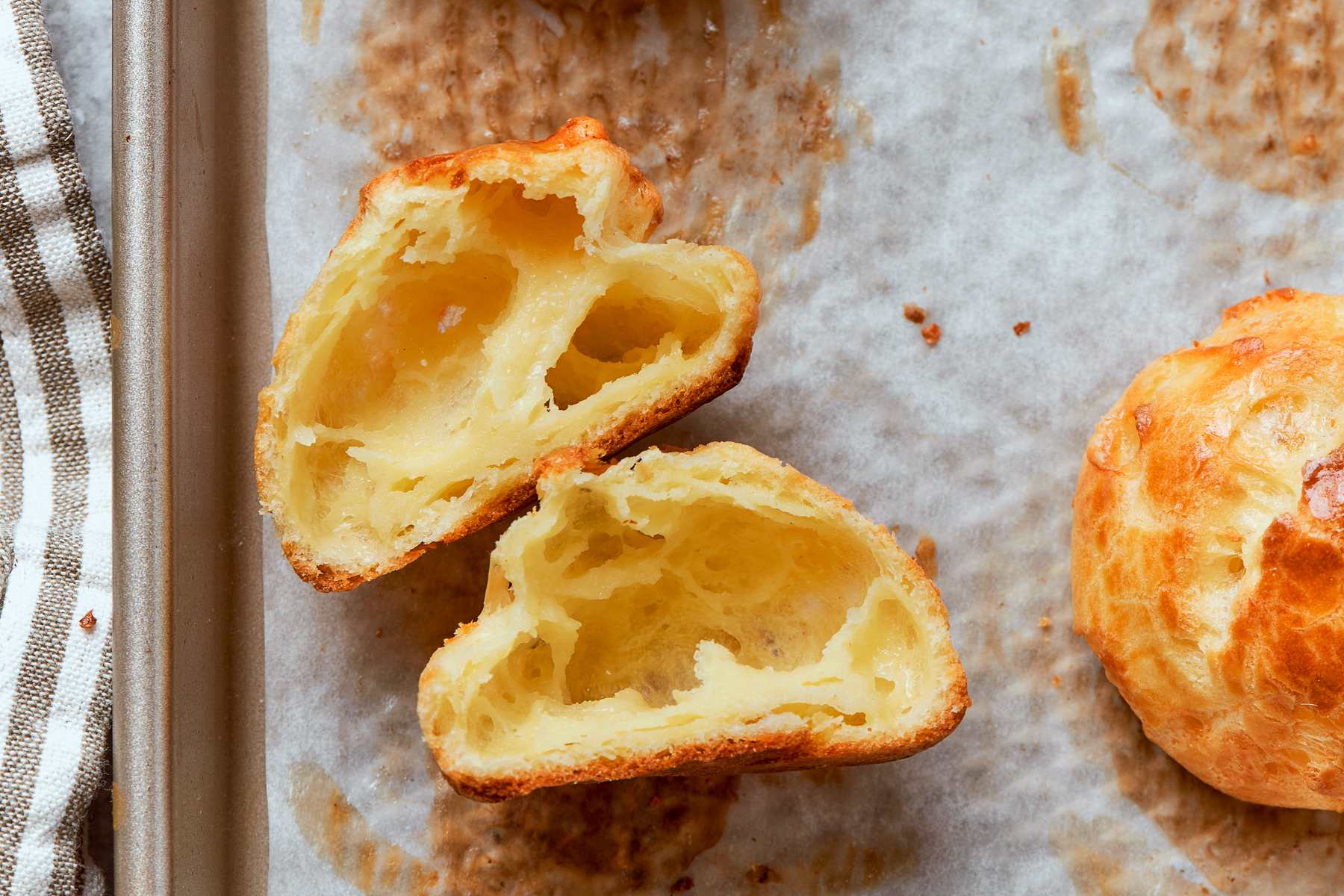
Gougères are one of those recipes that seem intimidating, but once you master it, they become an easy but impressive appetizer. This step-by-step guide walks you through classic pâte à choux so you get that crisp golden shell and hollow, airy interior every time.
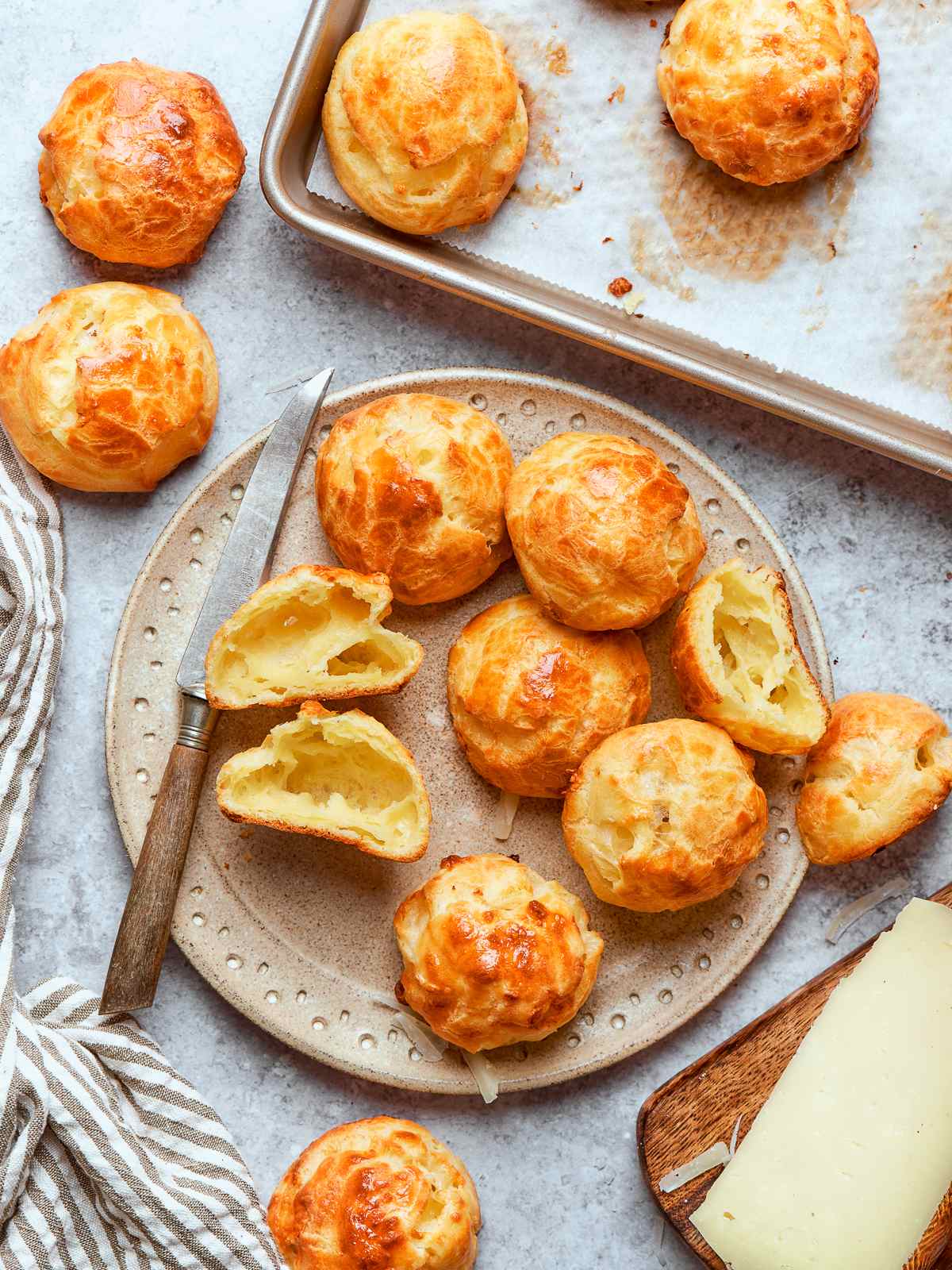
A Quick Look At The Recipe
This is a brief summary of the recipe. Jump to the recipe to get the full details.
Jump to RecipePrep Time
35 minutes
Cook Time
25 minutes
Cooling Time (optional)
1 hour
Total Time
2 hours
Servings
150 2cm gougères
Difficulty
Intermediate — stovetop choux paste with piping and a simple consistency test before baking.
Calories *
27 kcal per serving
Technique
Stovetop choux paste, piped and baked until puffed and golden.
Flavor Profile
Savory sharp cheddar, buttery, lightly salty, golden brown.
* Based on nutrition panel
I had always been intimidated by choux pastry, but the trench test was the detail that finally made it click for me. My gougères puffed up beautifully and had that hollow interior I had only seen in bakeries. I added a little gruyère alongside the cheddar and they disappeared within minutes. ⭐⭐⭐⭐⭐
Lauren
Why This Recipe Works
- Classic choux paste technique, fully explained. Every stage of pâte à choux has a visual cue that tells you exactly what to do next. This post walks through each step so you never have to guess whether your choux paste is ready.
- Hollow, airy interior with a golden crust. The egg wash is the key! It keeps the surface moist during baking, so the choux can fully expand before the exterior sets, which helps create that characteristic hollow center.
- Completely make-ahead friendly. The piped, egg-washed gougères can be refrigerated for up to 3 days or frozen for a month. That means fresh, hot gougères for a party without any last-minute stress!
Table of Contents
Gougères were a staple in my professional kitchen, and the recipe I kept coming back to was always the same: classic pâte à choux with good cheese and nothing extraneous. One-bite and endlessly riffable, these are the kind of appetizers that disappear from the tray before anything else does.
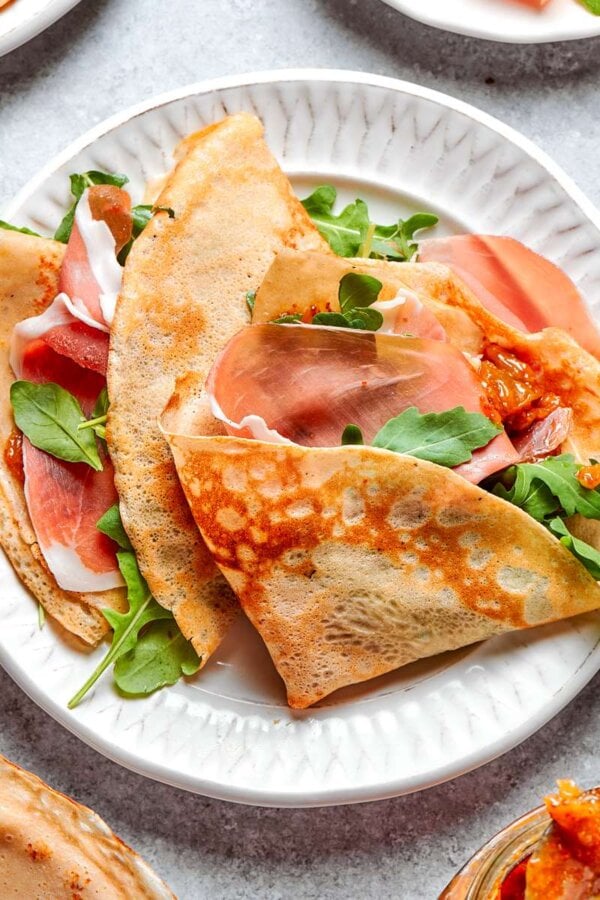
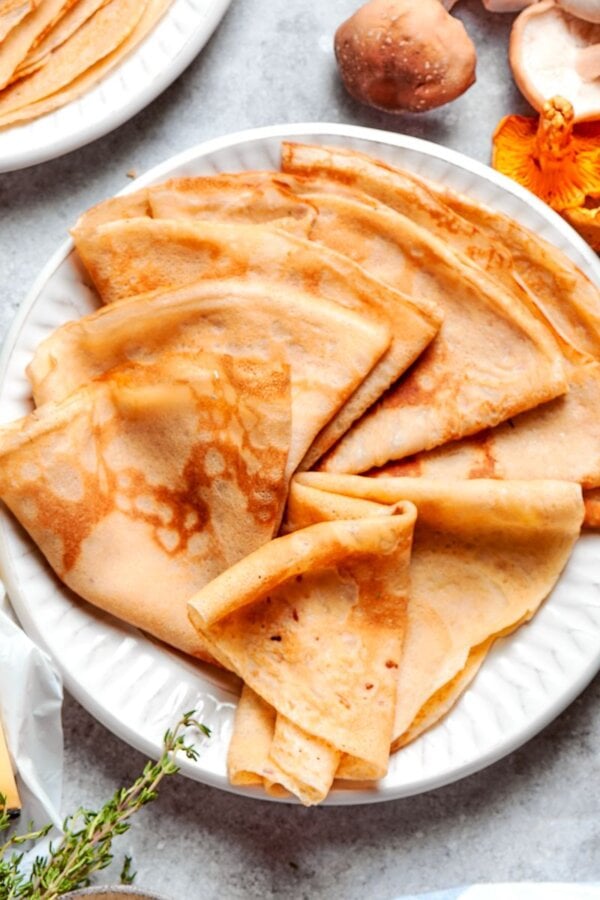
For other perfect appetizers or party favorites, check out these buckwheat crepes, ricotta meatballs, these perfect deviled eggs, or this tzatziki recipe.
Ingredients & Substitutions
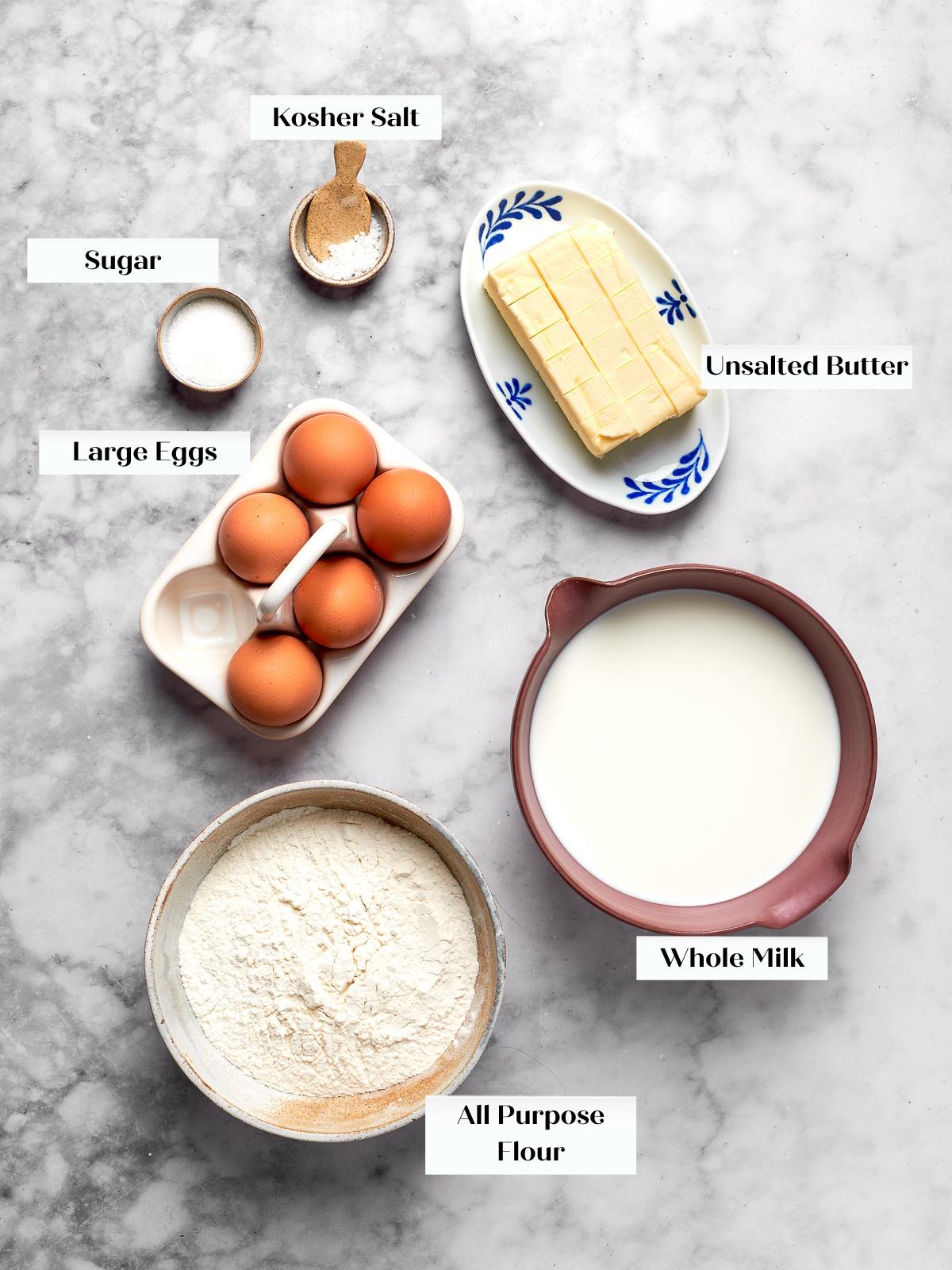
- Unsalted Butter: Butter is the primary fat in the pâte à choux, giving the gougères their rich flavor. Use unsalted so you can control the dough’s salt level.
- Whole Milk: Milk supplies the moisture that converts to steam in the oven, and that steam is what inflates the choux. Lower-fat milk produces paler, drier shells; whole milk gives you a richer, more custardy interior and better browning.
- All-Purpose Flour: Flour forms the structural backbone of the choux. Its starches gelatinize when stirred into hot milk and butter, enabling the paste to trap steam during baking. Weighing the flour using a kitchen scale is the only way to guarantee consistent results.
- Kosher Salt:
- Granulated Sugar: The small amount of sugar here is not for sweetness; it aids the browning and rounds out the savory flavors of the gougères.
- Large Eggs: Eggs provide structure, moisture, and fat, and they are the key variable that determines whether your gougères puff correctly. Too many eggs produce flat, greasy puffs, so use room-temperature eggs for better incorporation into the warm panade, and take the consistency test seriously. Texture cues matter more than the exact count, because how much water evaporates during the panade determines how many eggs the dough can absorb. Over-adding egg loosens the paste beyond recovery, producing flat, soggy puffs.
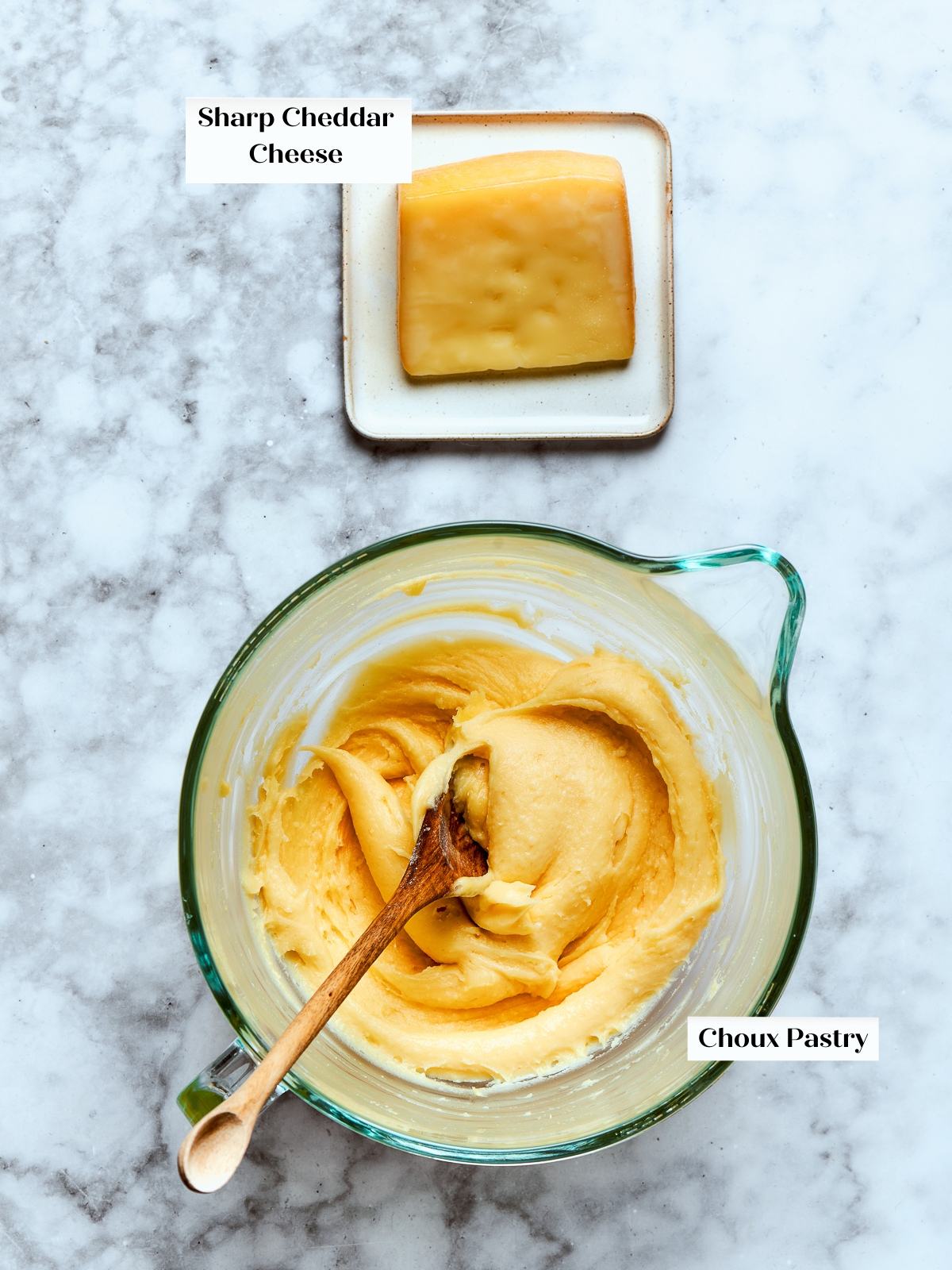
- Sharp Cheddar Cheese: Sharp cheddar provides flavor and contributes fat and salt directly to the dough. Finely shred it so it melts and disperses evenly, preventing greasy pockets or dense spots.
See the recipe card for full information on ingredients and quantities.
Variations on Gougères
- Different cheeses. Swap the sharp cheddar for comté, pecorino, or a combination. Each cheese will affect the dough’s saltiness and fat content, so taste the finished paste before piping and adjust the salt accordingly.
- Herbs and spices. Fold finely chopped fresh chives, thyme, or rosemary directly into the finished choux paste along with the cheese, or add a pinch of smoked paprika or cayenne for heat.
- Savory cream cheese filling. Pipe a savory cream cheese filling into the center of cooled, baked gougères using a small round tip inserted into the base of each puff. You couls also use this filling in this savory crepe recipe!
- Add toppings or fillings. You can use my everything bagel seasoning and sprinkle it on top, and fill with cream cheese for everything bagel gougères. Maybe try adding gruyère to the dough and fill the puffs with caramelized onions for a gougère version of the best french onion soup.
- Make them sweet. Make a sweet version of gougères: remove the cheese from the dough, and fill them with pudding, pastry cream, or make crème légère! You can also follow my cream puff recipe!
Professional Tips
- Cook the panade until a film forms on the bottom of the pot. This step drives off excess moisture. Underdeveloped panade leaves too much water in the dough, which prevents the choux from holding its shape and leads to flat, greasy puffs.
- Stop adding eggs when the dough passes one of the tests. Adding too much egg is the most common reason gougères fail to puff. My favorite is to use the trench test to confirm consistency before piping, and err on the side of slightly stiffer rather than looser if you are unsure. For more info on proper testing of the pate a choux consistency, check out this more in-depth post on choux pastry
- Space piped rounds at least 2 inches apart on the baking sheet. Gougères bake by trapping steam inside their shells, and rounds that are too close together create a shared steam environment, causing them to stick and bake unevenly. You also don’t want them to bake together.
- Apply an egg wash to each round before baking, and smooth out any peaks. The egg wash keeps the surface pliable during baking, allowing the choux to fully expand before the crust sets. Use a fingertip or pastry brush lightly dampened with egg wash to press down any pointed tips left by the piping bag, which would burn before the rest of the puff is golden.
How to Make Gougères
Choux pastry moves quickly, so have everything measured and ready before you turn on the heat.
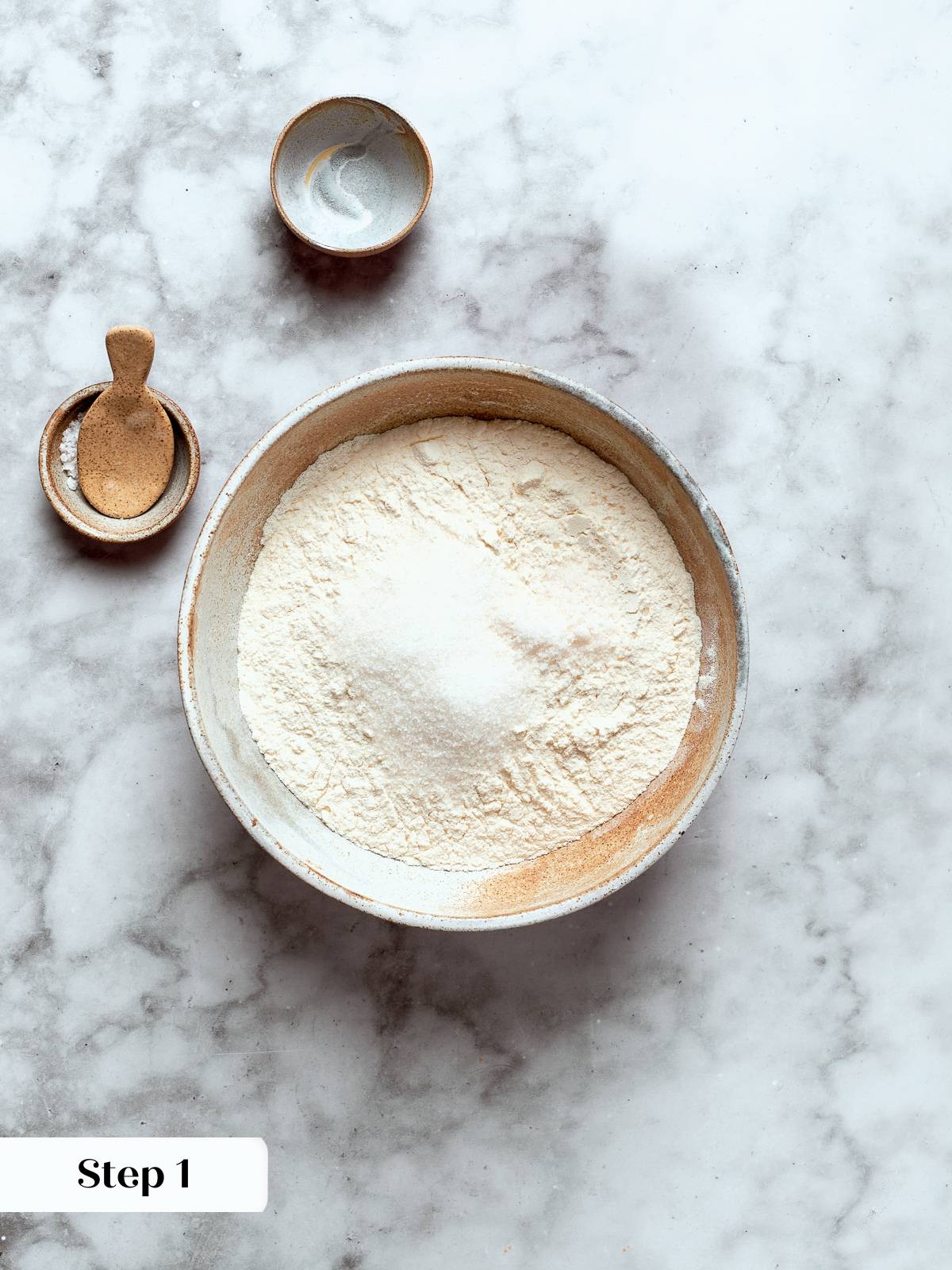
Step 1: Prep your ingredients and preheat. Combine the flour, salt, and sugar in a container and set aside. Crack the eggs into a separate bowl. Preheat the oven to 350°F convection or 375°F conventional. If you are making the dough ahead and refrigerating it before piping, wait to preheat until you are ready to bake. (photo 1)
Cutting the butter into cubes before adding it helps align that timing. Do not let the milk continue to boil once it gets there.
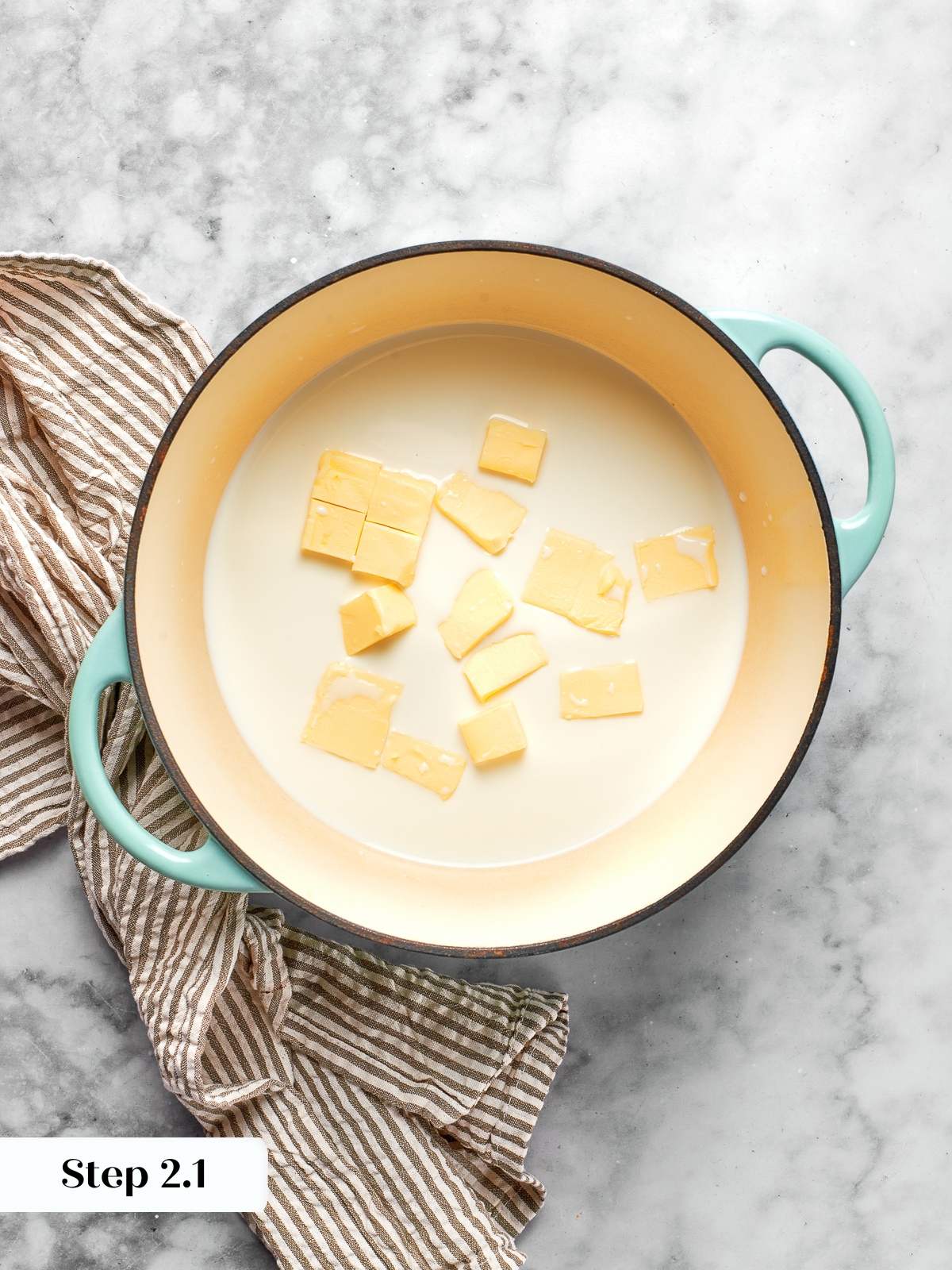
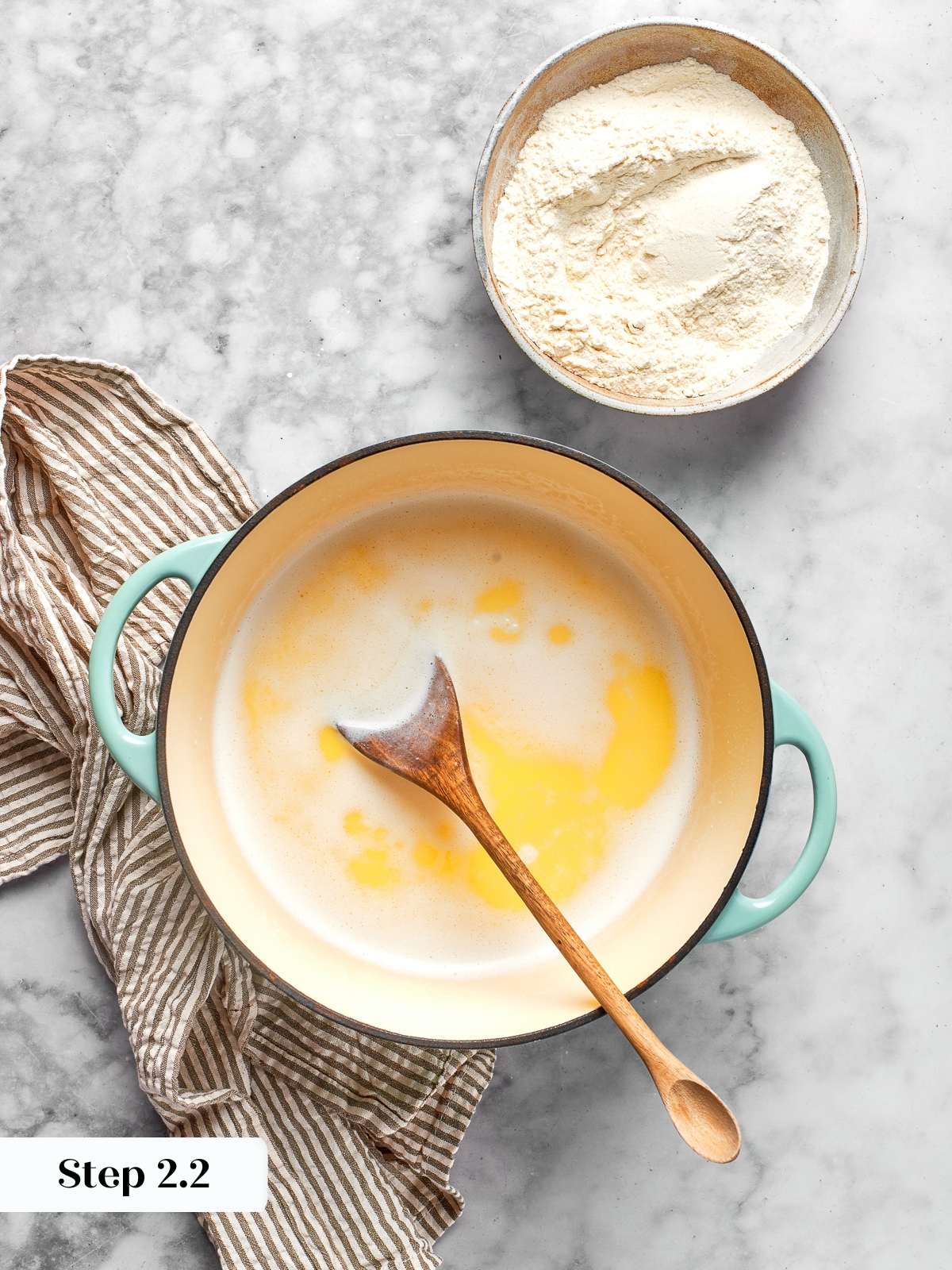
Step 2: Heat the butter and milk together. Add the butter and milk to a high-sided, heavy-gauge saucepan and heat over high heat. The goal is for the butter to be fully melted at the exact moment the milk reaches a boil. (photo 2 & 3 above)
Step 3: Add the flour and form the panade. Add the flour, salt, and sugar all at once. Stir carefully at first to avoid splashing, then stir more vigorously as the mixture thickens to smooth out any lumps. Keep cooking on high heat, stirring constantly, until the dough pulls cleanly away from the sides of the pot and leaves a coating on the bottom. That coating tells you enough moisture has evaporated to give you a pipeable paste. This usually takes me about 2 minutes. (photo 4 below)
Use a wooden spoon or spatula that you can hold securely. Mixing choux is hard work; you need to be able to hold your spoon, and a plastic one can be slippery, making it harder than it needs to be.
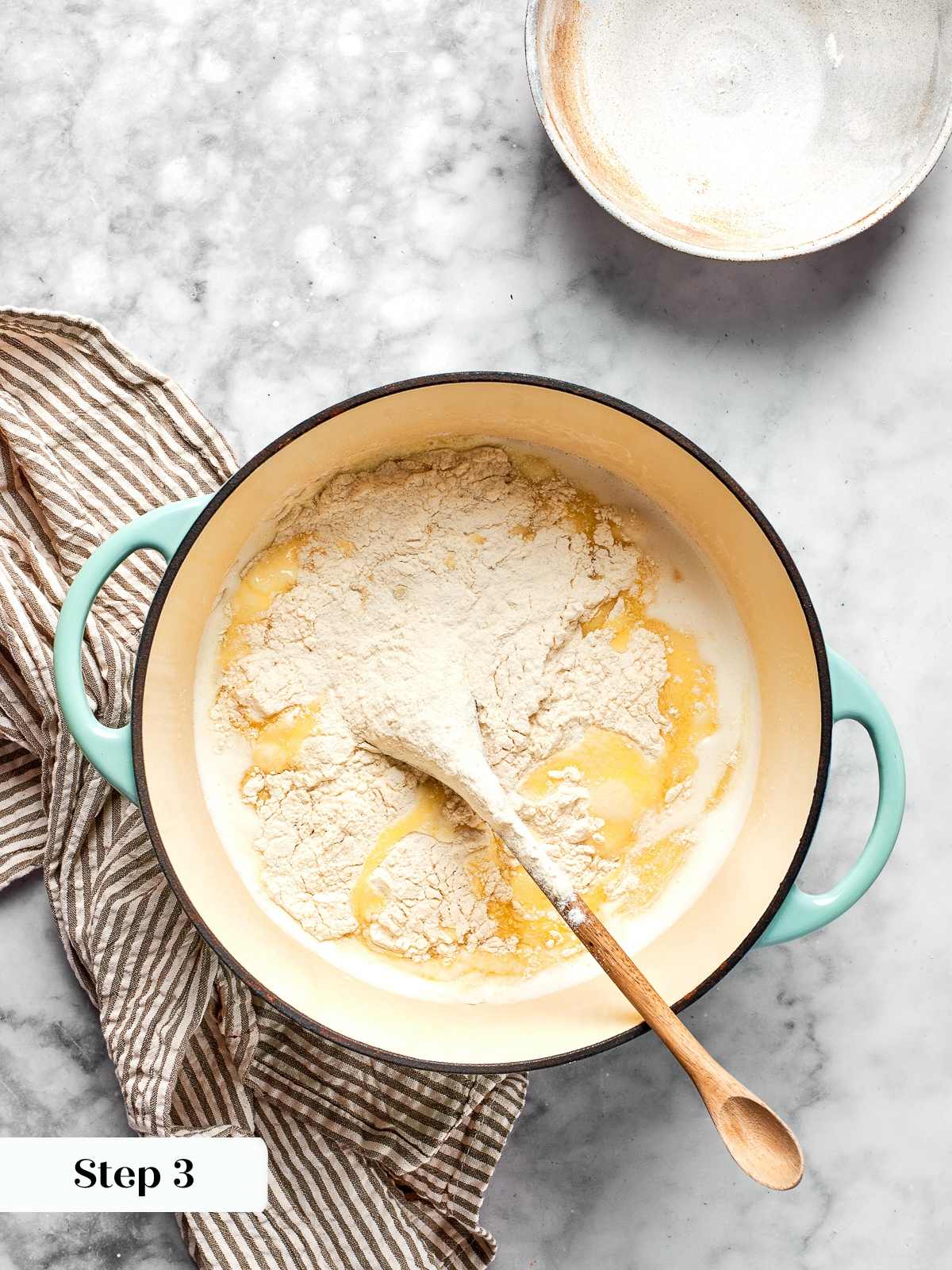
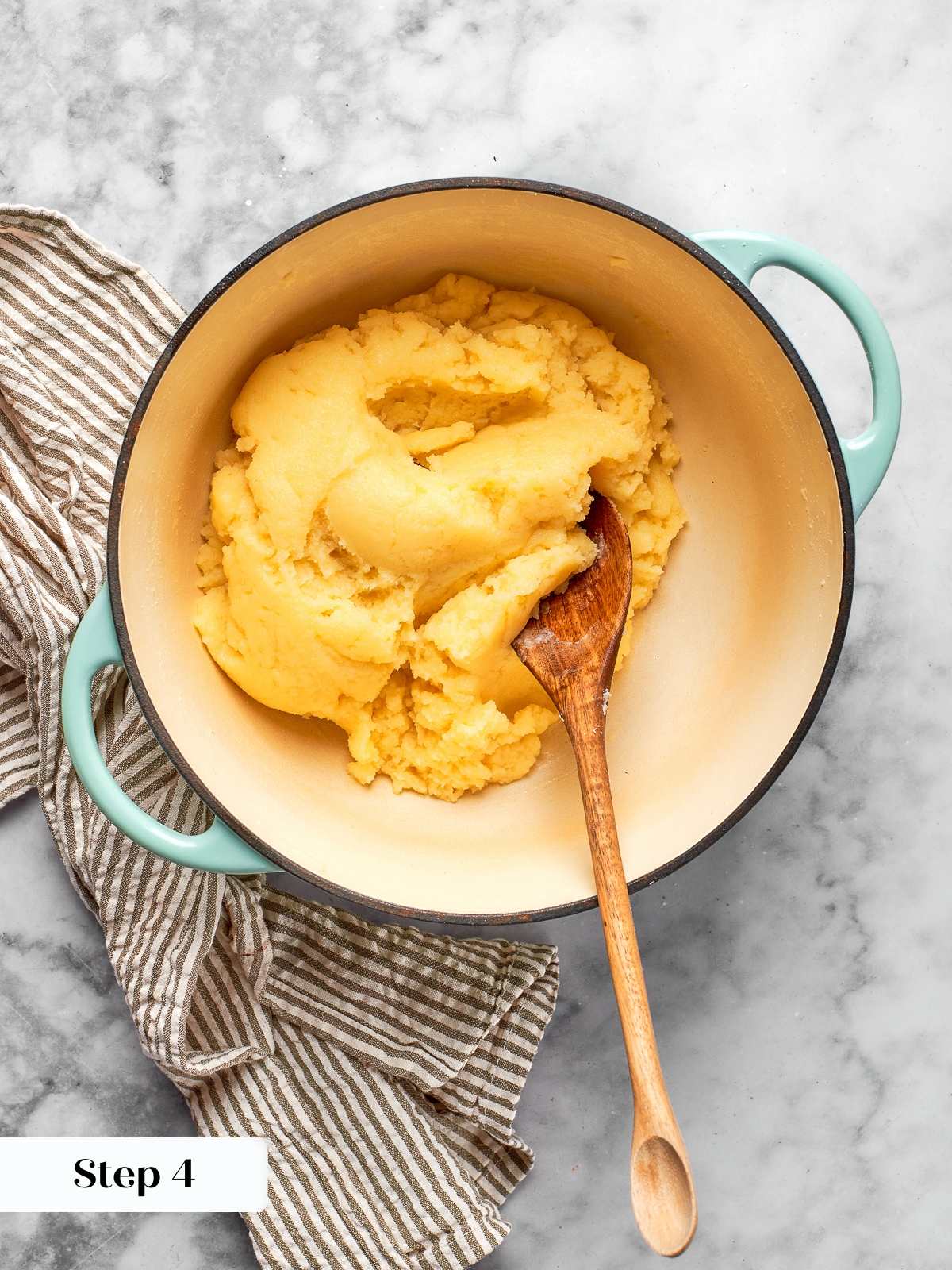
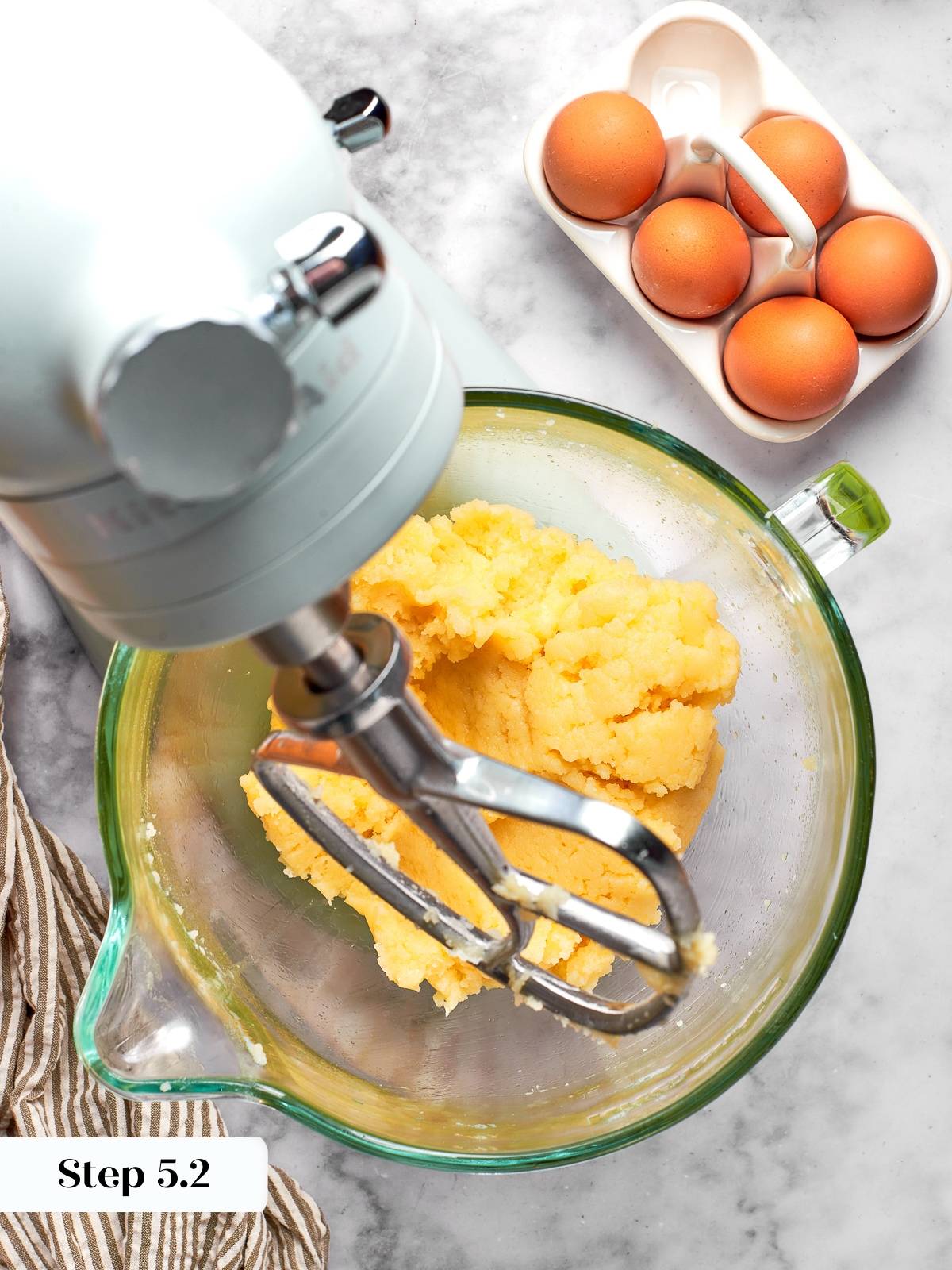
Step 4: Cool the dough in the stand mixer. Transfer the panade to the bowl of a stand mixer fitted with the paddle attachment. Beat on medium-high to release the steam. Wait until the dough stops steaming before you add any eggs. Adding eggs too early, while the dough is still very hot, will scramble them. (photo 5 & 6 above)
Step 5: Add the eggs one at a time. With the mixer on medium, add the eggs one at a time, beating fully after each addition before adding the next, much like when making chocolate chip cheesecake. After adding most of the eggs listed in the recipe card, perform the trench test: drag your finger through the dough. The channel should close steadily but not immediately run back together. If the sides do not move at all, the choux is too stiff. If you add all the eggs in the recipe and still need more, beat an egg, then add it in stages, retesting after each small addition. Keep in mind that cooler dough closes more slowly, so do not over-correct based on temperature alone. Any leftover beaten egg goes straight into your egg wash. (photo 7 & 8)
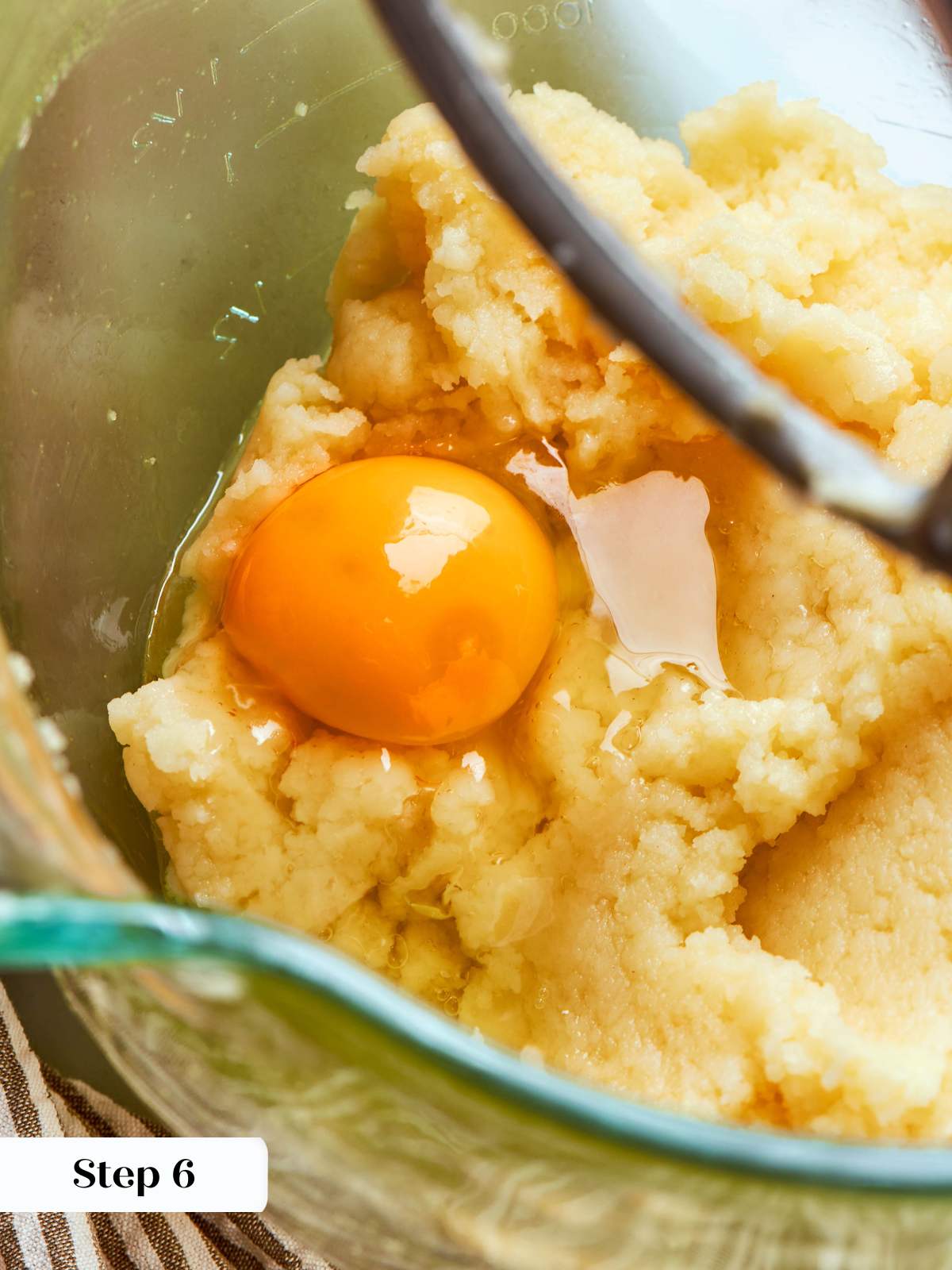
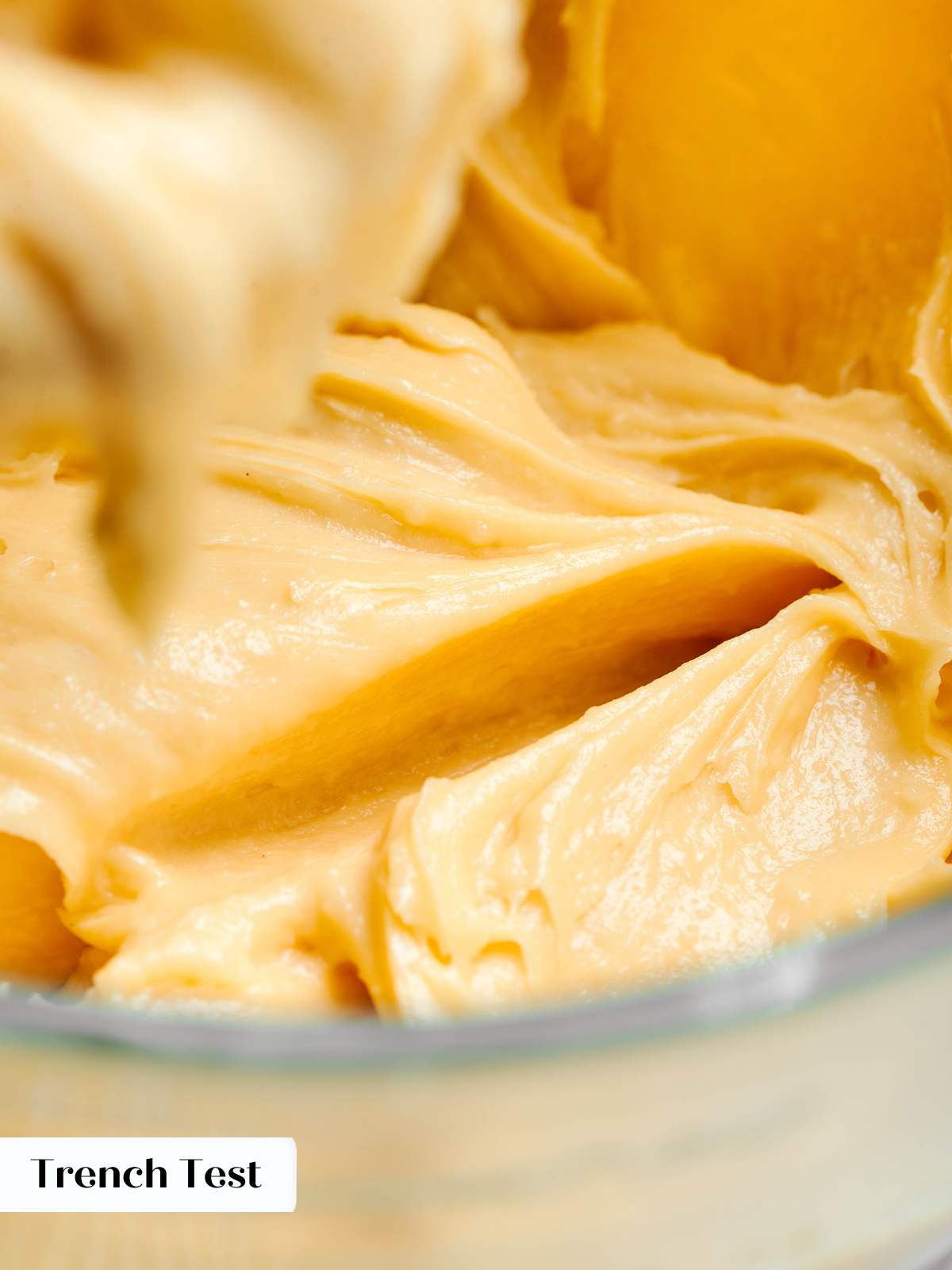
In eight years of making choux daily, it was rare that a single batch needed more than half an additional egg. Err toward less.
Step 6: Mix in the cheese. Add the cheddar and mix on medium until it is evenly distributed through the dough. (photo 9 & 10 below)
Step 7: Transfer to piping bags and secure. Scoop the choux into piping bags and tie off the tops with a piece of plastic wrap or a rubber band to keep the dough from drying out. You can pipe immediately or refrigerate the bags for up to 3 days. I find refrigerated choux actually pipes more easily and produces a better puff with a larger air pocket in the center. If you refrigerate it, let it sit at room temperature for about an hour before piping for the best results. (photo 11)
Step 8: Cut and prep the piping bag. When you are ready to pipe, cut the bottom of the bag about 2 centimeters across. Then trim off the excess seam that runs up the side of the bag, being careful not to split it open. This gives you cleaner, more consistent rounds.

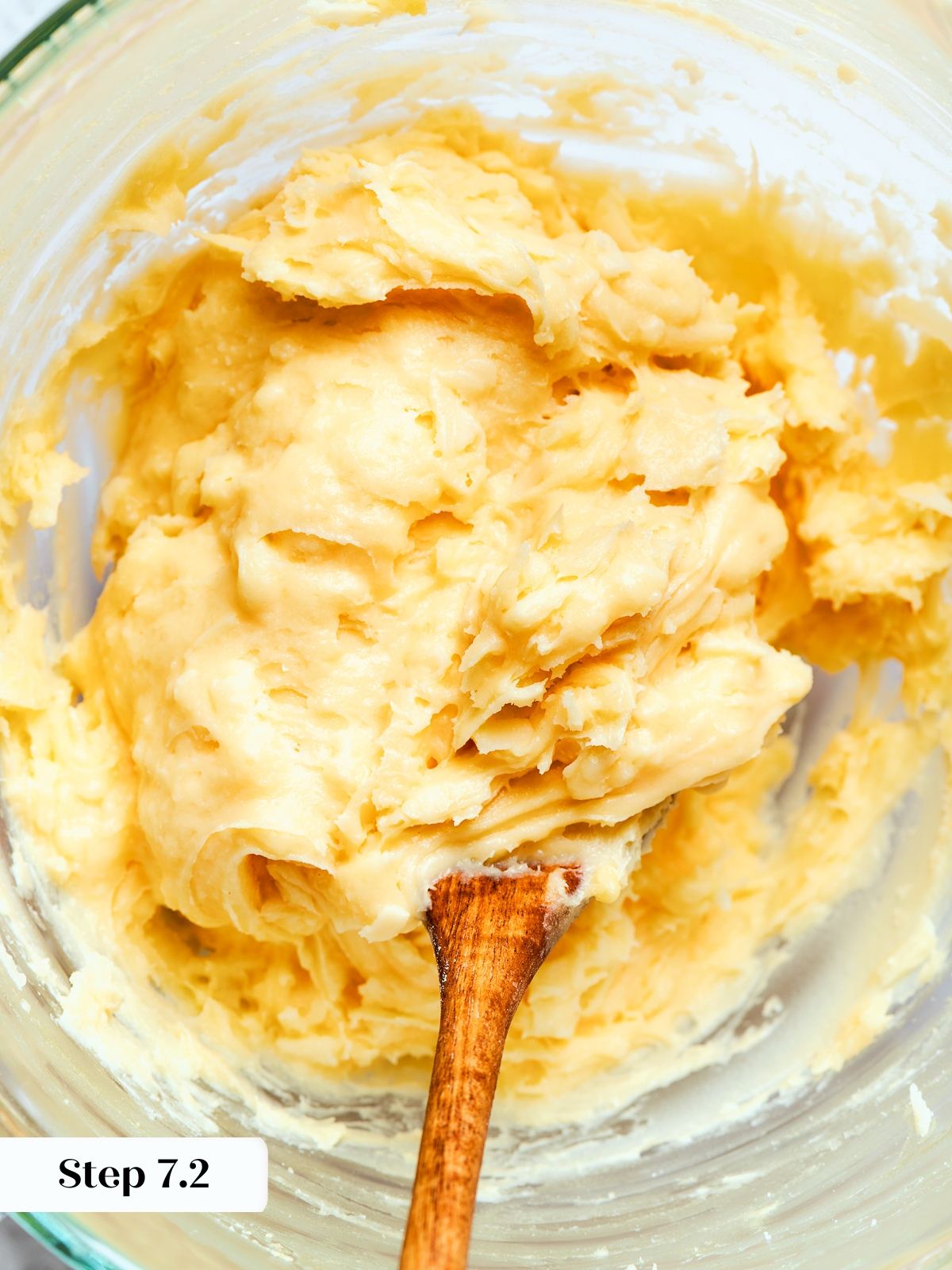
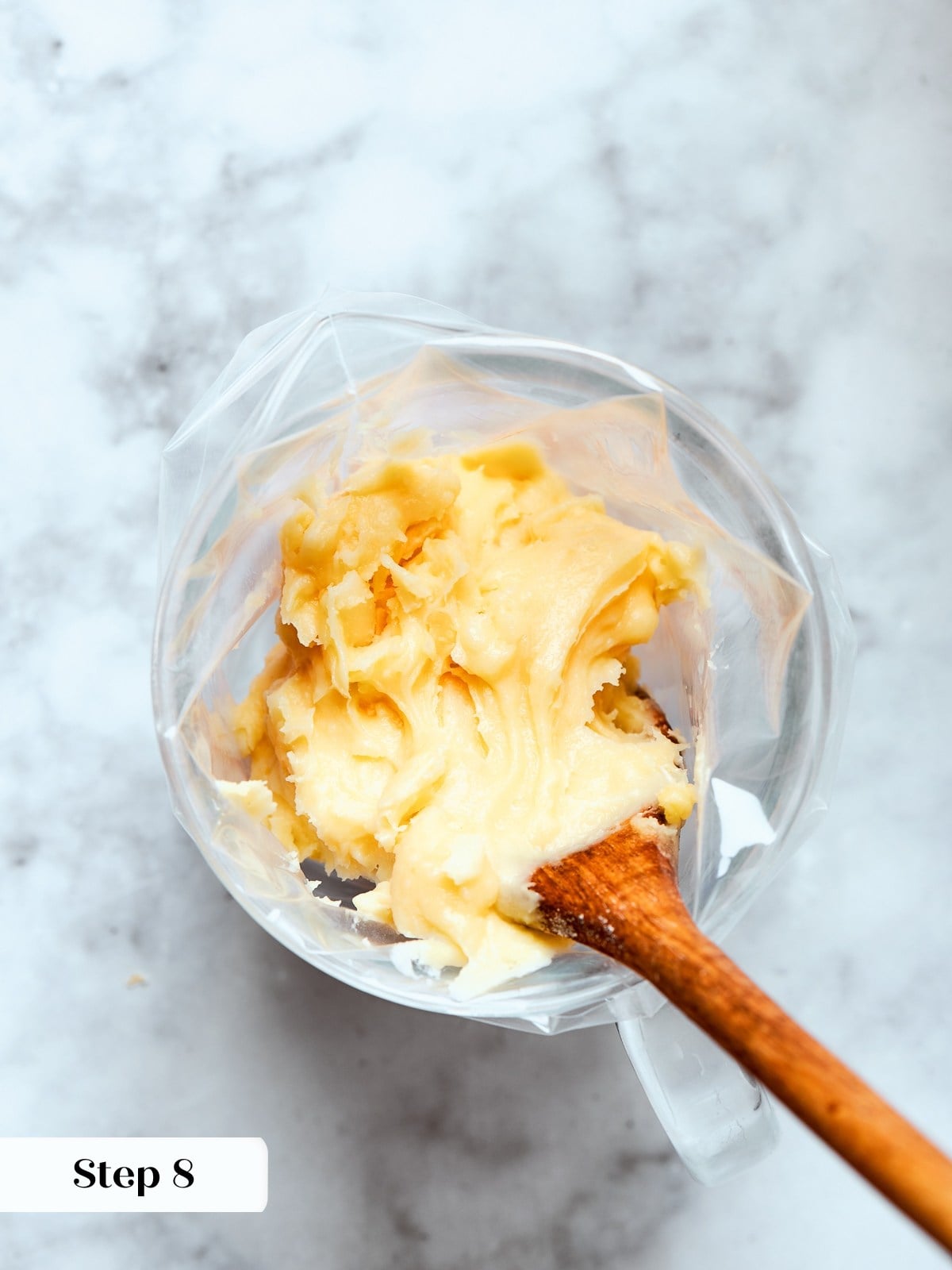
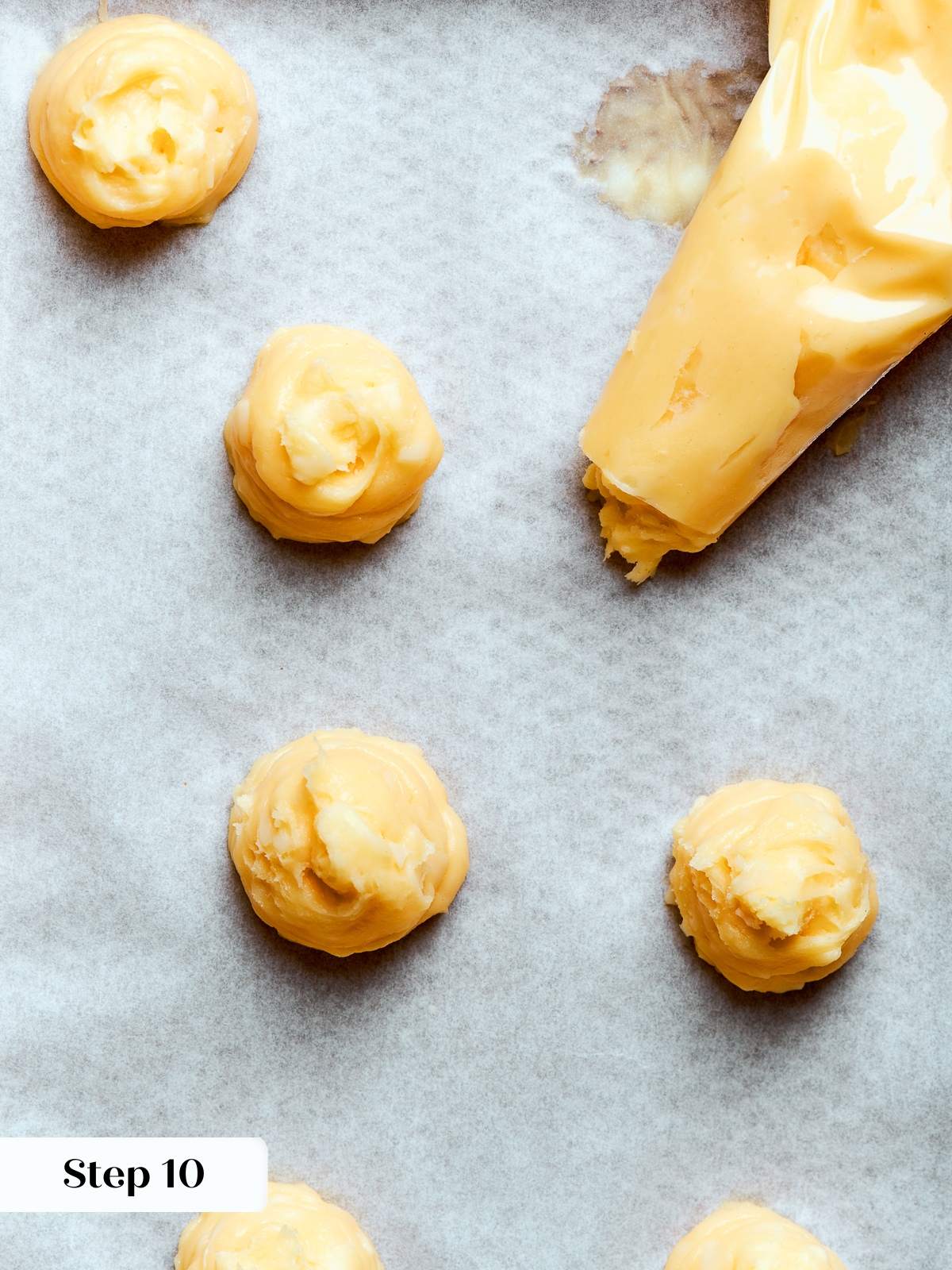
Step 9: Secure the parchment and pipe the gougères. Squeeze a small dot of choux onto each corner of your baking sheet and one in the center, then press a sheet of parchment paper on top. The choux acts as glue, keeping the paper flat while you pipe. This is essential for piping even, well-shaped gougères. Hold the tip of the bag about a centimeter above the parchment, apply firm and steady pressure, and stop squeezing once you have a ball roughly 2 centimeters across. Finish each one with a small wrist twist across the top to detach the paste cleanly without leaving a point. Space them about 2 centimeters apart. Break the bag by squeezing from the middle rather than the end, which gives you better control over pressure and shape. (photo 12 below)
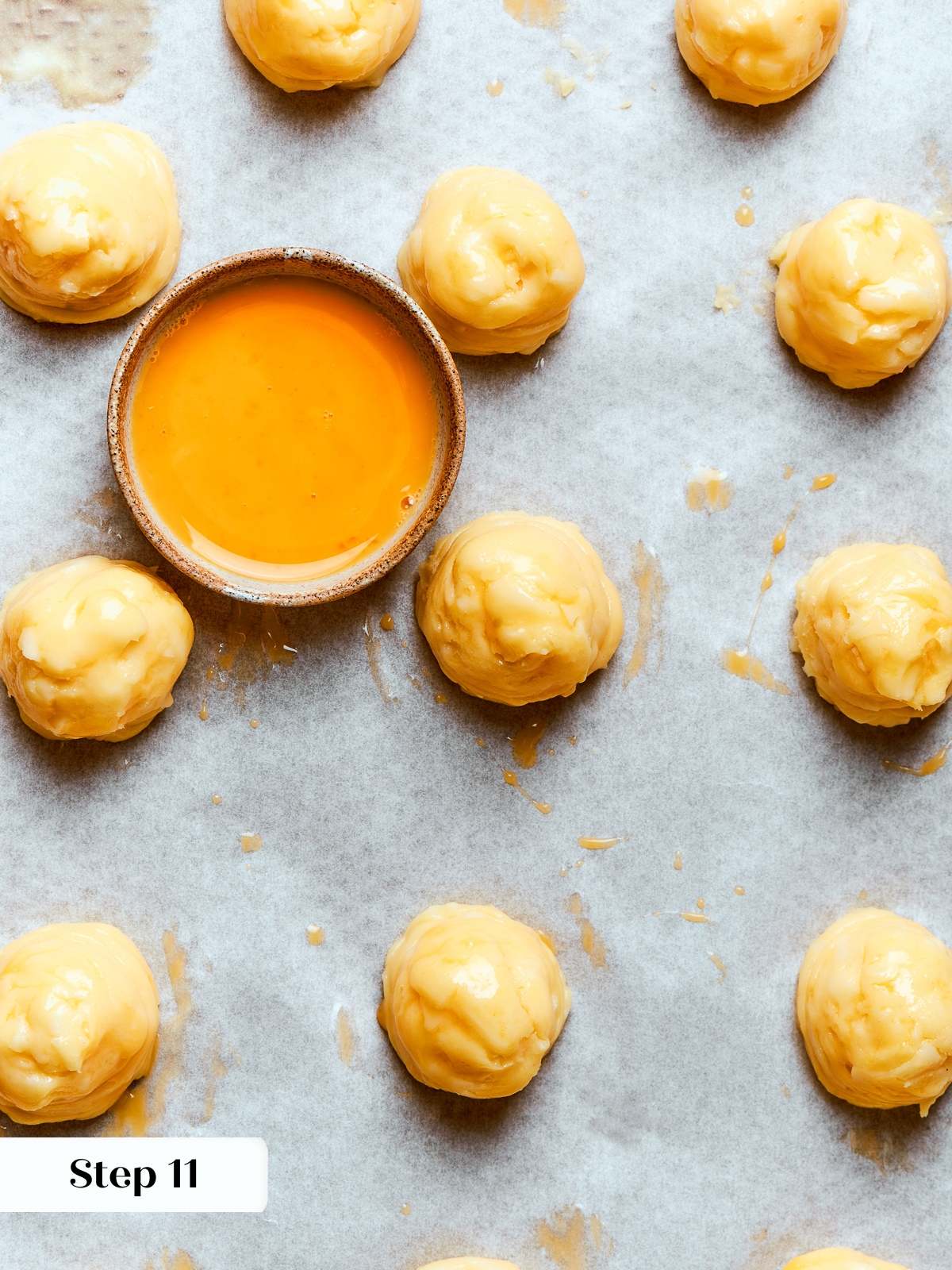
Step 10: Apply the egg wash. Use a pastry brush to coat the tops of the gougères with beaten egg. Any leftover egg from making the dough works perfectly here. Use this moment to gently press down any points or tails with the brush. The egg wash keeps the surface moist during baking, allowing the choux to expand fully, and gives the finished gougères their deep golden color. (photo 13)
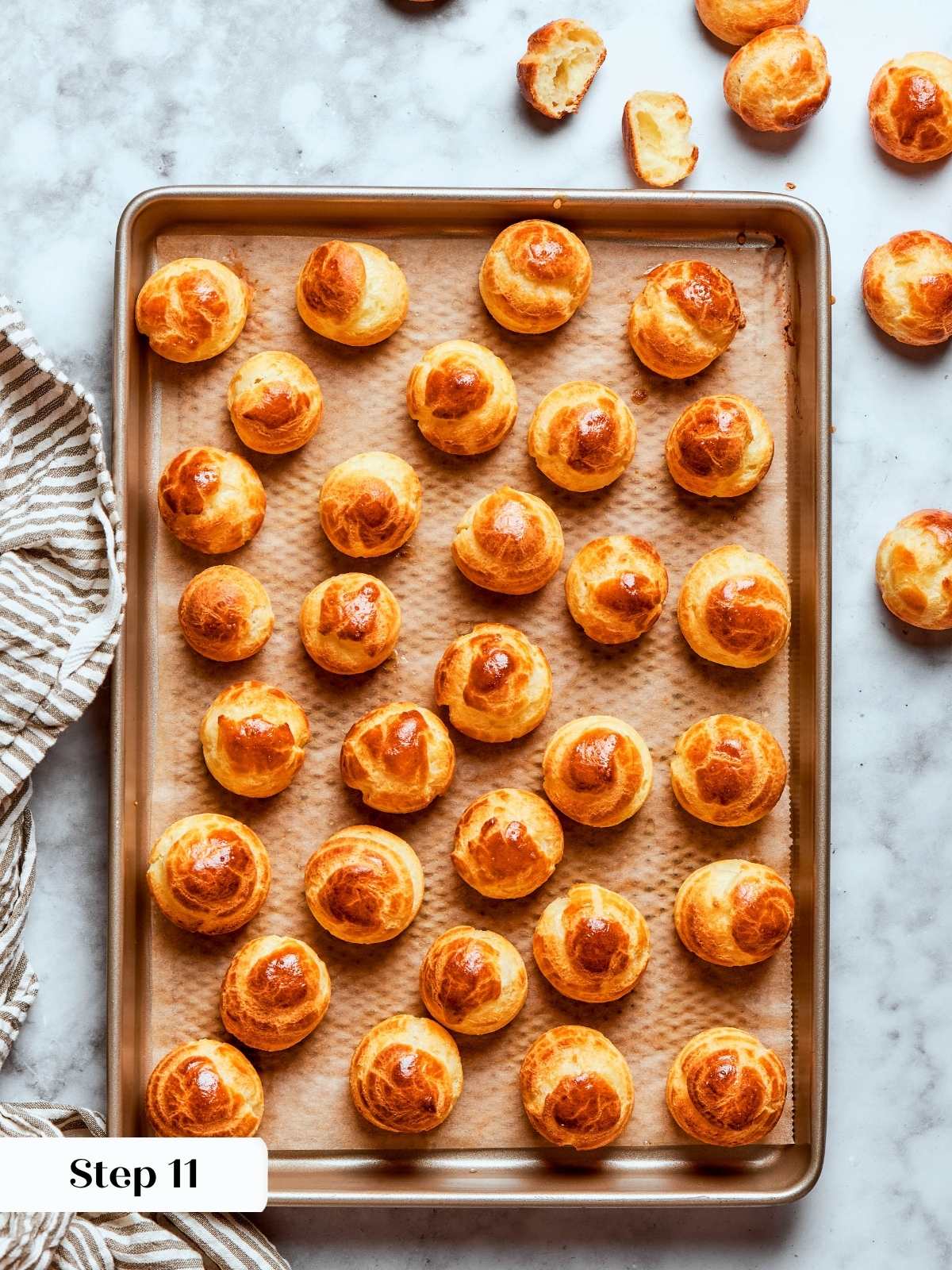
Step 11: Bake until puffed and golden brown. Bake at 350°F convection or 375°F conventional for 18 to 20 minutes for 2-centimeter gougères. Rotate the trays after 10 minutes. They are done when they are fully puffed and a deep, even golden brown all over. Larger gougères, up to 3 to 4 centimeters, will need 20 to 25 minutes. I do not recommend going larger than that. (photo 14)
Start checking at 18 minutes. Pull them when the color is uniformly golden. Under-baked gougères will deflate as they cool.
Step 12: Cool briefly and serve. Gougères are truly spectacular straight from the oven, but they are also excellent at room temperature. If you baked them ahead, simply refresh them on a baking sheet in a 350°F oven until warmed through and the exterior crisps back up.
Chef Lindsey’s Recipe Tip
The single detail that separates a hollow, well-puffed gougère from a flat, dense one is how long you cook the panade before adding the eggs. Most home cooks pull it off the heat the moment the dough comes together, but you need to keep stirring over medium heat until a visible film coats the bottom of the pot and the dough no longer steams aggressively. That extra minute of cooking drives off the moisture that would otherwise make your choux too wet to hold its shape, and no amount of careful egg addition will compensate for a panade that was not cooked long enough.
Recipe FAQs
Properly baked gougères will be puffed, evenly golden brown, and feel light when you lift one off the tray. If they look pale but feel firm, give them another 2 minutes rather than pulling them early, as underbaked choux will collapse as it cools.
Yes, and they are genuinely well-suited to it. Piped, egg-washed gougères can be wrapped tightly and refrigerated for up to 3 days or frozen for up to 1 month, then baked straight from the refrigerator or freezer.
Unfilled, baked gougères can be frozen for up to 1 month and refreshed in a 350°F oven to crisp before serving. If you prefer to store the raw choux paste instead, keep it in a piping bag in the refrigerator for up to 3 days. You will notice it begins to spot and discolor, and the puffs will not rise as well or have as large an air pocket as with freshly made paste. For the best all-around results, I recommend piping and egg-washing the rounds, then freezing them unbaked.
The two most common causes are an undercooked panade and too much egg in the dough. If the panade is not cooked long enough on the stovetop, excess moisture prevents the dough from holding its shape in the oven. If the egg addition pushes the dough past the correct consistency, the choux will spread rather than puff, so use the trench test and stop adding egg the moment the sides of the channel slowly close back together.
They are good at room temperature, but they are truly spectacular, still warm from the oven, which is one of the reasons the make-ahead piping method is worth the effort. Baking them fresh to order, even from frozen or refrigerated, takes less than 25 minutes and delivers that contrast of a crisp shell and soft, airy interior that you simply cannot replicate once they have fully cooled.
More Classic French Recipes
Dessert Recipes
Choux Pastry (Pâte à choux)
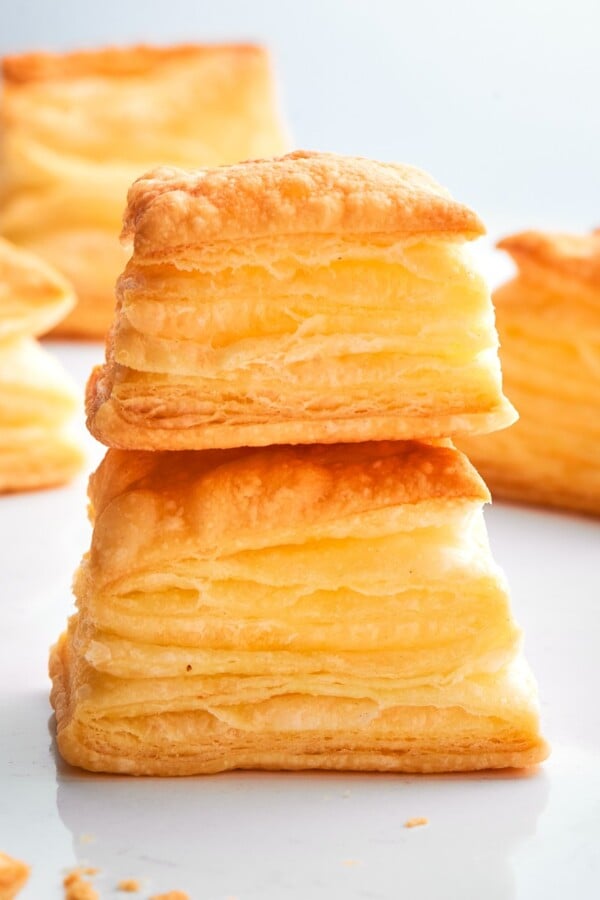
Dessert Recipes
Puff Pastry Recipe
Custard Recipes
Pastry Cream Recipe (Crème Pâtissière)
Pies and Tart Recipes
Apple Tarte Tatin
If you tried this recipe and loved it please leave a 🌟 star rating and let me know how it goes in the comments below. I love hearing from you; your comments make my day!
Gougères (French Cheese Puffs)
Ingredients
- 1 cup unsalted butter cubed
- 2 cups whole milk
- 2 cups all-purpose flour
- 1 ¼ teaspoons kosher salt
- 1 teaspoon granulated sugar
- 5 large eggs variable quantity
- 2 cups sharp cheddar cheese shredded
Instructions
- Preheat the oven to 350°F convection or 375°F conventional. Measure and separate the flour, salt, and sugar into one container and the eggs into another.
- Combine the butter and milk in a high-sided, heavy-gauge saucepan. Heat on high until the butter has melted and the milk just reaches a boil simultaneously. Do not allow the milk to continue boiling.
- Add the flour mixture all at once and stir to incorporate with a wooden spoon. Once the mixture thickens, stir vigorously to smooth out any lumps.
- Continue cooking on high heat, stirring constantly, until a cohesive dough (panade) forms, pulls away from the sides of the pot, and leaves a visible film on the bottom of the pan, about 2 minutes.
- Transfer the dough to the bowl of a stand mixer fitted with the paddle attachment. Beat on medium-high to release steam.
- Once the mixture stops steaming, add the eggs one at a time on medium speed, beating fully after each addition. Test consistency using the trench test: drag a finger through the dough and the channel should close slowly and steadily. If needed, beat a sixth egg separately and add in stages, stopping at no more than half an additional egg.
- Add the shredded cheddar and mix on medium until evenly distributed. Transfer the dough to piping bags and tie the pastry bag shut.
- Cut the bottom of the piping bag about 2 centimeters across, removing the excess seam along the side. Squeeze the bag from the middle rather than the end for better pressure control.
- Adhere parchment paper to the baking sheet by squeezing small dots of choux paste at the corners and center, then pressing the parchment on top.
- Pipe 2-centimeter rounds, holding the tip about 1 centimeter above the parchment and applying firm, consistent pressure. Twist the wrist across the top of each ball to detach cleanly. Brush the tops with beaten egg and reshape any points with the brush.
- Bake at 350°F convection or 375°F conventional for 18 to 20 minutes for 2-centimeter rounds, rotating the trays at 10 minutes. Larger rounds (up to 4 centimeters) will take 20 to 25 minutes. Gougères are done when puffed, evenly golden brown, and feel light when lifted.
Notes
Doneness Cue: Gougères should be puffed, evenly golden brown, and feel noticeably light when lifted off the tray. Pale but firm rounds need 2 more minutes; underbaked choux collapses as it cools.
Larger Gougères: Cut a slightly larger hole in the piping bag, then slowly lift your hand while squeezing steadily to form a larger ball. Larger puffs will bake between 20 to 25 minutes, and I do not recommend going beyond 3 to 4 centimeters.
Storage: Unfilled baked gougères can be frozen for up to 1 month. Refresh in a 350°F oven to crisp before serving. Raw choux paste is kept in a piping bag in the refrigerator for up to 3 days, though paste stored longer than a day will spot, discolor, and produce a smaller puff.
Nutrition
Before You Go
These cheese puffs disappear faster than almost anything else I make, unless it’s these thick chocolate chip cookies, like those I always make a double batch. Browse more fun party ideas in appetizer recipes or dessert recipes.









I had always been intimidated by choux pastry, but the trench test was the detail that finally made it click for me. My gougères puffed up beautifully and had that hollow interior I had only seen in bakeries. I added a little gruyère alongside the cheddar and they disappeared within minutes.