This post may contain affiliate links. Please read our disclosure policy.
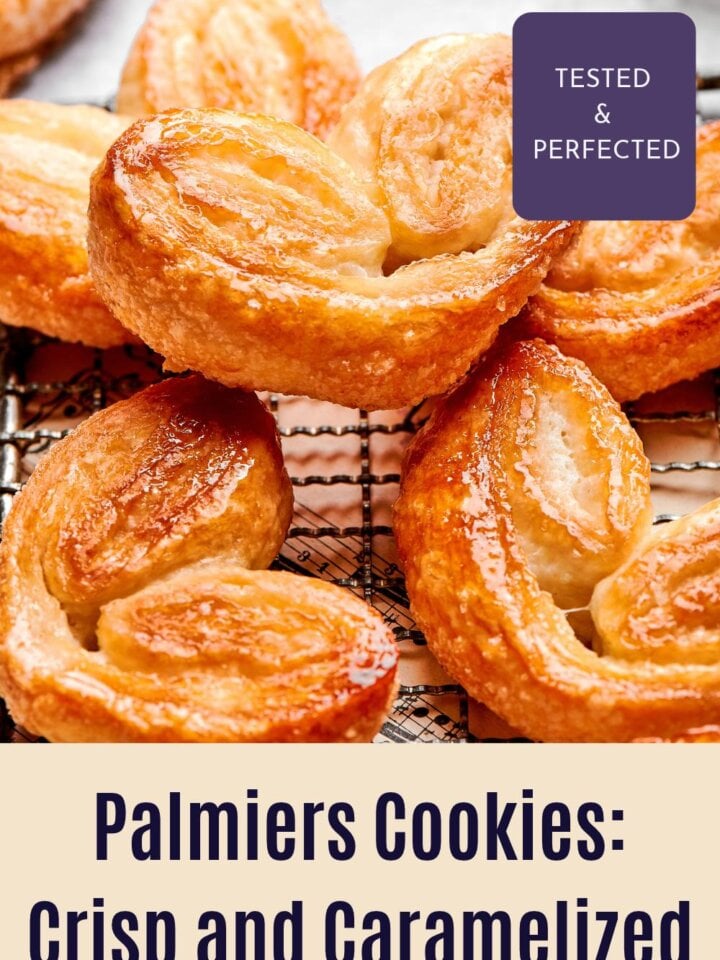
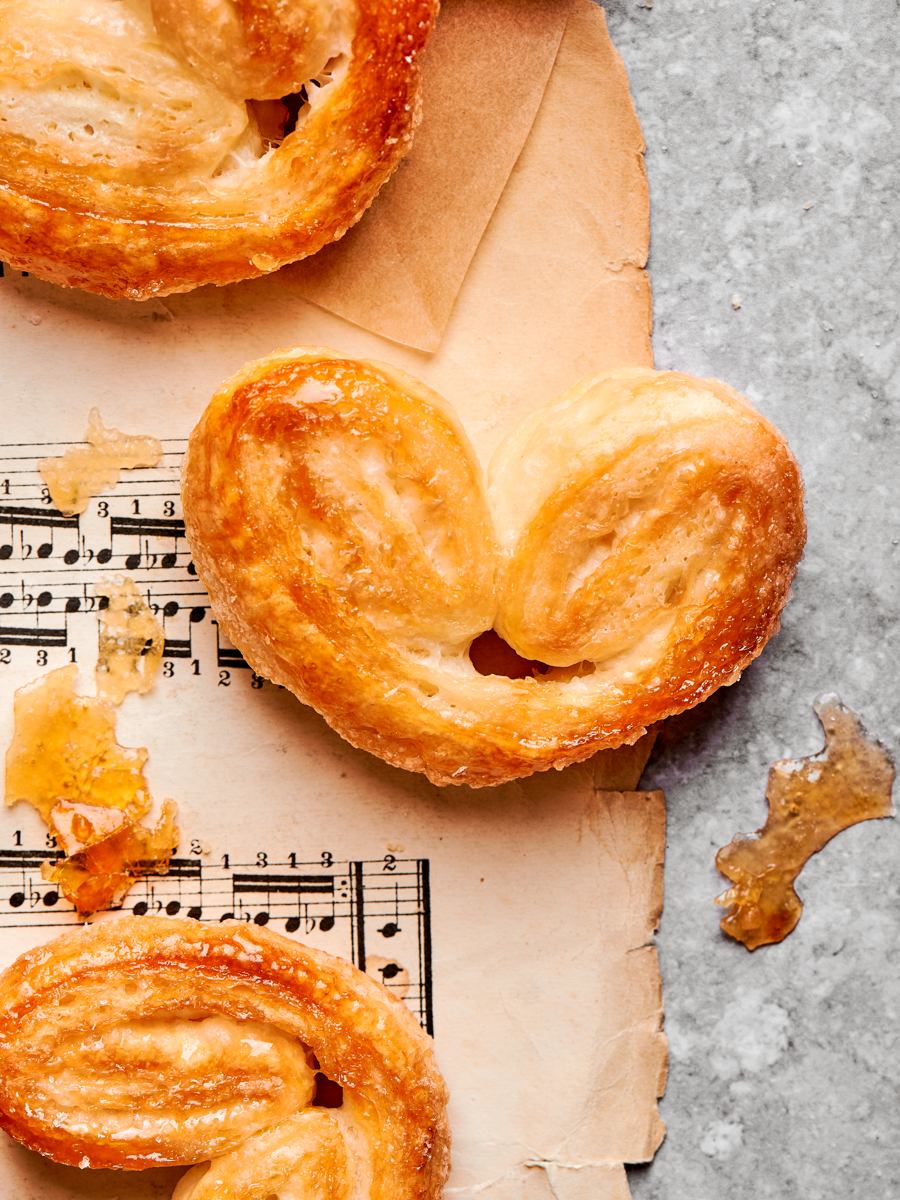
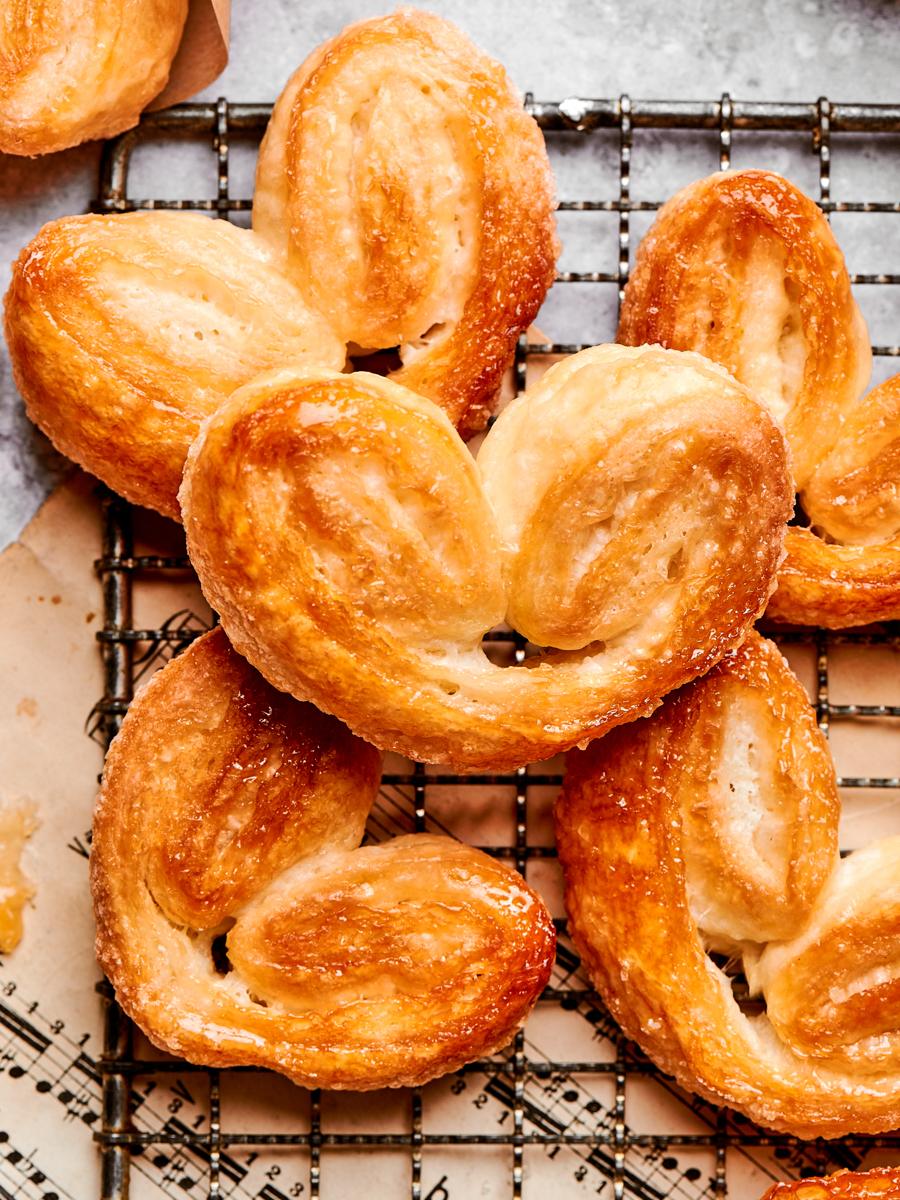
Palmiers cookies are a classic French pastry that requires only granulated sugar and puff pastry, but rewards precise technique with shatteringly crisp, caramelized layers that are impossible to stop eating.
A Quick Look At The Recipe
This is a brief summary of the recipe. Jump to the recipe to get the full details.
Jump to RecipePrep Time
20 minutes
Cook Time
18 minutes
30 minutes
Total Time
1 hour 8 minutes
Servings
18 Cookies
Difficulty
Intermediate
Calories *
96 kcal per serving
Technique
Classic pastry folding method with sugar rolling; dough chilled overnight before slicing and baked until deeply caramelized.
Flavor Profile
Buttery, caramelized, sweet, with a hint of toasted sugar.
* Based on nutrition panel
I had always been intimidated by palmiers, but the folding technique explained here made it completely clear. I followed the overnight chill and the cookies held their shape perfectly in the oven. The caramelized edges were shatteringly crisp, just as described. I will never buy these from a pastry case again. ⭐⭐⭐⭐⭐
Laurent
Why This Recipe Works
- Two ingredients, fully caramelized. Sugar and puff pastry are all this recipe requires, and the technique does the rest. Rolling the dough in sugar rather than just sprinkling it on top ensures every layer is coated, so the caramelization runs all the way through.
- Overnight chilling for even browning. Resting the log overnight hydrates the sugar and firms the butter, so the palmiers caramelize evenly in the oven rather than spreading before they set. Skipping this step is the most common reason palmiers brown unevenly.
- Homemade puff pastry makes the difference. Store-bought puff pastry produces a noticeably softer, less defined result. This recipe is written for my inverse puff pastry, which produces the most dramatically flaky, laminated layers of any method I have used.
Table of Contents
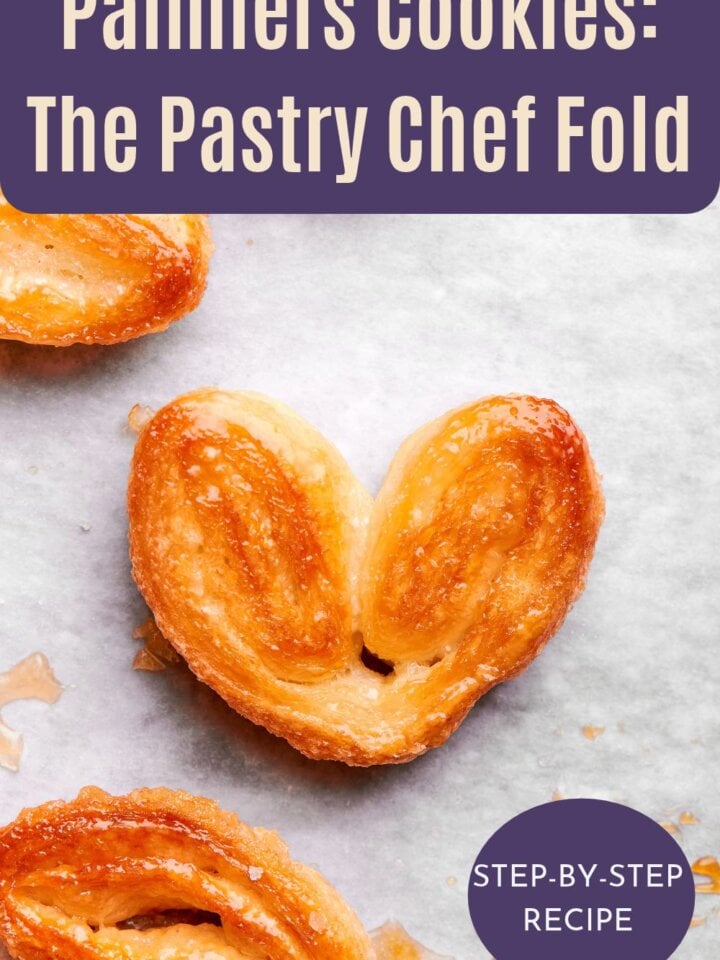
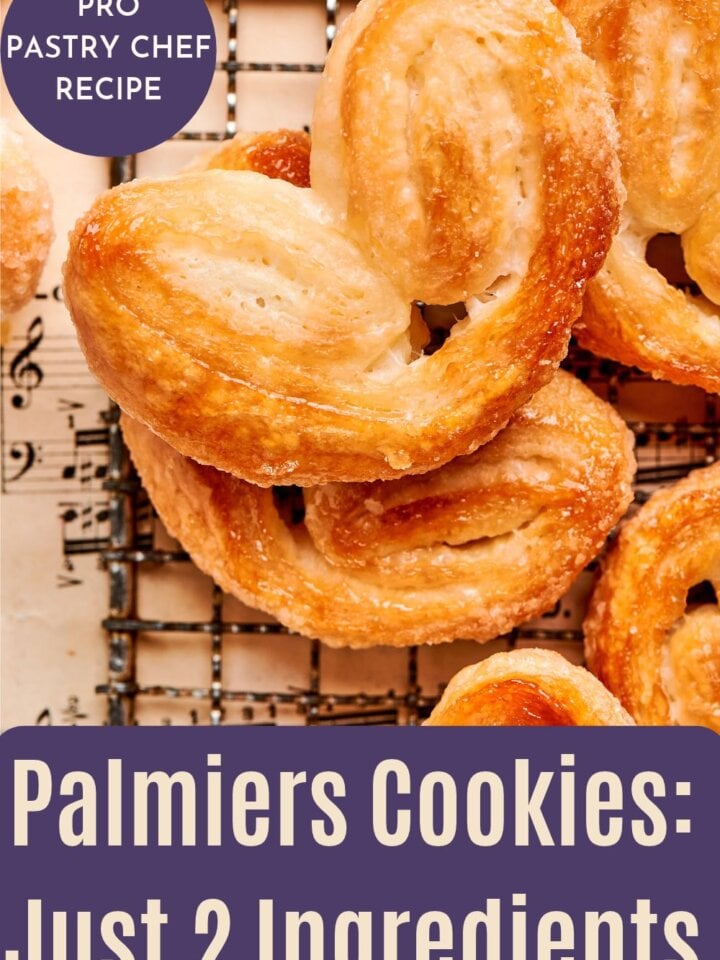
With just two ingredients—puff pastry and sugar—and a classic pastry school folding technique, you can make big, palm-sized palmiers with crisp, caramelized layers. I use the full width of the dough to create cookies that are satisfyingly large and shatteringly flaky. These are truly perfect palmiers: professional, buttery, and so simple.
This recipe is built for homemade laminated dough, and it is worth making the dough from scratch to get there. My classic puff pastry is the place to start. Once you make it you can make this [puff pastry fruit tart] or this mille-feuille (coming soon!) next!
Ingredients & Substitutions
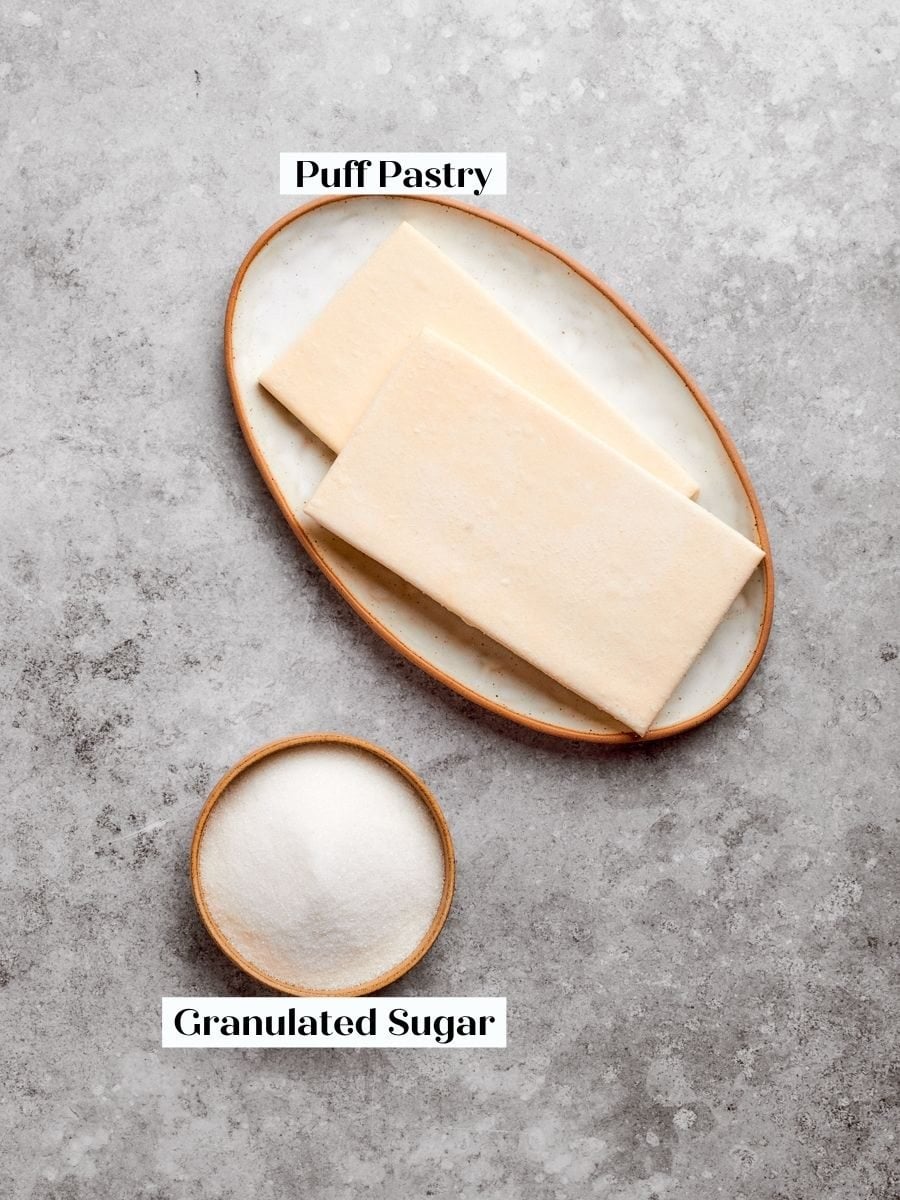
- Puff Pastry: This is the entire structure of your palmiers, providing the hundreds of thin butter-and-dough layers that puff and separate in the oven to create that signature flaky, crisp texture. Use well-chilled, fully laminated dough with distinct visible layers. Store-bought puff pastry will produce a softer, less defined result but will definitely still produce a delightful cookie. My classic puff pastry is the place to start if you have not made it before, and my inverse puff pastry produces the most dramatically laminated layers of any method I have used.
- Granulated Sugar: The sugar caramelizes on the outside and between the folds, giving palmiers their glassy, shattering crust and deep caramel flavor. Be genuinely liberal here: a heavy coating on both the dough and the work surface is critical, because the sugar acts like ball bearings as you roll, preventing sticking and helping create tight, layered spirals. Add more sugar whenever the dough starts to stick rather than reaching for flour, which would dull the caramelization.
See the recipe card for full information on ingredients and quantities.
Variations on These Palmiers Cookies
- Petits-Fours Palmiers. Cut the rolled-out rectangle in half lengthwise into two 6 × 14-inch pieces before folding, slice each log ⅜ inch thick, and bake 20 to 24 minutes for bite-sized palmiers that work beautifully on a dessert tray.
- Spiced Sugar Palmiers. Take my cinnamon sugar twist as inspiration and layer in cinnamon sugar for spiced palmiers, or try it with my apple pie spice, gingerbread spice, or speculoos spice mix recipe.
- Citrus! Zest some lemon, orange, grapefruit, or lime into sugar and let it sit overnight in the fridge. Then use it to make the palmiers.
- Vanilla sugar. This is how we made them in culinary school. Make vanilla sugar by adding a seeded vanilla pod to sugar and let it sit for a few days, then use it to make your palmiers.
- Dip in chocolate.
Professional Tips
- Be generous with the sugar, more than feels reasonable. A heavy coating on both the work surface and the dough is not optional: it prevents sticking during rolling and ensures the caramelization runs through every layer. Add more sugar whenever the dough begins to drag rather than rolling freely.
- Score before you fold. Lightly mark the rectangle into six even strips before making any folds to give you a precise reference point at each stage. Without that guide, the folds shift, and you lose the tight, symmetrical spiral that defines a proper palmier.
- Do not skip the overnight chill. The log needs to rest at least overnight so the sugar hydrates and the butter firms back up completely. Slicing a warm or under-chilled log produces palmiers that spread before they set, which is the most common reason the shape collapses in the oven.
- Flip the cookies at the right moment. Pull the pan when the bottoms are beginning to turn amber, flip each cookie, and return them to the oven until they are deeply golden all the way through. Pulling too early leaves you with pale, soft centers; waiting too long on the first side risks burning before the flip. I show you all this and more in session 11 in Kitchen Confidence Live!
How to Make Palmiers Cookies
Folding is the technique here, and once you see the logic, the whole process clicks into place.
Make the Palmier Log
Step 1: Sugar the work surface. Liberally coat your work surface with granulated sugar more than you would when making Hungarian Nut Roll Cookies. Do not be shy with it. The sugar is your rolling medium and your coating all at once, and generosity here is what gives palmiers their deeply caramelized, crackly exterior.
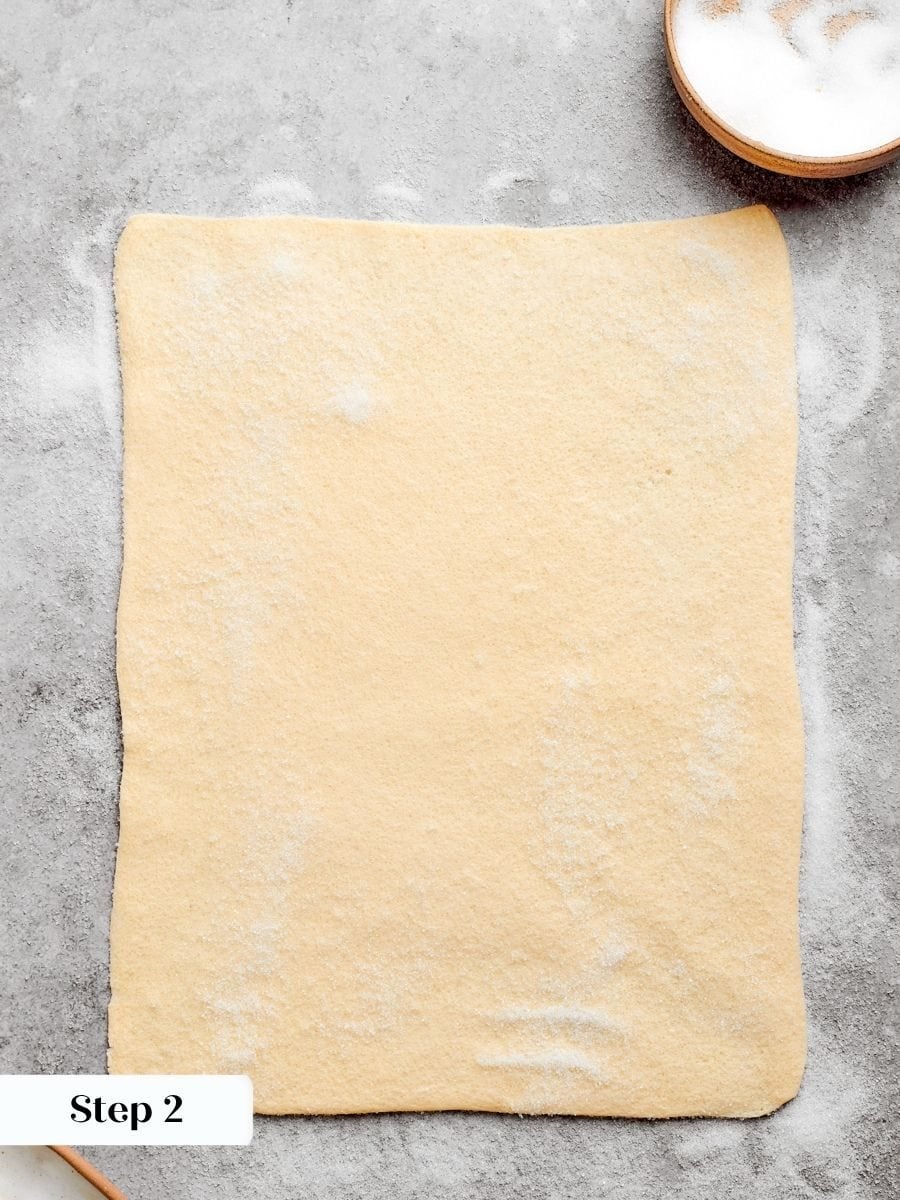
Step 2: Roll the puff pastry into a rectangle. Lay your puff pastry on the sugared surface and begin rolling, sprinkling more sugar on top as needed to prevent sticking to the pin. Roll until you have a 12-inch by 14-inch rectangle, about ⅛ inch thick. The dough should feel supple and cold but pliable. Rotate the rectangle so that one of the long, 14-inch sides faces you. (photo 1).
Step 3: Score the dough into six strips. Using a ruler, lightly score the dough into six even 2-inch strips, with the score lines running parallel to the long side.
You are just marking the dough, not cutting through it. These score lines are your fold guides, and spacing them evenly is what keeps the finished log symmetrical.
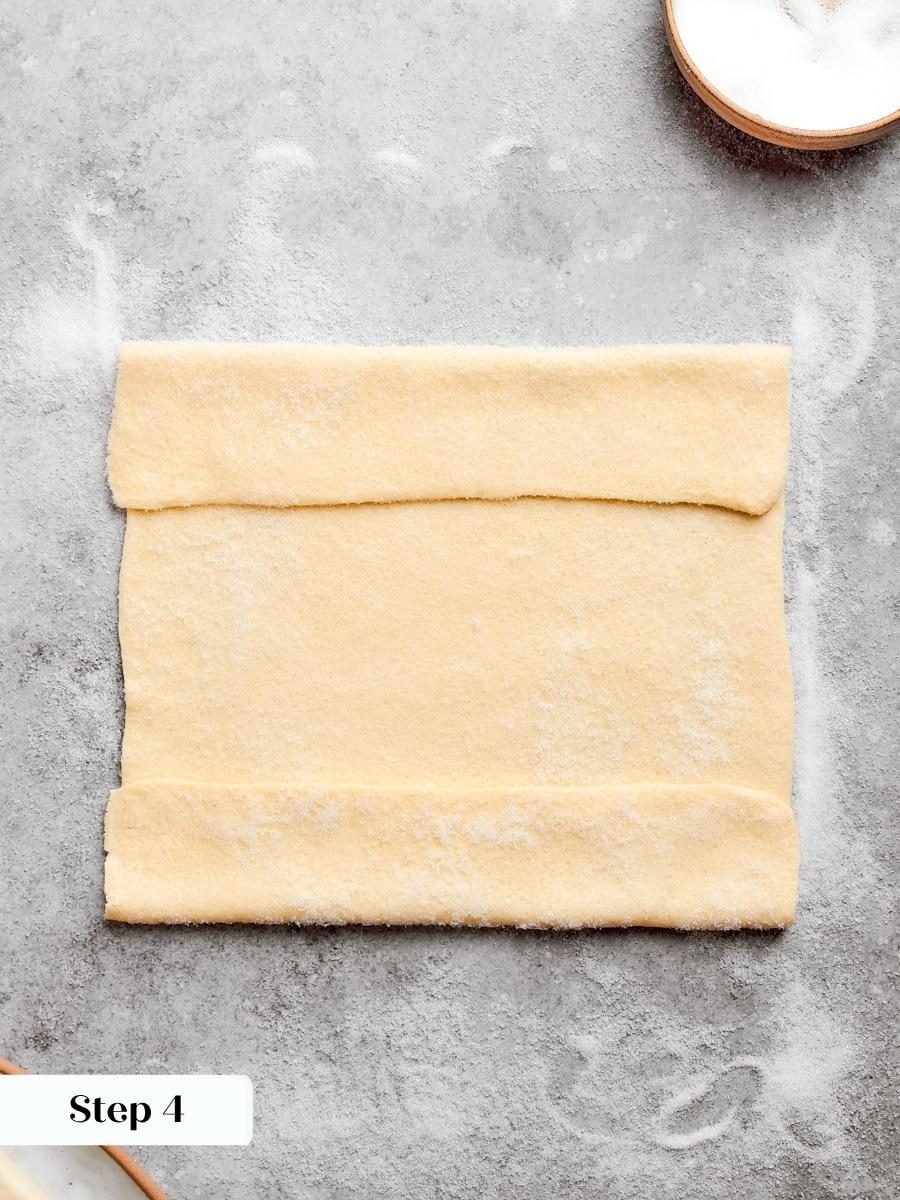
Step 4: Make the first fold. Fold the two outer strips inward toward the center, aligning each fold with its first score line. Press the folded layers together lightly with your rolling pin. The dough should feel slightly firm from the cold and will hold its shape cleanly as you press. (photo 2).
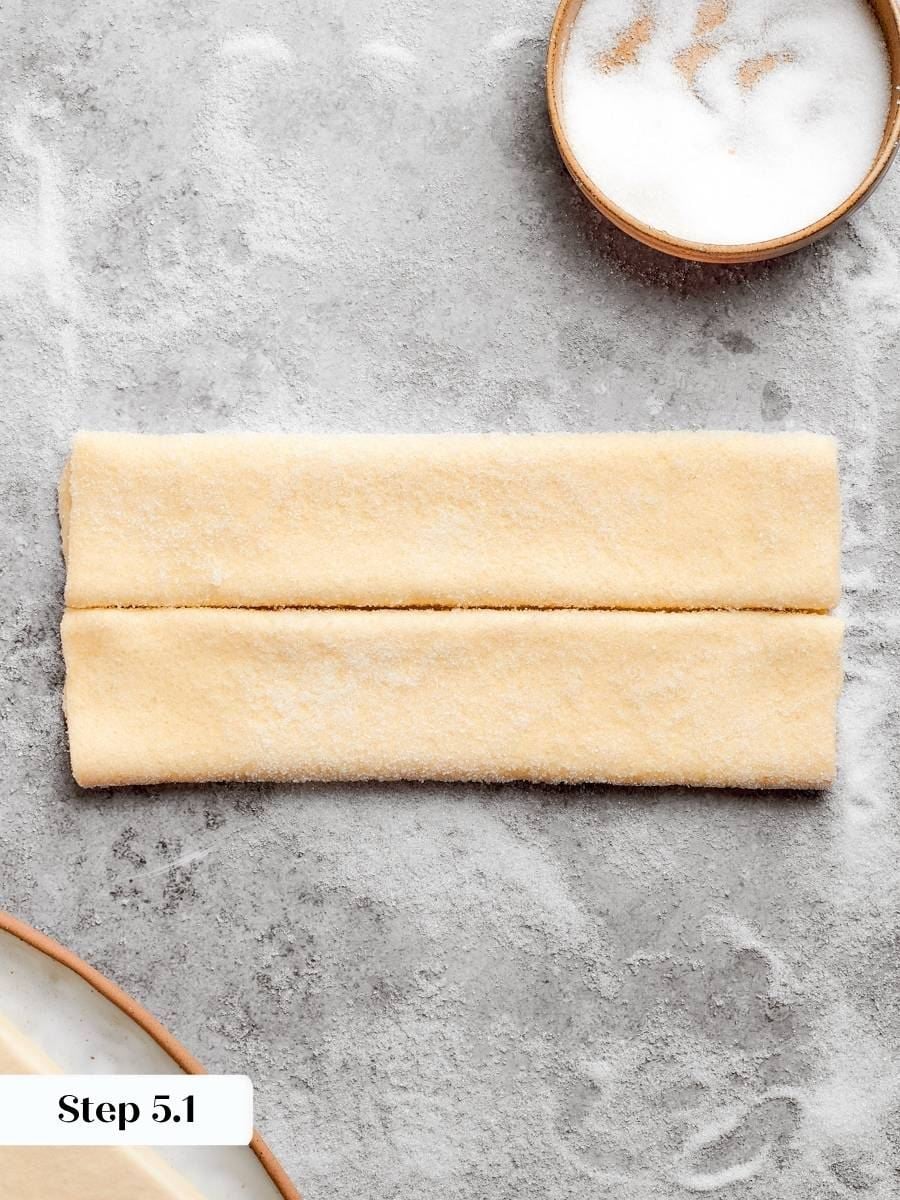
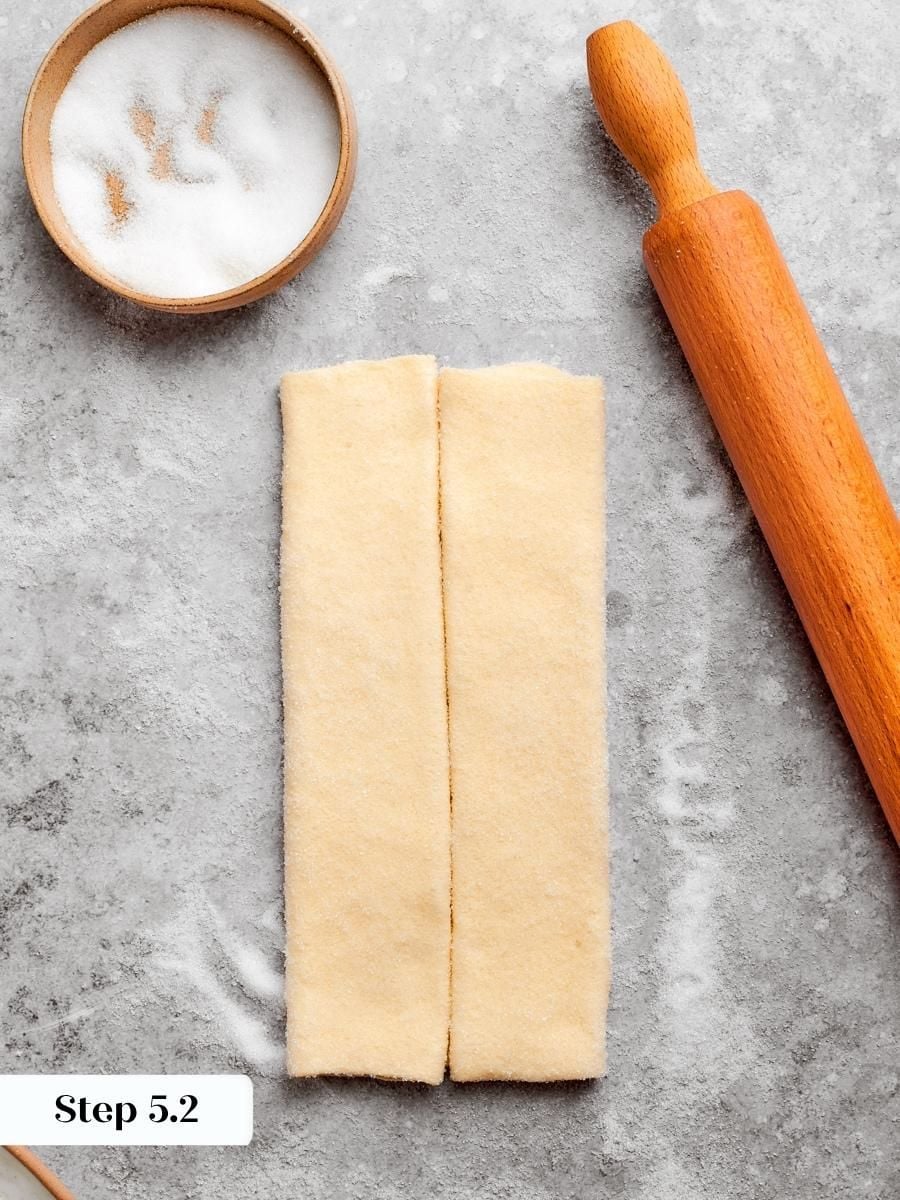
Step 5: Make the second fold. Fold again along the second score lines so that the two folds almost meet at the center but do not quite touch. Press again gently with the rolling pin to encourage the layers to adhere. You will have a long, layered strip that is starting to look like a thick book spine. (photos 3 & 4).
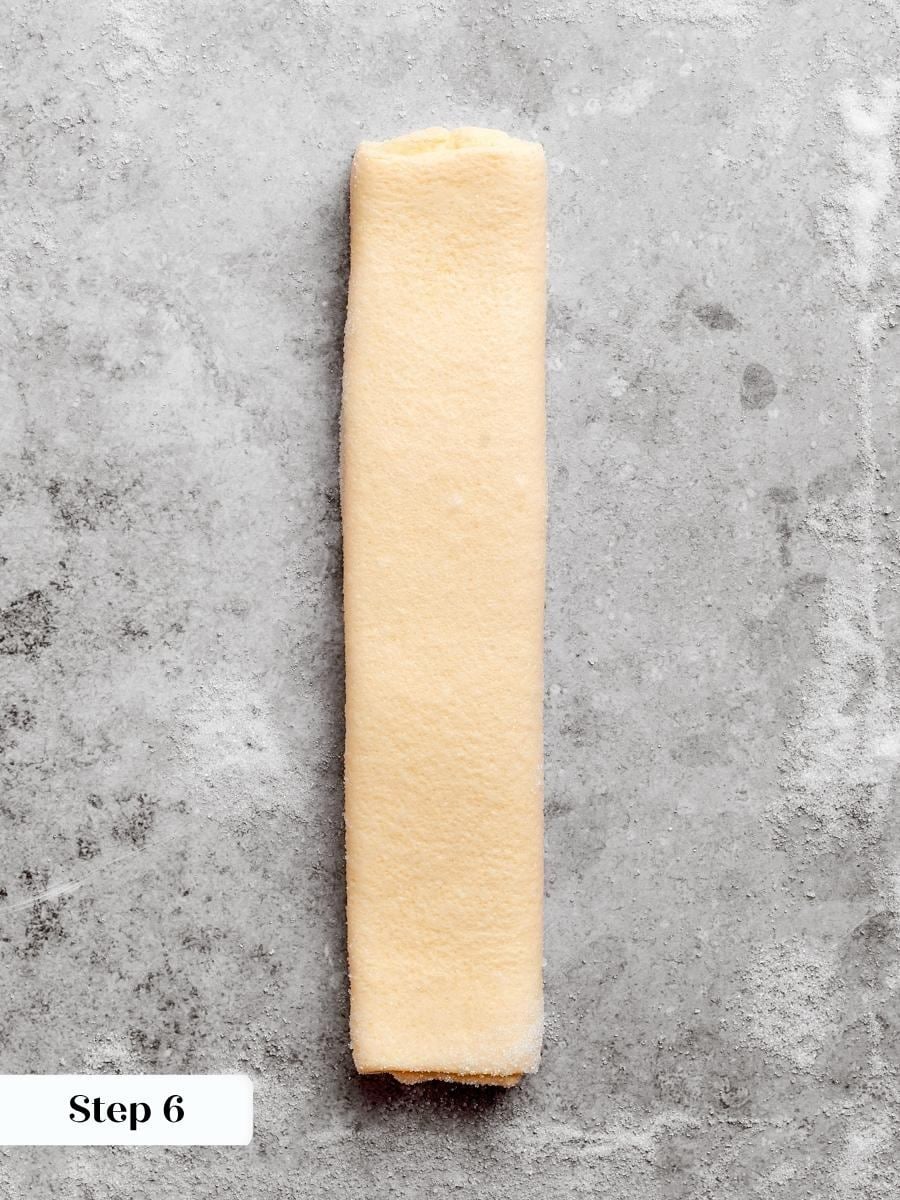
Step 6: Close the log. Fold the two halves together along the center line, exactly like closing a book, to form one 14-inch-long log. Press gently one final time. The log should be compact and even, with all the sugar sealed inside the layers. (photo 5).
Chill Overnight
Step 7: Wrap and chill overnight. Wrap the log tightly and refrigerate overnight for the best results.
An overnight chill is essential. It hydrates the sugar throughout the layers and gives you the most evenly browned, caramelized exterior when you bake. The unbaked log keeps in the refrigerator for 2 to 3 days or in the freezer for up to 2 months, so you can slice and bake as many as you need at a time.
Slice and Bake
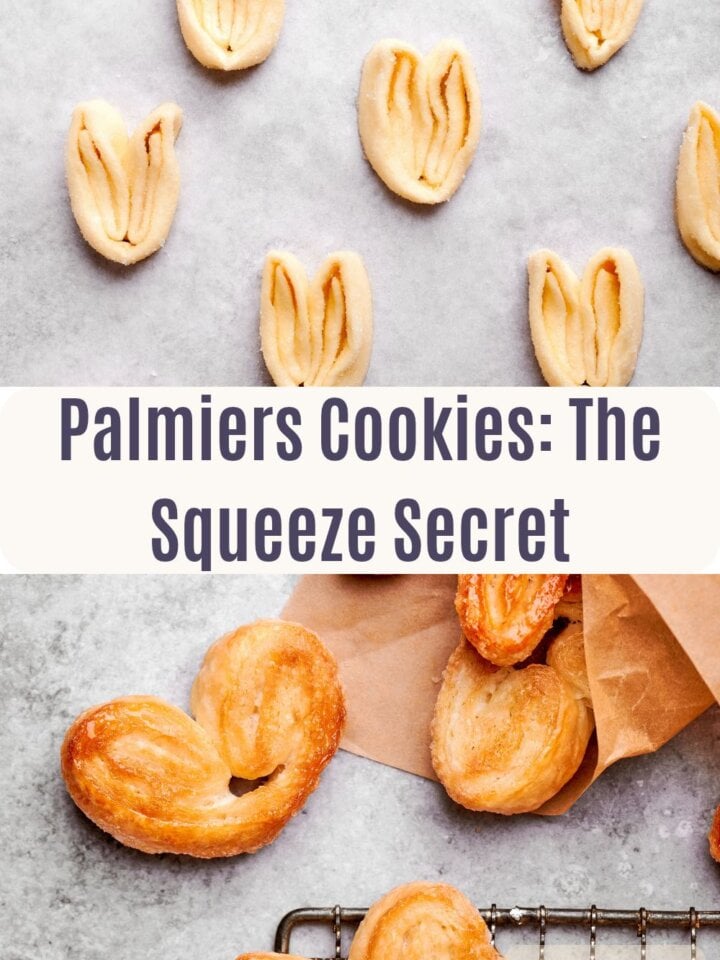
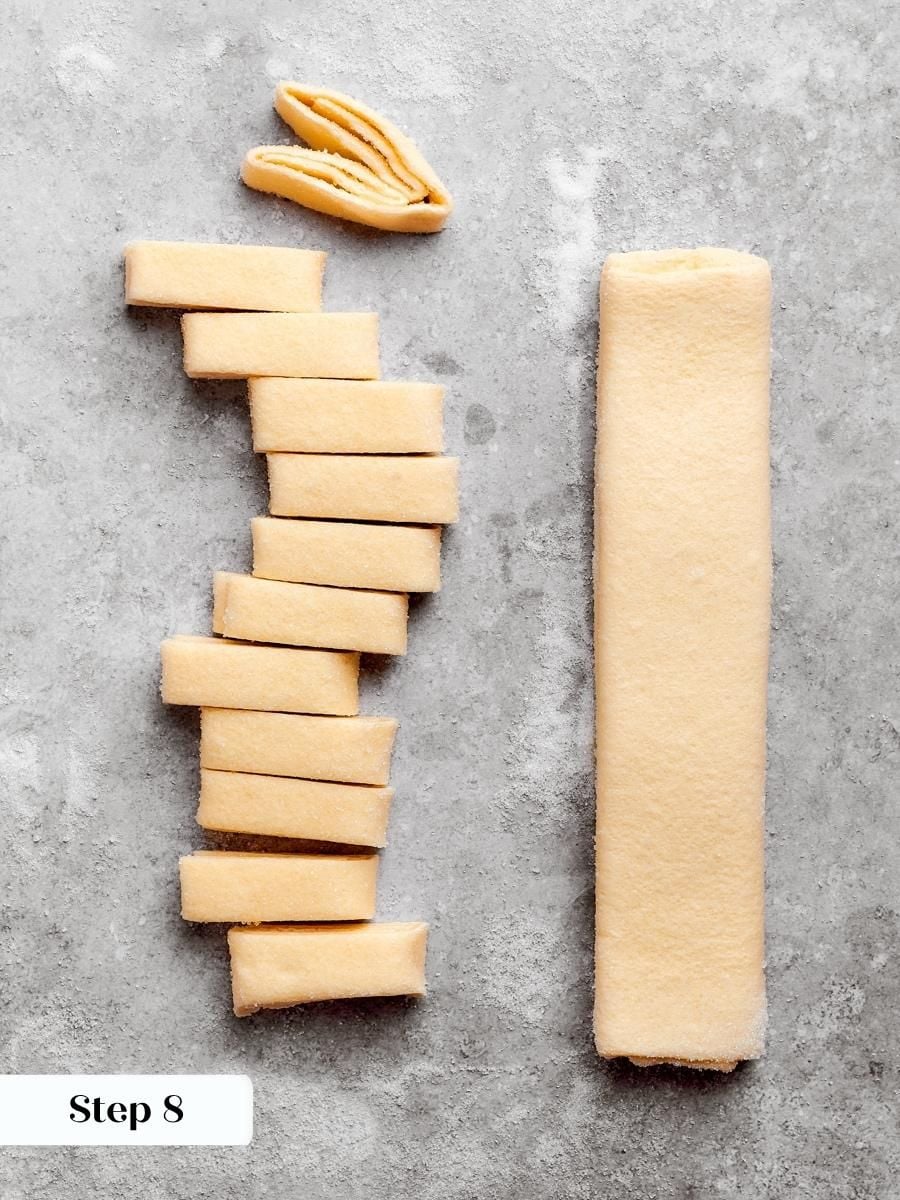
Step 8: Preheat and slice. Preheat the oven to 375°F (191°C). Pull the chilled log from the refrigerator and cut it into ¾-inch slices using a sharp knife. The log should be firm enough to cut cleanly without compressing the layers. Place the slices cut-side up on a parchment-lined sheet pan, about 2 inches apart. They will double or triple in size as they bake, so give them room. The folds should be facing up so each slice looks like a small rainbow on the pan. (photo 6).
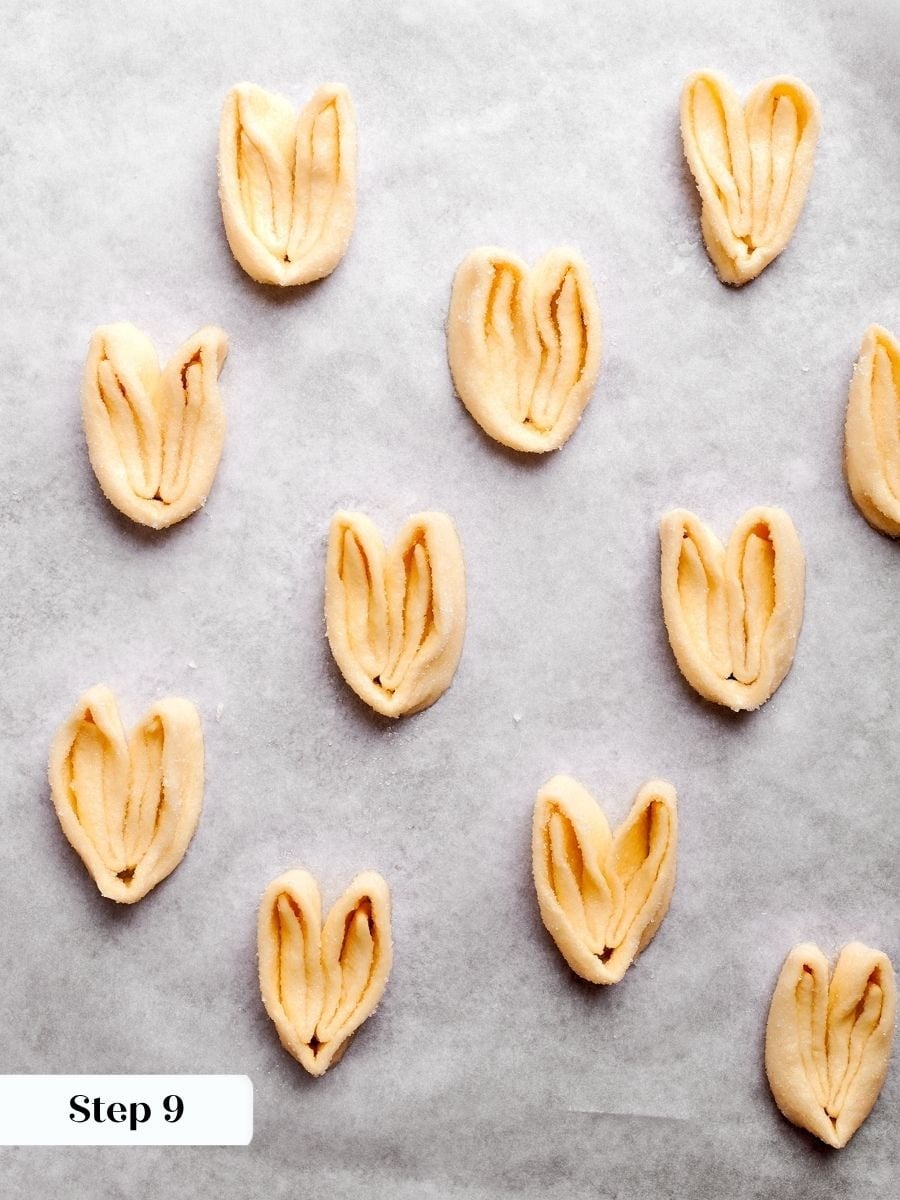
Step 9: Squeeze the tops before baking. Just before the pan goes into the oven, use your fingers to squeeze the top third of each slice, the rounded part, pressing it gently inward to create a slight indent against the sheet pan. This is the culinary school trick that creates the classic palmier silhouette as the layers puff and fan out during baking. It takes only a second per slice and makes a noticeable difference in the final shape. (photo 7).
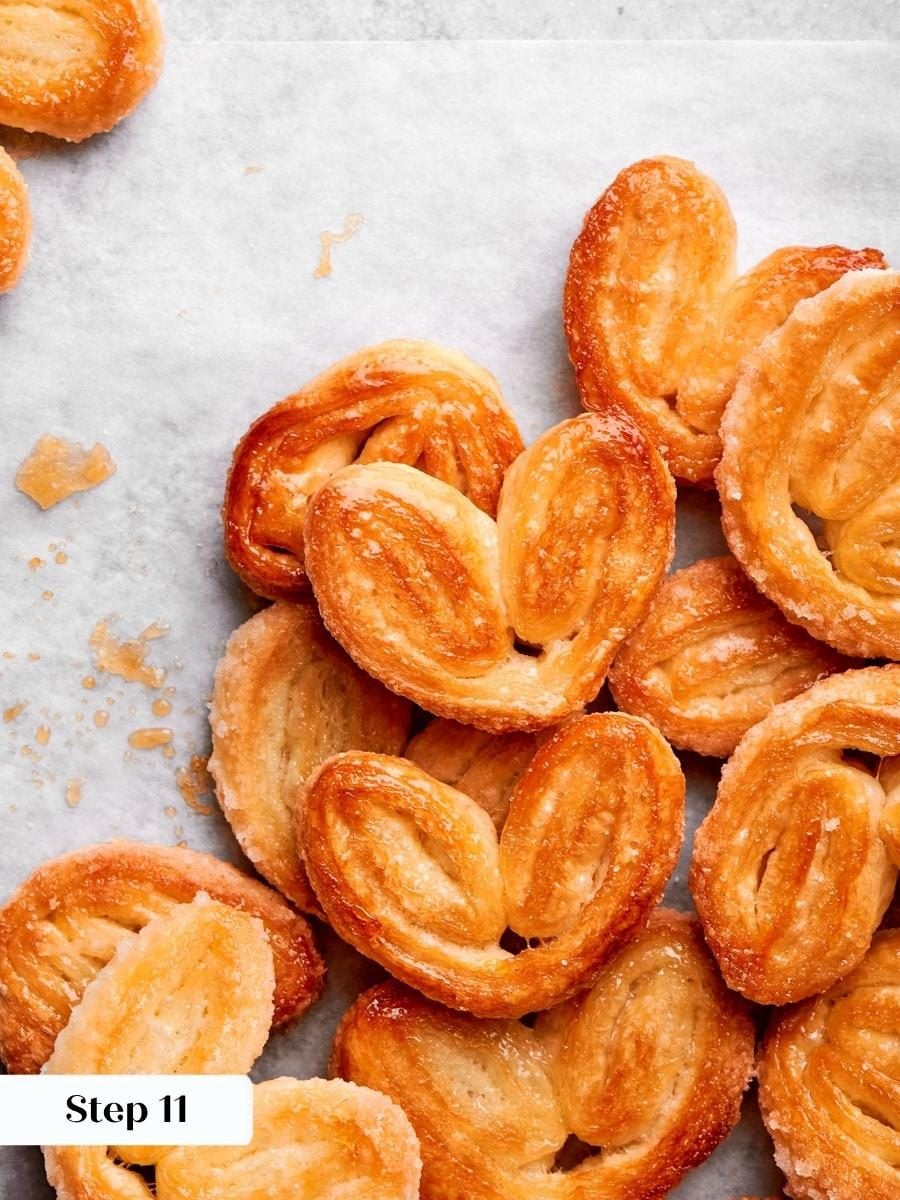
Step 10: Bake, then flip. Bake for 24 to 28 minutes total, watching the undersides closely starting around the 12-minute mark. When the bottoms begin to turn golden brown and the caramel is actively bubbling at the edges, flip each palmier with a thin spatula and continue baking until both sides are deeply golden and caramelized all the way through. The finished cookie should be amber and lacquered-looking, with no pale or soft patches. Start checking at 24 minutes.
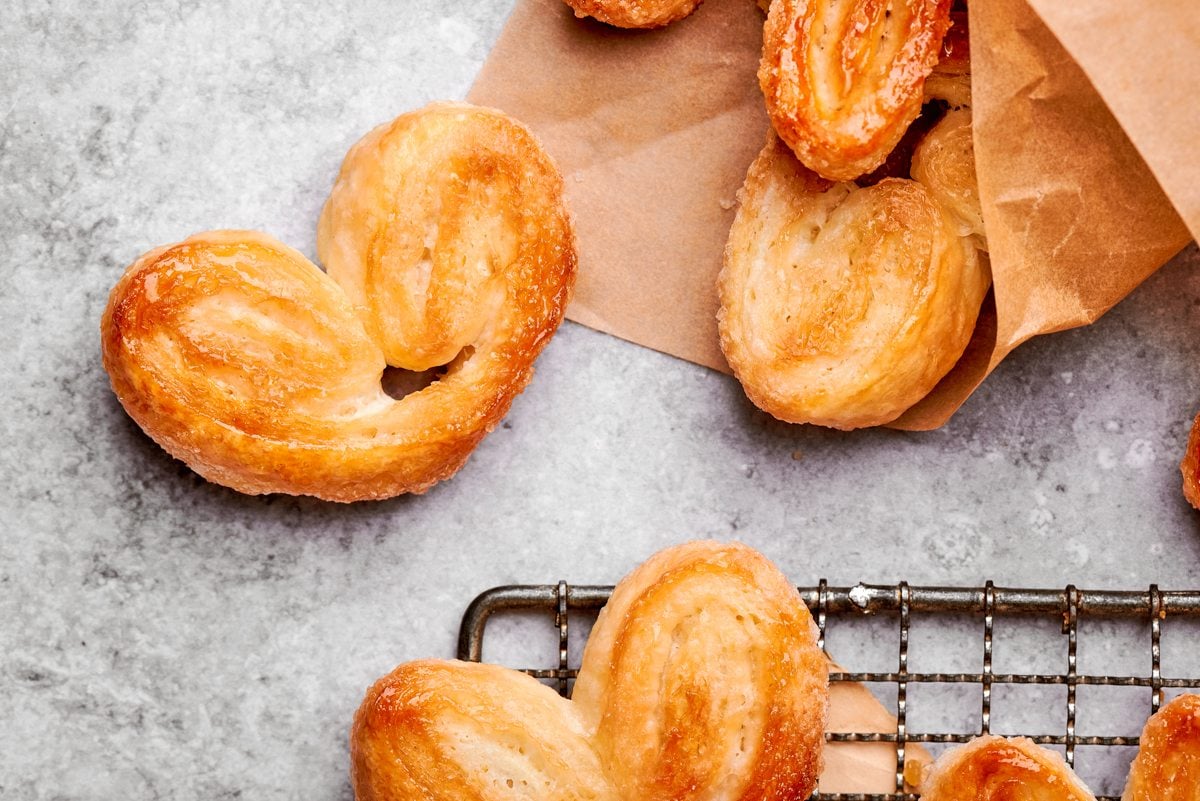
Step 11: Cool completely on the pan. Transfer the pan to a wire rack and let the palmiers cool completely on the sheet pan without moving them. The caramelized sugar needs to set as it cools, and moving the cookies too soon will crack the crust before it hardens. Once fully cooled, they will be crisp, flaky, and glossy. Store airtight and serve within 1 week, though they are at their very best the day they are baked. (photo 8).
Chef Lindsey’s Recipe Tip
The shape of a palmier is determined before it ever touches a baking sheet. Once you slice the chilled log and lay the pieces flat, take a moment to squeeze the top third of each slice inward with your fingers, creating a slight indent that echoes the classic palm-leaf silhouette. It sounds minor, but this is the culinary school detail that separates a palmier with a defined shape from one that just looks like a swirl.
Recipe FAQs
The unbaked log is the ideal make-ahead format. It keeps in the refrigerator for 2 to 3 days and in the freezer for up to 2 months, so you can slice and bake as many as you need at a time. Once baked, palmiers are best the day they come out of the oven, when the layers are crispest and the caramel is still snappy.
Keep baked palmiers in an airtight container at room temperature and serve within 1 week. The texture will soften slightly after the first day as the caramelized sugar absorbs ambient moisture, which is completely normal. For the crispest result, bake them the day you plan to serve them.
The most common cause is an under-chilled log. The butter needs to be fully firm before slicing so the layers hold their definition as they hit the oven’s heat. An overnight chill is the minimum; if your kitchen is warm, tuck the sliced cookies back into the refrigerator for 30 minutes before baking.
Classic French Recipes
Dessert Recipes
Choux Pastry (Pâte à choux)
Pies and Tart Recipes
Pear Frangipane Tart
Custard Recipes
Pastry Cream Recipe (Crème Pâtissière)
Dessert Recipes
Cream Puffs
If you tried this recipe and loved it please leave a 🌟 star rating and let me know how it goes in the comments below. I love hearing from you; your comments make my day!
Palmiers Cookies
Ingredients
- 1 sheet puff pastry about ⅓ classic puff pastry recipe
- ½ cup granulated sugar plus more as needed
Instructions
- Cover your work surface liberally with sugar. Roll the puff pastry in the sugar, adding more as needed to prevent sticking, until you have a 12 × 14-inch rectangle about ⅛ inch thick. Rotate so a long side faces you.
- Using a ruler, lightly score the dough into six even 2-inch strips, lines running parallel to the long side.
- Fold the two outer strips inward to the first score lines. Press lightly with a rolling pin. Fold again to the second score lines so the two folds nearly meet at center. Press again. Fold the two halves together along the center line like closing a book to form one 14-inch log. Press gently.
- Wrap the log and refrigerate overnight. The unbaked log can be refrigerated for 2 to 3 days or frozen for up to 2 months.
- Preheat the oven to 375°F (191°C).
- Cut the chilled log into ¾-inch slices and place them 2 inches apart on a parchment-lined sheet pan, folds facing up so each slice looks like a rainbow. Just before baking, squeeze the top third of each slice inward to indent it slightly — this creates the classic palm-leaf shape.
- Bake for 24 to 28 minutes. Flip each palmier when the underside begins to brown and continue baking until both sides are evenly golden and deeply caramelized.
- Cool completely on the sheet pan. Store airtight and serve within 1 week.
Video
Notes
Shape: Squeezing the top third of each slice before baking is the step that gives palmiers their defined palm-leaf silhouette. Do not skip it.
Doneness: Palmiers are done when they are evenly golden and deeply caramelized on both sides with no pale patches remaining.
Storage: Store baked palmiers airtight at room temperature for up to 1 week. The unbaked log keeps in the refrigerator for 2 to 3 days or in the freezer for up to 2 months.
Nutrition
Before You Go
These caramelized puff pastry spirals are one of those recipes that look far more impressive than the effort required, and once you have a batch cooling on the rack, I think you will find yourself making them on repeat. Browse more ideas in Cookie Recipes or make these apricot kolachys next!