
This post may contain affiliate links. Please read our disclosure policy.
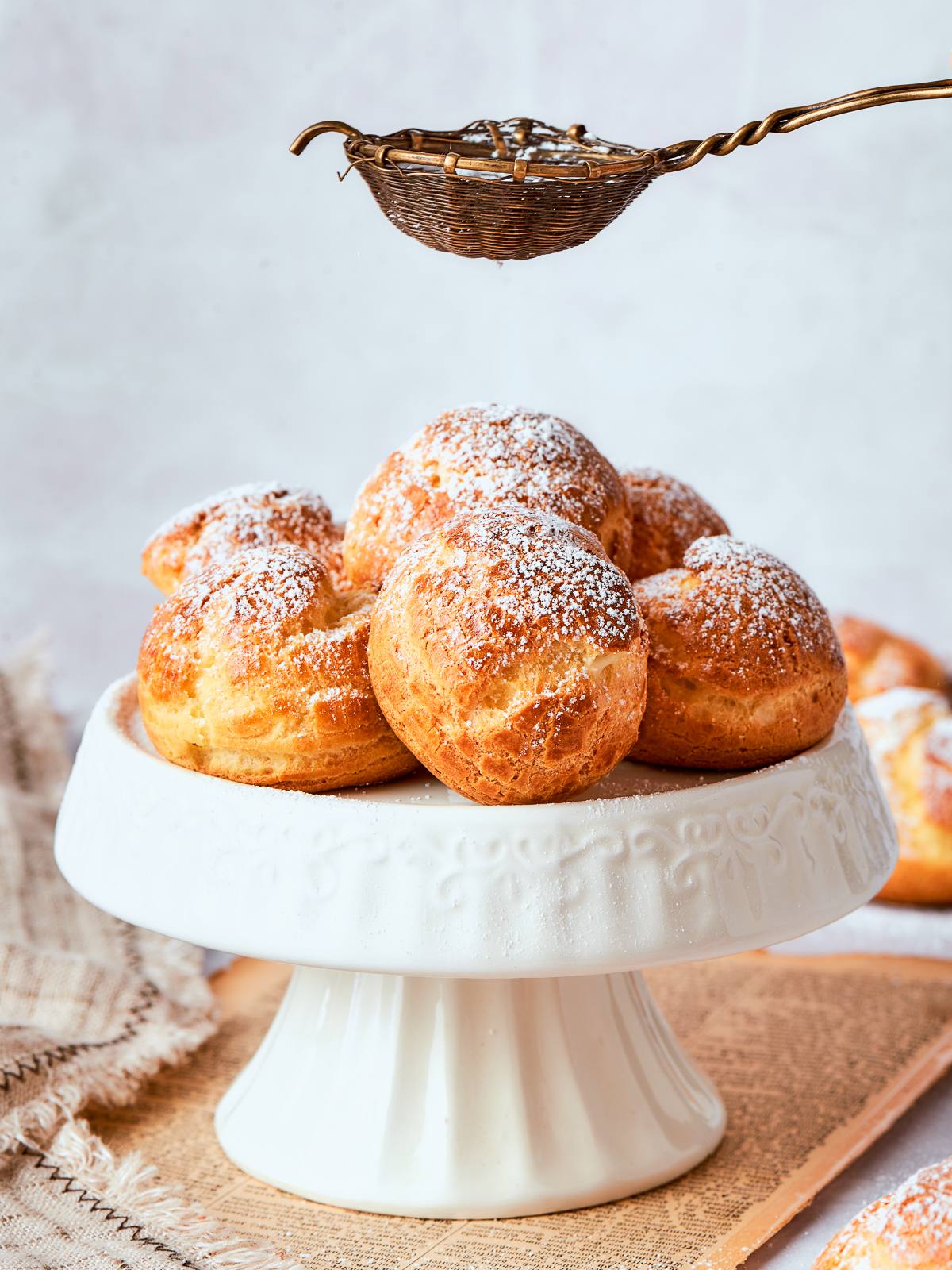
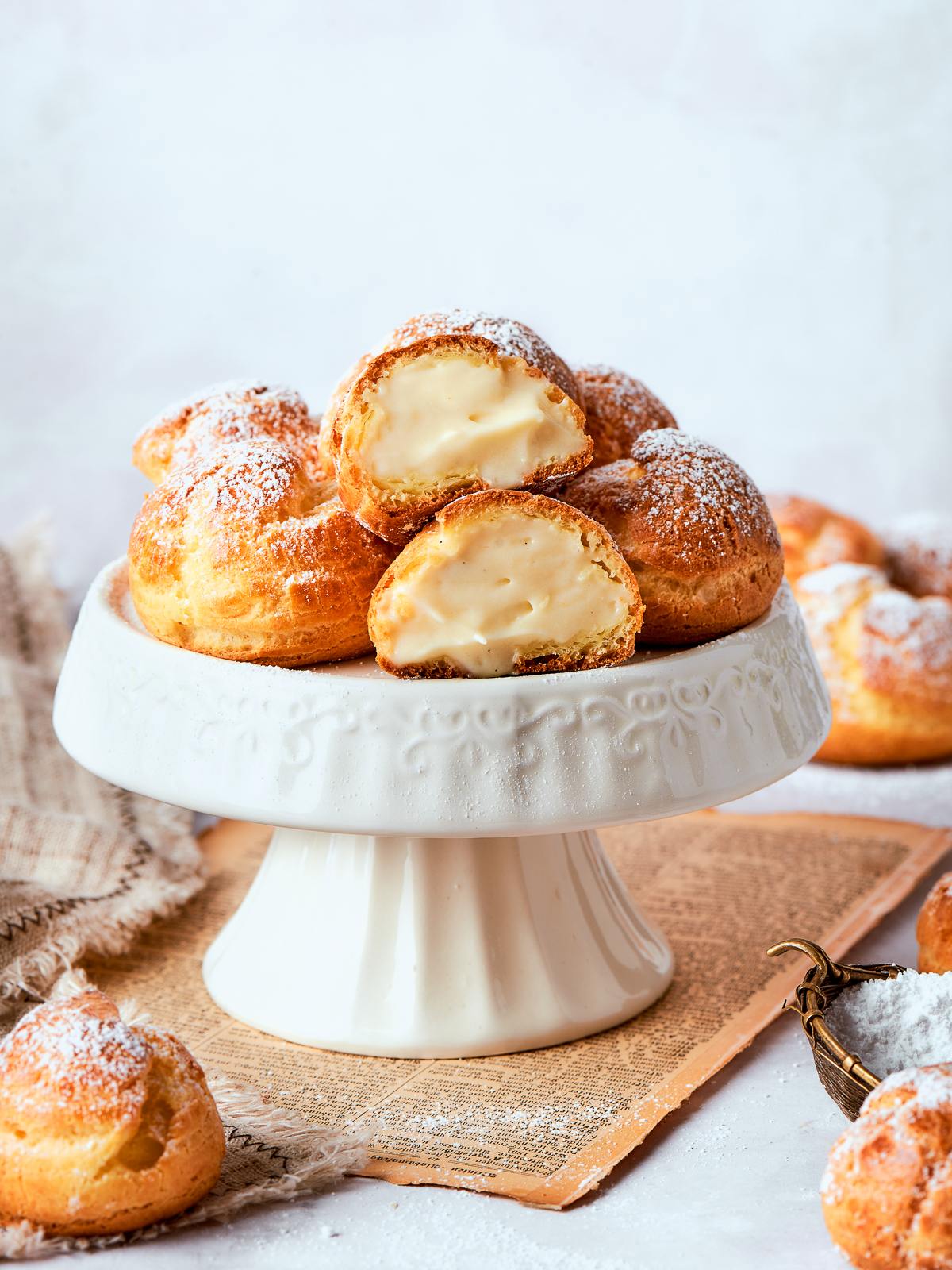
Cream puffs are one of those pastries that look impressive but are completely achievable at home when you understand the technique. This recipe gives you the professional guidance to nail choux pastry and silky crème légère from scratch.
A Quick Look At The Recipe
This is a brief summary of the recipe. Jump to the recipe to get the full details.
Jump to RecipePrep Time
45 minutes
Cook Time
23 minutes
Cooling Time
1 hour
Total Time
2 hours 8 minutes
Servings
150 4 cm puffs
Difficulty
Intermediate — classic choux method requiring attention to dough consistency and egg incorporation.
Calories *
33 kcal per serving
Technique
Stovetop choux pastry with eggs incorporated to a specific consistency; filled with crème légère made from pastry cream folded with whipped heavy cream.
Flavor Profile
Light vanilla, delicately sweet, buttery, rich cream.
* Based on nutrition panel
I was nervous about choux pastry but the consistency tests in this recipe made all the difference. My shells came out hollow and crisp, and the crème légère filling was light without being bland. I made the full batch for a party and they were gone within the hour. This is the only cream puff recipe I will use from now on. ⭐⭐⭐⭐⭐
Lauren
Why This Recipe Works
- Precision consistency tests built into the method. The panade, the egg incorporation, and the final batter each have specific visual indicators that tell you exactly when to stop. Guesswork is the reason most homemade choux fails.
- Proper panade technique for a stable, hollow shell. Cooking the flour paste long enough drives off excess moisture much and prevents raw flour flavor like with my ermine frosting recipe. That step is what gives the shells their structure and creates the hollow center that holds the filling.
- Crème légère filling that stays light. Folding whipped cream into finished pastry cream produces a filling that is rich without being heavy. The ratio keeps it stable enough to pipe cleanly and hold its shape once the puffs are filled.
- Tested size and baking parameters. At 4 centimeters or under, the shells bake through evenly without the exterior overbaking before the center sets. Larger puffs require a vent hole and extended baking time.
Table of Contents
Cream puffs were one of the first things I learned to make with precision in a professional kitchen, and I have tested every variable worth testing, from panade cook time to egg ratios to resting the choux paste overnight in the refrigerator.
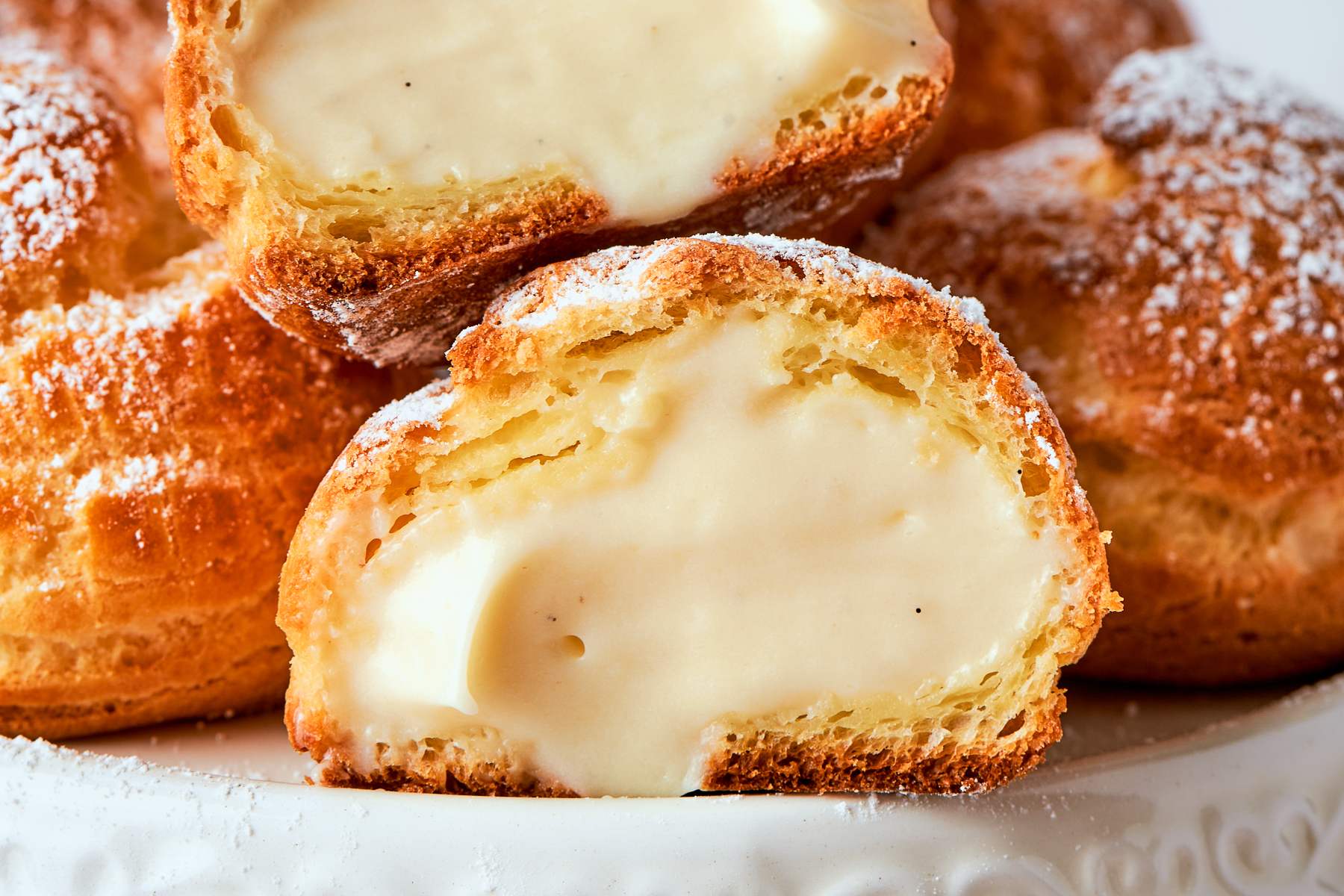
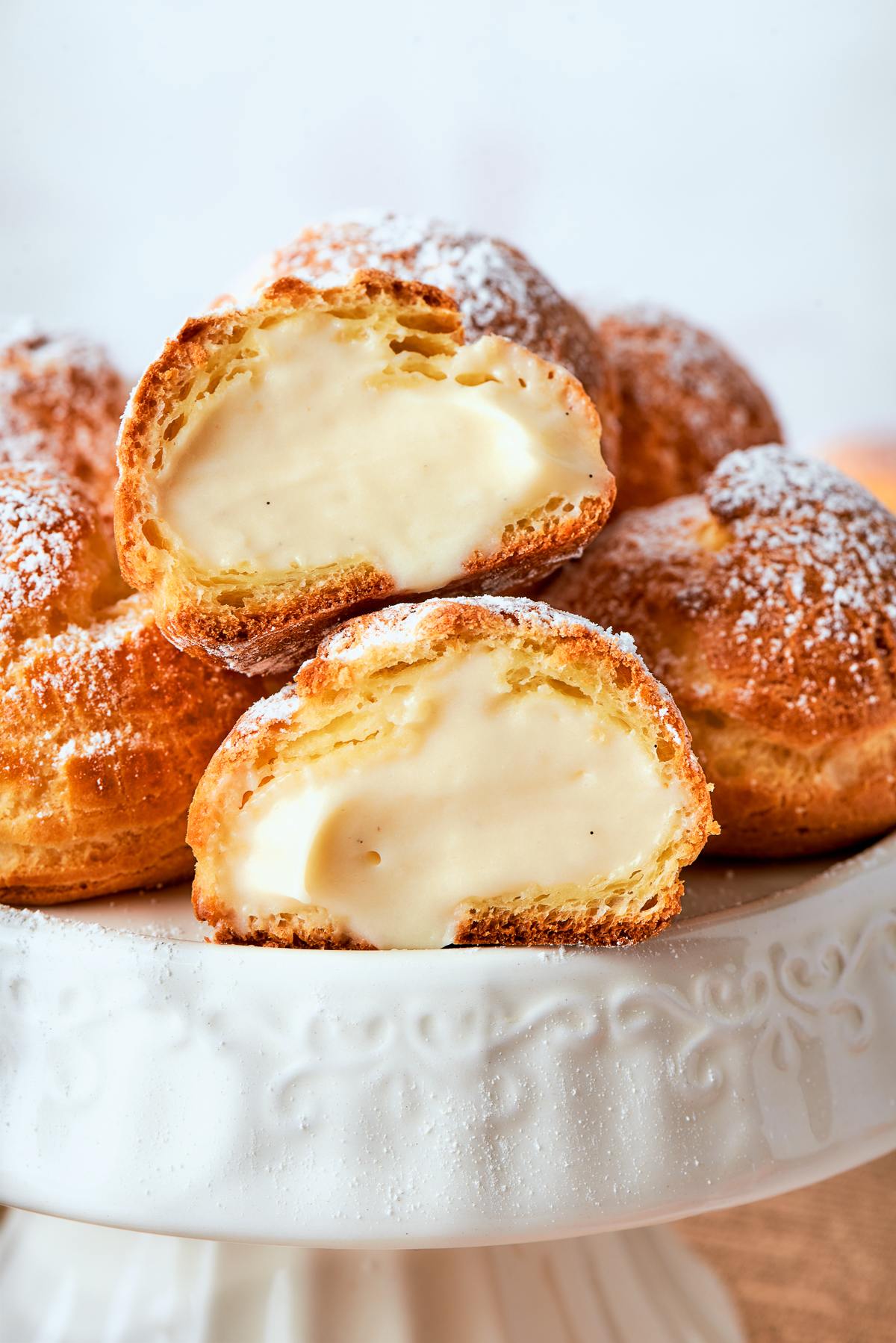
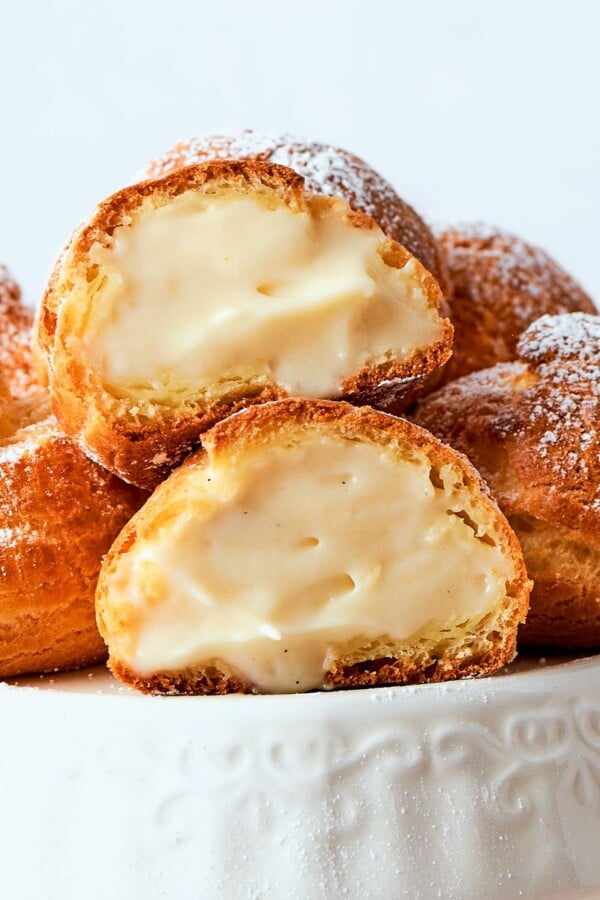
The filled cross-section is what sells them for me every time. This recipe walks you quickly through every stage with the visual cues I rely on in a professional kitchen, but if you want to go deeper on the base dough itself, every detail is in my pâte à choux tutorial.
Ingredients & Substitutions
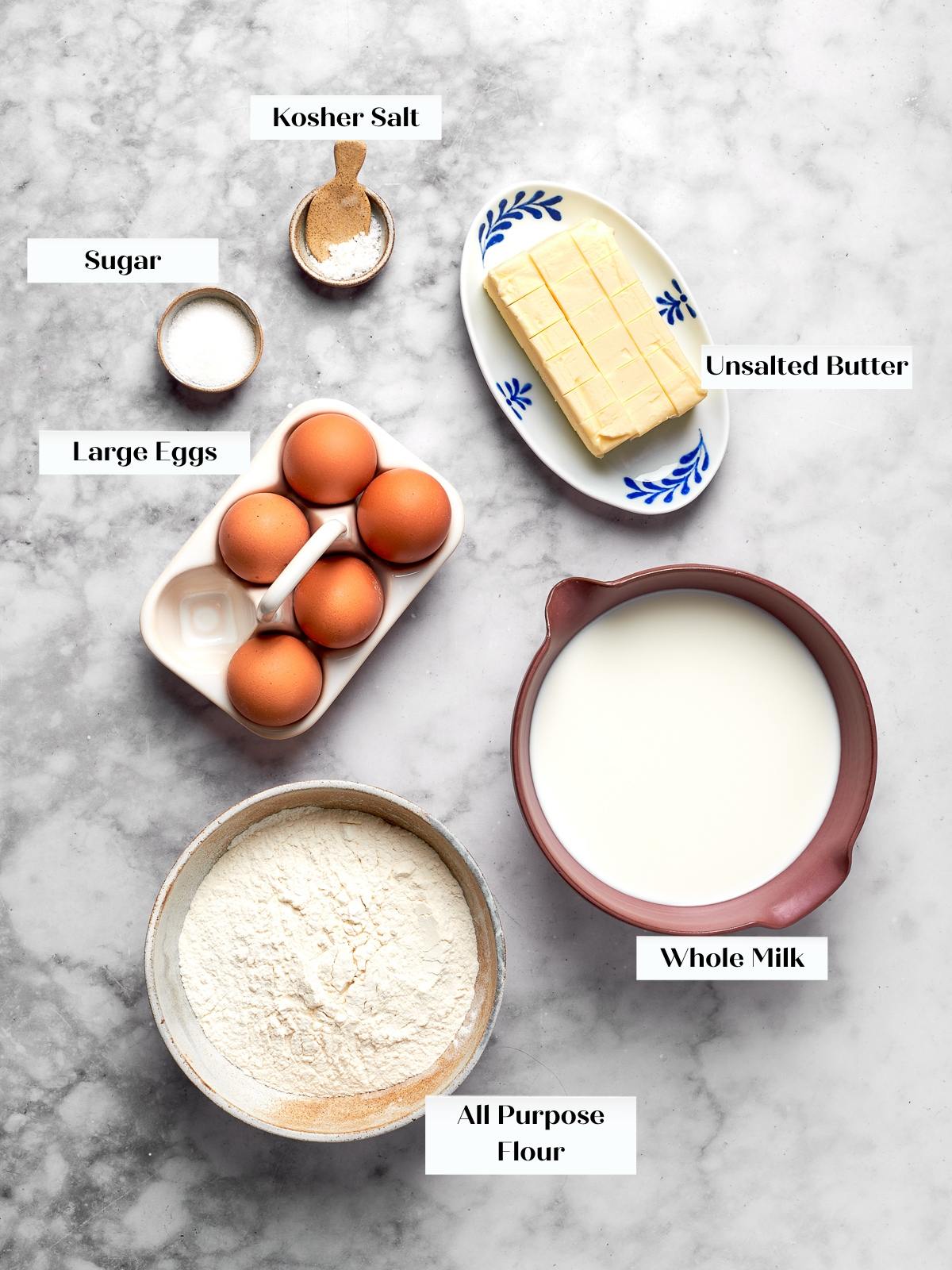
- All-Purpose Flour: The structure of the shell comes from flour gelatinizing with the liquid during cooking. Weighing the flour using a kitchen scale is the only way to guarantee consistent results, because even a small excess will make the paste too stiff to puff properly.
- Unsalted Butter: Butter enriches the paste and contributes to the tender, crisp shell. Use unsalted so you control the salt level precisely.
- Whole Milk: Using all milk gives the shells a richer flavor and a more golden exterior than other recipes using a combination of milk and water.
- Salt and Sugar: These are present in small amounts to season the paste and promote even browning. Neither is optional, even though the quantities are small.
- Large Eggs: Eggs are what make choux paste work. They provide the steam and protein structure that causes the shells to puff and set hollow. The exact quantity varies by batch because you are adding eggs until the paste reaches the right consistency, not following a fixed count.
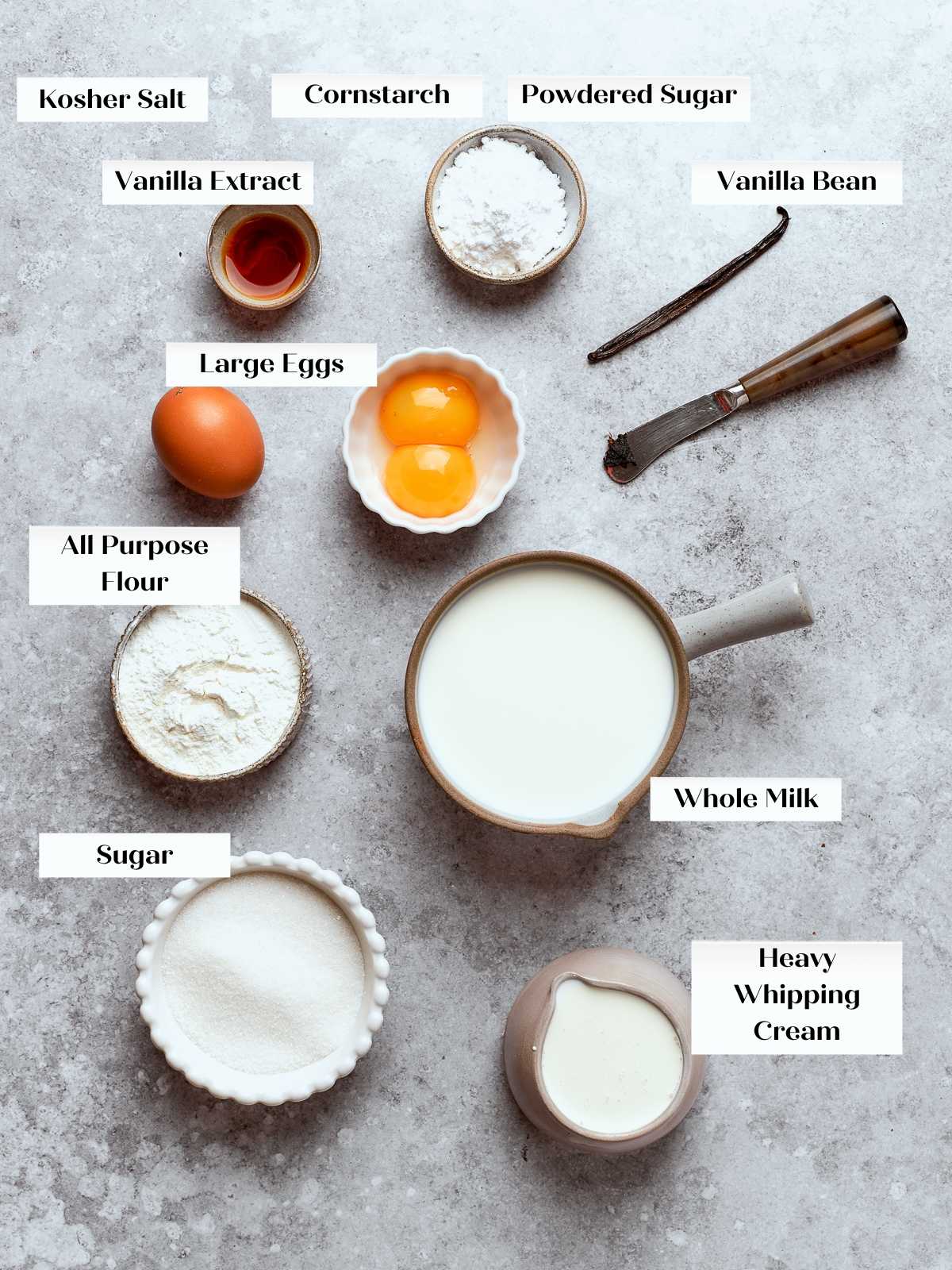
- Whole Milk: The base of the pastry cream. Whole milk is necessary here; lower-fat milk produces a thinner custard that will not set firmly enough to hold inside the shell.
- Egg Yolks: Yolks enrich and thicken the custard, giving it a deep golden color and a creamy texture. Save those egg whites and make angel food cake or this lemon berry pavlova cake! Do not substitute whole eggs, which produce a looser, less stable cream, if you would like to use whole eggs try making these with this homemade vanilla pudding recipe.
- Granulated Sugar: Sweetens the pastry cream and helps stabilize the yolks during cooking. The quantity is intentionally moderate so the filling does not taste sweet.
- Cornstarch: This is the primary thickener in pastry cream, and it is not optional. It gives the cream the firm, sliceable set it needs to stay in place once the shells are filled. Flour can substitute in equal weight, but the texture will be slightly starchier and the flavor less clean.
- Vanilla Bean: A split vanilla bean steeped in the warm milk gives the pastry cream its defining flavor. You can substitute 1 to 2 teaspoons of pure vanilla extract added off the heat, though the depth from a fresh bean is noticeably different. Vanilla bean paste is a good middle-ground option if whole beans are hard to source.
- Heavy Cream: Whipped cream folded into the finished pastry cream lightens the filling without sacrificing its structure. Use heavy cream with at least 36% fat; anything lighter will not hold volume once folded in.
See the recipe card for full information on ingredients and quantities.
Variations on This Cream Puffs
- Chocolate Pastry Cream Filling. Swap the vanilla pastry cream for a chocolate pastry cream by whisking in 2 to 3 ounces of chopped dark chocolate while the cream is still warm from cooking, then chill and fold with whipped cream as written.
- Profiteroles. Fill the baked shells with a small scoop of vanilla ice cream instead of crème légère and drizzle with this hot fudge sauce recipe immediately before serving. The shells should be fully cooled and vented so they stay crisp long enough to serve.
- Caramel Cream Puffs. Replace the vanilla pastry cream with caramel pastry cream.
- Chouquettes. Skip the filling entirely, brush the piped rounds with egg wash, and top the pipe choux with pearl sugar before baking. These are the simplest expression of choux and a classic French afternoon snack.
- Larger Cream Puffs. Cut a slightly larger hole in the piping bag and slowly lift your hand as you squeeze steadily to build a taller, wider ball; puffs larger than 4 centimeters will need a vent hole poked in the bottom and additional baking time beyond the 20 to 23 minute mark, and I don’t love the tradeoff for anything larger than 5 centimeters because the exterior overbakes before the center sets.
Professional Tips
- Cook the panade until a film forms on the bottom of the pan. This cooks off enough moisture to prevent a runny paste and eliminates the raw flour flavor. Pulling it too soon is the most common reason choux spreads flat and tastes starchy.
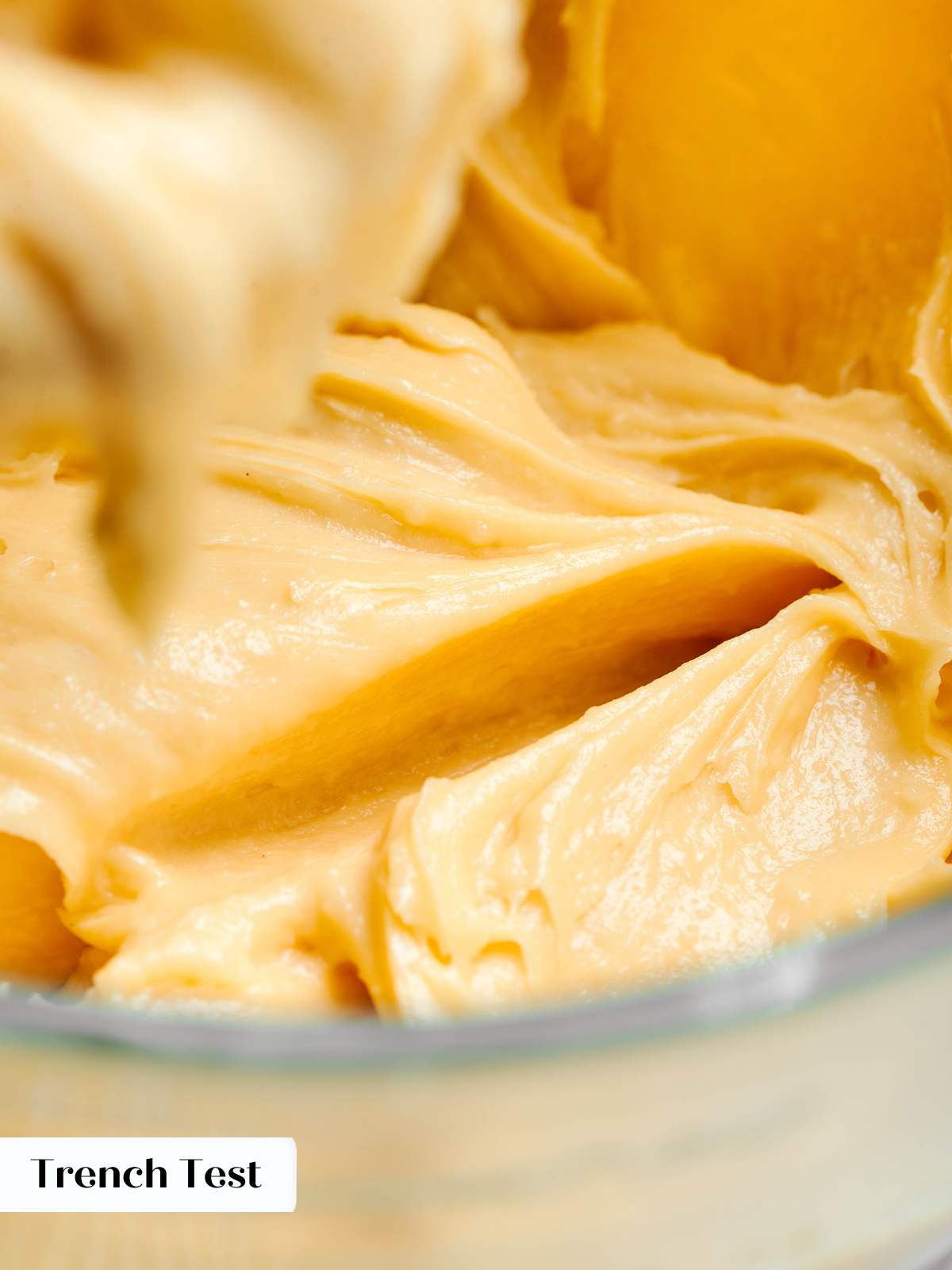
- Add eggs gradually and use the trench test. Pour the eggs in slowly, beating well between additions, and stop when a spoonful of paste dragged across the bowl leaves a trench with sides that slowly fall back in. Adding too many eggs makes the paste too thin to hold its shape when piped, and there is no recovering from that.
- Temper refrigerated choux paste before piping. Choux piped cold is harder to work with and moves more slowly through the bag. Letting it sit at room temperature for about an hour makes it easier to pipe and, in my experience, produces a bigger air pocket in the finished shell.
- Space the puffs and smooth the points. If they are piped too close together, the shells steam against each other and the outsides stay soft instead of crisping. Smooth any pointed tip left by the piping bag before baking: a browned point is the clearest sign of an uneven, rushed pipe job, and it is completely avoidable.
How to Make Cream Puffs
This recipe has two components made in sequence: the pastry cream, which needs time to chill, and the choux paste, which comes together on the stovetop just before you bake.
Prepare the Pastry Cream
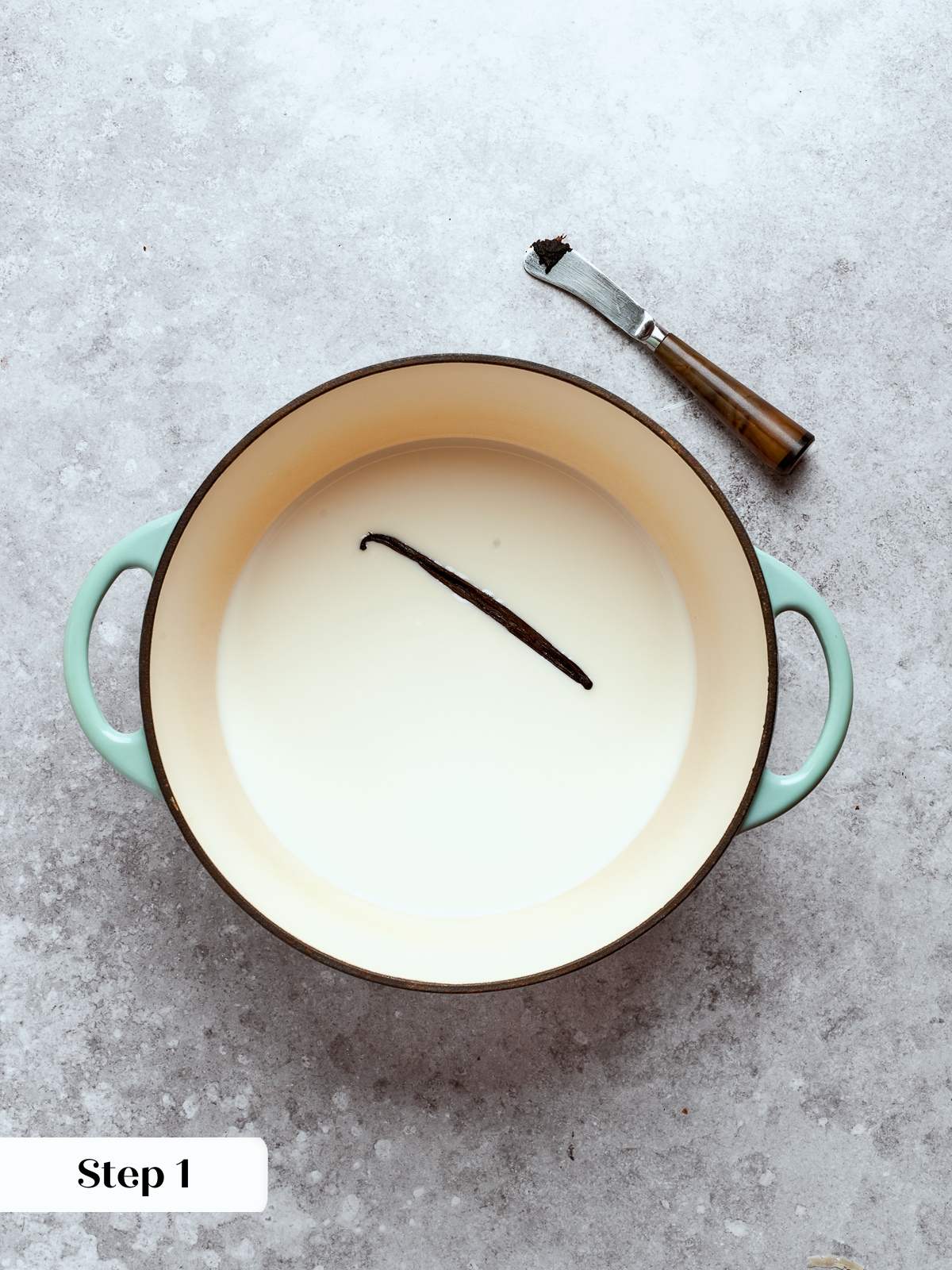
Step 1: Infuse and heat the milk. In a large, high-sided saucepot, combine the milk, vanilla bean pod and seeds, and about half the sugar (photo 1). Stir to combine and bring to a rolling boil over medium-high heat, stirring occasionally until the sugar fully dissolves. The milk will foam up as it approaches a boil, which is completely normal.
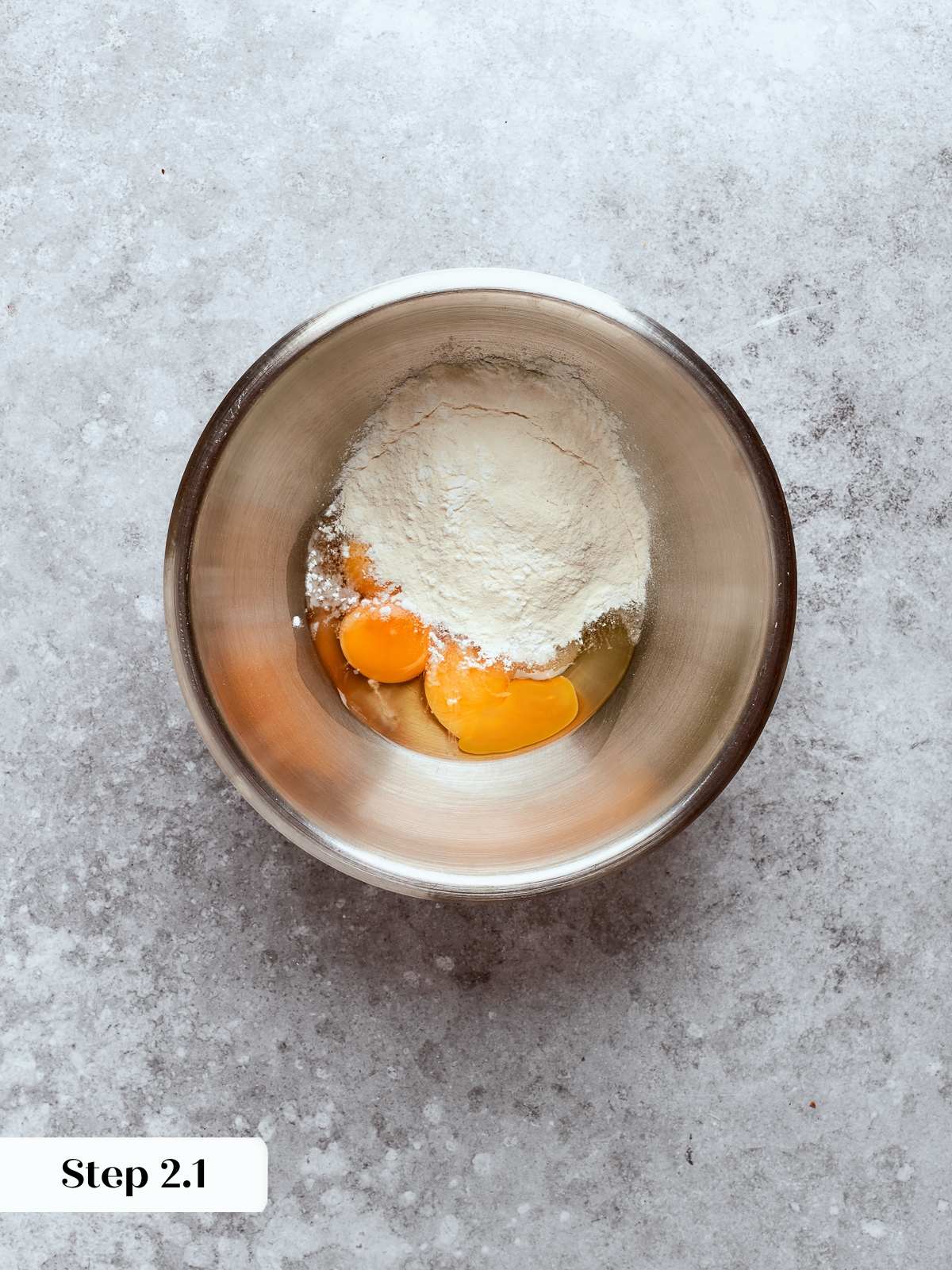
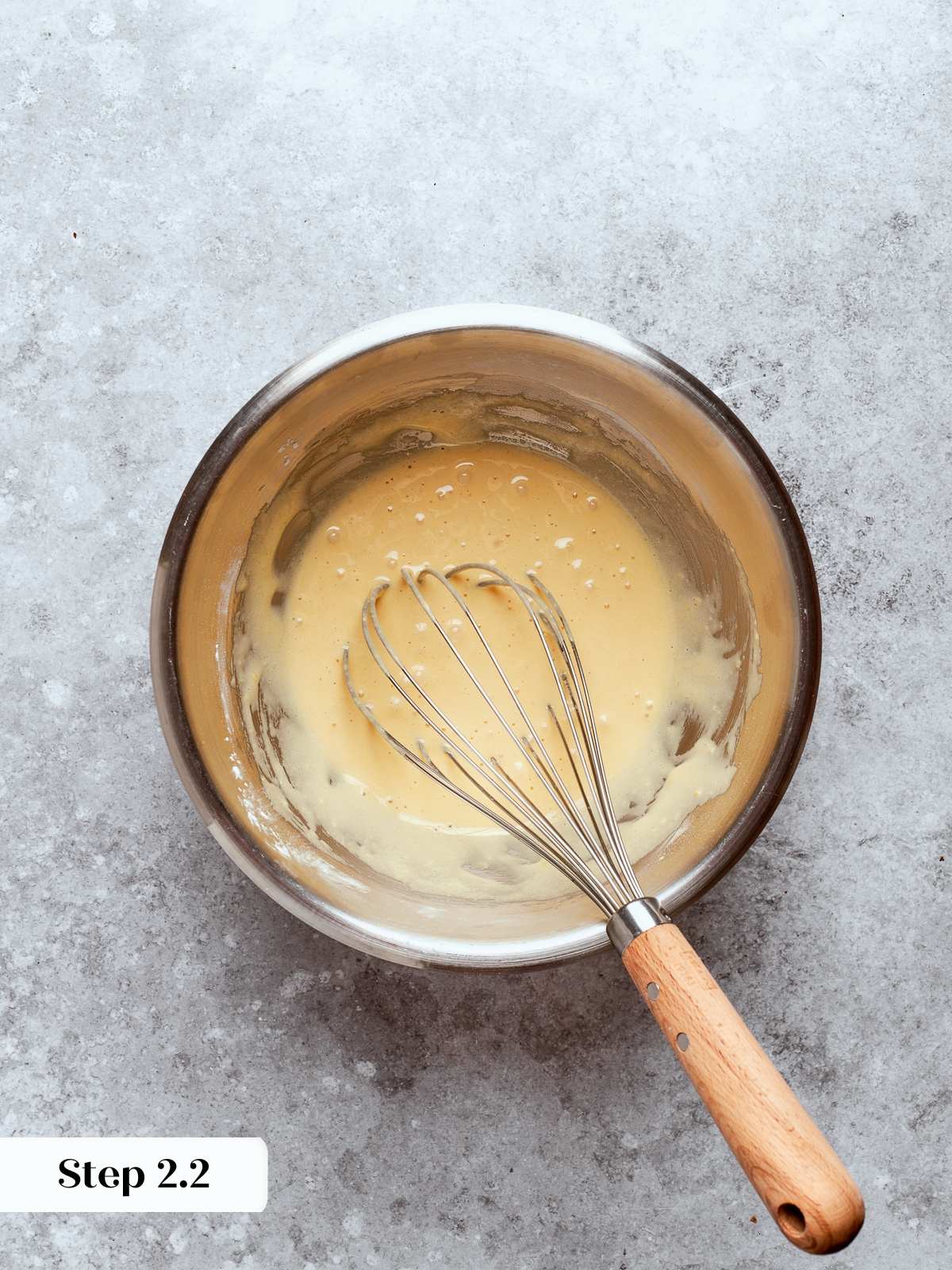
Step 2: Prepare the egg mixture and your workstation. Set a large bowl on a damp paper towel to keep it from sliding, then whisk together the whole egg, egg yolks, cornstarch, and remaining sugar until the mixture lightens to a pale, even yellow (photo 2 & 3). While the milk comes to a boil, line a baking sheet with plastic wrap or parchment paper. You will use this to spread and cool the finished pastry cream quickly.
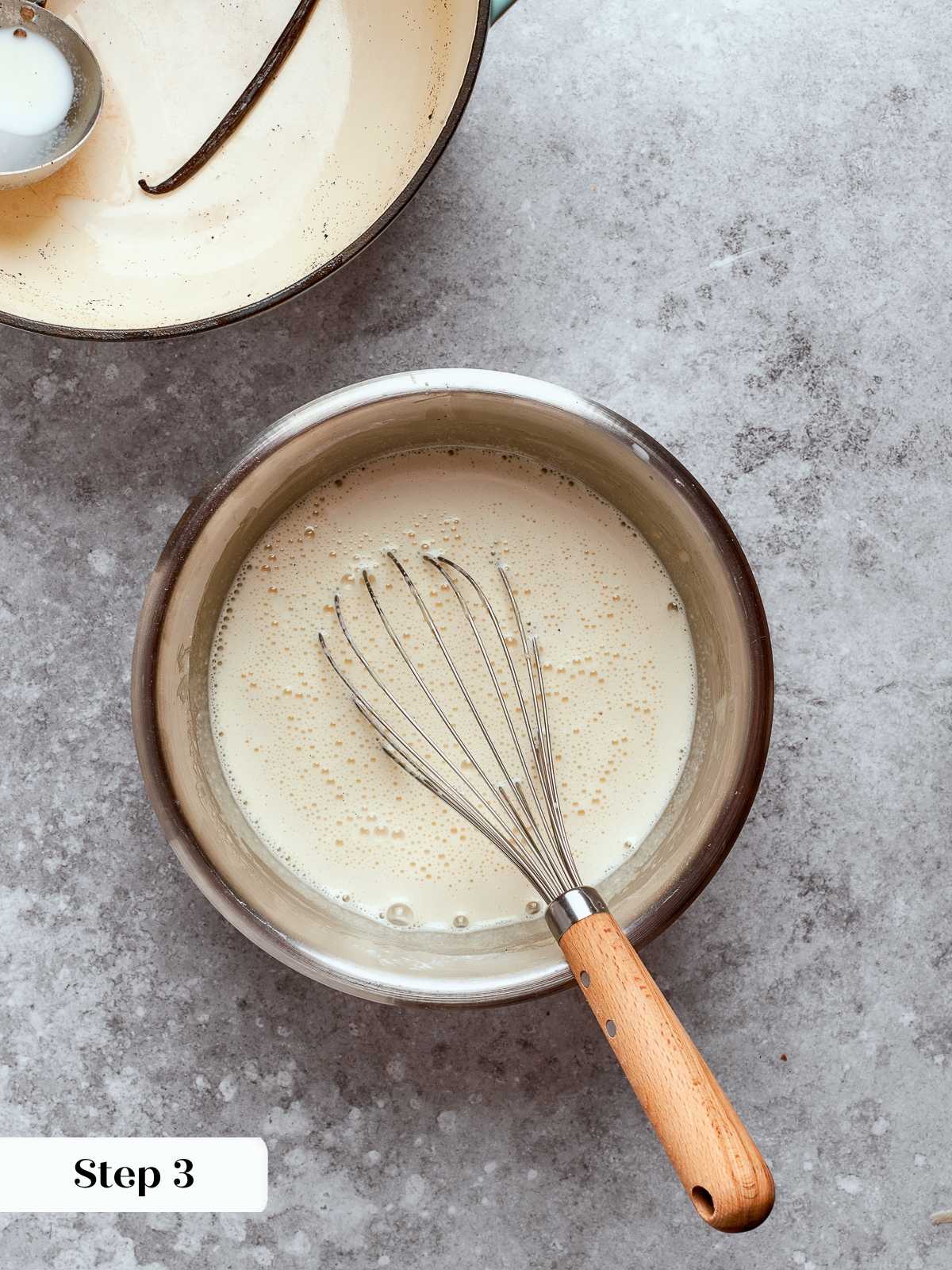
Step 3: Temper the eggs. When the milk reaches a full rolling boil, give the egg mixture one final whisk. Pour a small amount of the hot milk into the egg mixture, whisking constantly. Gradually add more hot milk, whisking the whole time, until you have added about half. Then pour in the remaining milk and whisk vigorously to combine. Moving slowly at first is what keeps the eggs from scrambling: you are raising their temperature gradually before they hit the full heat. (photo 3).
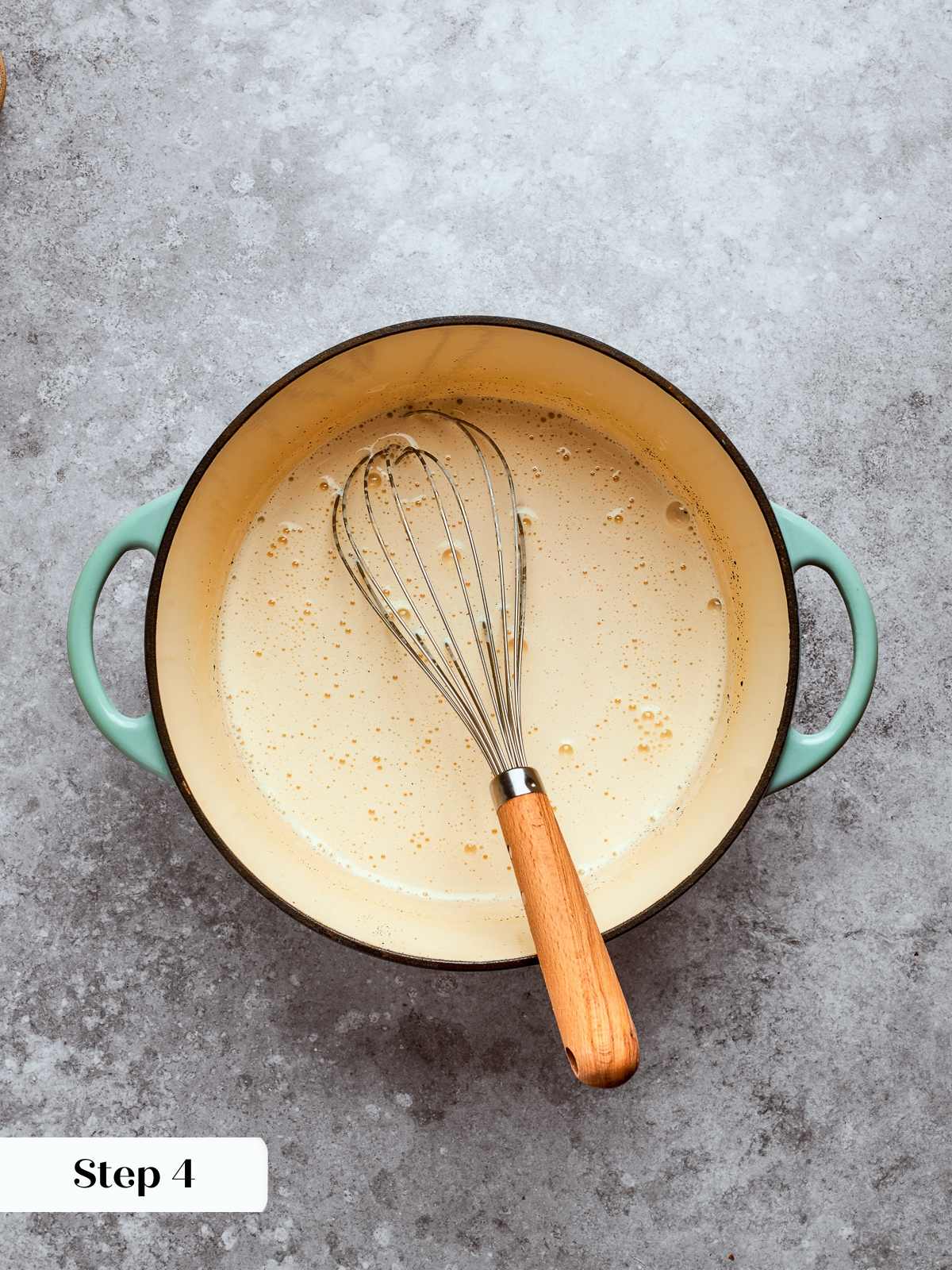
Step 4: Cook the custard base to a boil. Pour the custard base back into the same saucepot and return it to medium-high heat (photo 5). Stir constantly with a silicone spatula, paying close attention to the bottom and edges of the pot. The mixture will look thin and loose for several minutes, then you will feel it start to drag against the spatula as it thickens. The moment it begins to thicken, switch to a whisk.
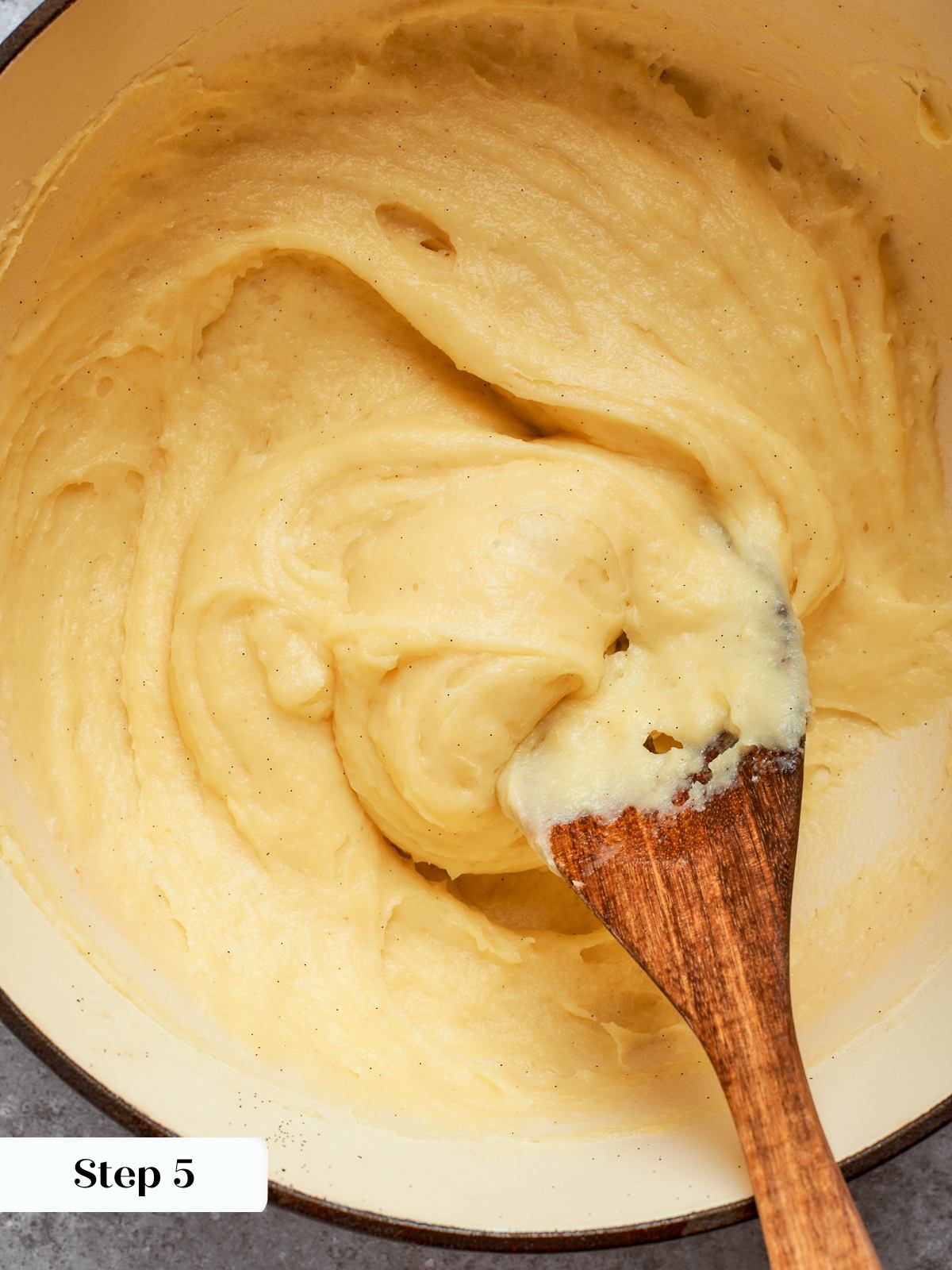
Step 5: Boil the pastry cream for one full minute. Whisk vigorously, making sure to get into the corners of the pot, and bring the pastry cream to a boil. Keep it at a boil for one full minute. This step is not optional: boiling activates the cornstarch fully and eliminates the starchy flavor that undercooked pastry cream always has. The finished cream will be thick, glossy, and hold its shape on the whisk (photo 6).
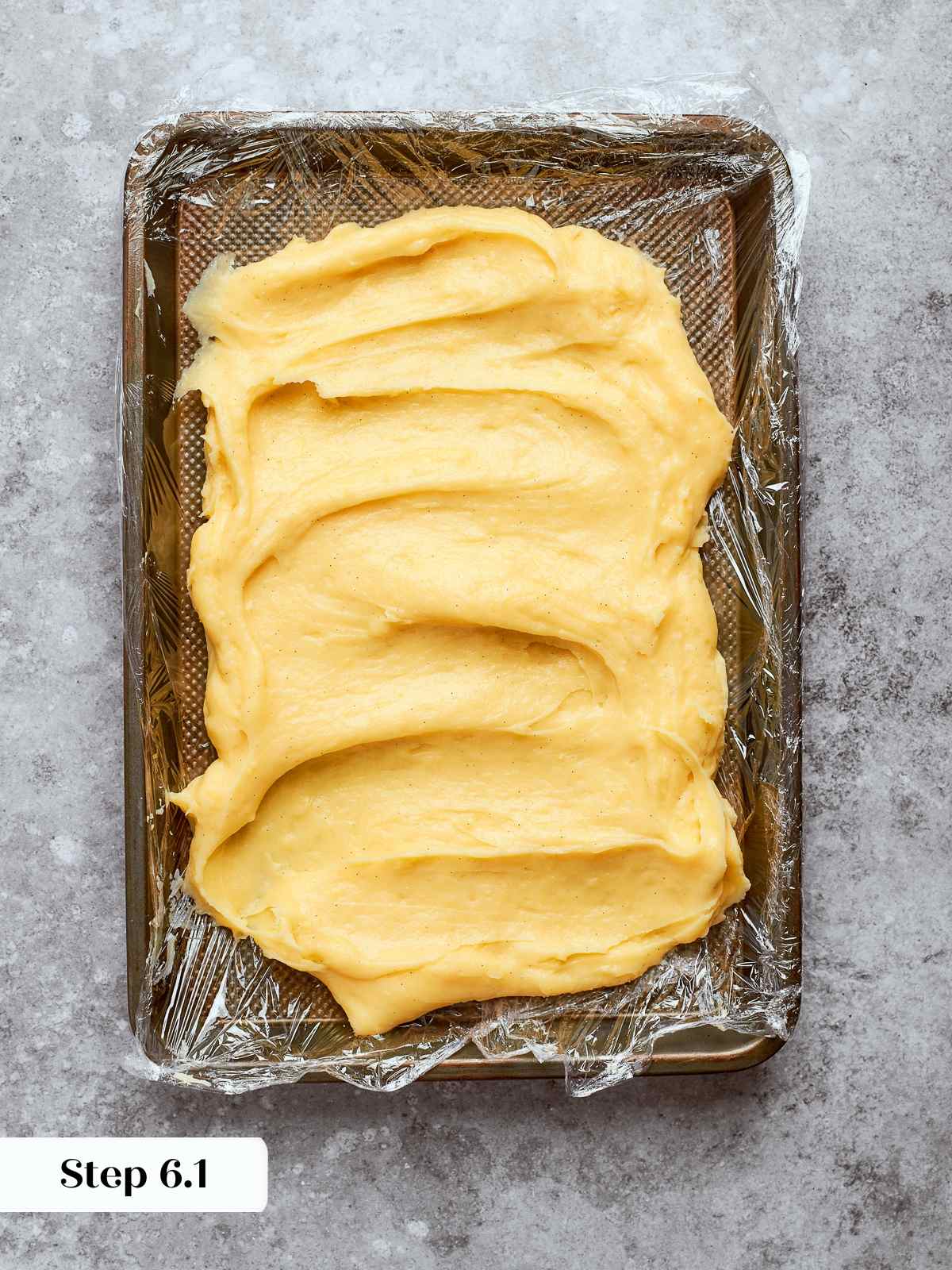
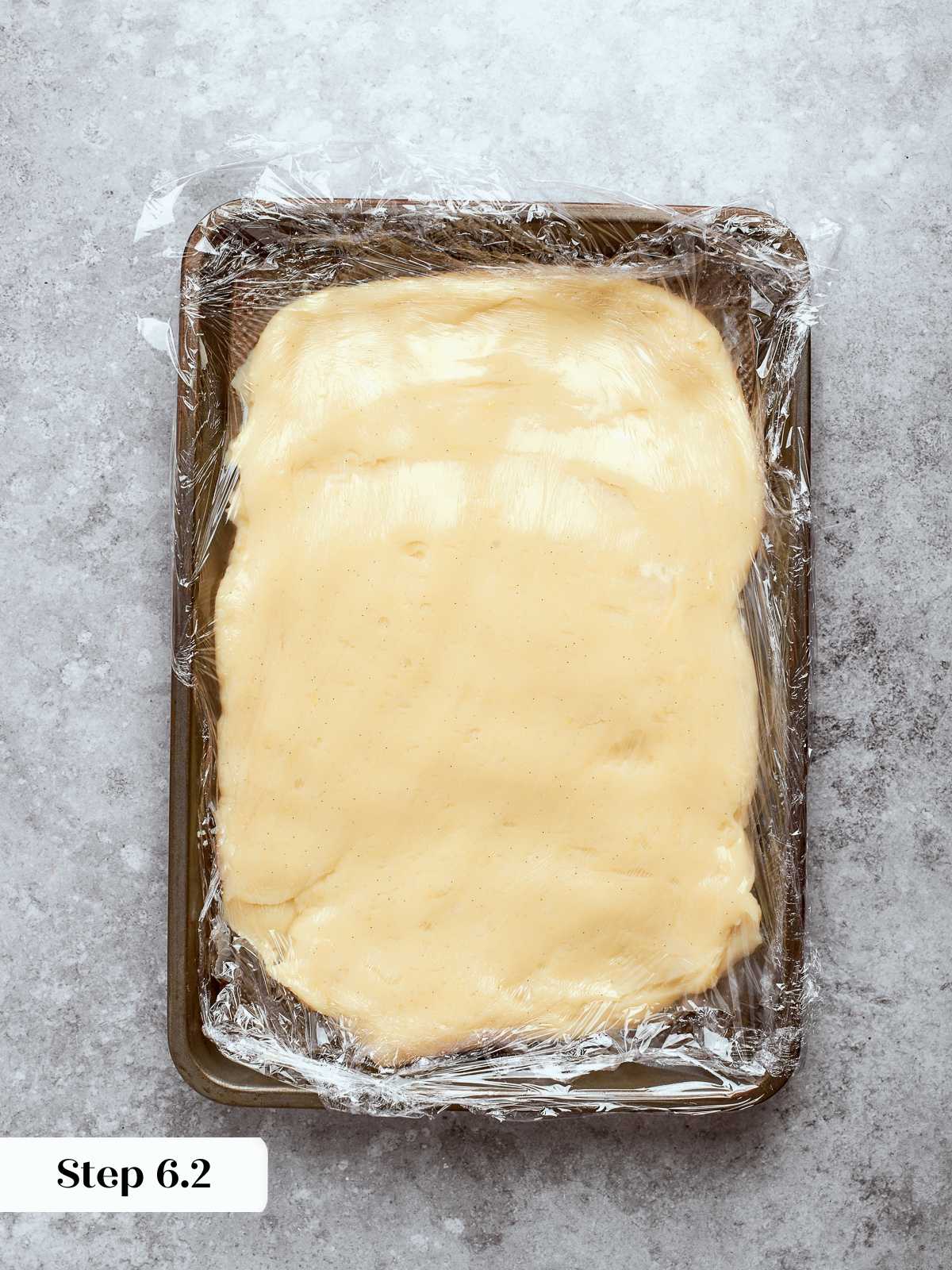
Step 6: Cool the pastry cream. Scrape the hot pastry cream onto your prepared baking sheet and spread it into an even layer (photo 7). Press a piece of plastic wrap directly onto the surface and poke a few holes to let steam escape. Refrigerate until completely cold, at least 1 hour and up to overnight. (photo 8)
Prepare the Choux Pastry
Step 1: Measure and organize all ingredients. Combine the flour, salt, and sugar in a bowl and set it aside. Crack the eggs into a separate container so they are ready to add one at a time. Cube the butter now if you have not already. Cubing the butter helps it melt in sync with the milk coming to a boil (photo 1), so the two happen simultaneously rather than the milk boiling off while you wait for a large cold block to melt.
Step 2: Bring the butter and milk to a boil. In a high-sided, heavy-gauge saucepot, combine the cubed butter and milk over high heat. Watch closely. The goal is for the butter to finish melting exactly as the milk reaches a boil. The moment the milk boils, move to the next step. Do not let it continue boiling. (photo 2).
Step 3: Add the flour mixture and begin the panade. Add the flour, salt, and sugar all at once. Stir carefully at first to bring the mixture together without splashing, then once the flour has absorbed the liquid and the mixture thickens, switch to vigorous stirring to smooth out any lumps. A wooden spoon is the right tool here. It gives you leverage against the thickening dough and is easier to grip than a silicone spatula when the paste starts to resist (photo 3).
Step 4: Cook the panade until it clears the pot. Keep the heat on high and stir constantly. The dough will pull away from the sides of the pot and leave a thin, dry coating on the bottom. That coating is the visual signal that enough water has evaporated from the milk and butter to produce a pipeable choux paste. This usually takes about 2 minutes from the moment the flour goes in. Do not rush it or pull the dough early (photo 4).
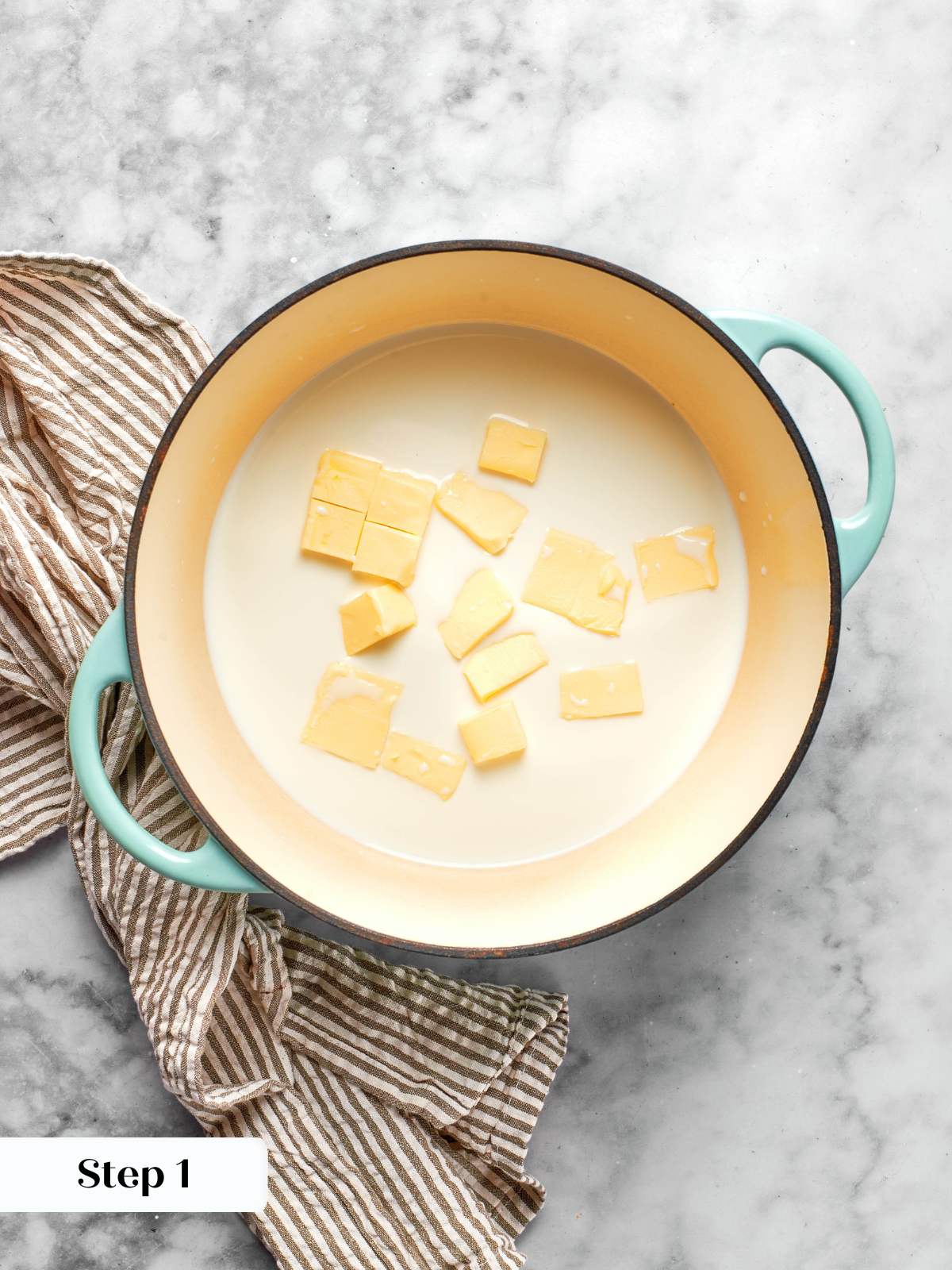
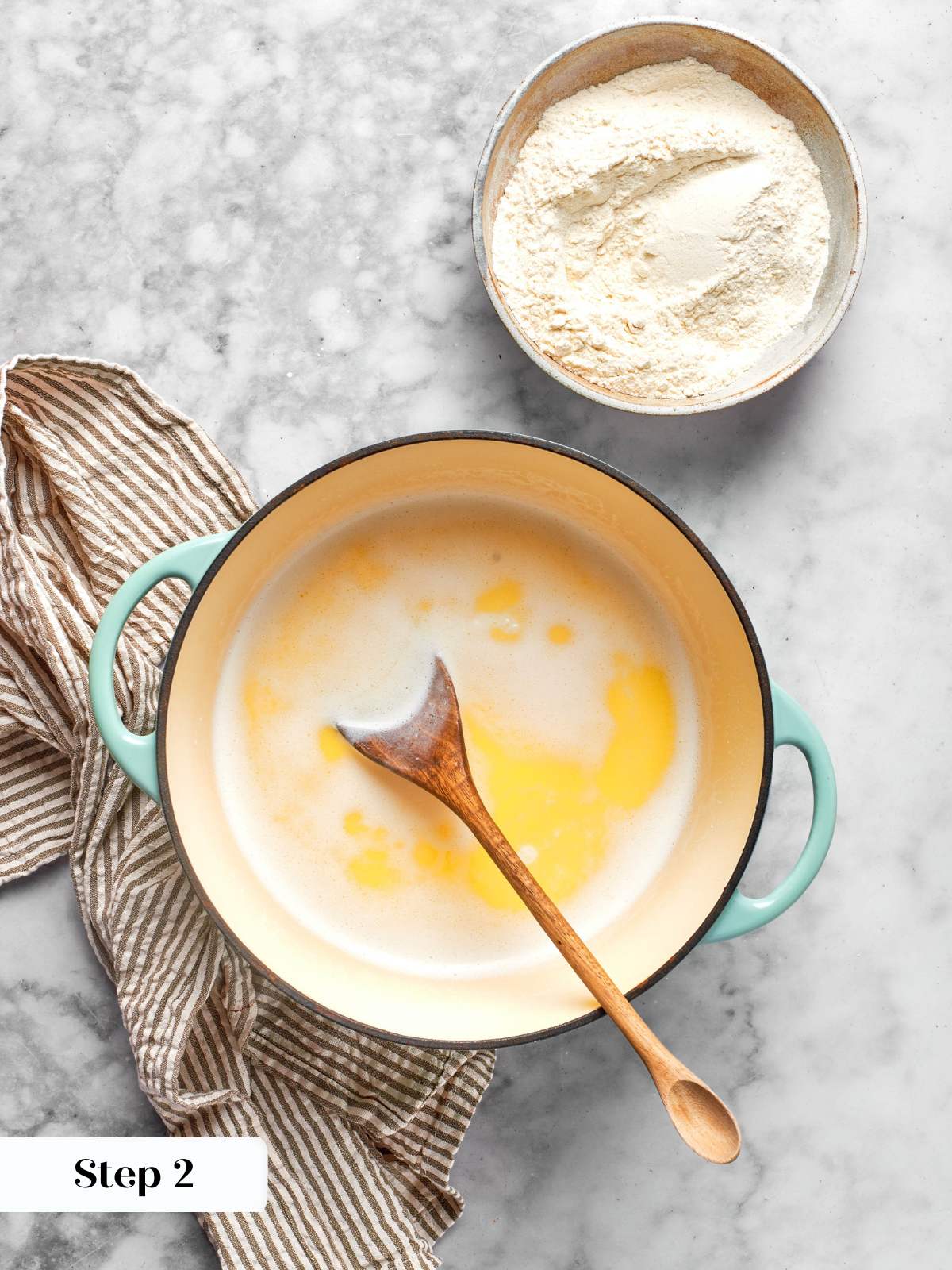
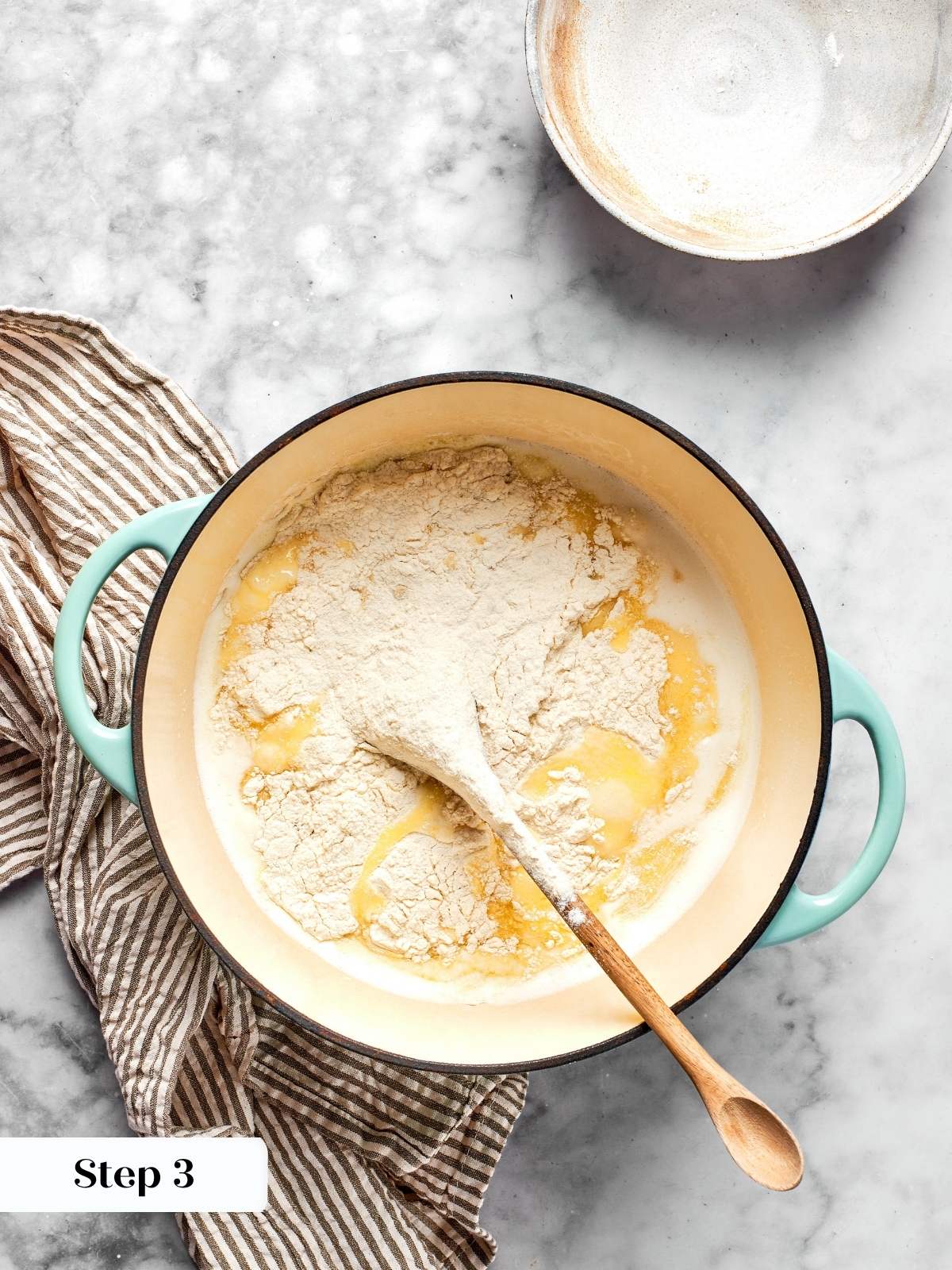
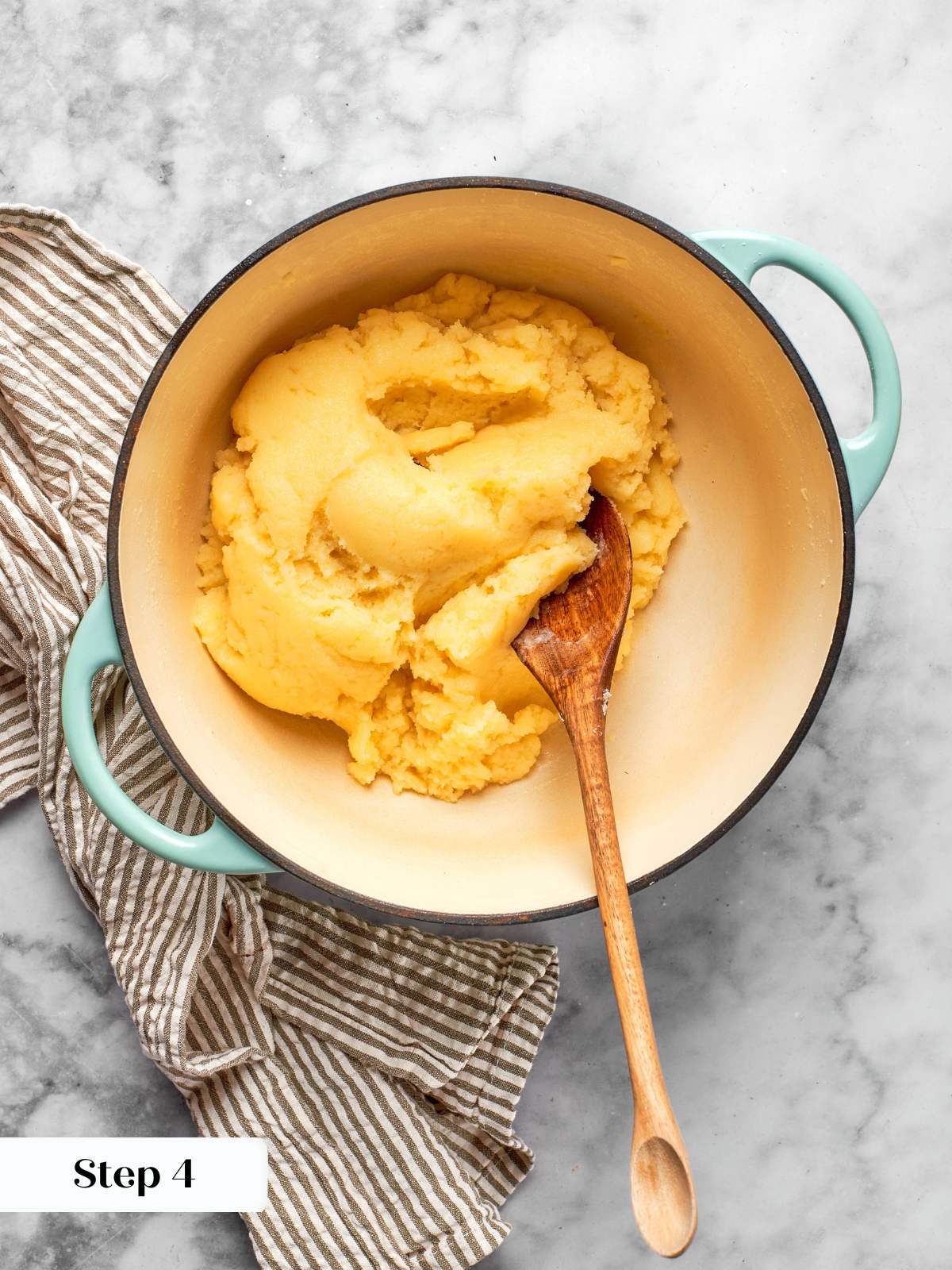
This recipe has a high ratio of butter to milk and flour, which limits how much the paste will stick to the pot. If you notice the butter beginning to melt out of the dough, transfer it to the mixer bowl immediately and continue from Step 5. You will likely need 1 to 1.5 additional eggs.
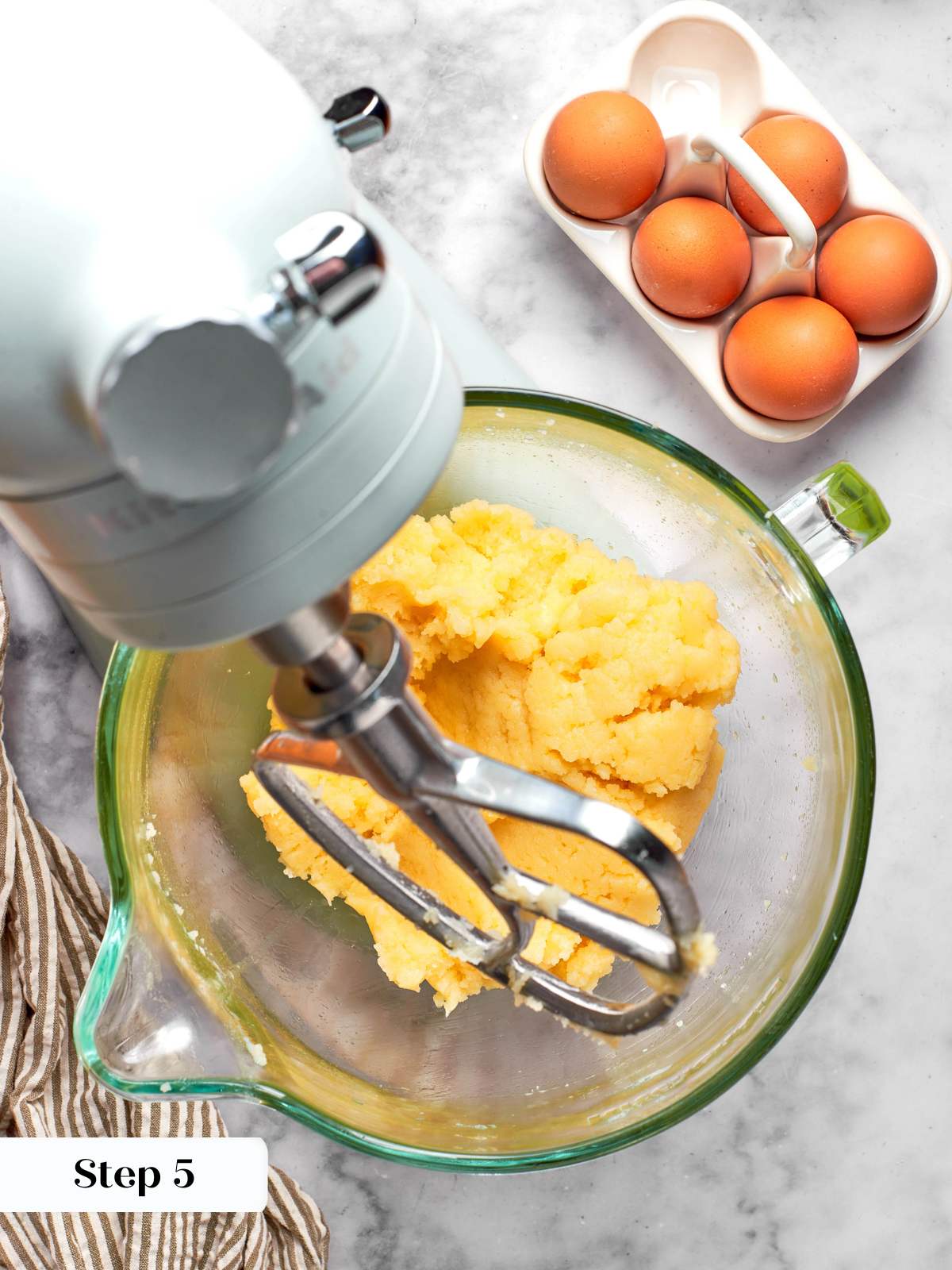
Step 5: Transfer to the stand mixer and release the steam. Move the panade to the bowl of a stand mixer fitted with the paddle attachment. Beat on medium-high. The dough will look rough and steamy at first, which is completely normal. You are not incorporating anything yet. You are letting the steam escape so the mixture cools enough to accept eggs without scrambling them. Wait until the steam stops rising before adding a single egg. (photo 5).
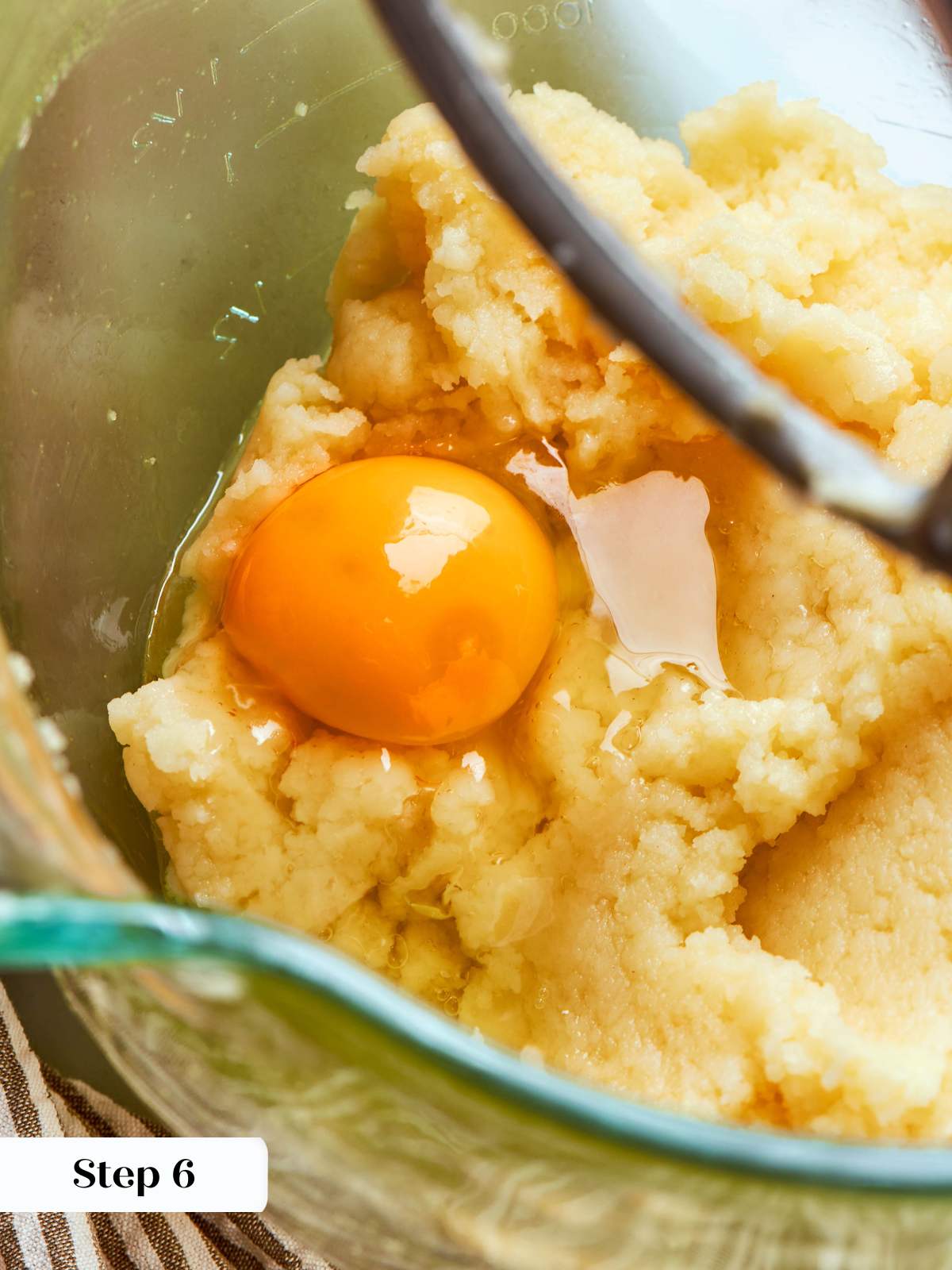
Step 6: Add the eggs one at a time. Once the mixture stops steaming, reduce to medium speed and begin adding the eggs one at a time, letting each egg fully incorporate before adding the next. The dough will look broken and curdled after the first egg or two, and that is fine. It comes back together. Adding eggs to choux paste is similar to the final steps of building Italian meringue buttercream: the interplay between the residual heat of the paste and the added moisture from the eggs determines how the dough develops. If the panade has cooled too much before you start adding eggs, you may need more eggs than the recipe calls for to reach the right consistency, which will alter both the texture and flavor of the finished pastry, which I want you to avoid. (photo 6).
Step 7: Test the choux for doneness. For this particular recipe, I find the trench test to be the most reliable (photo 7). Some of my pastry cooks preferred the hook test or a combination, but using the ribbon test often resulted in them adding too many eggs. There is a section in my choux pastry tutorial post that details each of the 3 tests for doneness.
The cooler the choux, the slower the trench will close. If you are working with refrigerated dough that has been brought back to room temperature, factor that in before adding more egg.
In rare cases you may need to add more egg than the recipe specifies. Beat an additional egg separately and add it in small additions (part of an egg), testing the dough after each addition. At the upper end, you should need no more than half an additional egg for a standard single batch.
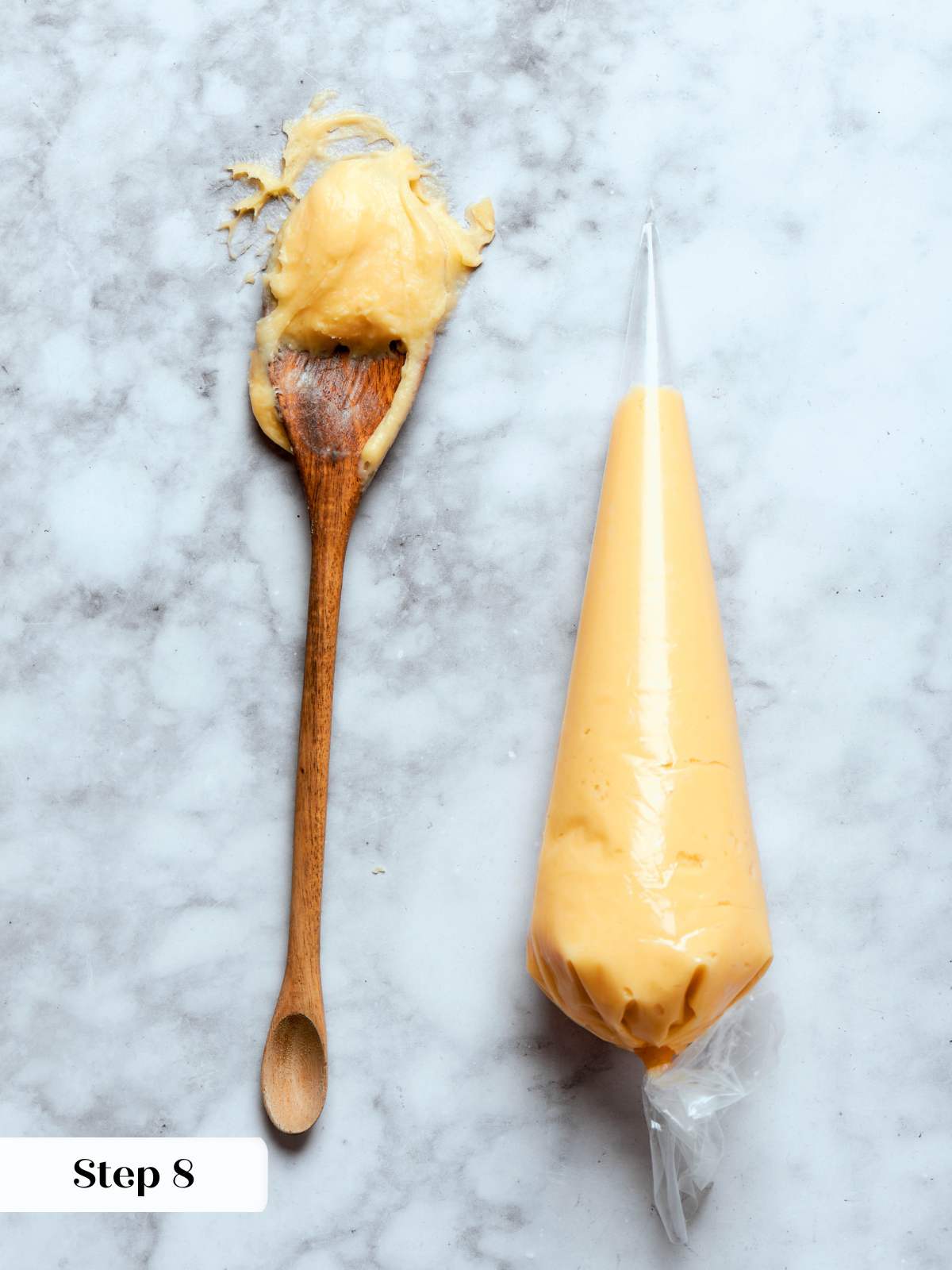
Step 8: Transfer to piping bags. Transfer the dough to piping bags (photo 8). You can pipe immediately or refrigerate the filled bags for up to 3 days. The paste will begin to spot and discolor over time in the refrigerator, which is normal.
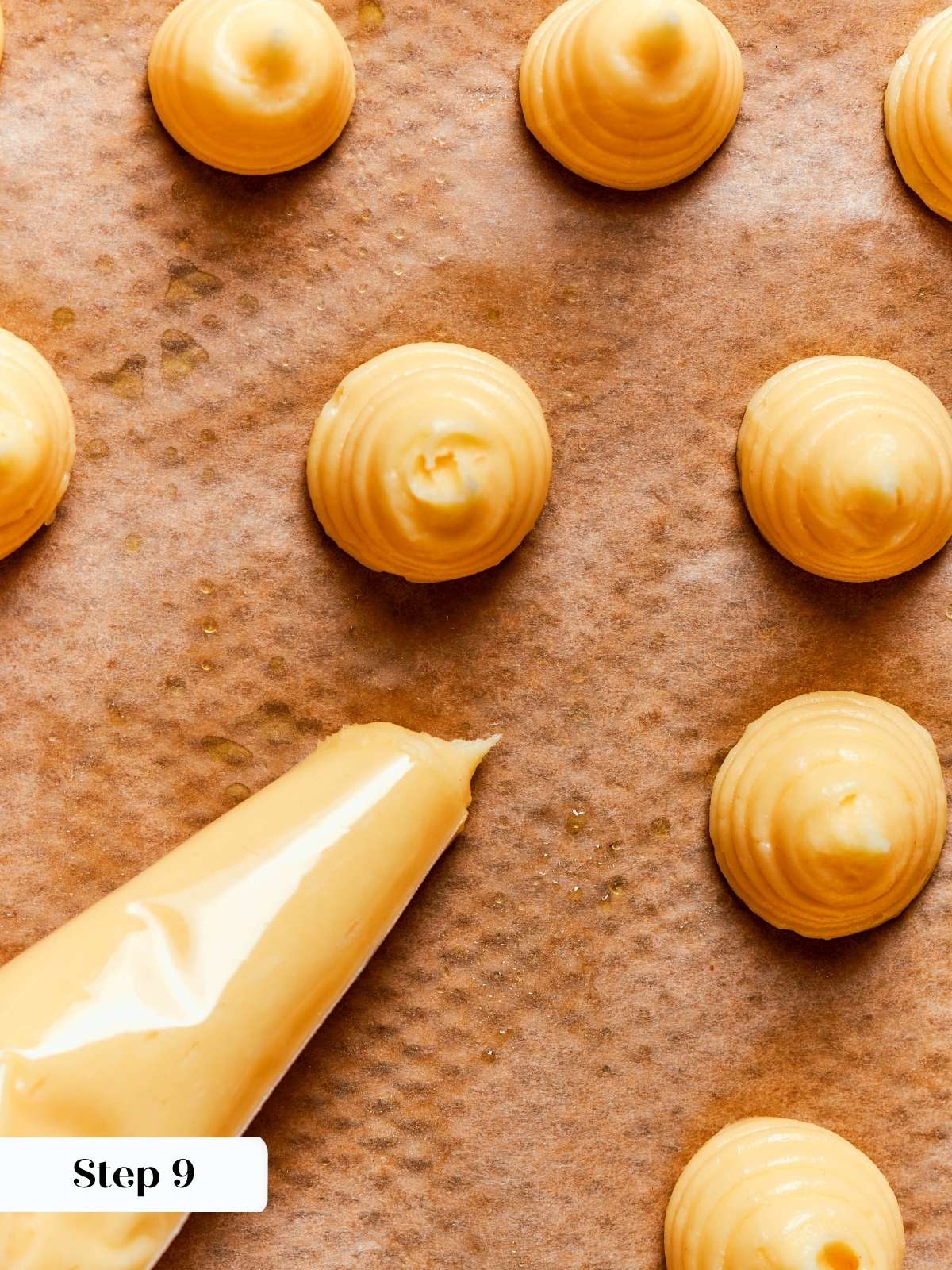
Step 9: Pipe the choux onto prepared baking sheets. Pipe your shapes at an even, consistent pressure. For standard cream puffs and éclairs, no pastry tip is necessary. A straight-cut piping bag gives you clean results without the added variable of a tip size affecting your flow. Space the pieces with enough room to expand (photos 9).
If you are working with refrigerated dough, allow it to temper at room temperature for an hour before piping.
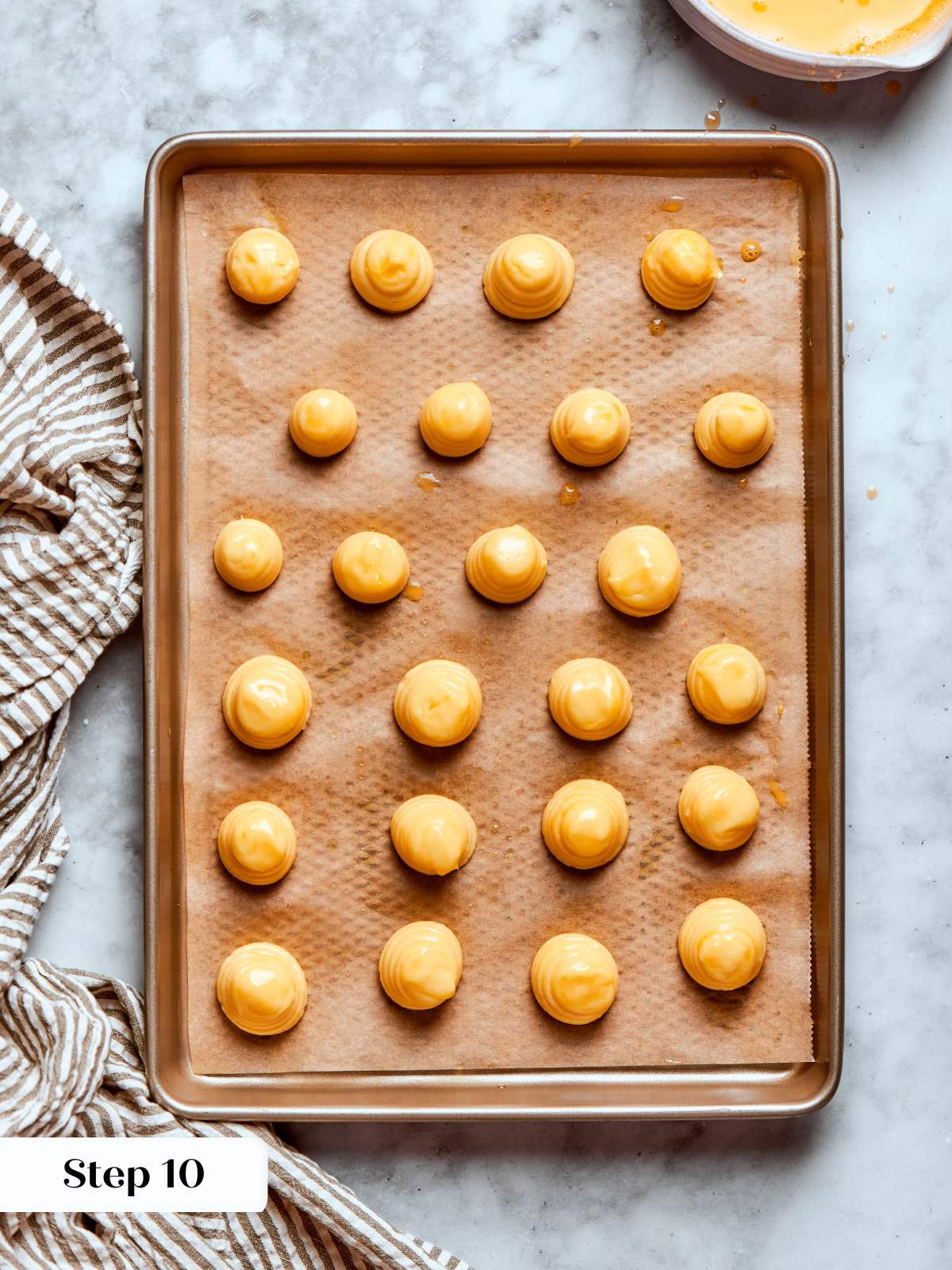
Step 10: Egg wash piped choux. Use a pastry brush to brush the tops of the piped choux with beaten egg (photo 10). If you have any egg left from making the dough, that is perfect! You can use this opportunity to reshape any choux that have points. Nothing gives away a novice baker like a browned point on a gougère or profiterole!
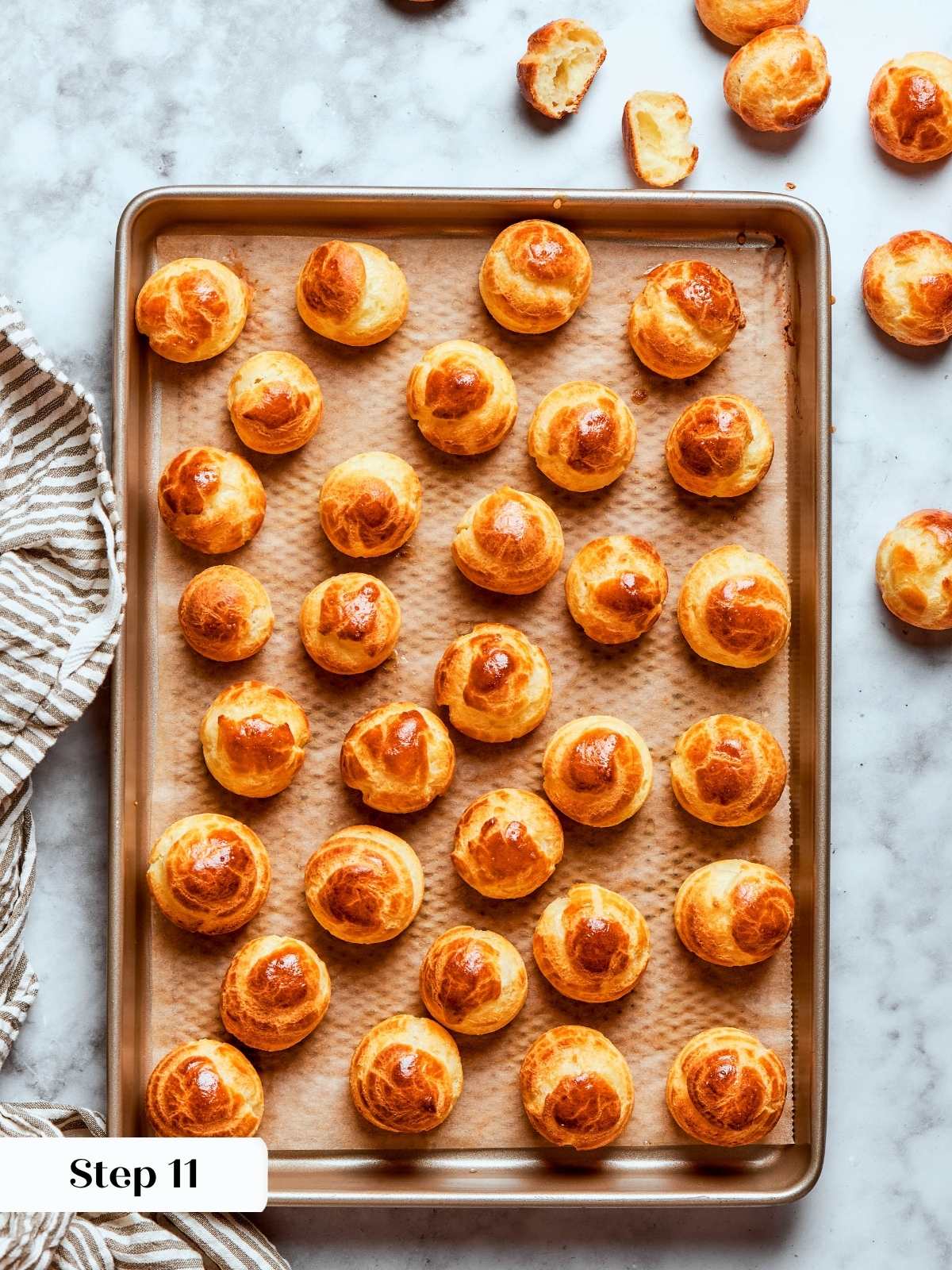
Step 11: Bake at 350°F convection or 375°F conventional. Bake time will vary depending on the size and shape of your piped choux. Do not open the oven door during the first two-thirds of baking. The shells need the sustained heat and trapped steam to rise fully before the structure sets. Once the shells are deeply golden and feel hollow and rigid when you tap them, they are done. A shell that gives slightly when pressed needs more time. (photo 10).
Step 12: Cool and vent the cream puffs. Remove the baked cream puffs from the oven and let them cool completely on the pan. As soon as they come out, poke a small hole in the bottom of each one with a small piping tip. This vents any trapped steam as they cool and creates the opening you will use for filling. Skipping this step can leave the interior gummy. (photo 11).
Prepare Crème Légère & Fill
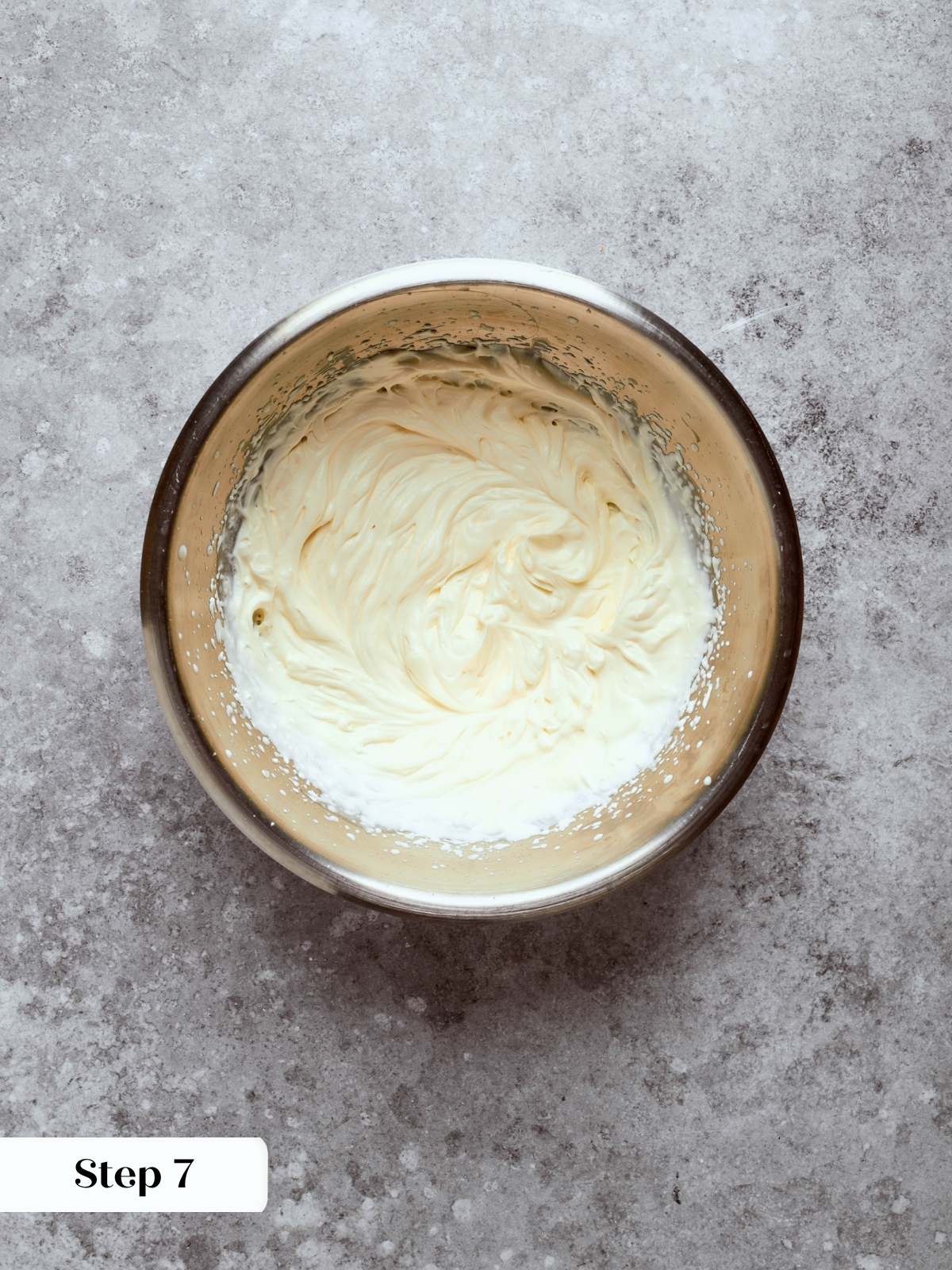
Step 1: Whip the cream to soft peaks. In the bowl of a stand mixer fitted with the whisk attachment, combine the heavy cream, powdered sugar, and vanilla extract. Whip on high speed until soft peaks form: peaks that stand up and then flop over immediately. You want them just barely holding structure, not stiff. Transfer the whipped cream to a clean bowl and set aside. (photo 1 below).
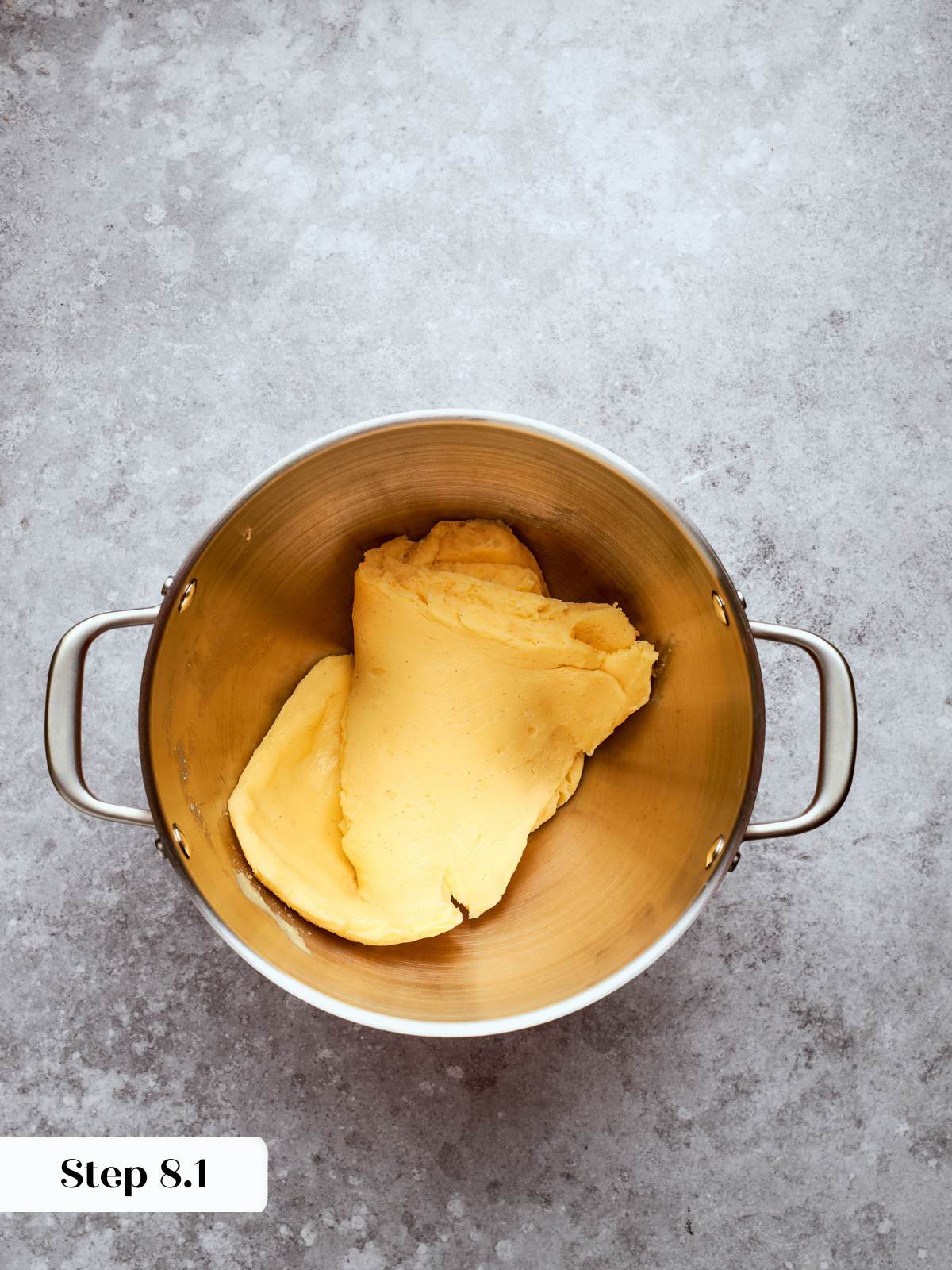
Step 8: Smooth the pastry cream. Remove the vanilla bean pod from the chilled pastry cream. Add the pastry cream to the stand mixer bowl and fit the mixer with the paddle attachment, a scraper paddle if you have one. Beat on medium-high speed until the pastry cream becomes completely smooth and looks like a thick, flowing batter. Cold pastry cream can be stiff and lumpy straight from the refrigerator, and this step is what brings it back to a workable consistency. (photo 2 & 3 below).
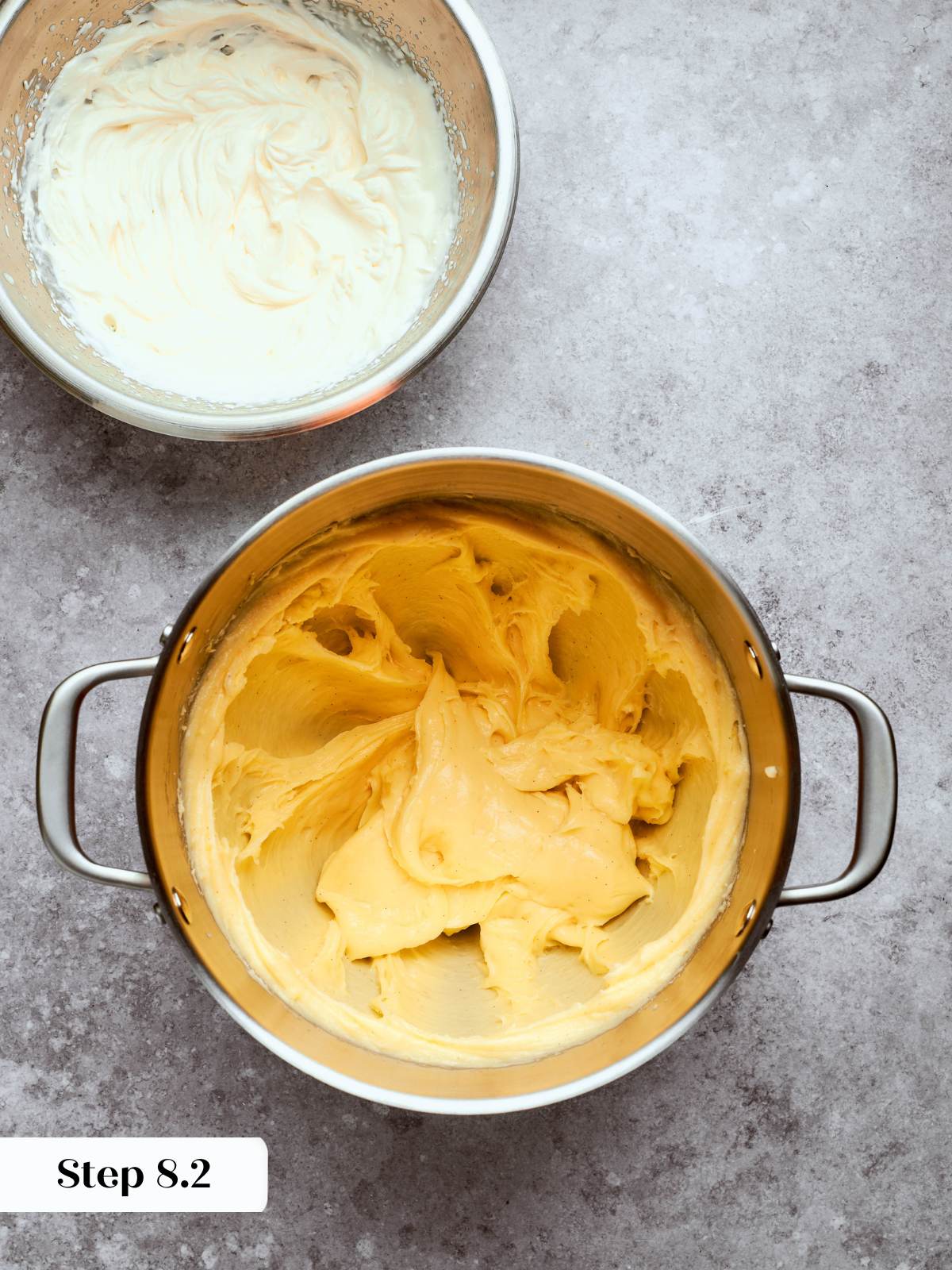
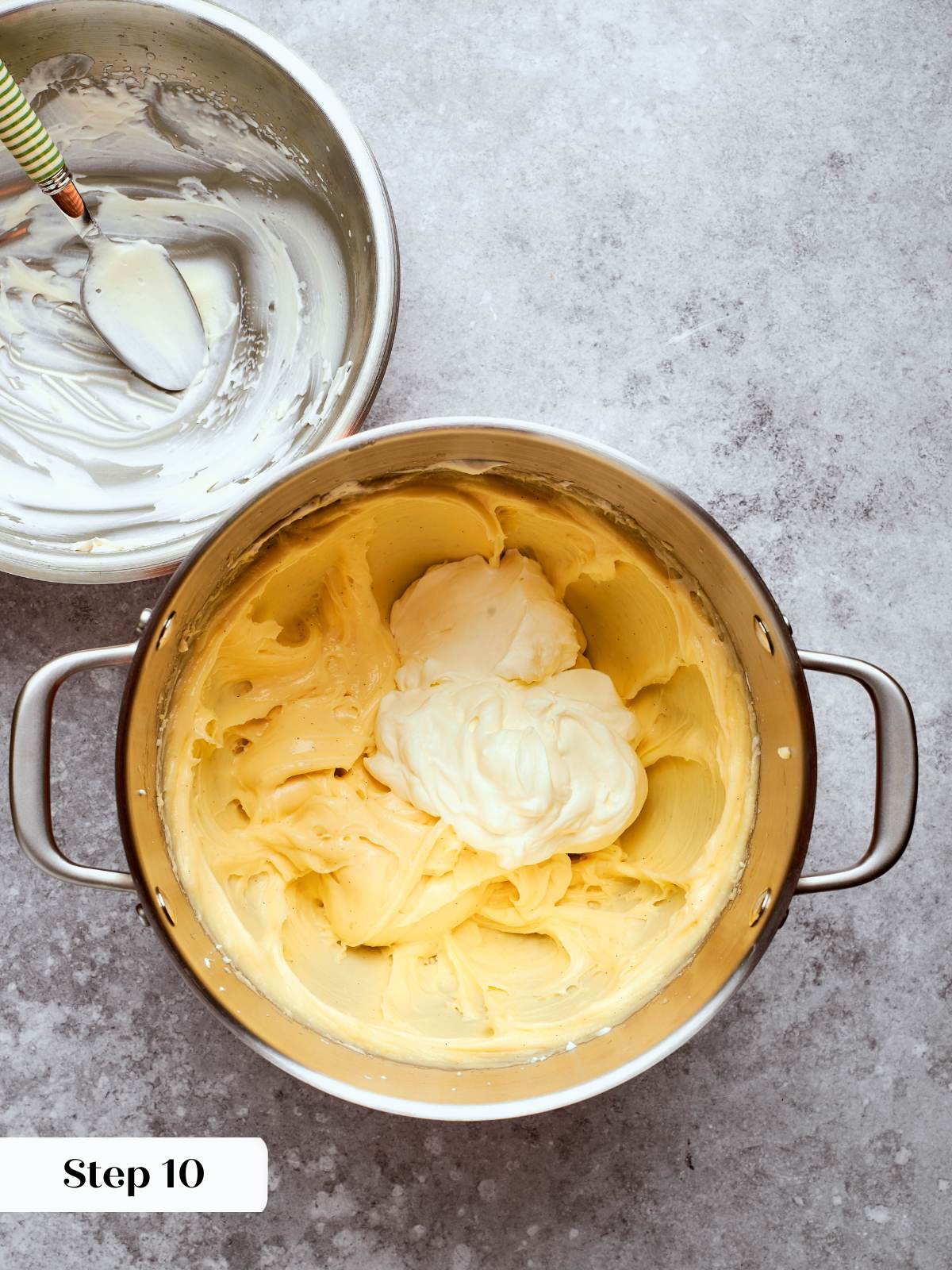
Step 9: Sacrifice a third of the whipped cream. Fold about one third of the whipped cream into the pastry cream aggressively, using a spatula with full strokes. This is called “sacrificing”: you are intentionally deflating some of the whipped cream to loosen the pastry cream base.
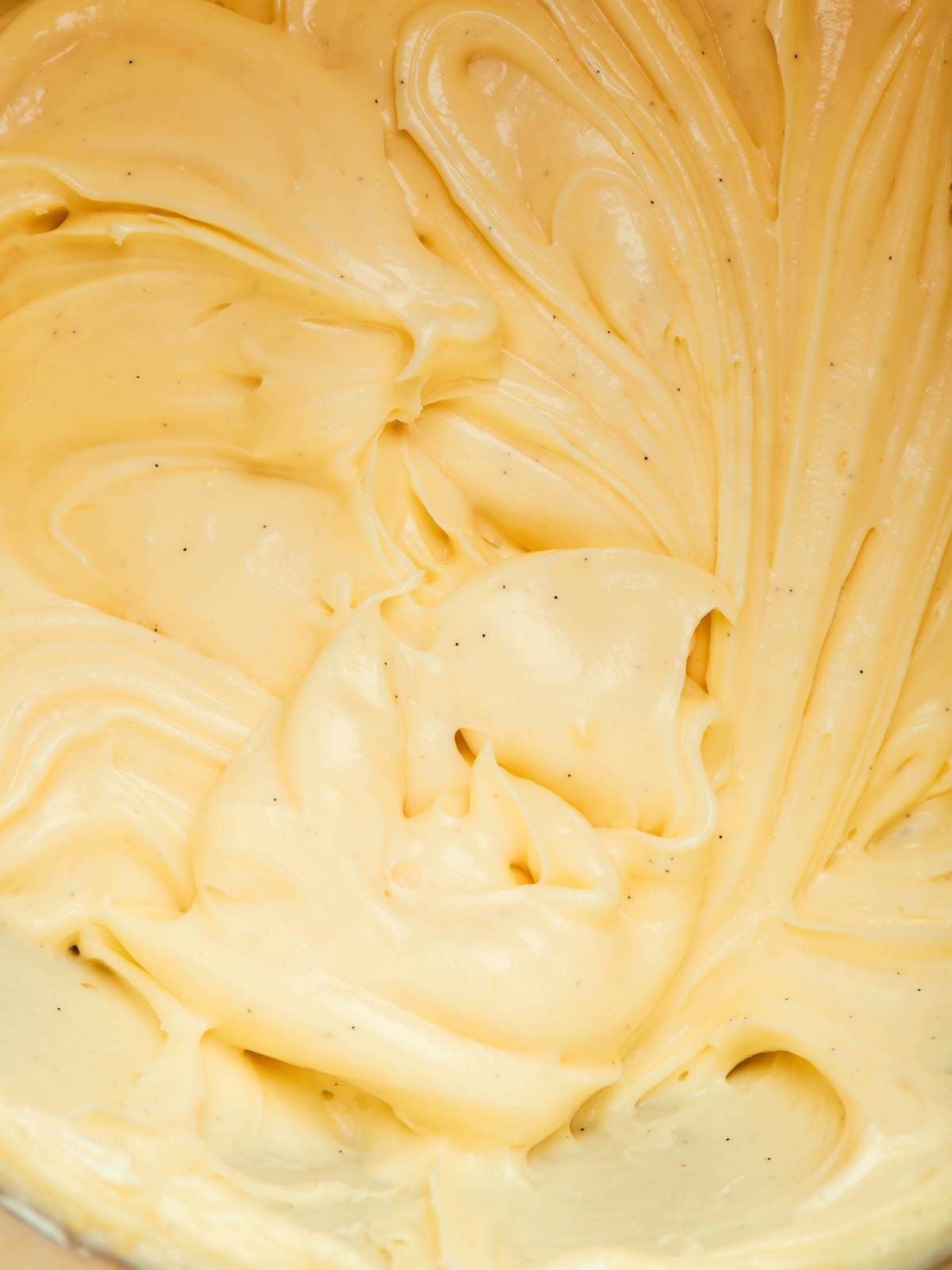
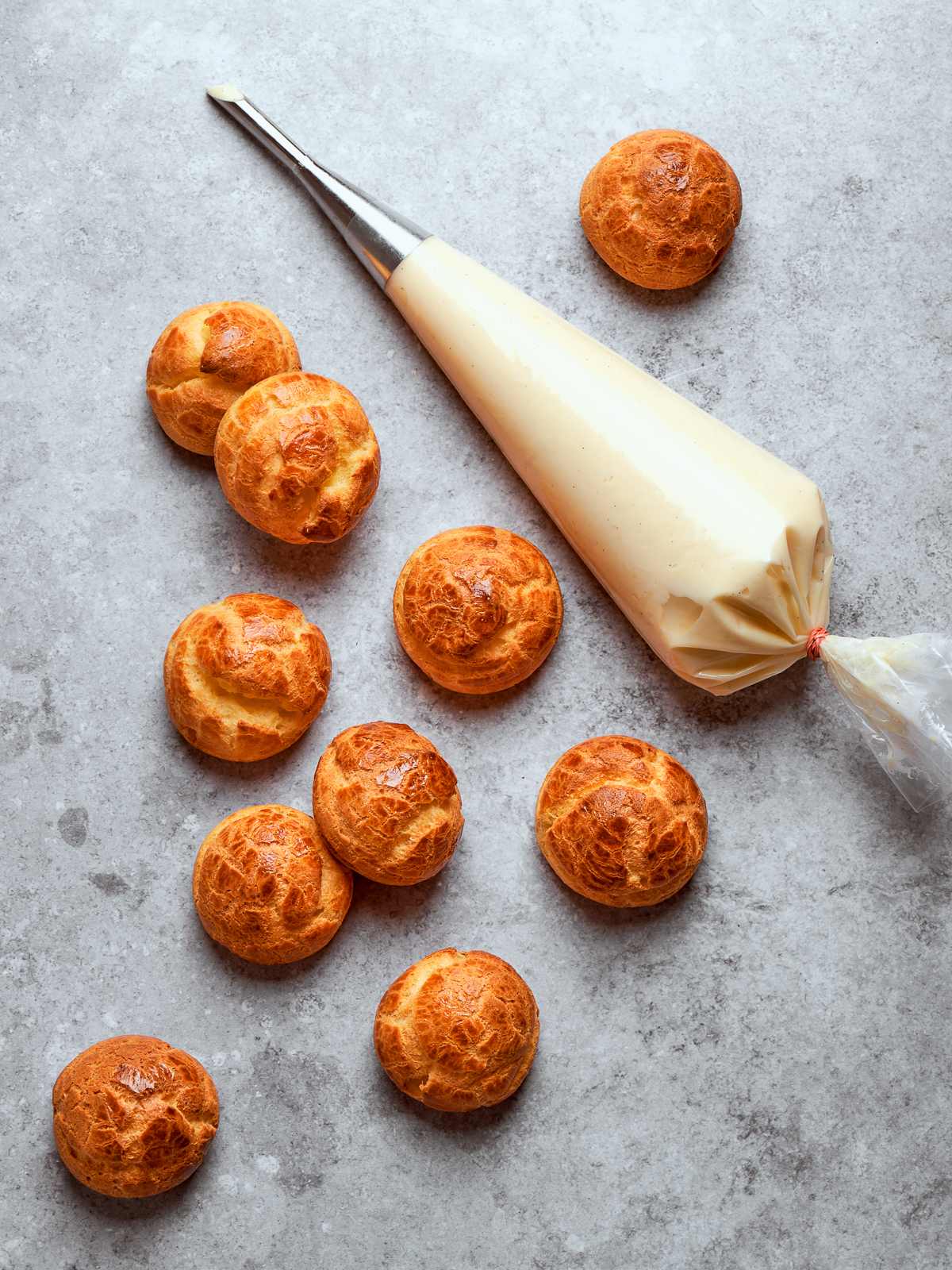
Step 10: Fold in the remaining whipped cream. Add the rest of the whipped cream to the loosened pastry cream base and fold gently to combine, using wide, sweeping strokes from the bottom of the bowl up and over the top. Stop the moment the mixture looks smooth and uniform. The finished crème légère should be light, airy, and just thick enough to hold its shape when spooned or piped. Transfer to a piping bag or leave in the bowl, and refrigerate until ready to use. (photo 4, 5 & 6 above).
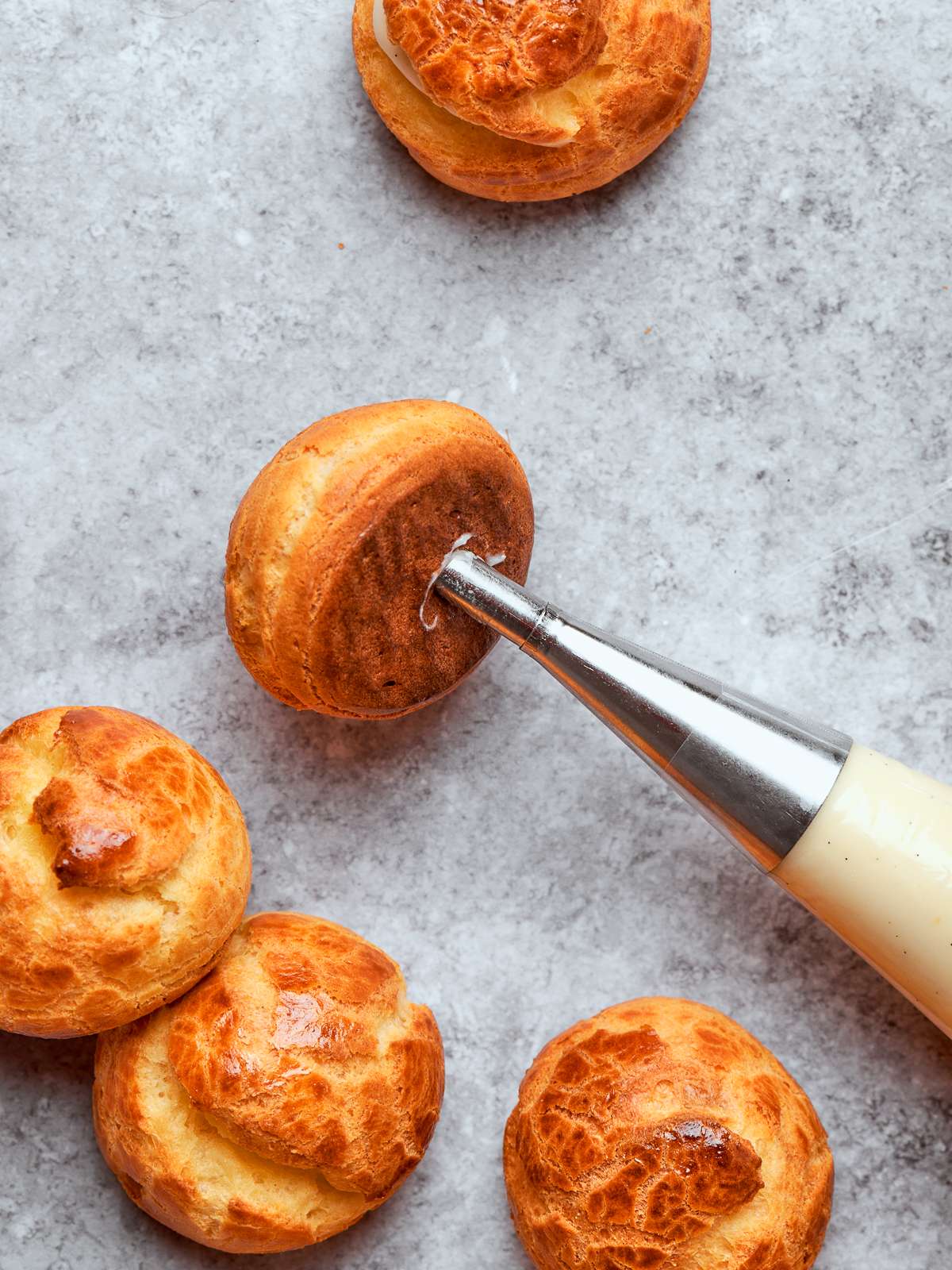
Step 11: Fill the puffs. Transfer the filling to a piping bag fitted with a small round tip. Use a paring knife to make a small hole in the bottom of each shell, or slice each puff in half horizontally if you prefer. Pipe the filling in through the hole until you feel resistance and a little filling begins to press back, which tells you the shell is full. If you sliced the shells, pipe or spoon a generous mound of filling onto the bottom half before replacing the top. (photo 18).
Step 19: Top and serve. Dust the filled puffs generously with powdered sugar just before serving, or dip the tops in melted chocolate and set them on a rack until the coating is firm. Cream puffs are best served the day they are filled, within a few hours of assembly, so the shells stay light and crisp against the cool filling. (photo 19).
Chef Lindsey’s Recipe Tip
The single most important thing to understand about cream puffs is that the choux paste is a living variable, not a fixed formula. The number of eggs you add will shift depending on the size of your eggs, the humidity in your kitchen, and how thoroughly you cooked the panade. Trust the consistency tests over the ingredient quantities: when the paste holds a trench, forms a ribbon, and hangs in a hook from the spoon, it is ready. No earlier, no later.
Recipe FAQs
The shells should be deep golden brown all over, not just on the peaks. If you pull them too early, the steam trapped inside will cause them to collapse as they cool.
Yes, there are several points where you can work ahead. Choux paste stores well in a piping bag in the refrigerator for up to 3 days, and piped, egg-washed unbaked puffs can be refrigerated for up to 3 days or frozen for 1 month and baked directly from cold. Unfilled baked shells freeze well for up to 1 month and can be refreshed in a 350°F oven until crisp before cooling and filling.
Filled cream puffs can be refrigerated for up to 3 days, but the pastry cream softens the shell over time. I prefer the texture of a freshly filled puff, so I bake the shells ahead and fill them as close to serving as possible. Store any unfilled shells in the freezer rather than at room temperature to preserve their crispness.
The most common cause is an undercooked panade, which leaves too much moisture in the paste and prevents the shells from building structure in the oven. Adding too many eggs without testing the dough at each stage is the second most frequent issue: once the paste is too loose, you cannot correct it. Use one of the three consistency tests described in my pate a choux tutorial.
Four centimeters is the target for standard cream puffs. At that size the shells bake through evenly at 350°F convection or 375°F conventional in 20 to 23 minutes without the exterior overbaking before the center sets. Puffs larger than 5 centimeters require a vent hole and additional baking time, and I find the tradeoff for doneness is not worth it beyond that size.
Puffs piped too close together trap steam between them as they bake, which keeps the sides soft and prevents the crisp exterior that makes a cream puff worth eating. Give each puff enough room to expand fully without touching its neighbor. This spacing is just as important as the piping itself for getting that hollow, crisp shell.
More French Recipes to Love
Dessert Recipes
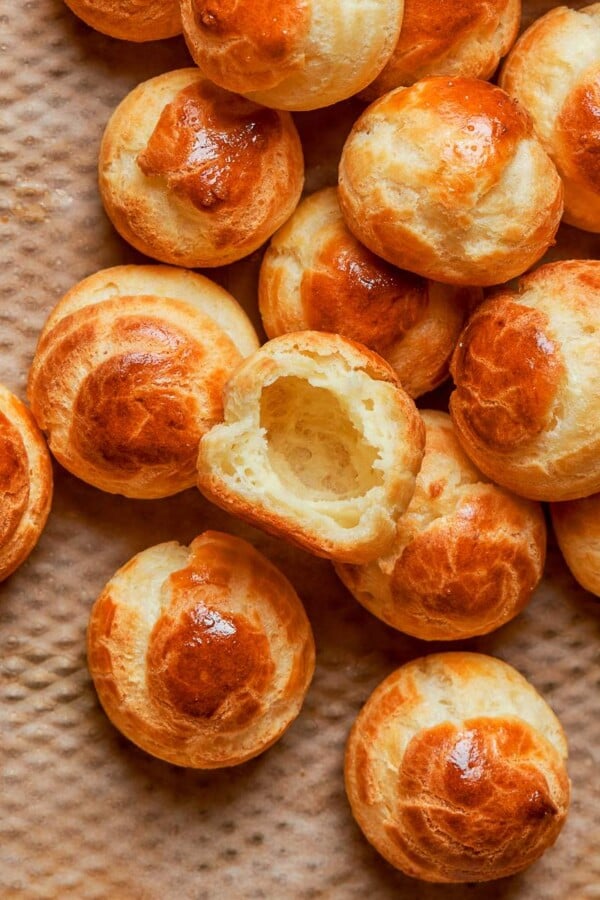
Choux Pastry (Pâte à choux)
Custard Recipes
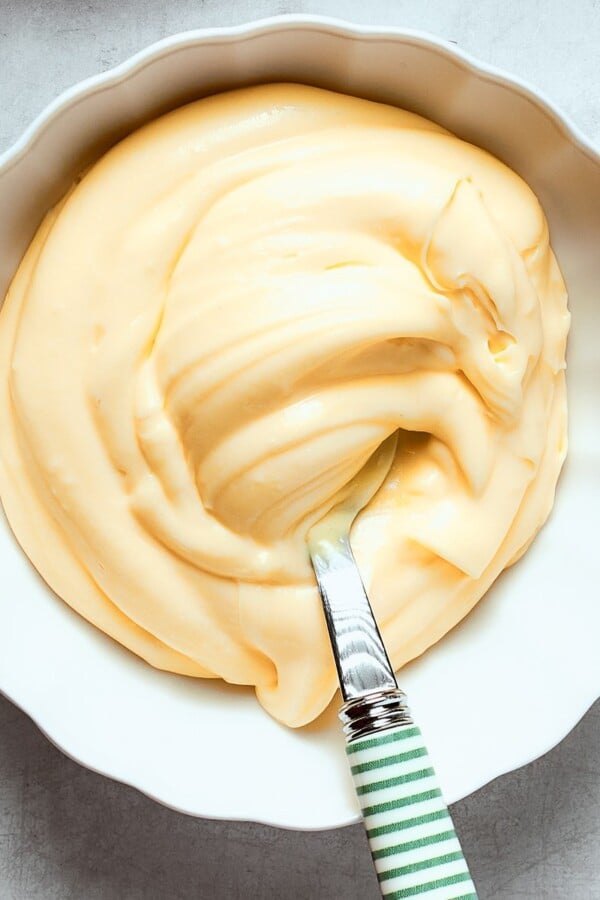
Pastry Cream Recipe (Crème Pâtissière)
Pies and Tart Recipes
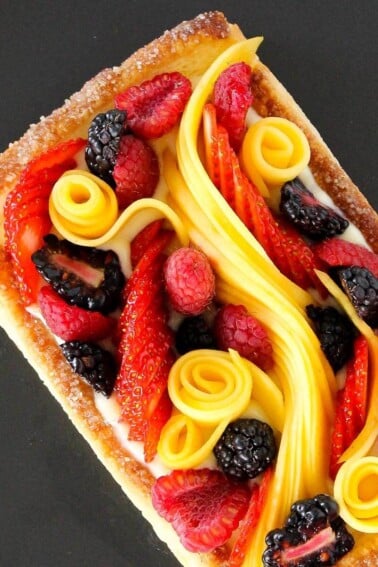
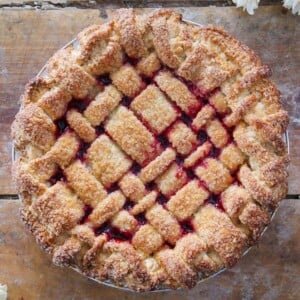
Puff Pastry Fruit Tart
Dessert Recipes
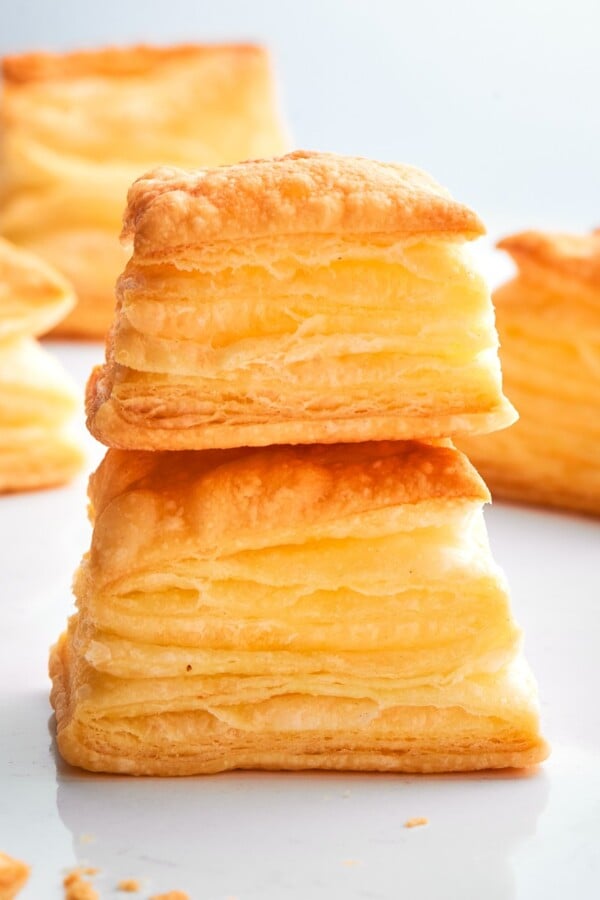
Puff Pastry Recipe
If you tried this recipe and loved it please leave a 🌟 star rating and let me know how it goes in the comments below. I love hearing from you; your comments make my day!
Cream Puffs
Ingredients
For the Pastry Cream
- 2 cups whole milk
- ½ vanilla bean split and seeded
- ½ cup granulated sugar divided
- 1 large egg
- 2 egg yolks
- ¼ cup cornstarch
For the Crème Légère
- 1 cup heavy whipping cream
- 2 tablespoons powdered sugar
- ½ teaspoon vanilla extract
For the Choux Pastry
- 1 cup unsalted butter cubed
- 2 cups whole milk
- 2 cups all-purpose flour
- 1 ¼ teaspoons kosher salt
- 1 teaspoon granulated sugar
- 5 large eggs variable quantity
- Powdered sugar for dusting
Instructions
- Make the pastry cream. Warm the milk in a saucepan. Whisk yolks, sugar, and cornstarch together in a bowl until pale. Temper the hot milk into the yolk mixture, return to the pan, and cook over medium heat, whisking constantly, until the mixture comes to a boil and thickens. Continue cooking at a gentle bubble for 1 to 2 minutes to cook out the starch. Remove from heat, whisk in butter and vanilla, and press plastic wrap directly onto the surface. Refrigerate until fully chilled.
- Make the choux paste (panade). Combine water, milk, butter, sugar, and salt in a saucepan over medium heat. Bring to a full boil. Add the flour all at once and stir vigorously with a wooden spoon until the dough pulls cleanly from the sides of the pan and a thin film forms on the bottom, about 1 to 2 minutes. The paste should look smooth and matte.
- Add the eggs. Transfer the panade to a stand mixer fitted with the paddle attachment and mix on medium speed for 1 to 2 minutes to release steam. Add eggs one at a time, allowing each to fully incorporate before adding the next. Stop adding eggs when the paste holds a trench when a spoon is dragged through it, falls from a spoon in a thick ribbon, and hangs in a V-shaped hook. Do not add eggs beyond this stage.
- Pipe and egg wash. Transfer choux paste to a piping bag fitted with a round tip. Pipe rounds onto parchment-lined baking sheets. Whisk together the egg wash and lightly brush each round, smoothing any peaks with a dampened finger.
- Bake. Bake at 375°F conventional (or 350°F convection) until the shells are deep golden brown all over, including the creases, 30 to 35 minutes. Do not open the oven during the first 25 minutes. Cool completely on a wire rack before filling.
- Make the crème légère. Whisk the chilled pastry cream until smooth. Whip the heavy cream to medium-stiff peaks separately, then fold it into the pastry cream in two additions until fully combined and light.
- Fill and serve. Pipe crème légère into the bottom of each shell or slice the tops and fill. Serve immediately for the best texture.
Notes
Doneness cue: The shells must be deep golden brown all over, including all creases. A pale shell will collapse as it cools. If uncertain, bake an additional 3 to 5 minutes.
Egg quantity: The number of eggs will vary based on egg size, humidity, and how long the panade cooked. Trust the consistency tests over the recipe quantity: trench, ribbon, and hook before you stop.
Nutrition
Before You Go
If you make these cream puffs, I would love to hear how they turned out. Leave a star rating and a comment below — it helps other bakers find the recipe and tells me what you want to see next.









I was nervous about choux pastry but the consistency tests in this recipe made all the difference. My shells came out hollow and crisp, and the crème légère filling was light without being bland. I made the full batch for a party and they were gone within the hour. This is the only cream puff recipe I will use from now on.