
This post may contain affiliate links. Please read our disclosure policy.
Swiss Meringue Buttercream is easy to make, perfectly sweetened, and has a light, silky texture. It is the perfect topping for cakes or cupcakes! Its silky texture makes it the best frosting to achieve that perfectly smooth coating on a layer cake.
[Insert image here]

A Quick Look At The Recipe
This is a brief summary of the recipe. Jump to the recipe to get the full details.
Jump to RecipePrep Time
15 minutes
Cook Time
5 minutes
Total Time
45 minutes
Servings
16 people
Difficulty
Intermediate
Calories *
277 kcal per serving
Technique
Cook egg whites and sugar to 130°F, whip to stiff peaks, then add butter until smooth
Flavor Profile
Lightly sweet, rich, and buttery with a clean vanilla finish
* Based on nutrition panel
I was terrified of Swiss meringue buttercream after two failed attempts with other recipes, but this one finally made it click. The tip about refrigerating the bowl when the mixture looks soupy saved my batch entirely. It came together perfectly and frosted my daughter’s birthday cake like a dream. ⭐⭐⭐⭐⭐
Lenny
Why This Recipe Works
- A meringue base produces a lighter texture. Whipping the cooked whites to a stiff, cooled meringue before adding butter creates an emulsified frosting that is silky and smooth.
- Almost foolproof. This recipe so easy that it’s almost foolproof. I provide precise temperatures and measurement along with instructions to make it by feel.
- The formula accepts a wide range of flavor additions. Because Swiss meringue buttercream is less sweet than American-style frosting, it balances bold additions like caramel, jam, or make a [chocolate swiss meringue buttercream] without becoming cloying.
Table of Contents
Swiss meringue buttercream (SMB) is delicious and stable: the buttercream version of the best friend who always has your back and will pick up your call no matter the time! This SMB is delicately sweetened, light and silky. It almost melts in your mouth!
This buttercream is perfect to use on these vanilla cupcakes or to frost this yellow cake. It is versatile to fit your flavor and sweetness. Looking for an even more stable buttercream be sure to check out this [Italian meringue buttercream].
Ingredients & Substitutions
[Insert image here]
- Egg Whites: These form the structural base of the buttercream. Separate your eggs cold, then let the whites come to room temperature before you start — room temperature whites whip faster and to greater volume than cold ones just like when making this [white cake recipe].
- Granulated Sugar: Dissolves into the whites over heat, creating the syrup that becomes your meringue. Do not substitute powdered sugar here; the cornstarch it contains will make the final buttercream gummy.
- Unsalted Butter: This is the most critical ingredient, and the temperature matters more than almost anything else in this recipe. Butter that is too warm will make the emulsion soupy; butter straight from the refrigerator will make it dense and lumpy. You want it cool but still pliable, meaning it bends without cracking and leaves an indent when pressed, but does not feel greasy or soft at the edges.
- Vanilla Extract: Adds warmth and rounds out the flavor. Pure vanilla extract is my preference here; imitation vanilla will work, but it tends to read slightly artificial in an uncooked frosting where the flavor has nowhere to hide.
See the recipe card for full information on ingredients and quantities.
Variations on This Swiss Meringue Buttercream
- Jam or Jelly. Fold in up to ¾ cup of jam or jelly after the buttercream comes together, adding it a spoonful at a time so it incorporates without breaking the emulsion. My Mixed Berry Jam works beautifully here.
- Caramel. Swap up to ¾ cup caramel sauce for a rich, buttery variation, which is what I do for my Caramel Swiss Meringue Buttercream. Make sure the caramel is fully cooled before adding it, or it will melt the butter.
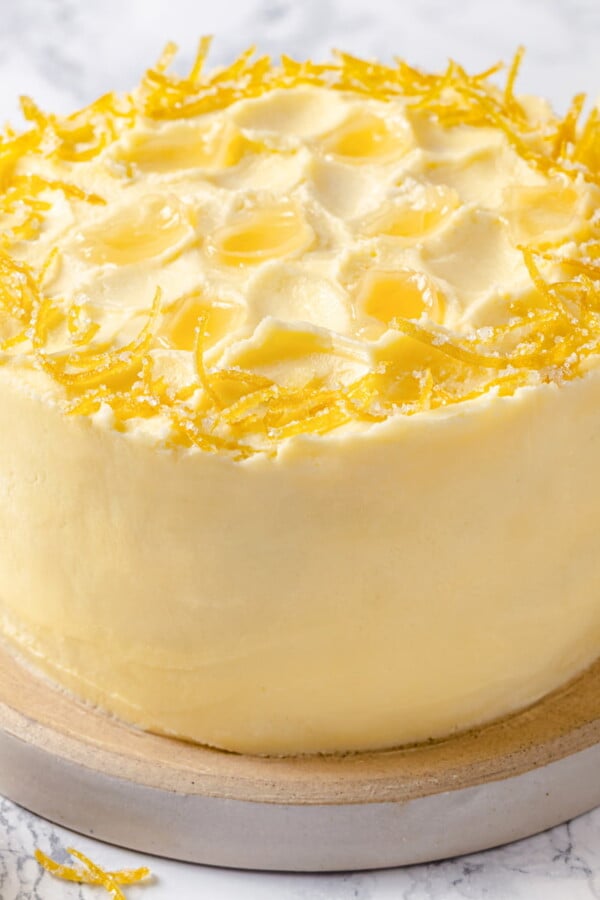
- Lemon Curd. Add up to ¾ cup lemon curd for a bright, tart frosting that cuts through rich cakes beautifully. My Lemon Swiss Meringue Buttercream gives you the full method with ratios dialed in.
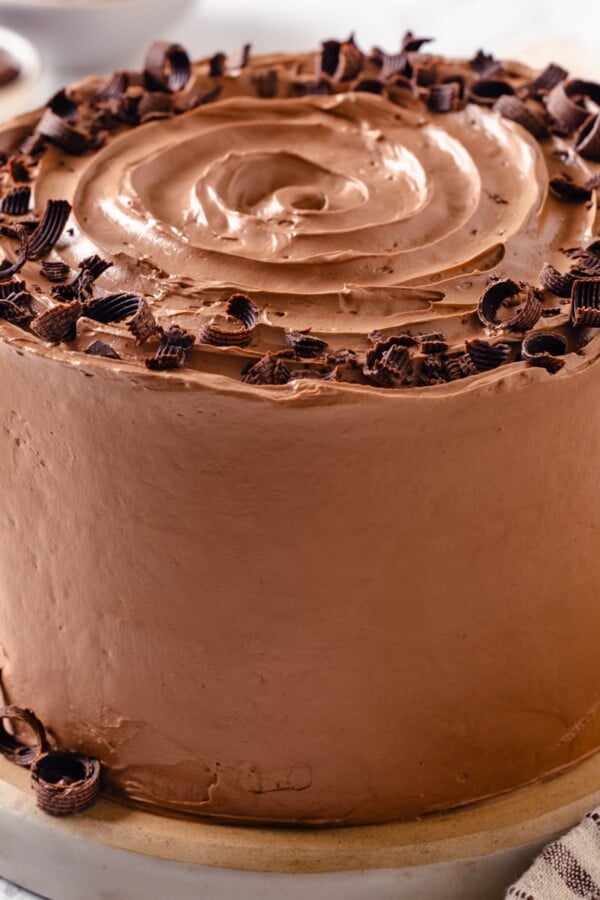
- Chocolate. Fold in up to 7 oz of melted chocolate, making sure it has cooled to room temperature before adding so it does not seize or melt the butter. For the complete version, see my Chocolate Swiss Meringue Buttercream.
[Insert image here]
Professional Tips
- Adding the salt to meringue adds stability. Most recipes call for the salt to be added in at the end, but I like to make my ingredients work for me. Adding the salt to the meringue before cooking will stabilize the meringue and add flavor. And now you are baking like a professional chef too.
- Know its limits. It is the most stable when refrigerated but tastes the best at room temperature. If possible, I allow the whole cake to sit at room temperature for at least 2 hours prior to serving. You can also slice it cold then allow it to sit to ensure perfect slices.
- Weigh ingredients for the best results. There can be a 30% difference in the weight of one egg white depending on the size of the egg yolk. This means that the resulting meringue will be more or less stable depending on the ratio of egg white to sugar. For the average baker this does not matter, but if you are going to entrust a wedding cake to this buttercream, weigh your ingredients.
- People stress too much about fat in meringues. Here is the real talk: as long as there are no visible yolks in the whites and your bowl feels clean, then you are fine. Wiping out your bowl with vinegar is unnecessary and will impact the flavor. If your meringue is not whipping up, add cream of tartar by the teaspoon until it does. If you can taste it in the final meringue, then start again, but you probably won’t have to. Life is too short to stress about meringue.
- If it looks broken, keep mixing. A curdled or soupy buttercream is not ruined. If it is soupy, refrigerate the bowl for 20 to 30 minutes and continue mixing. If it looks curdled, keep the mixer running: the friction and emulsification will bring it back together.
- A kitchen torch can rescue stubborn butter chunks. If a few pieces of butter refuse to incorporate, run a kitchen torch briefly around the outside of the bowl to soften them. Work quickly and keep the torch moving so you do not melt the surrounding butter beyond recovery.
How to Make Swiss Meringue Buttercream
Use these instructions to make the perfect Swiss Meringue Buttercream.
This is the setup that makes the gentle, even heat possible, so take a moment to check the fit before you add anything to the bowl.
Step 1: Set up your double boiler. Fill a medium saucepan with about an inch of water and bring it to a simmer over medium heat. Nest your stand mixer bowl inside — you want it to sit above the water without touching it.
Step 2: Whisk together the egg whites, sugar, and salt over the double boiler. Combine everything in the mixer bowl and set it over the simmering water. Whisk constantly as it heats: the mixture will start thin and granular, then gradually turn warmer and smoother as the sugar dissolves. You are looking for 130°F on an instant-read thermometer, or until you can rub a bit between your fingers and feel no graininess at all. The mixture will have gained a little volume and feel noticeably lighter by the time it is ready.
[Insert image here]
[Insert image here]
Step 3: Whip the meringue to stiff peaks. Transfer the bowl to your stand mixer fitted with the whisk attachment. If you have a gas burner, the bowl will be genuinely hot, so use a towel to handle it. Beat on high speed until the meringue reaches stiff, glossy peaks and the outside of the bowl feels only slightly warm to the touch, which is completely normal and exactly what you want before adding the butter. Rushing this step is the most common reason buttercream breaks.
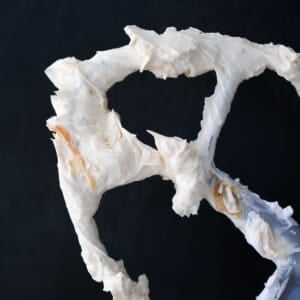
Step 4: Add the butter and beat until silky. Switch to the paddle attachment and add all the butter at once. Beat on medium speed and give it time. The mixture will look curdled and broken for several minutes, which is completely normal — keep going. Eventually it will suddenly pull together into a smooth, silky buttercream that looks almost too good. That transformation is my favorite part of this whole process.
If your buttercream looks like soup rather than curdled, the meringue was likely still too warm when you added the butter. Let the butter work in completely anyway, then place the entire bowl and paddle attachment in the refrigerator for 20 to 30 minutes and continue mixing. The number one rule here is patience.
[Insert image here]
[Insert image here]
Step 5: Troubleshoot any stubborn butter bits. If there are a few small chunks that refuse to incorporate, run a kitchen torch briefly around the outside of the bowl to gently warm those spots. Keep the torch moving and do not linger in any one place, or you risk melting the surrounding butter — and at that point there is no recovering the batch.
Step 6: Add vanilla and whip to finish. Switch back to the whisk attachment, add the vanilla extract, and beat until the buttercream is light, fluffy, and fully aerated. This is what I always do last: the whisk gives it that final lift that makes it spreadable and smooth right out of the bowl.
[Insert image here]
[Insert image here]
Chef Lindsey’s Recipe Tip
Use a clean metal bench scraper, palate knife or plexiglass to achieve the smoothest cake surface. You can also heat the bench scraper for a perfectly smooth coat but that will change the color of the buttercream.
Recipe FAQs
Yes. Store it in a clean, airtight container in the refrigerator for up to 2 weeks, or freeze it for up to 3 months. When you are ready to use it, bring it back to room temperature and re-whip with the paddle attachment until smooth and silky again.
The butter went in while the meringue was still too warm. Place the whole bowl and paddle attachment in the refrigerator for 20 to 30 minutes, then continue mixing and it will come back together.
Yes, it is actually one of the better options because it crusts slightly and creates a smooth, stable surface. Chill the frosted cake until the buttercream is firm before laying on the fondant.
Swiss meringue buttercream is built on a cooked egg white base, which gives it a silkier texture and a less sweet flavor than American buttercream. American buttercream is faster but noticeably sweeter and denser, which makes it a better fit for certain applications like piped decorations that need to hold a very sharp edge.
Yes, it can safely sit at room temperature overnight. For anything longer, refrigerate it and re-whip before using.
[Insert image here]
If you tried this recipe and loved it please leave a 🌟 star rating and let me know how it goes in the comments below. I love hearing from you; your comments make my day!
Swiss Meringue Buttercream
Ingredients
- 5 egg whites
- 1 ¼ cups granulated sugar
- ¼ teaspoon kosher salt
- 2 cups unsalted butter 4 sticks, cool but still pliable
- 2 teaspoons vanilla extract
Instructions
- Heat about an inch of water in a medium saucepot until just below a simmer. The stand mixer bowl should nest inside the pot without the water touching the bottom of the bowl.
- Whisk together the egg whites, sugar, and salt in the stand mixer bowl. Set the bowl over the simmering water and whisk constantly until the mixture reaches 130°F on an instant-read thermometer, or until the sugar has fully dissolved and the mixture is warm to the touch. The meringue will look slightly thickened and feel lighter.
- Transfer the bowl to the stand mixer and fit it with the whisk attachment. Beat on high speed until the meringue reaches stiff, glossy peaks and the bowl feels only slightly warm at the base.
- Switch to the paddle attachment and add all the butter at once. Beat on medium speed until the butter fully incorporates and a silky, smooth buttercream forms.
- If a few stubborn bits of butter remain, briefly warm the sides of the bowl with a kitchen torch, then continue beating. Do not hold the torch in one spot too long or the surrounding butter will melt.
- If the buttercream looks soupy, let the butter finish working in completely, then refrigerate the bowl and paddle attachment for 20 to 30 minutes. Return to the mixer and beat again until it comes together. Patience is the most important ingredient here.
- Once the buttercream is smooth, switch back to the whisk attachment and add the vanilla. Beat until light and fluffy, then use immediately or store.
Video
Notes
Doneness Cue: The finished buttercream will look glossy, hold a smooth peak, and pull cleanly away from the sides of the bowl without any visible chunks of butter.
Storage: Store in a clean, airtight container in the refrigerator for up to 2 weeks, or freeze for up to 3 months. Bring to room temperature and re-whip with the paddle attachment before using. Swiss meringue buttercream can also sit at room temperature overnight.
Make Ahead: This buttercream can be made up to 2 weeks in advance and refrigerated, or frozen for up to 3 months. Re-whip after thawing until smooth and silky before frosting.
Nutrition
Before You Go
If this silky, cloud-like buttercream has you thinking about what else you could frost, pipe, or fill, browse my Buttercream and Frosting Recipes or make this [ermine frosting] next!









Hi Lindsey! Would this work to make piped flowers on top of cupcakes? I have a friend asking for almond cupcakes and I was looking for something better tasting than American buttercream. This seems easy but she is asking for flowers because it’s for her daughter’s wedding shower.
Hi Rochelle! Yes, SMB works for piping flowers on cupcakes. It has a silky, stable texture that holds its shape well, especially when chilled slightly before piping. For detailed, intricate flowers, I recommend refrigerating the buttercream for about 10–15 minutes before piping to help it firm up. You can also adjust the consistency by adding a little extra butter if needed. If you’d like highly detailed, crisp flowers, Italian Meringue Buttercream might be better (still not American, so your friend should be happy!). I love that you’re using it for such a special occasion! Let me know how it turns out!
I am so happy to find your Swiss Meringue Buttercream recipe that can use jam to make it fruit flavored. Puree always seems to make my buttercream a little soupy and freeze dried fruit powder has always make mine have a chalky taste to it. I do have one question. Can I used cartoned egg whites instead of fresh egg whites? If so, how many grams (or ounces) of egg whites is the same as one fresh egg white? I just want to make sure I use the correct amount. Thank you.
Hi Rachel! Yes, you can use carton egg whites, 1 fresh egg white = 2 tablespoons (30g or 1 ounce of carton egg whites). However, carton egg whites will not produce a stable meringue. I personally only use separated eggs for this recipe. Happy frosting!
Lindsey your Swiss Meringue Buttercream recipe is the only one I will use! I love how your recipe tricks my pickiest eaters into thinking the frosting on their cupcakes came from a bakery instead of a busy momma’s kitchen. Thank you, friend!
Hi Micah! You can’t understand just how happy your comment made me! Thank you so much!
So amazing! I did this for a wedding cake and it was perfect stiffness and not too sweet. Even if you think you have wrecked it it comes together. Thank you I don’t think I will use any other buttercream recipe ever again.
Hi Chantel! A wedding cake is very high stakes, I’m honored you came here for your buttercream needs! Thank you for commenting, and I’m so thrilled you enjoyed.