
This post may contain affiliate links. Please read our disclosure policy.
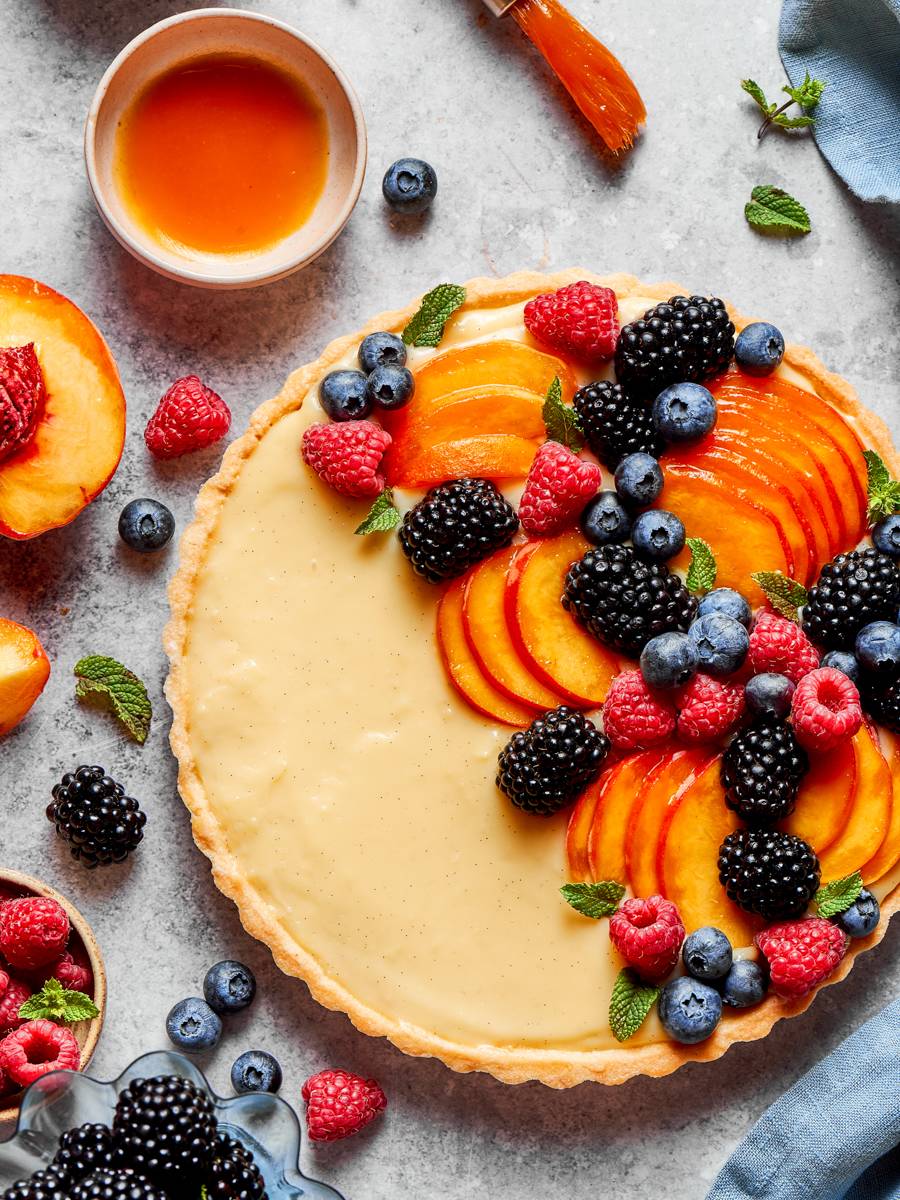
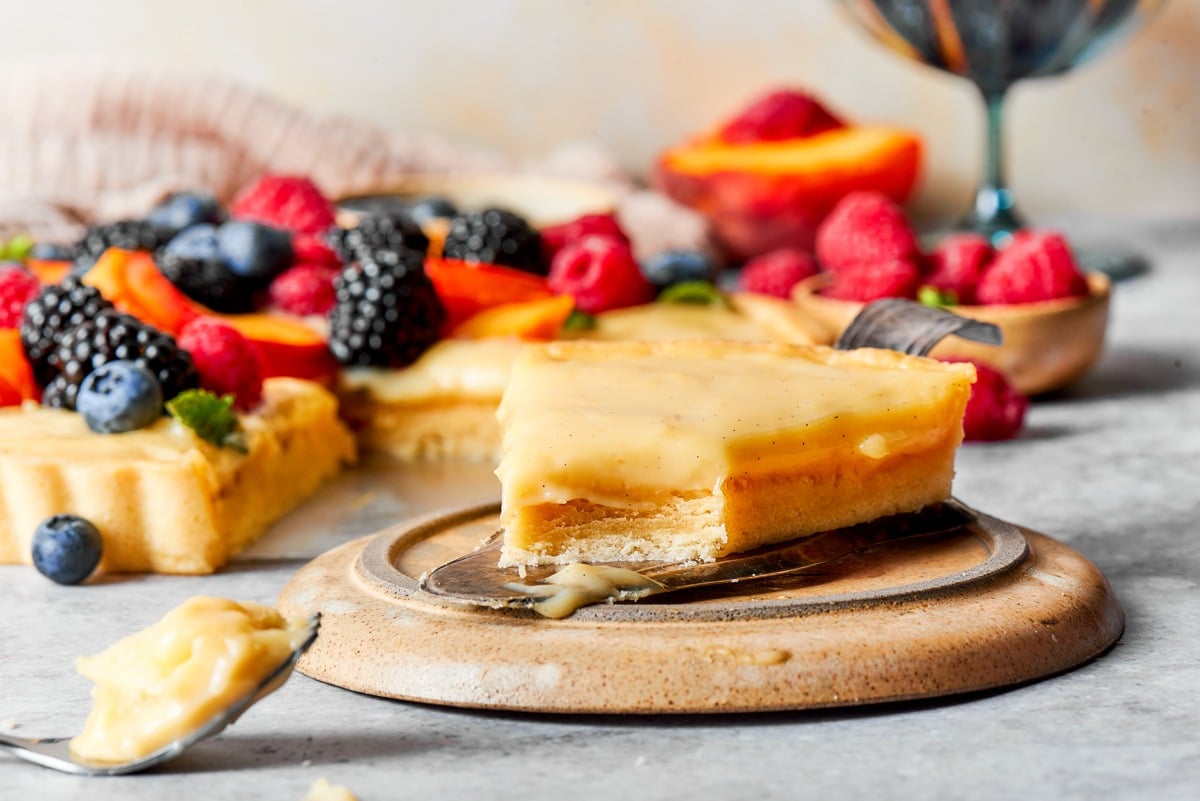
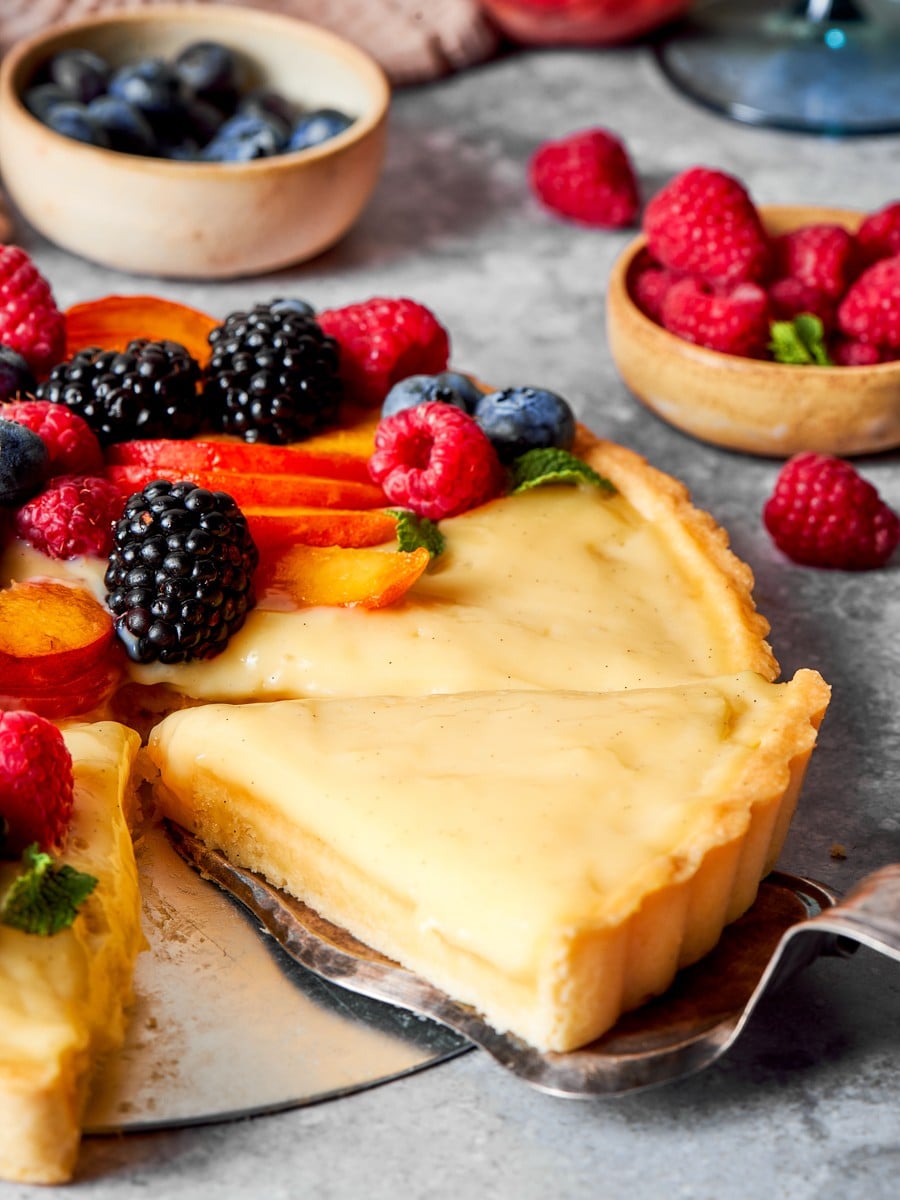
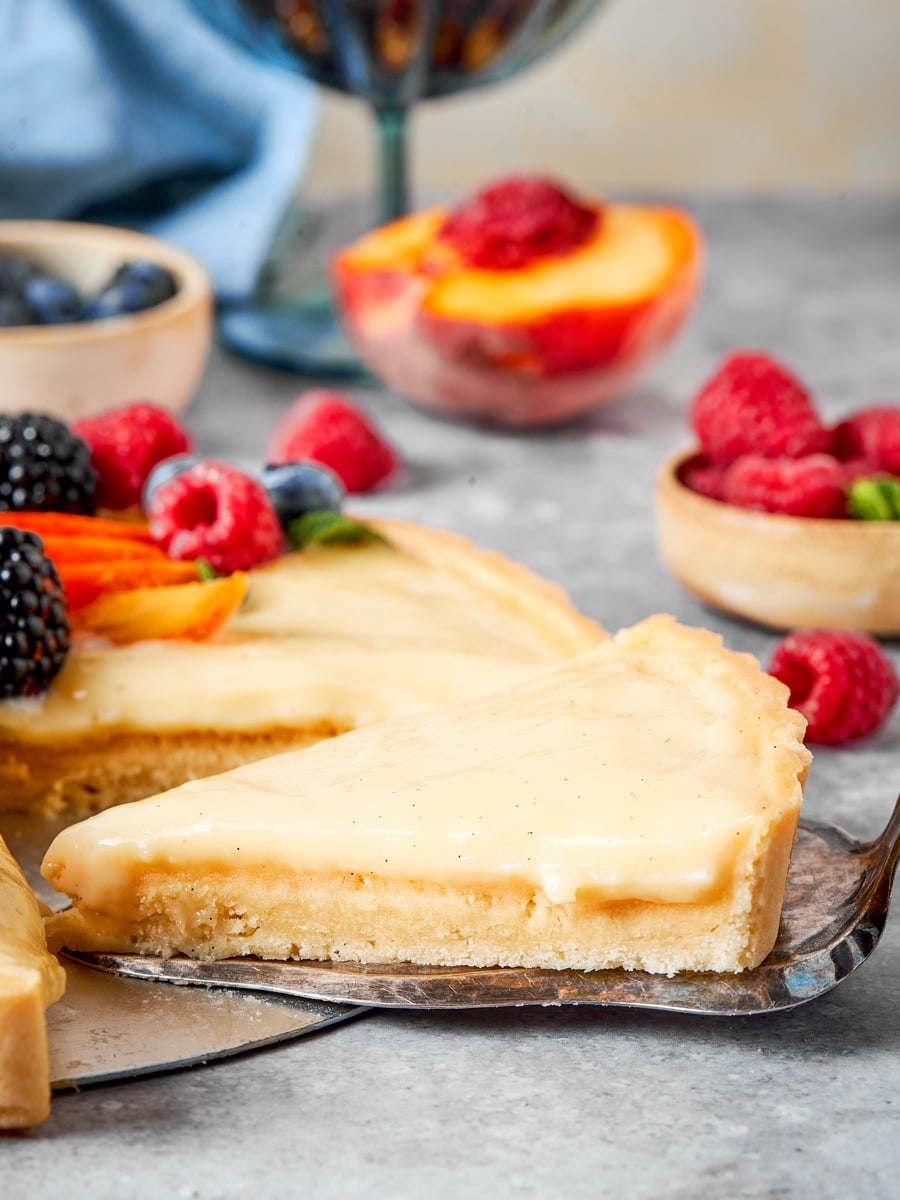
This fruit tart layers pâte sablée, baked almond cream, and silky pastry cream beneath fresh seasonal fruit for a patisserie-quality result at home.

A Quick Look At The Recipe
This is a brief summary of the recipe. Jump to the recipe to get the full details.
Jump to RecipePrep Time
45 minutes
Cook Time
30 minutes
Chill Time
2 hours
Total Time
3 hours 15 minutes
Servings
12 Slices
Difficulty
Advanced — requires three separately prepared components and precise technique at each stage.
Calories *
550 kcal per serving
Technique
Pâte sablée pressed and blind-baked, almond cream baked directly in the shell, stovetop pastry cream cooled and piped before topping with fresh fruit and a glaze finish.
Flavor Profile
Buttery, vanilla, nutty almond, bright and fresh seasonal fruit.
* Based on nutrition panel
I made this for a dinner party and could not believe how professional it looked and tasted. Baking the almond cream directly in the shell before adding the pastry cream was a step I had never seen before, and it made such a difference in the overall texture. The crust stayed crisp even the next day, which never happens with tarts I have made before. ⭐⭐⭐⭐⭐
Mary
Why This Recipe Works
- Pâte sablée and frangipane bake as one. The soft, buttery sablée crust and the almond cream layer fuse together in the oven, creating a seamless base where the textures blend rather than compete. The result is a melt-in-your-mouth bite that carries through every forkful.
- Silky pastry cream finishes perfectly. Carefully tempering the eggs on the stovetop produces a pastry cream that is smooth, stable, and rich without being heavy. It sets firmly enough to slice cleanly but stays tender under the fruit.
- Each component can be made ahead. The crust, almond cream, and pastry cream can all be prepared in advance and assembled the day before serving. A thin coat of apricot nappage locks in freshness and gives the tart its professional, glossy finish.
- Classic French techniques, applied at home. Rolling and lining pâte sablée, creaming almond cream to the right consistency, and tempering eggs for pastry cream are learnable skills that produce patisserie-level results without specialized equipment. Every step is handled with standard kitchen tools.
Table of Contents
- Why This Recipe Works
- Ingredients & Substitutions
- Variations on This Fruit Tart
- Professional Tips
- How to Make Fruit Tart
- Make Pâte Sablée
- Make Pastry Cream
- Make Almond Cream
- Roll and Blind Bake
- Prepare the Components
- Assemble the Tart
- Chef Lindsey’s Recipe Tip
- Recipe FAQs
- Recommended Tart Recipes!
- Recommended Pie & Tart Recipes
- Fruit Tart Recipe Recipe
- Before You Go
This fruit tart blew me away the first time I tried it. The way the sablée crust melds with the almond cream during baking, then meets this silky pastry cream recipe and bright seasonal fruit on top, is the kind of combination that makes you stop mid-bite.
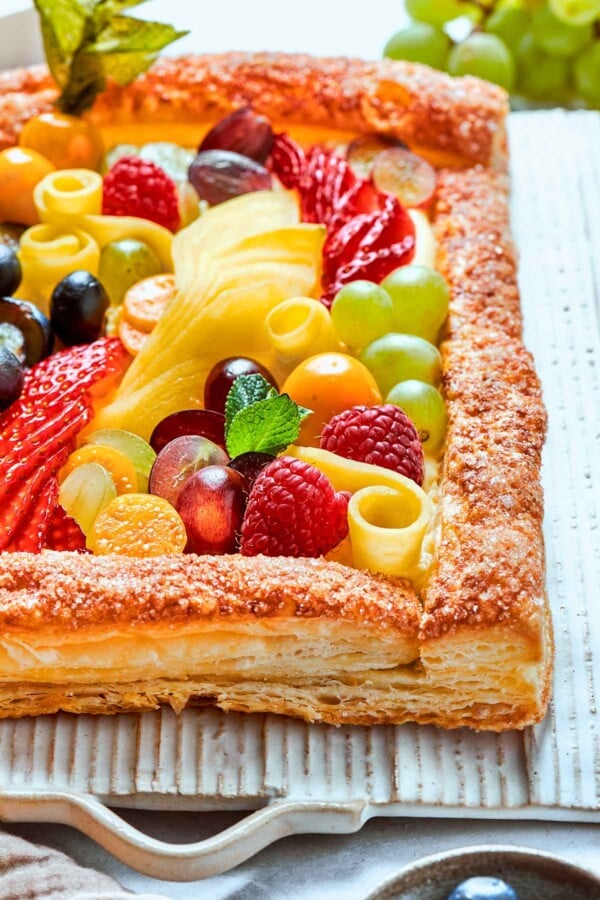
Each layer has a distinct role, and they work together without any one element overtaking the others. If you want to experiment with a slightly richer base, my almond cream with almond paste is a natural companion to this tart and worth having in your repertoire. Or you could make this puff pastry fruit tart next!
Ingredients & Substitutions
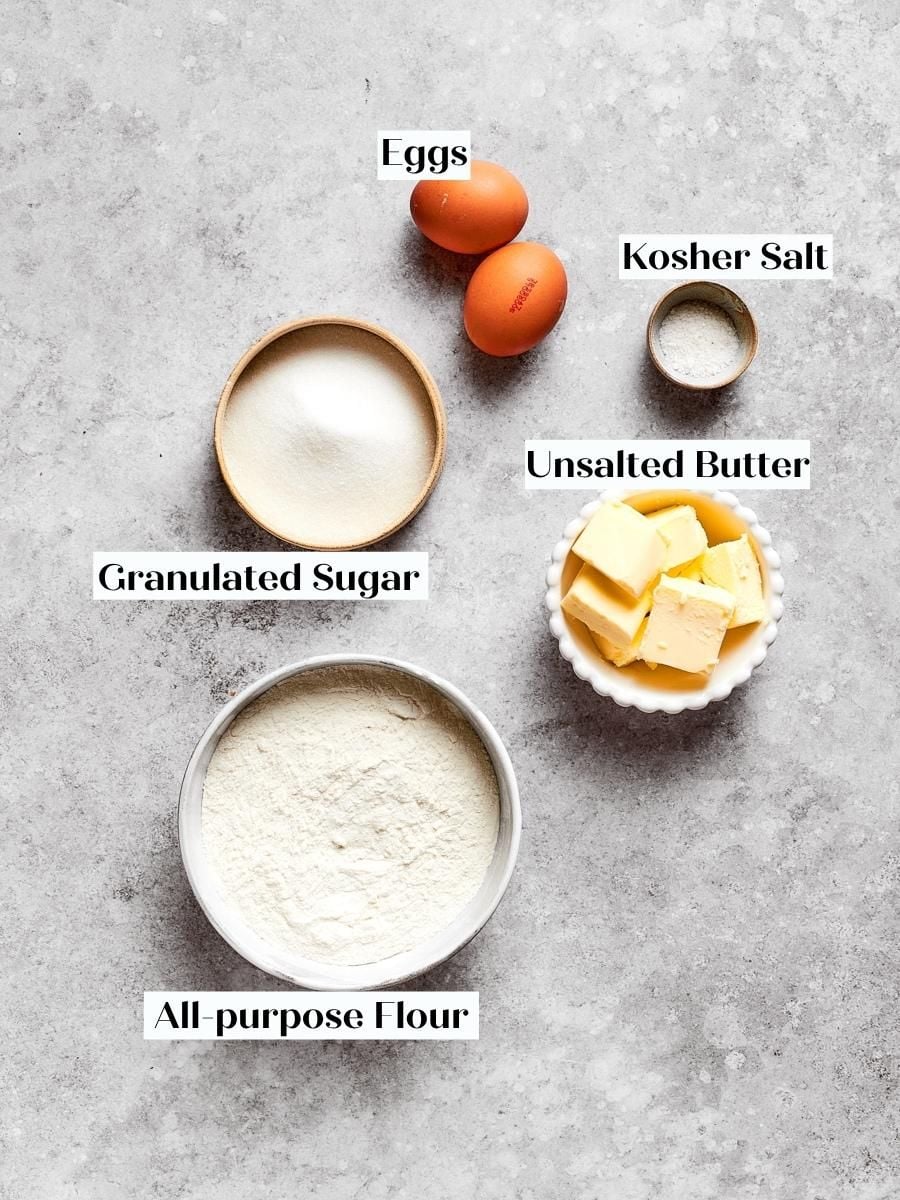
- All-Purpose Flour: Forms the structure of the pâte sablée through gluten development. Weighing the flour using a kitchen scale is the only way to guarantee consistent results. You can make it with pastry flour if you have some stocked at home.
- Granulated Sugar (pâte sablée): Sweetens the tart shell and tenderizes the dough by limiting gluten formation. The fine crystals also help achieve that sandy sablée texture when creamed with the butter.
- Whole Egg and Egg Yolk (pâte sablée): These work together to hydrate the dough and bind it. The whole egg provides structure, while the yolk adds extra fat and emulsifiers that make the crust more tender, cohesive, and richly colored.
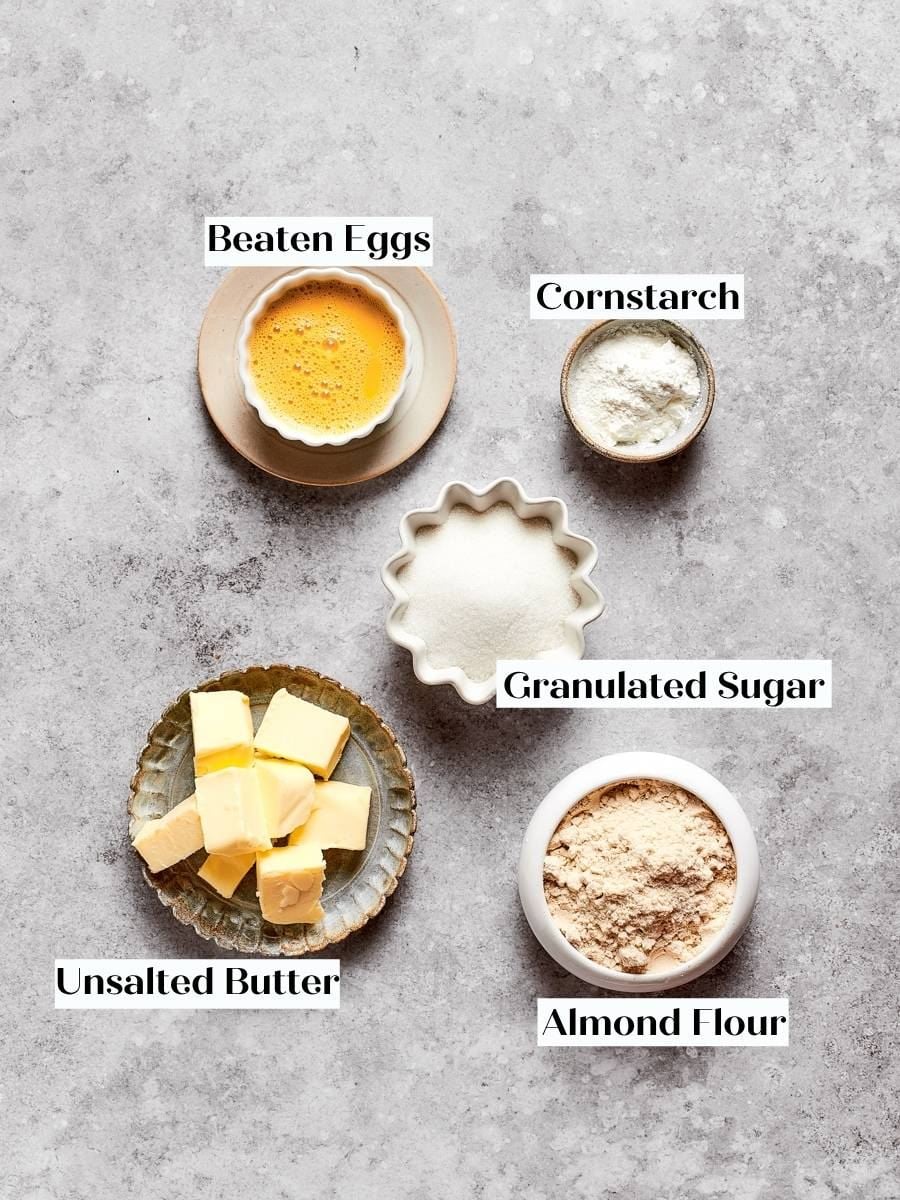
- Unsalted Butter, Room Temperature (almond cream): This butter must be truly soft so it creams smoothly with the sugar and incorporates air. Properly aerated butter gives the almond cream its light, spreadable texture and helps it bake evenly without greasing out.
- Almond Flour: Forms the base of the almond cream, adding rich, nutty flavor and a moist, tender crumb. Use finely ground blanched almond flour. Coarse almond meal will give the filling a gritty texture and can cause the filling to bake unevenly.
- Whole Eggs, Beaten (almond cream): The beaten eggs emulsify the almond cream, binding the fat from the butter and ground nuts into a smooth, stable mixture.
- Cornstarch: Almond cream and pastry cream are starch-bound custards. Meaning the cornstarch is baked or boiled to thicken the custard.
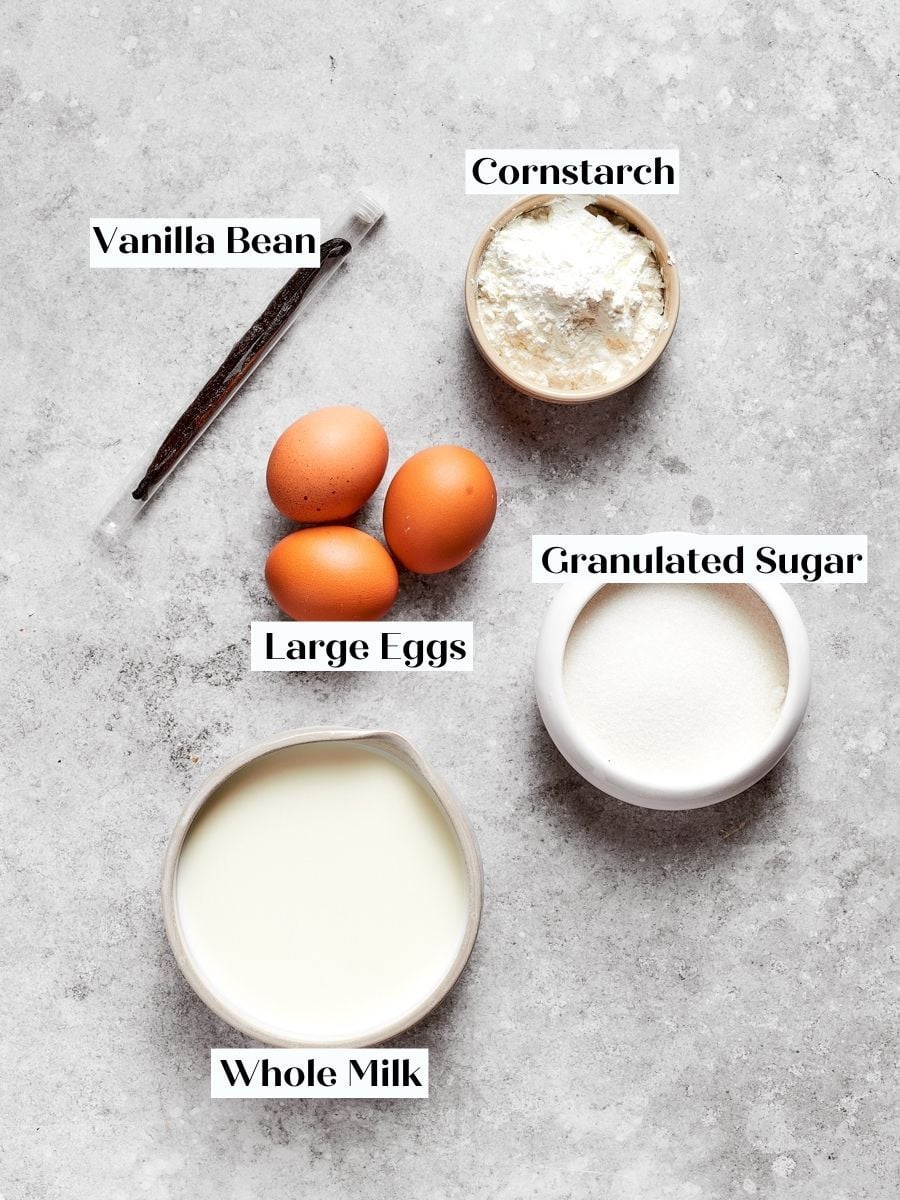
- Whole Milk: Whole milk is the primary liquid for the pastry cream and its fat content is critical for a smooth, luxurious result. Do not substitute low-fat milk; the cream will be thinner, less stable, and noticeably less rich.
- Vanilla Bean: Infuses the pastry cream with deep, complex flavor and the classic visible seeds of a well-made crème pâtissière. Split and scrape the bean, then steep it in the warm milk so the flavor fully extracts before you begin thickening. You can use vanilla extract or vanilla bean paste.
- Granulated Sugar (pastry cream): Sweetens the cream and, importantly, helps protect the eggs from curdling by raising their coagulation temperature as the cream cooks. The amount is calibrated so the tart stays balanced rather than cloying.
- Grand Marnier, Kirsch, or Cognac: A small amount added to the assembled tart brings aromatic warmth and complexity without dominating the other flavors. Measure carefully; too much thins the cream and makes the flavor harsh.
- Fresh Seasonal Fruit: Choose fruit that is ripe but still firm, so it holds its shape and does not weep excessively onto the pastry cream. The variety is entirely up to you, which I love, because this tart works beautifully in every season.
- Apricot Jam, for Nappage: Melted and thinned slightly, apricot jam creates a glossy glaze that seals the fruit and prevents it from drying out. Apricot is the classic choice because its neutral, bright flavor pairs well with nearly any fruit and its pectin content helps it set into a soft, even gel.
See the recipe card for full information on ingredients and quantities.
Variations on This Fruit Tart
- Seasonal Fruit Combinations. The fruit layer is entirely flexible: stone fruits in summer, poached pears or figs in autumn, blood oranges and citrus segments in winter, and strawberries or kiwi in spring all work beautifully over the pastry cream.
- Change to tart dough. I haven’t tested this, but a sheet of blind-baked puff pastry can replace the pâte sablée for a quicker, flakier result — see my Puff Pastry Fruit Tart Recipe for a fully developed version of that approach. You could also use a pate sucree or an all-butter pie crust.
- Pastry Cream Variations. The base formula here is classic vanilla bean, but my caramel pastry cream would be divine. You could also use chocolate pudding.
Professional Tips
- Chill the dough completely before rolling. Pâte sablée that is still cold but pliable rolls without cracking; dough that is too firm or too soft will tear or slump. Chill until firm, then let it sit at room temperature for just a few minutes until it yields slightly without cracking at the edges.
- Stop mixing the moment the egg is added. Once the egg and yolk go into the sablée dough, mix only until the dough just comes together. Overworking at this stage develops gluten, and the crust will bake tough rather than short and sandy.
- Cook the pastry cream to a full boil and hold it for one minute. The cream will look thick before it reaches a boil, but that extra minute at temperature is what fully cooks out the cornstarch and gives you a stable, sliceable filling. Pull it too soon and it will taste starchy and weep under the fruit.
- Use in-season fruit. I know it sounds obvious, but you should use produce that is in season to really let the fresh fruit shine. No strawberries in winter.
How to Make Fruit Tart
This tart comes together across three components: pâte sablée, pastry cream, and almond cream. Each can be made ahead and assembled when you are ready. Further details and measurements can be found in the recipe card below!
Make Pâte Sablée
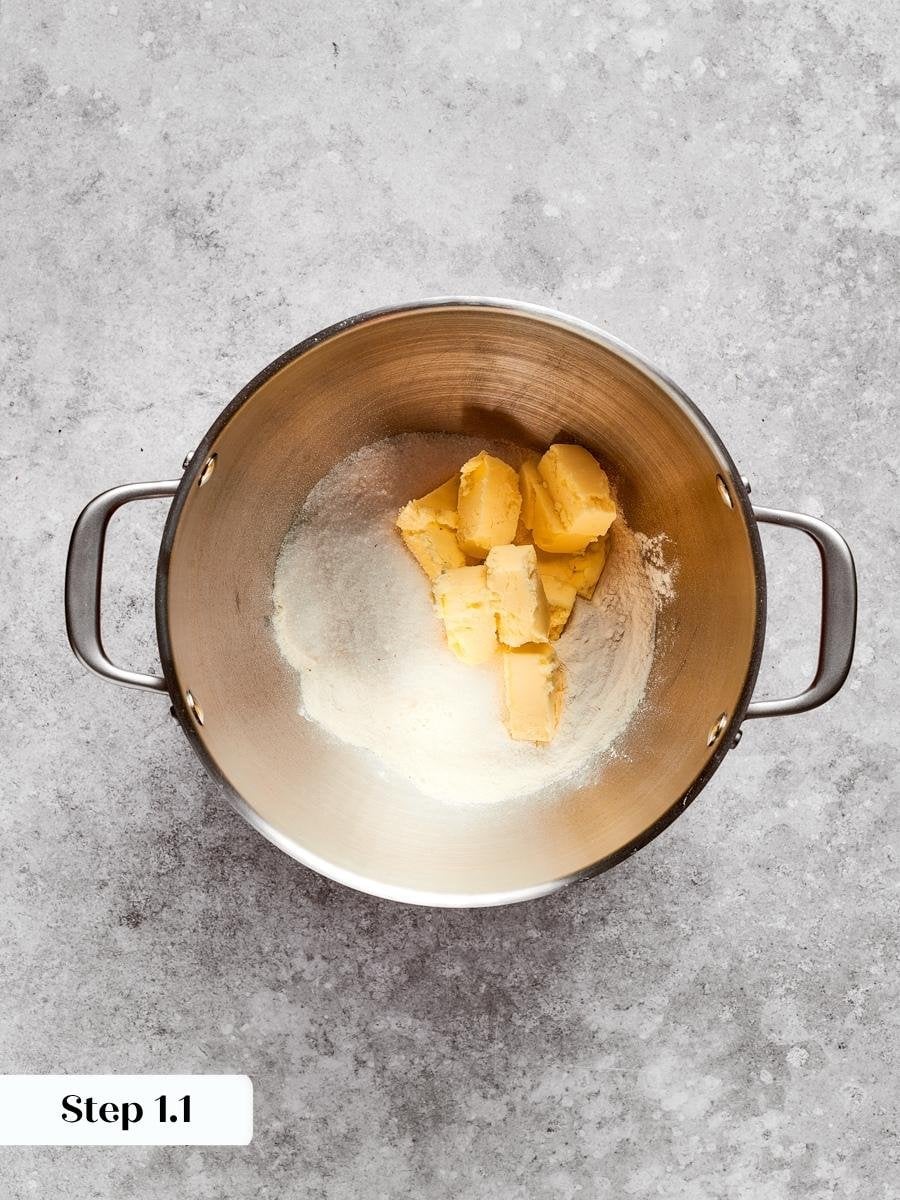
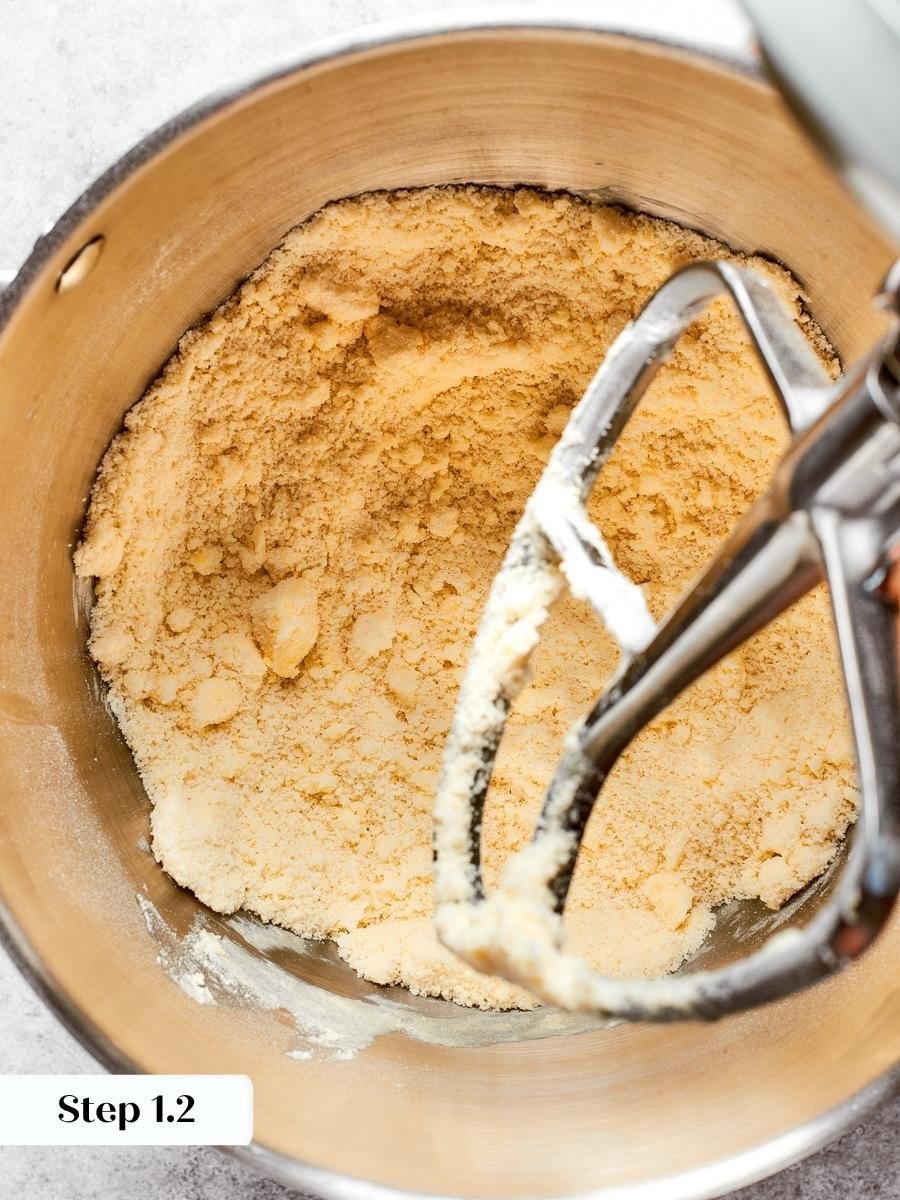
Step 1: Cut the butter into the dry ingredients. In the bowl of a stand mixer fitted with the paddle attachment, combine the flour, sugar, salt, and butter for the pâte sablée. Mix on low speed until no visible pieces of butter remain and the mixture has the texture of damp sand. Run your fingers through it to confirm the butter has fully worked in just like when making [blueberry scones]. (photos 1 & 2).
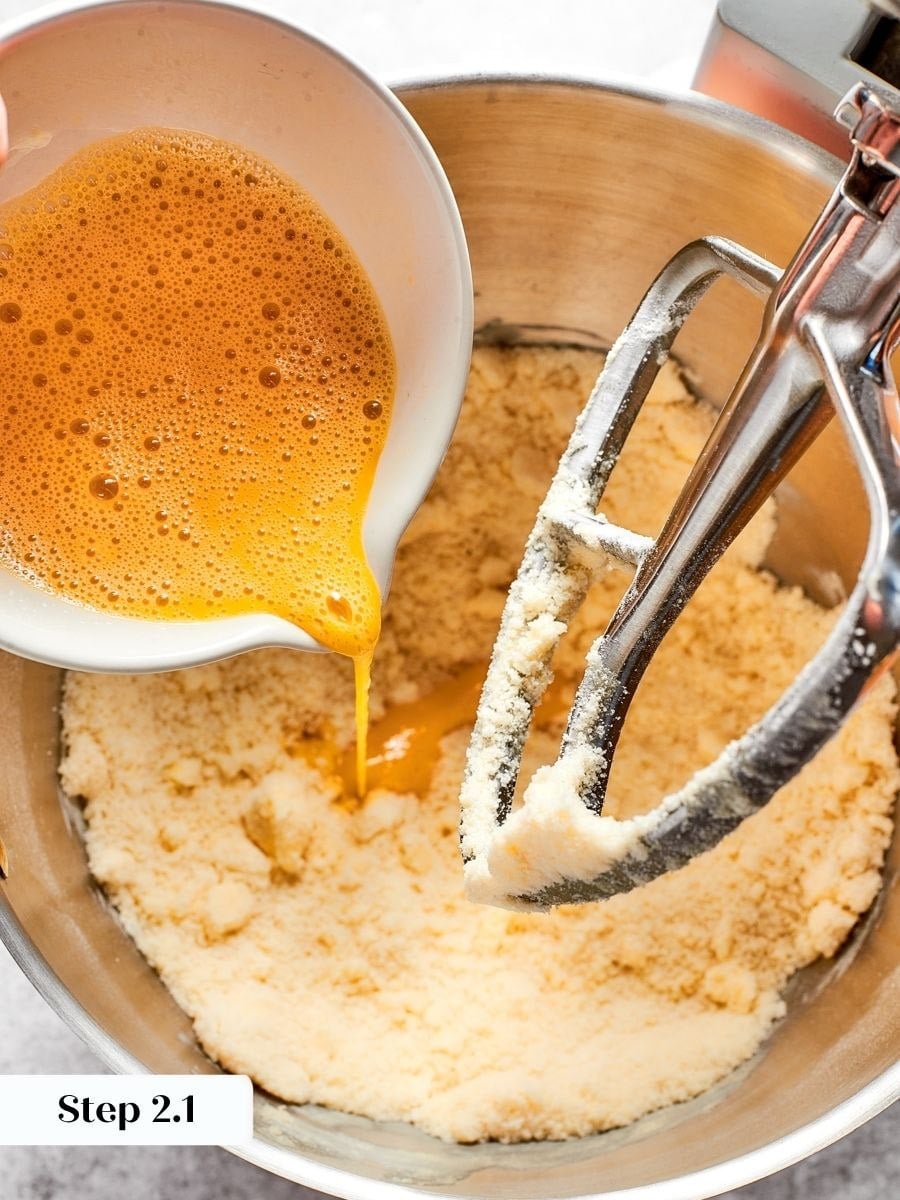
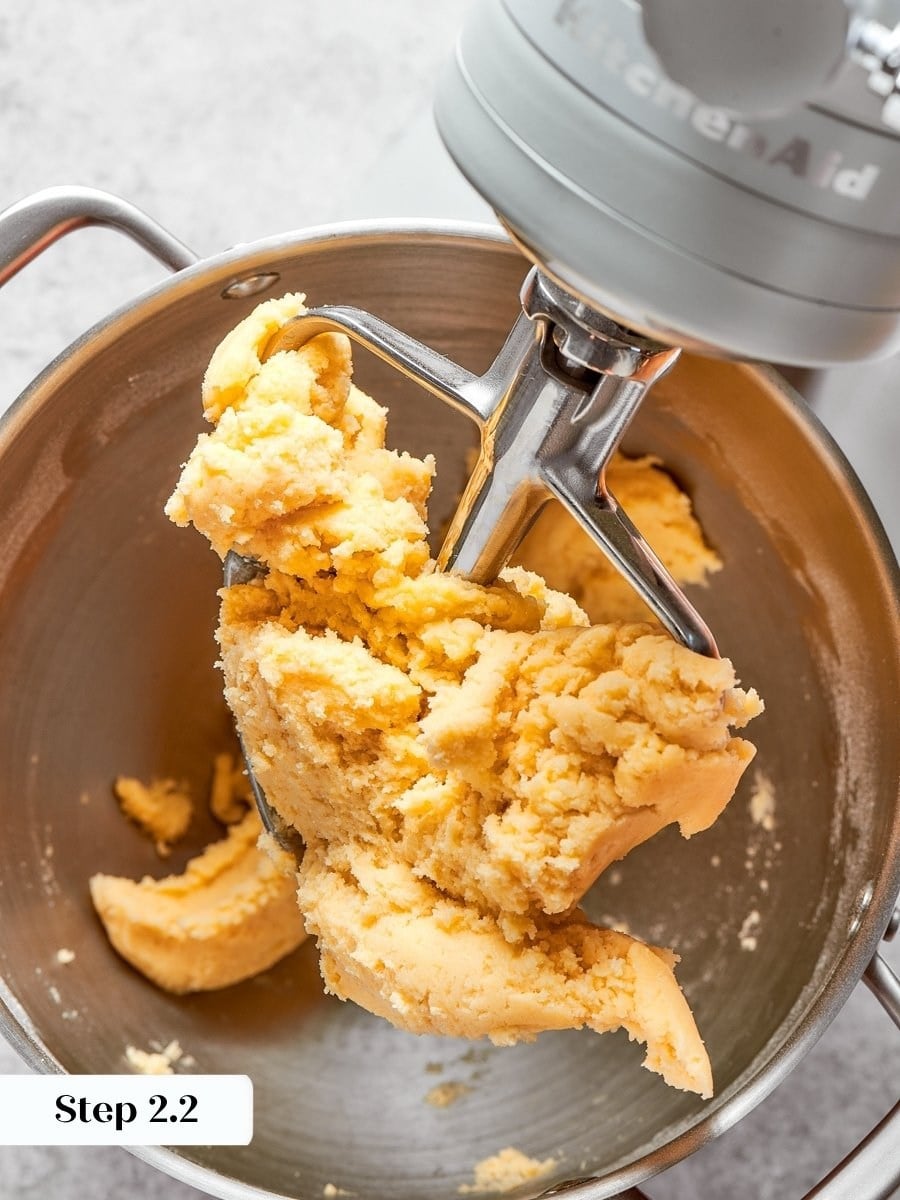
Step 2: Add the eggs and form the dough. In a separate bowl, whisk the egg and egg yolk until completely uniform with no streaks of white or yolk remaining. Pour the beaten eggs into the mixer and mix on low speed until a smooth, cohesive dough forms. It will look like cookie dough. Stop mixing the moment the dough comes together. (photos 3 &4).
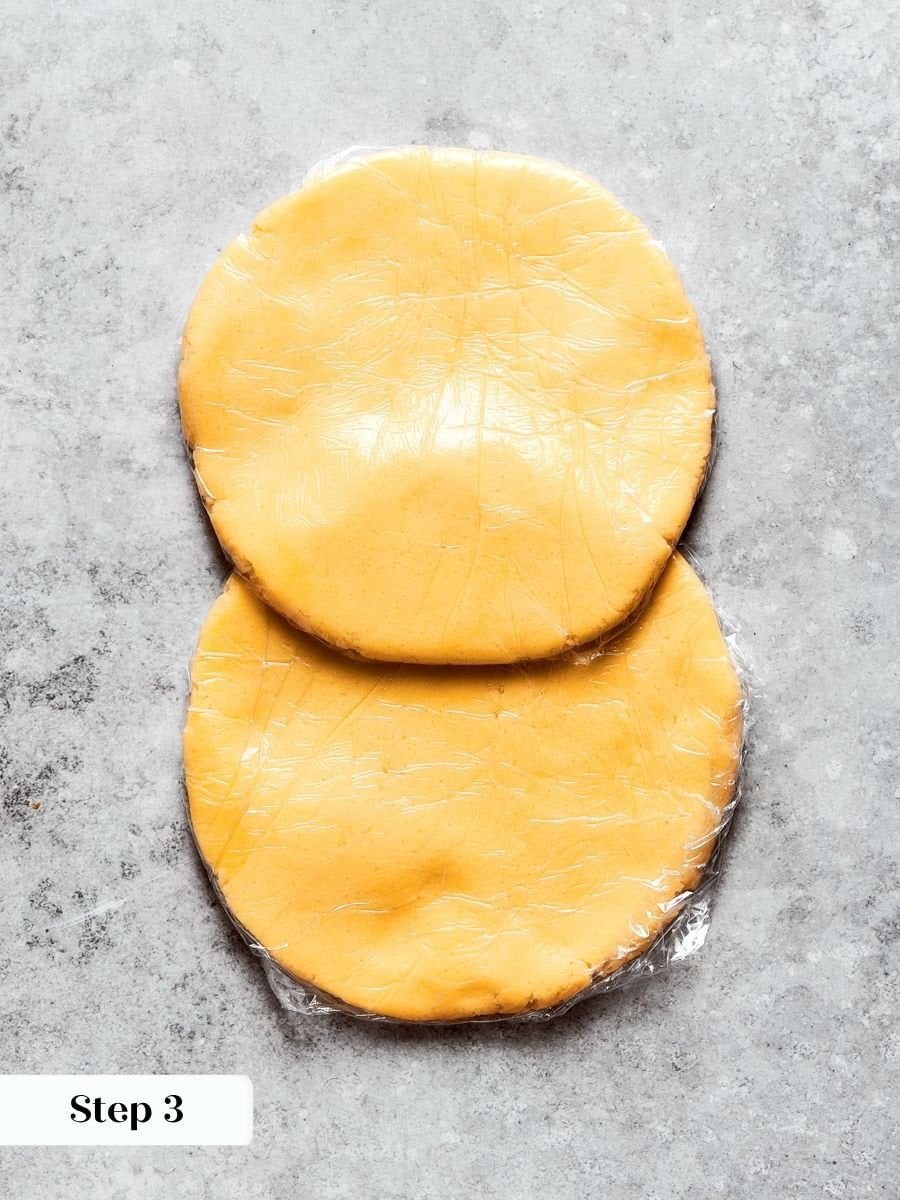
Step 3: Divide and chill the dough. Divide the dough into two equal pieces, approximately 275g each, flatten each into a disc on a piece of plastic wrap, and wrap tightly. Refrigerate for at least 2 hours or overnight. The dough must be fully chilled before rolling or it will crack and split rather than roll smooth. (photo 4).
Make ahead — the wrapped dough discs keep well refrigerated overnight, which makes day-of assembly significantly faster.
Make Pastry Cream
Step 4: Prepare the landing spot for the pastry cream. Line a rimmed baking sheet with plastic wrap. This gives you a flat, ready surface to spread and cool the pastry cream quickly once it comes off the heat.
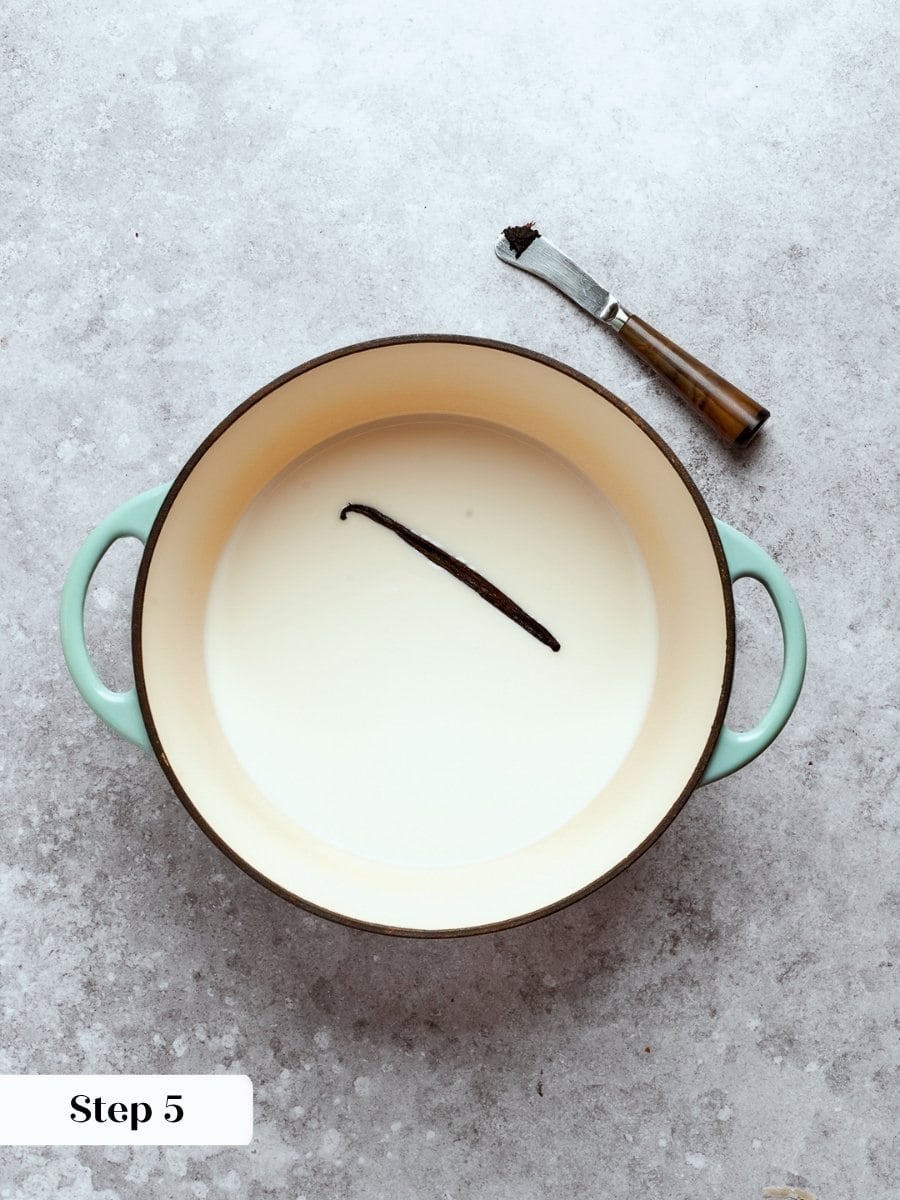
Step 5: Heat the milk with the vanilla bean. In a medium saucepot, combine the milk, approximately half the sugar, and the split and scraped vanilla bean with its seeds. Stir and heat over medium-high heat until the mixture comes to a boil. (photo 5).
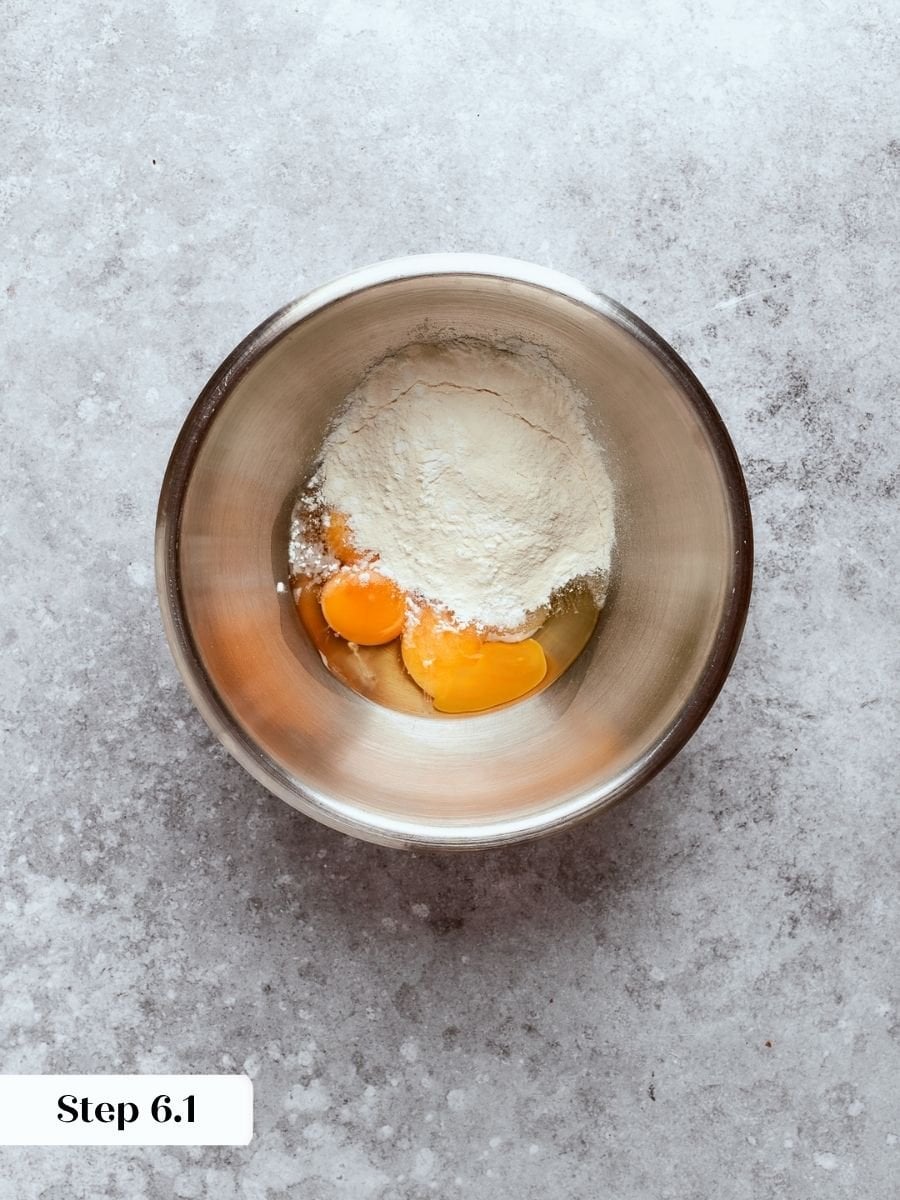
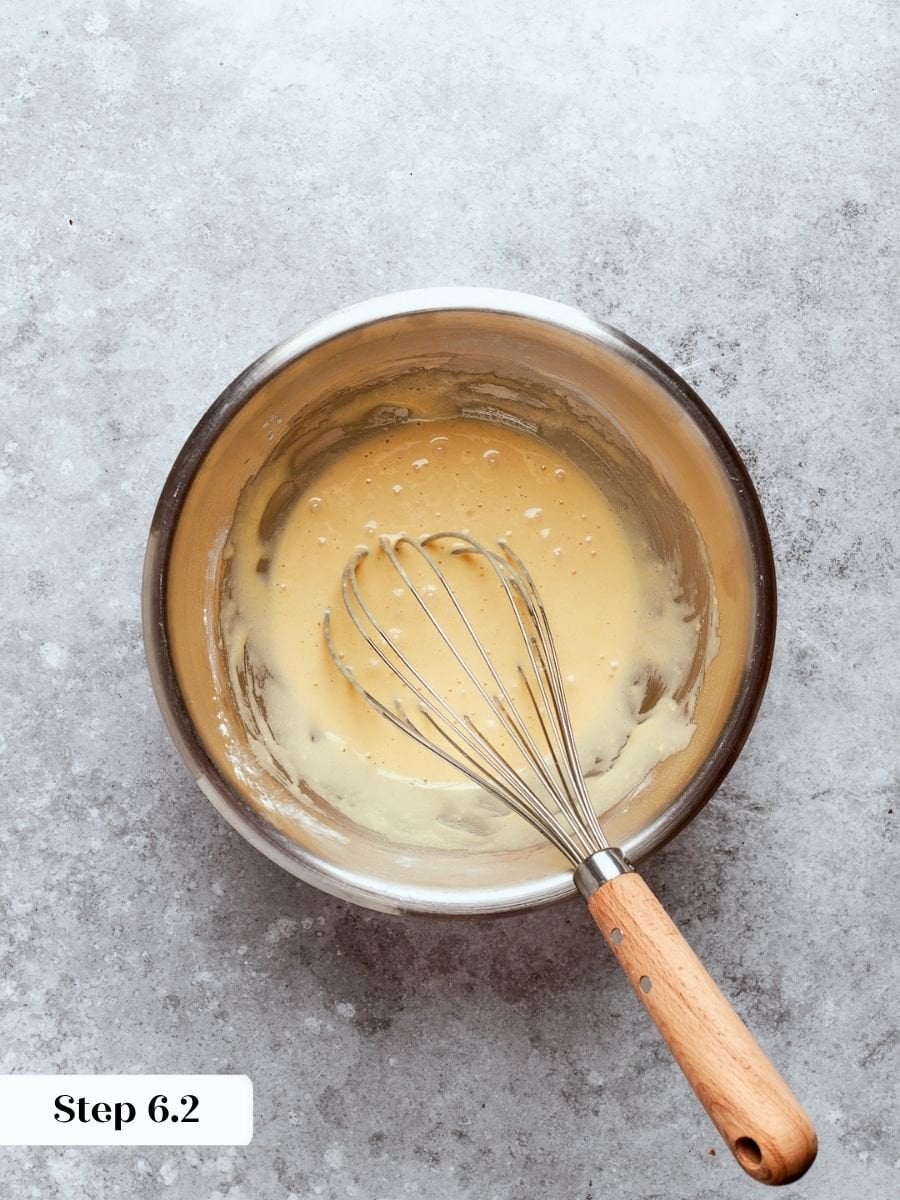
Step 6: Whisk the egg mixture. While the milk heats, whisk together the egg, egg yolks, remaining sugar, and cornstarch in a large mixing bowl. Whisk vigorously until the mixture lightens in color and the cornstarch is fully dissolved. (photos 6 & 7).
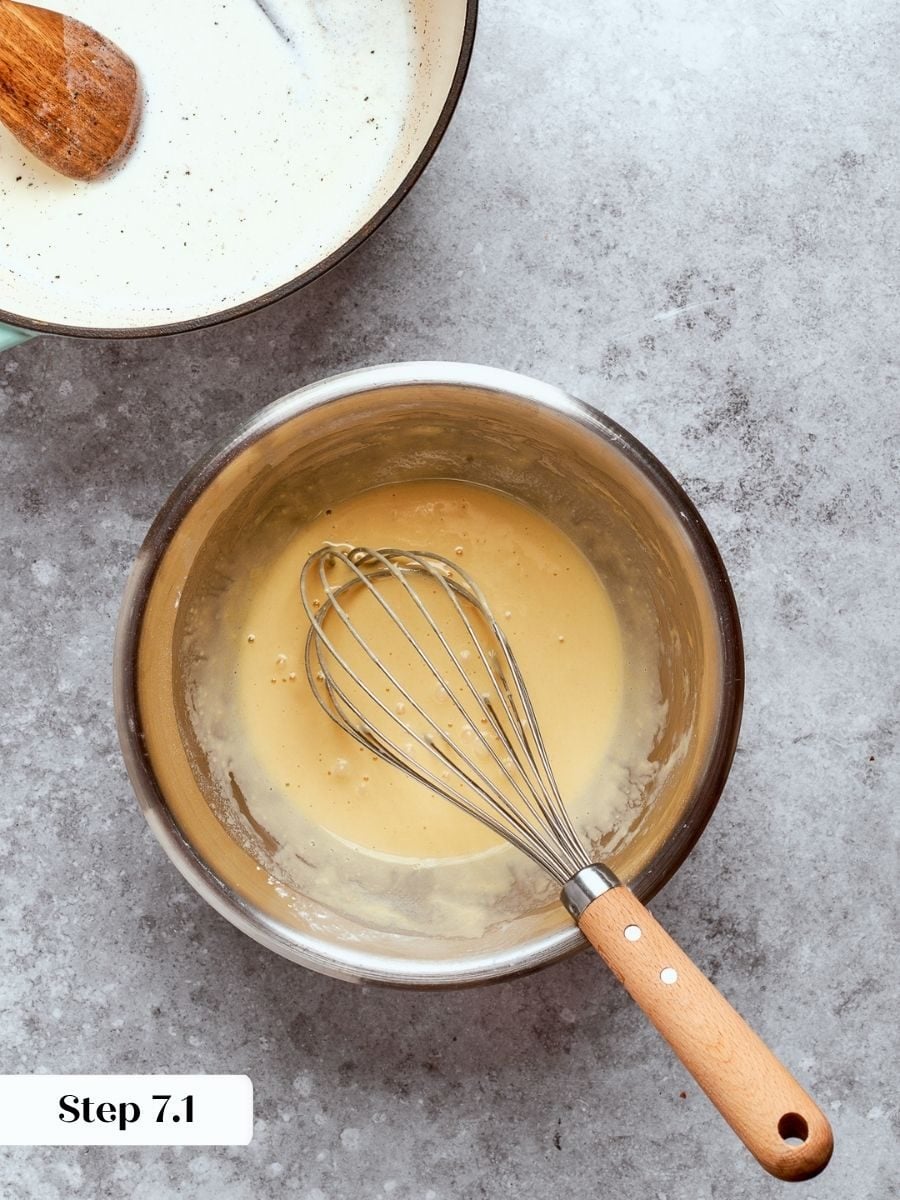
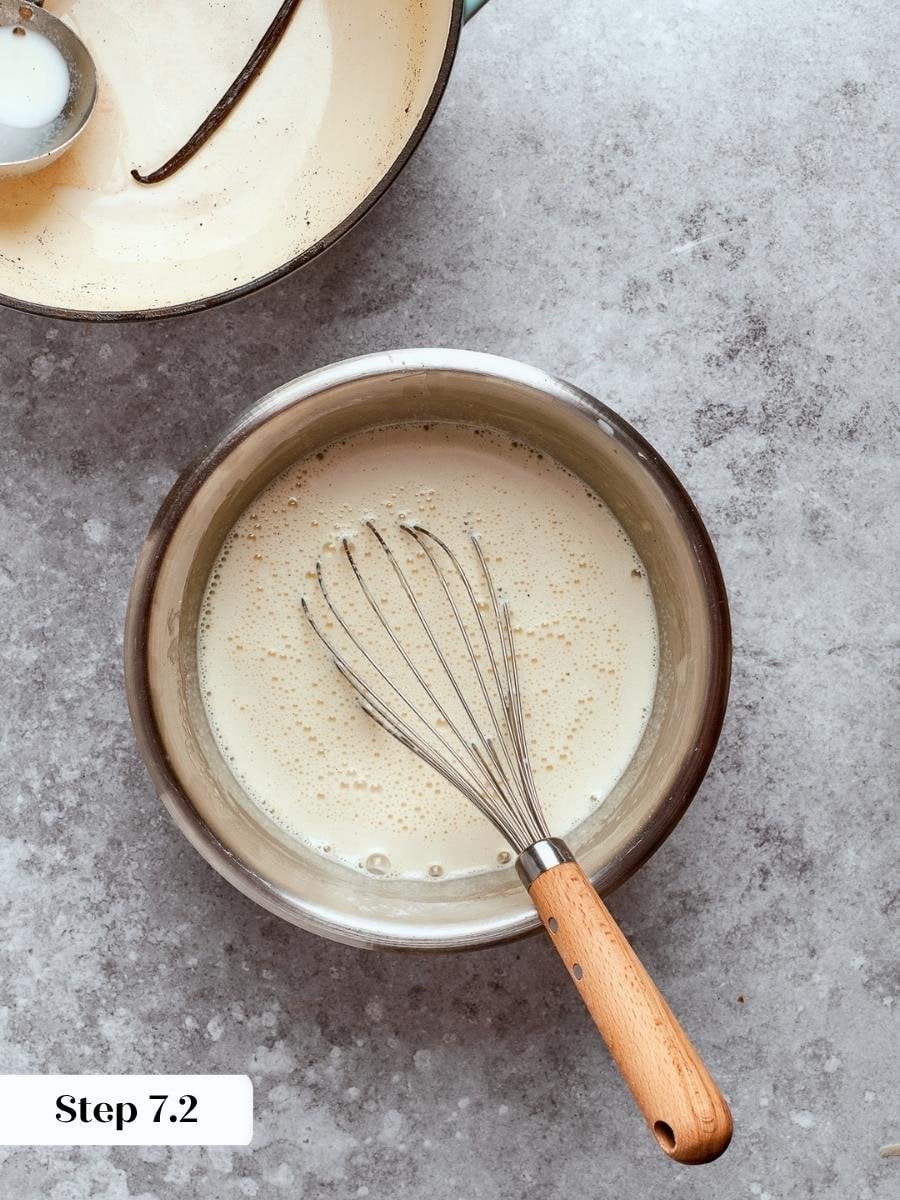
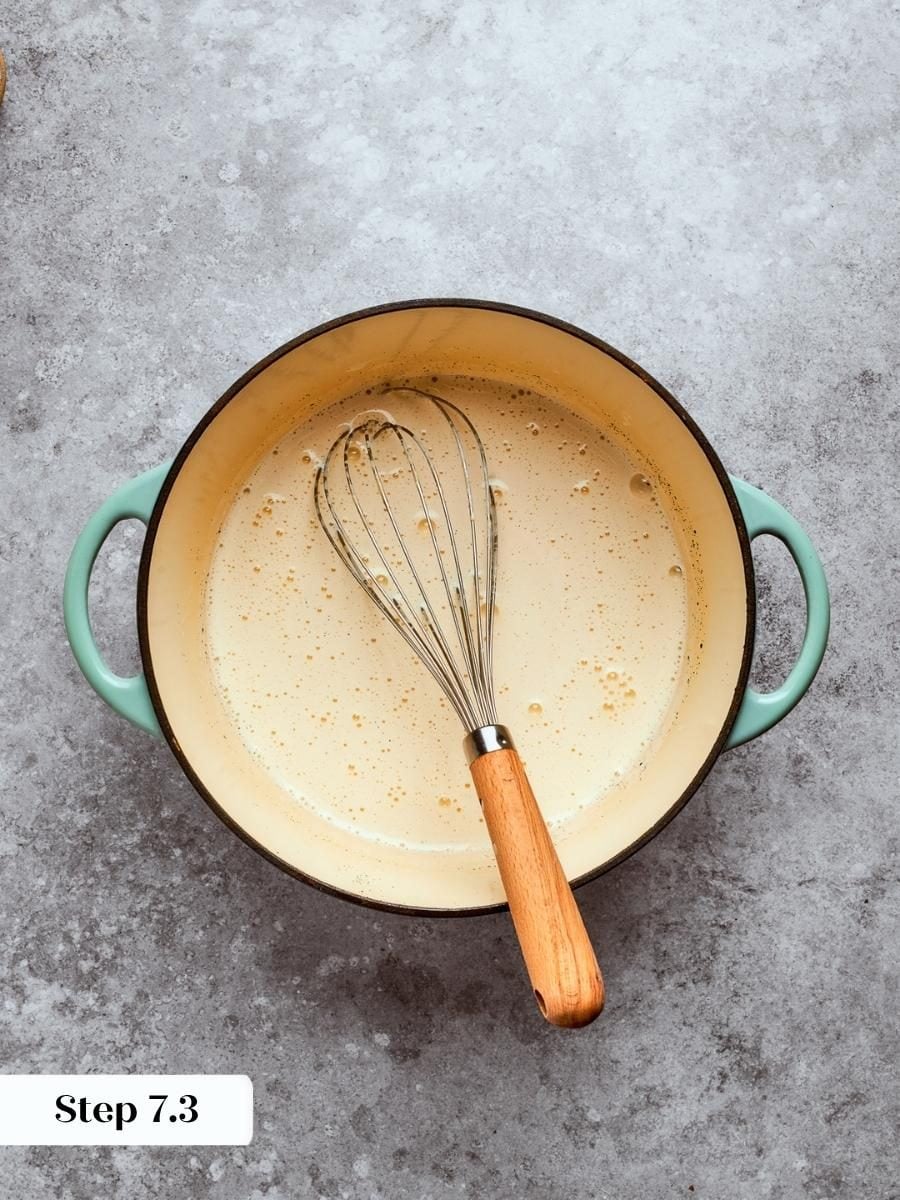
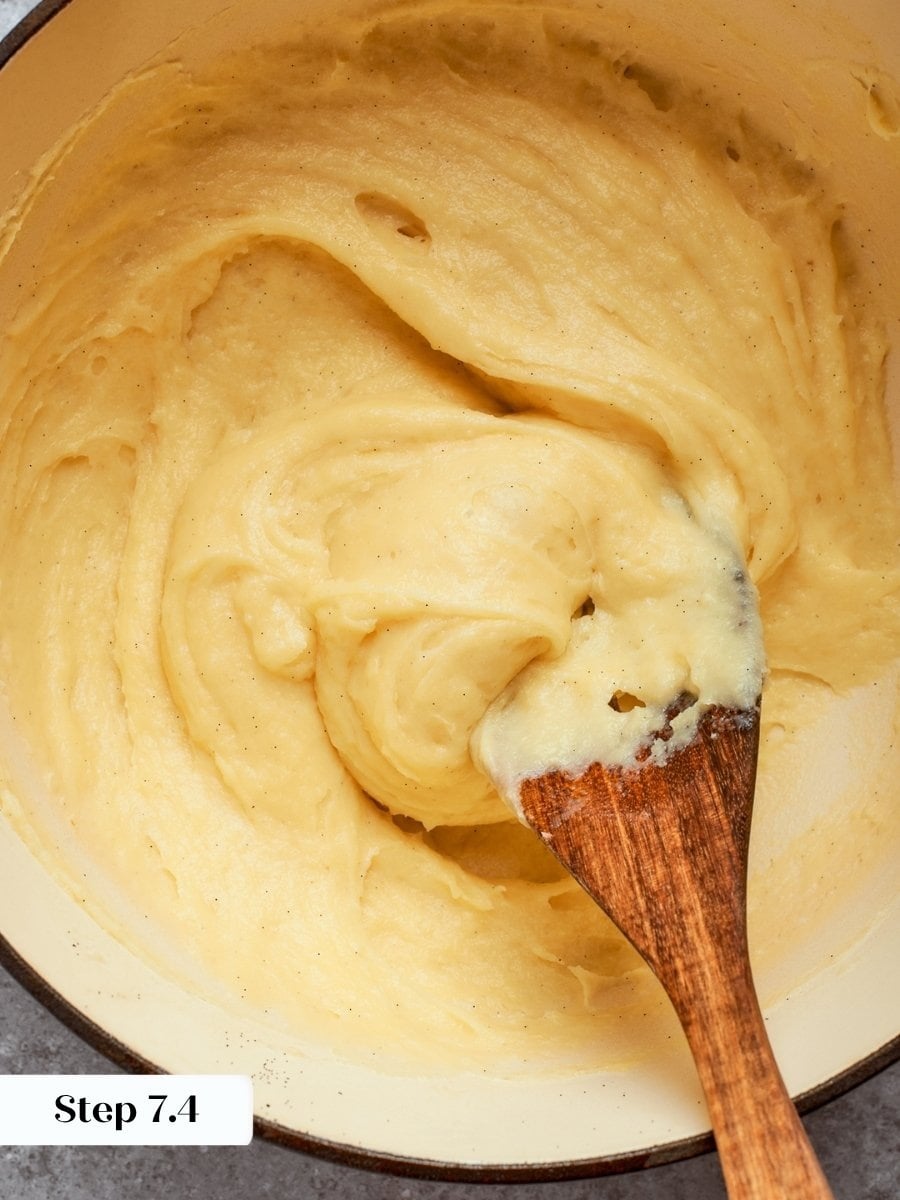
Step 7: Temper the eggs and cook the pastry cream. When the milk comes to a boil, remove it from the heat. Slowly pour the hot milk into the egg mixture in a thin, steady stream while whisking constantly. Once combined, return the entire mixture to the pot over medium heat and whisk constantly. The cream will look thin and loose for several minutes, then suddenly it will thicken and the whole mass will come to a boil. That full boil is important: it activates the cornstarch completely and eliminates any starchy flavor. (photos 8- 10).
This is the temper: you are raising the egg temperature gradually so it does not scramble. Once you add the mixture back to the pot don’t stop whisking!
Step 8: Boil briefly and cool the pastry cream. Boil the pastry cream for exactly 1 minute, then scrape it onto the prepared plastic-lined baking sheet. Spread it flat with a spatula, lay another piece of plastic wrap directly on the surface, and poke a few holes in the wrap to let steam escape. Refrigerate until completely cold, at least 1 hour or overnight. (photo 11)
If the pastry cream starts to get lumpy, remove from the heat and whisk until they disappear. If it is too far gone you can strain when it’s done cooking.
Make Almond Cream
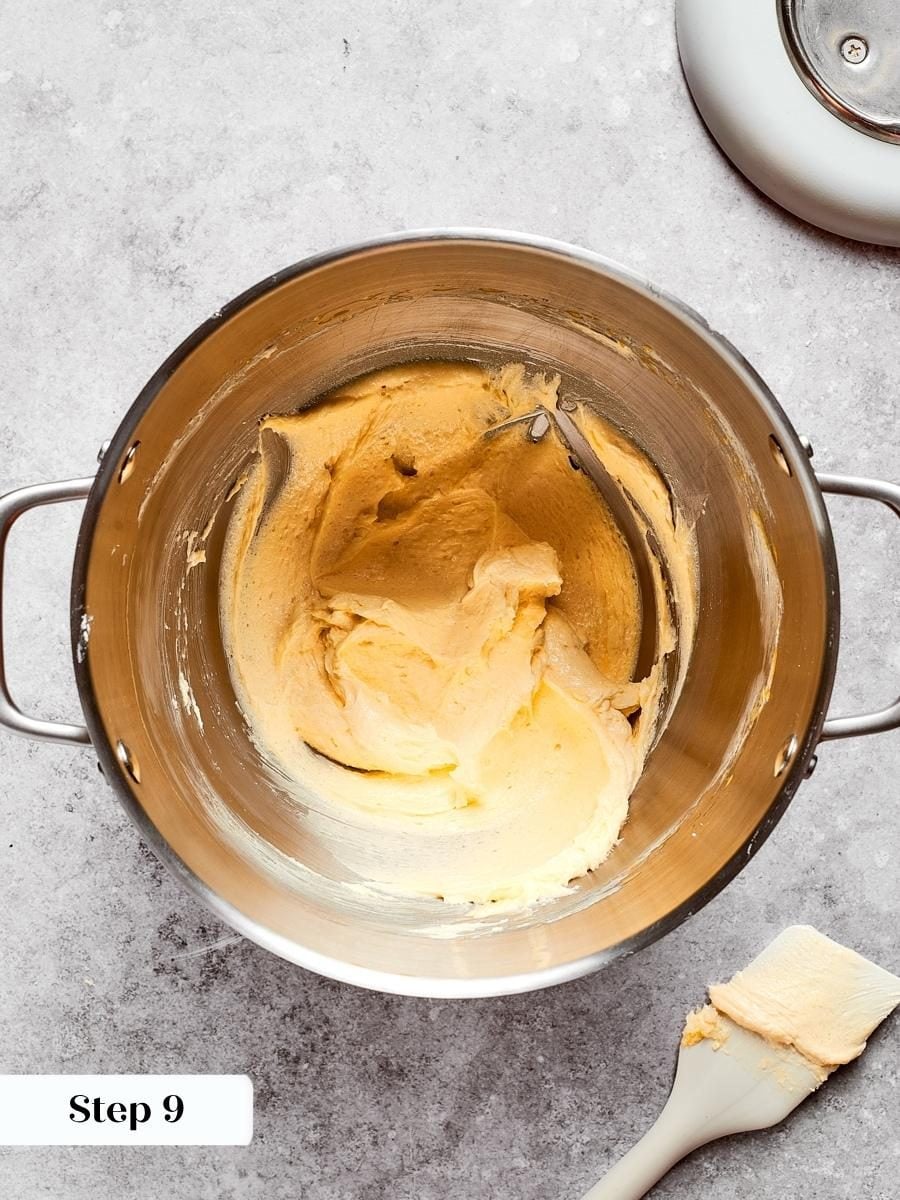
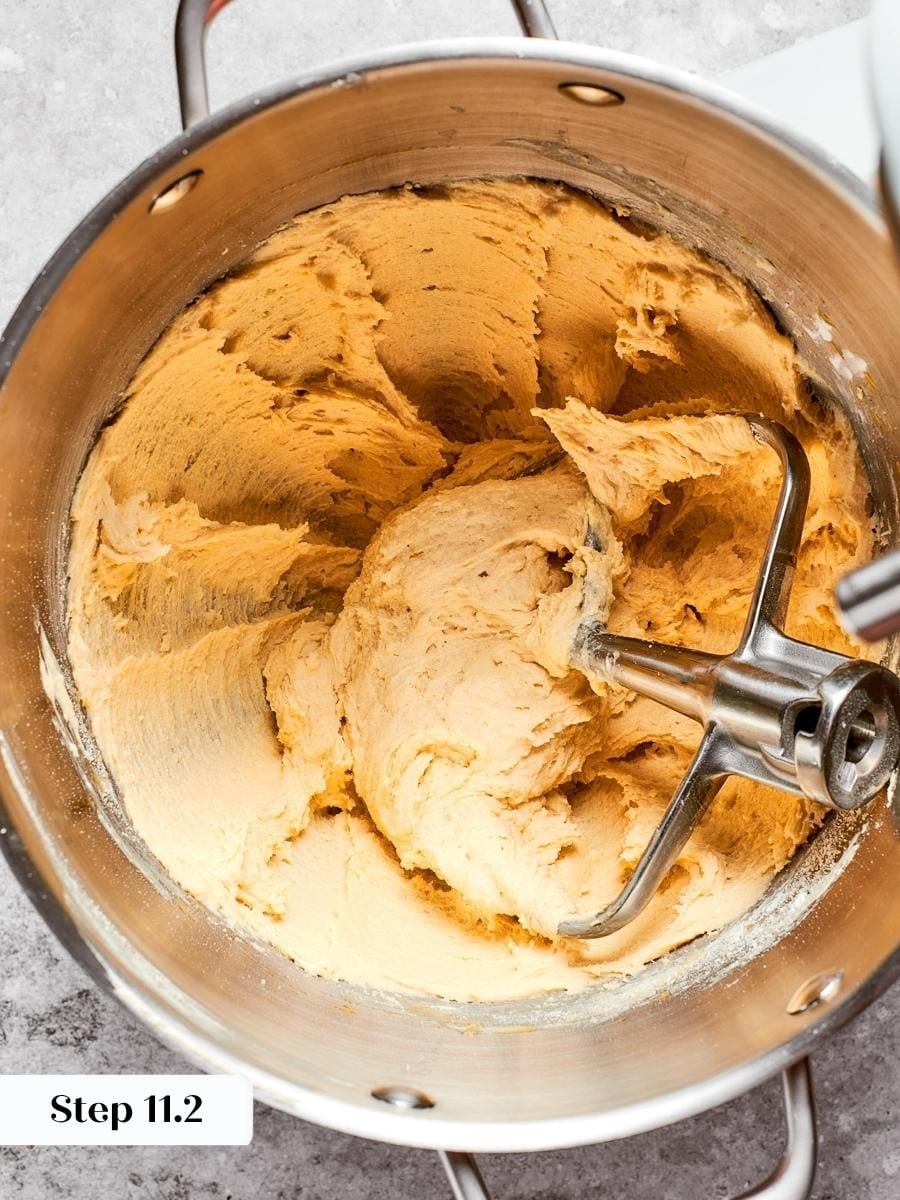
Step 9: Cream the butter and sugar for the almond cream. In the bowl of a stand mixer fitted with the paddle attachment, cream the softened butter and sugar together until light and fluffy. (photo 12).
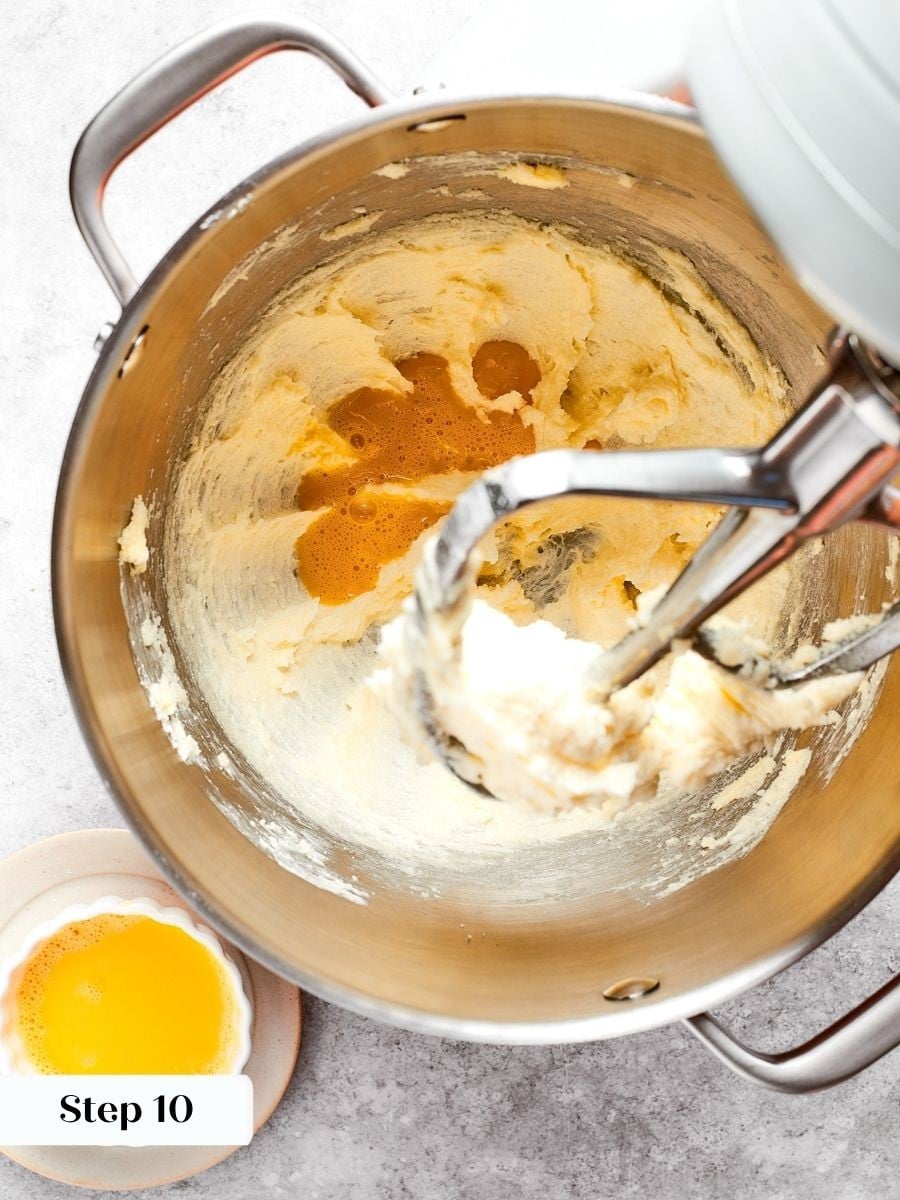
Step 10: Add the eggs to the almond cream. With the mixer running on medium-high, add the beaten eggs in several slow additions, waiting until each addition is fully incorporated before adding the next. Adding them too quickly risks breaking the emulsion, which produces a greasy, separated almond cream. (photo 13).
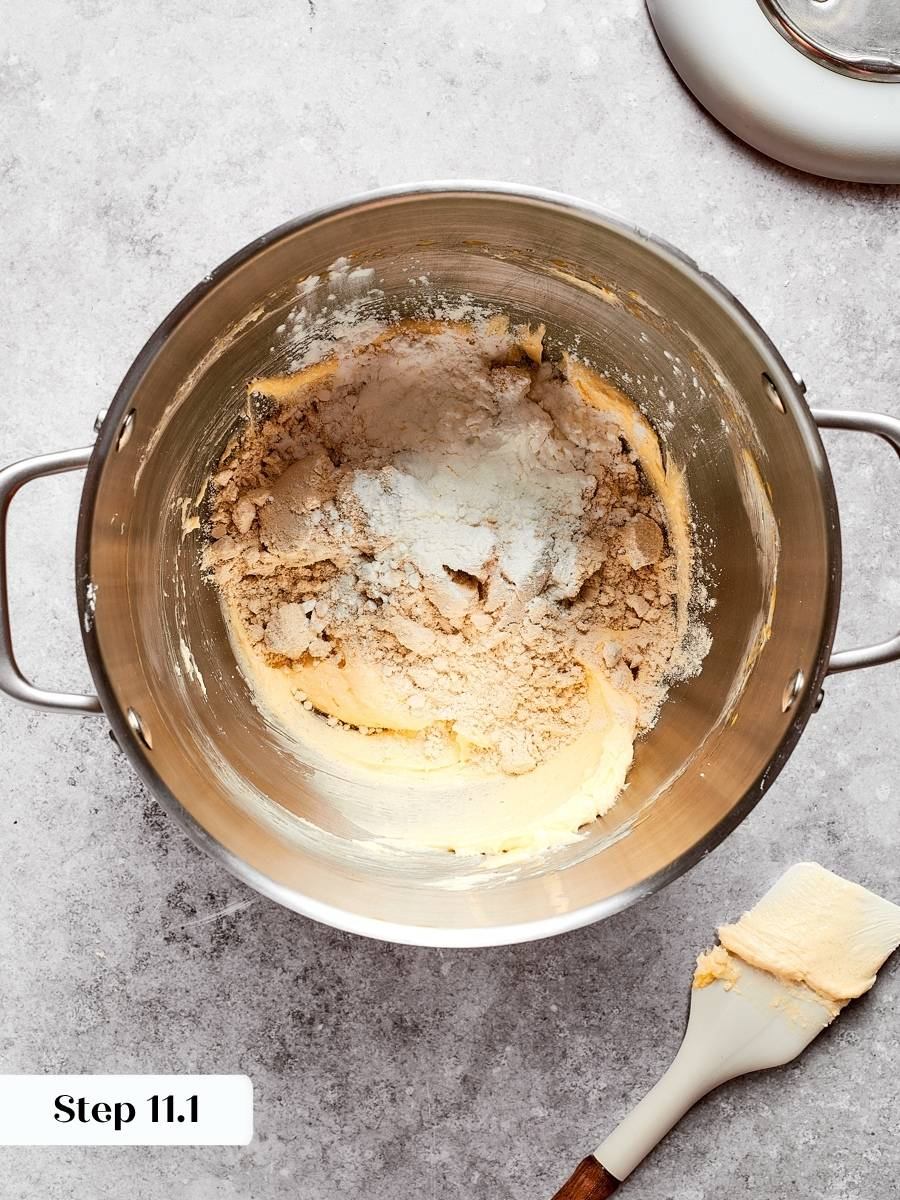
Step 11: Add the almond flour and cornstarch. Add the almond flour followed by the cornstarch and mix until just combined. If you are assembling the tart the same day, the almond cream can stay at room temperature. Otherwise, transfer it to an airtight container and refrigerate for up to one week. (photos 14 & 15).
Roll and Blind Bake
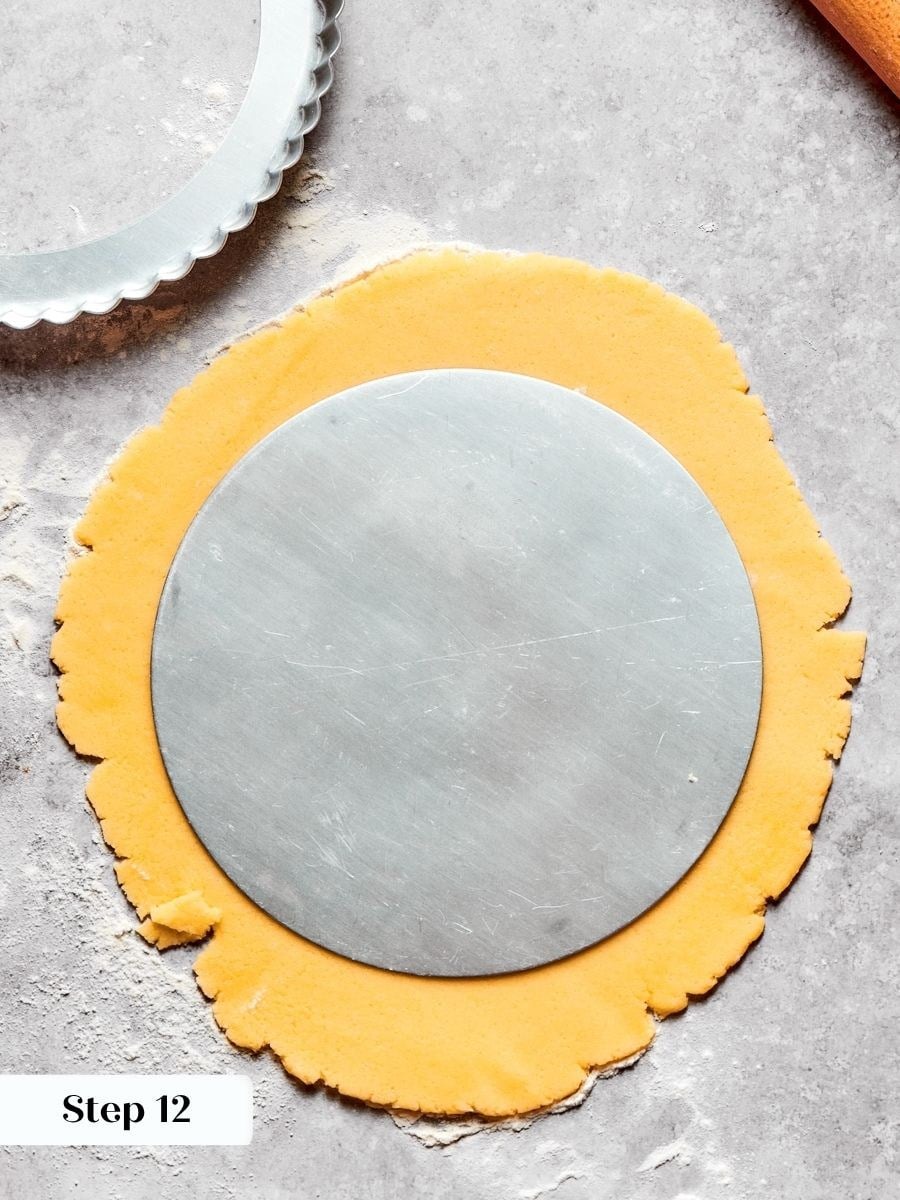
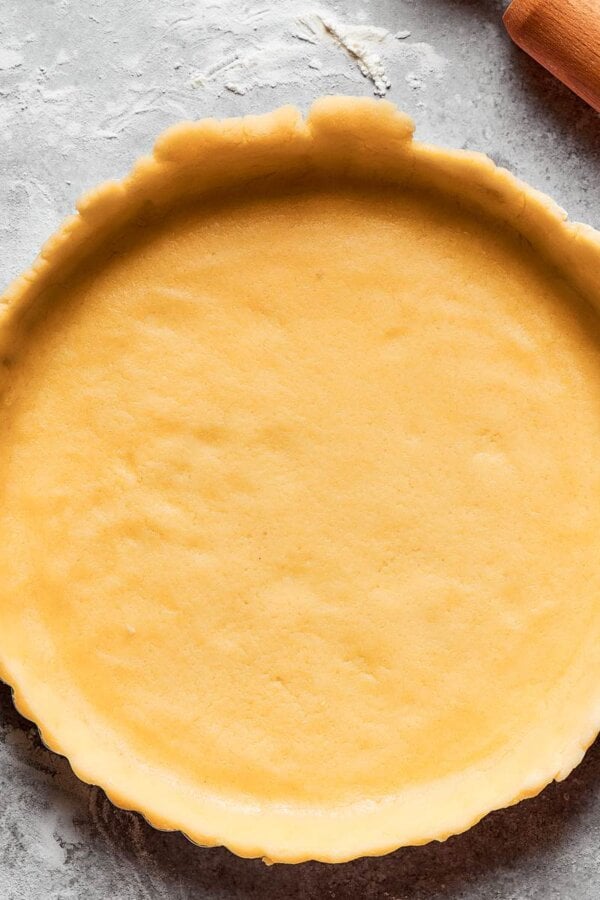
Step 12: Roll out the tart dough. Preheat the oven to 375°F conventional or 350°F convection. Remove one disc of chilled dough from the refrigerator and let it sit at room temperature until it becomes fully pliable. Do not rush this step. Cold dough will crack the moment you start rolling; pliable dough rolls out in smooth, even strokes. On a piece of parchment paper, roll the dough to approximately ⅛ inch thick and about 10 inches in diameter, flouring your rolling pin as needed. Once rolled, refrigerate the sheet for about 30 minutes until firm again. (photo 16).
Only flour one side of the dough. The dough needs the stickiness to stick to the tart ring to keep it from falling or sliding down while baking.
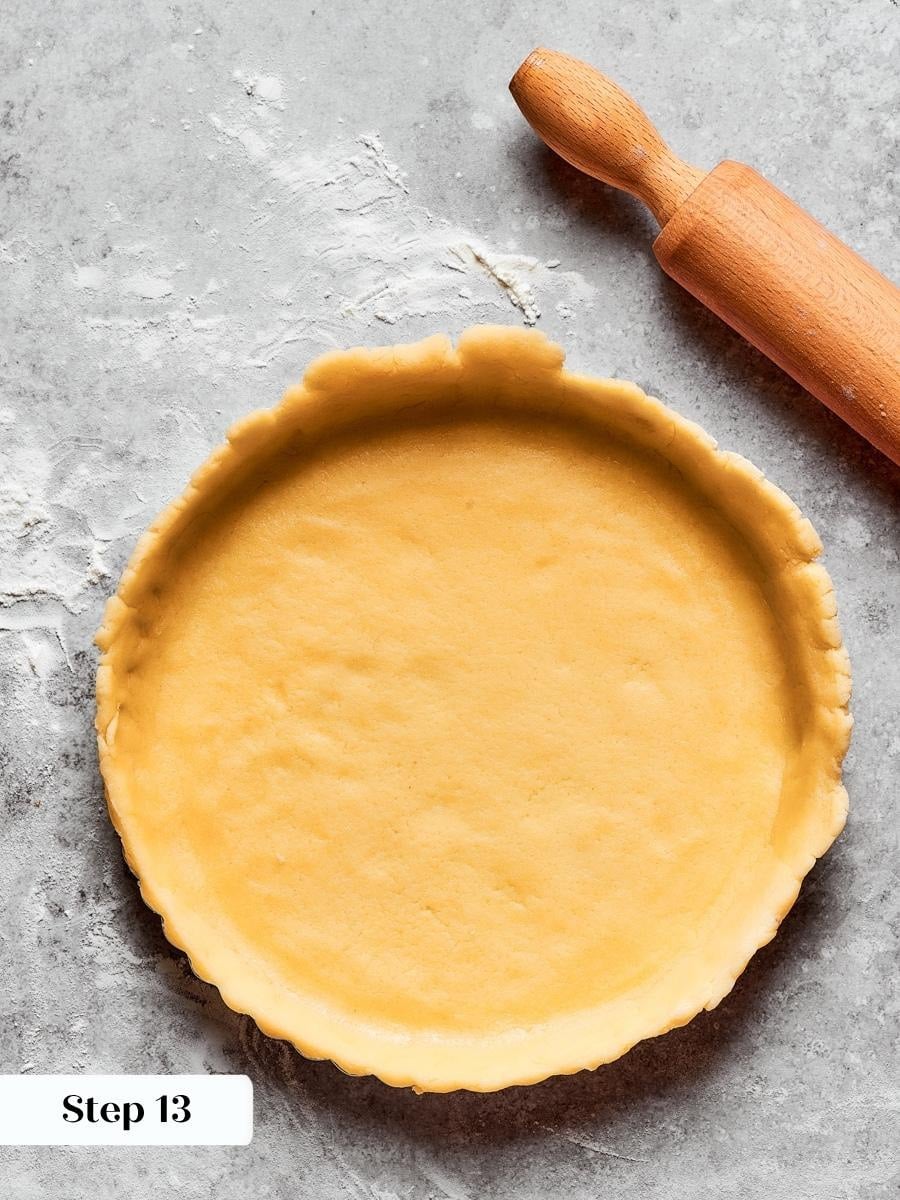
Step 13: Line the tart pan and dock the dough. Let the chilled, rolled dough become pliable again, then carefully lift and drape it over a tart ring or removable-bottom tart pan, pressing it gently into the sides and letting the edges overlap. Chill for 15 minutes. Once firm, use a sharp paring knife or roll a rolling pin across the top of the pan to trim the excess cleanly. Press the dough flat against the sides and bottom to eliminate any air pockets, then dock the bottom by pressing the tines of a fork firmly into the dough in several places. (photo 17).
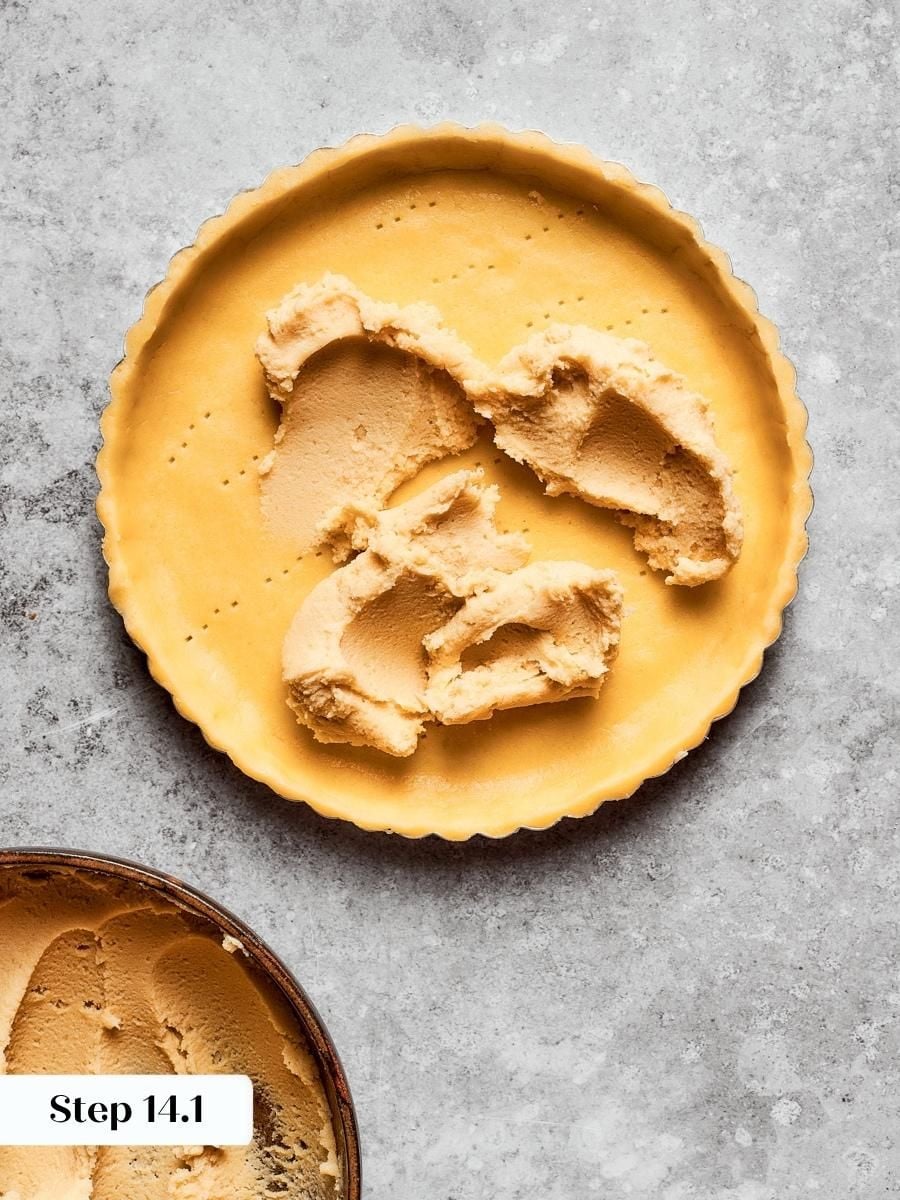
Step 14: Fill and bake the tart shell. Spread the almond cream in a thin, even layer over the bottom of the lined tart shell. Slide the pan into the preheated oven and bake for 15 to 18 minutes, starting to check at 15. The tart is done when the surface is evenly browned and the almond cream feels set and slightly spongy when you press it gently in the center. (photos 18 & 19).
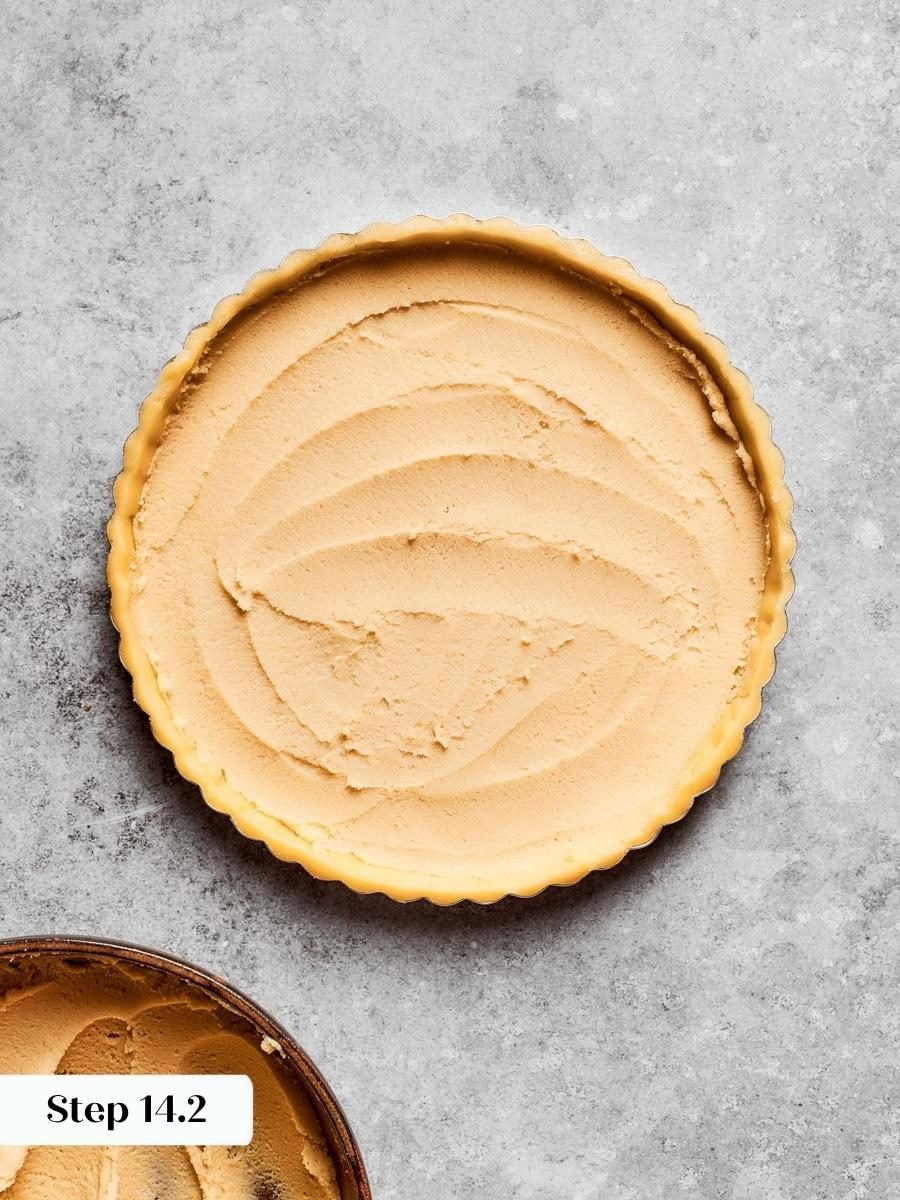
Step 15: Cool the tart shell completely. Set the baked tart shell aside on a wire rack and let it cool completely before removing the tart ring or pan. Do not rush this step: the shell is fragile when warm and will hold its shape cleanly once fully cooled.
Prepare the Components
Step 16: Prepare the fruit. While the shell cools, peel any fruit that needs it and slice everything as thinly as you can.
Thin slices are easier to arrange attractively and make the final tart much cleaner to slice and serve.
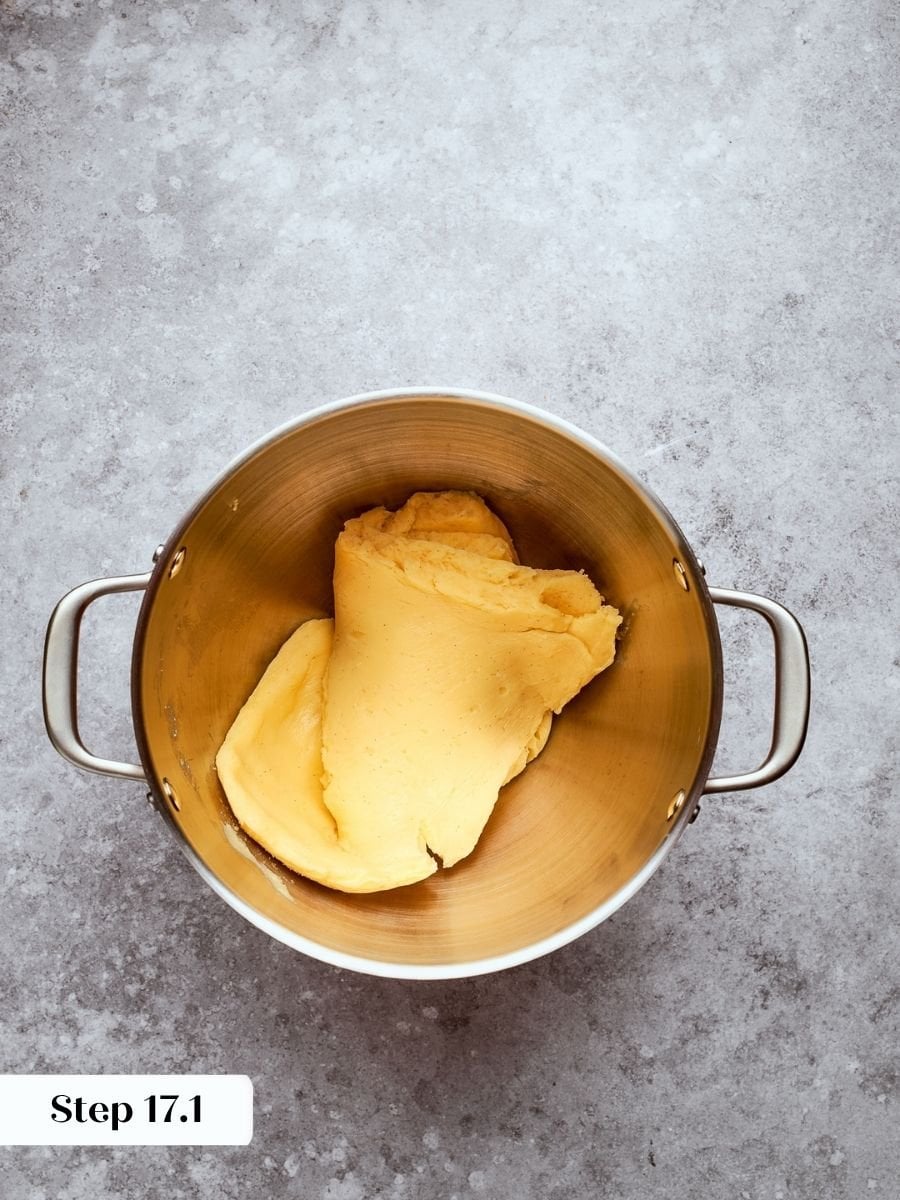
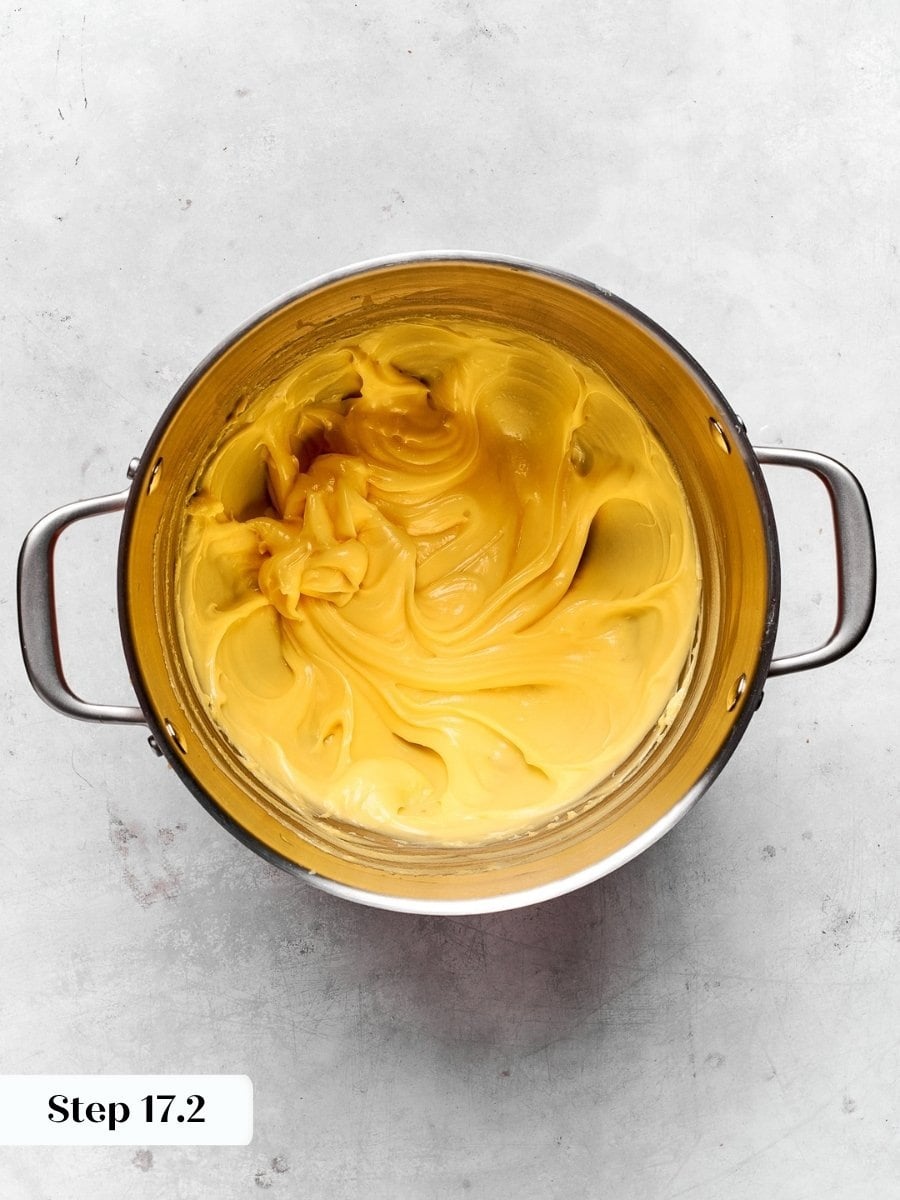
Step 17: Refresh the pastry cream. Remove the chilled pastry cream from the refrigerator. In a large bowl, whisk it vigorously until completely smooth. Or in the beat it with a paddles attachment in a bowl of the stand mixer. Whisk in any flavorings you are using at this stage. It will look stiff and almost gelatinous straight from the refrigerator; whisking brings it back to a silky, spreadable consistency. (photos 20 & 21).
It will look stiff and almost gelatinous straight from the refrigerator; whisking brings it back to a silky, spreadable consistency.
Assemble the Tart
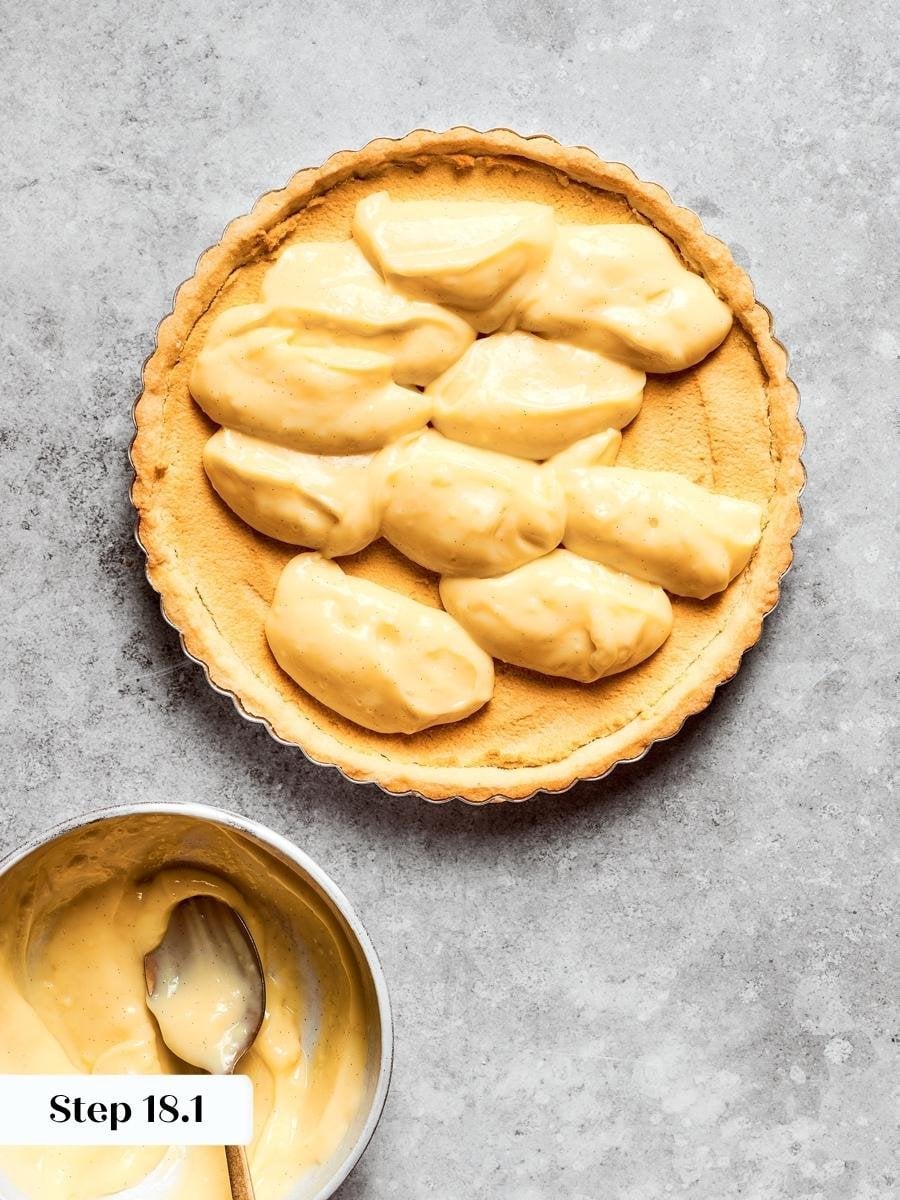
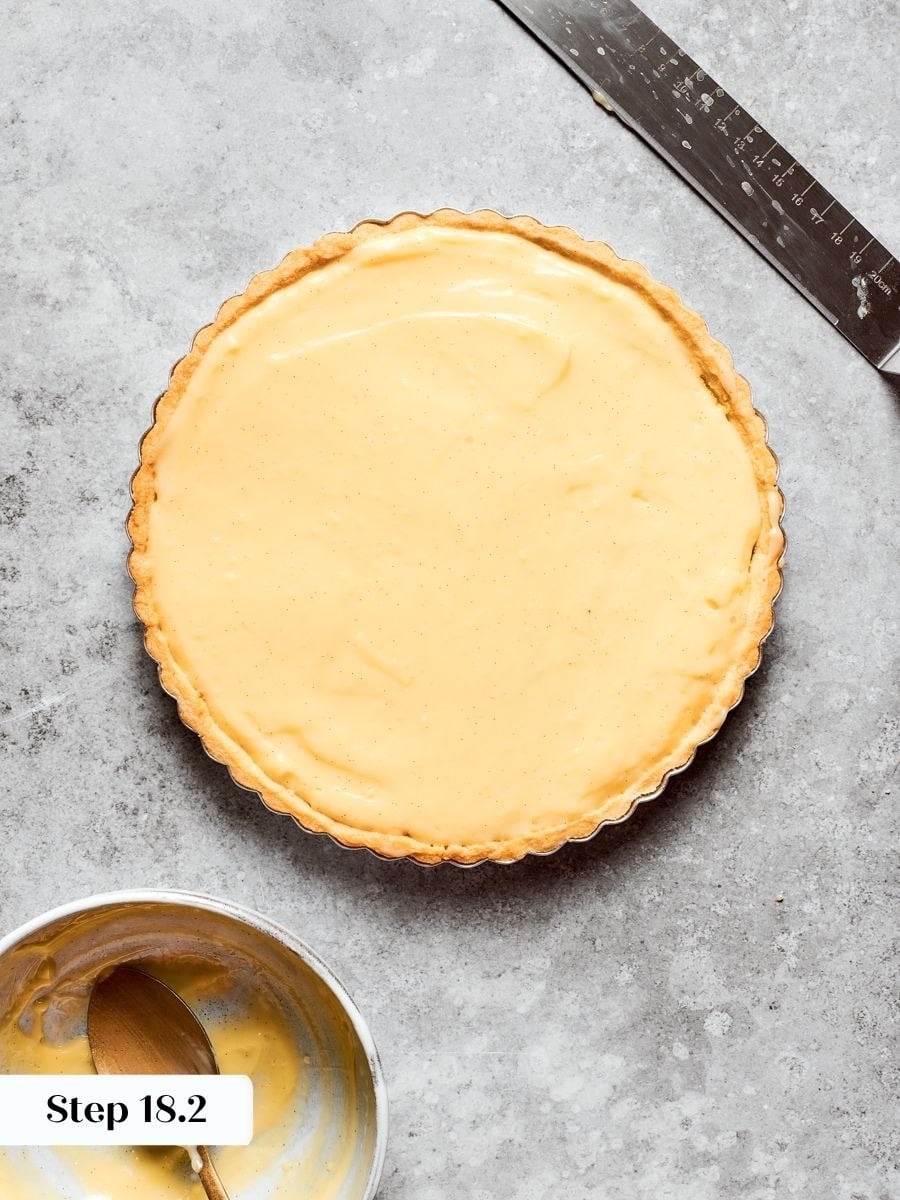
Step 18: Fill the tart shell with pastry cream. Dollop the refreshed pastry cream over the cooled almond cream in the tart shell. Spread it evenly with a small offset spatula, working from the center outward and taking it all the way to the edges. The layer should be thick enough to support the fruit but level across the entire surface. (photos 22 & 23).
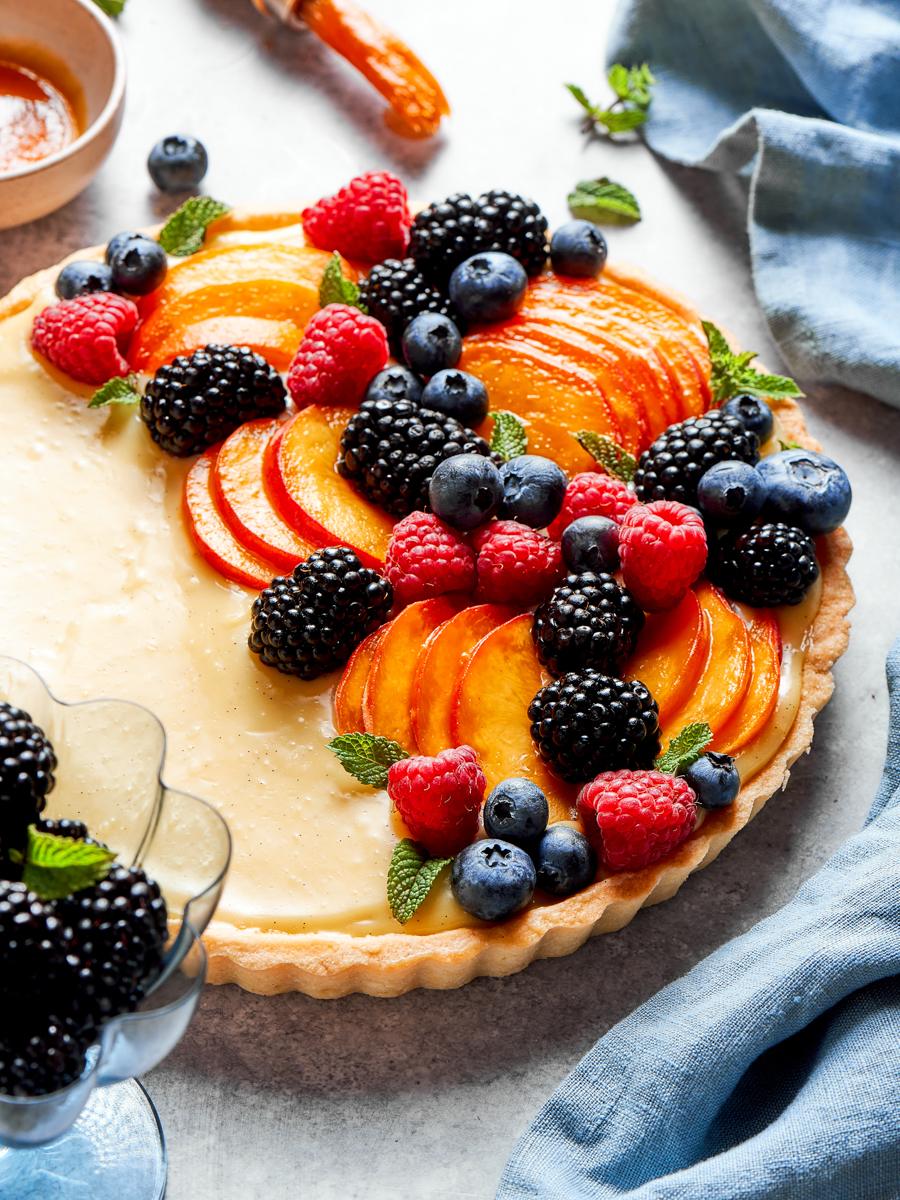
Step 19: Arrange the fruit. Arrange your prepared fruit over the pastry cream. Take your time here: the pattern does not need to be perfect.
You can decorate your tart any way you see fit. In culinary school, we made sure no pastry cream showed through to give the tart that finished, polished look.
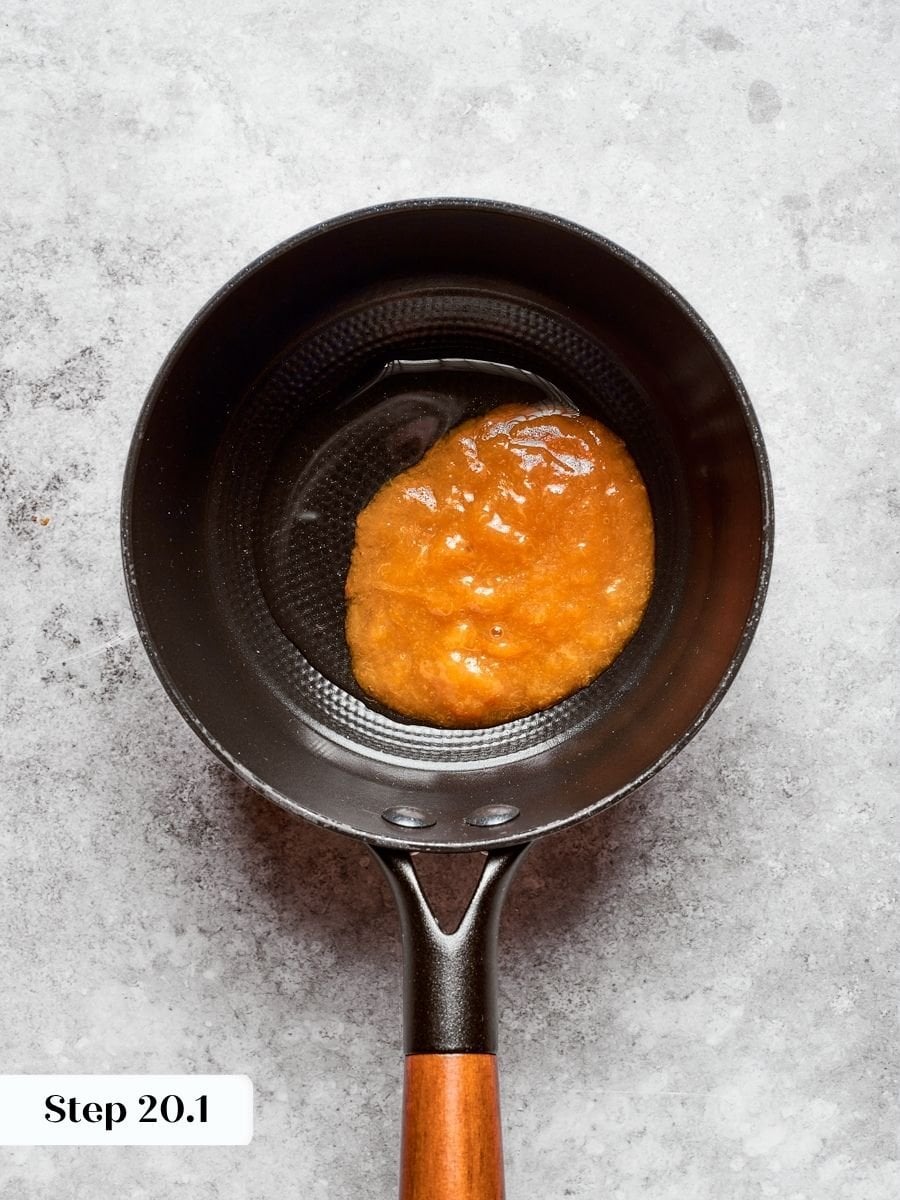
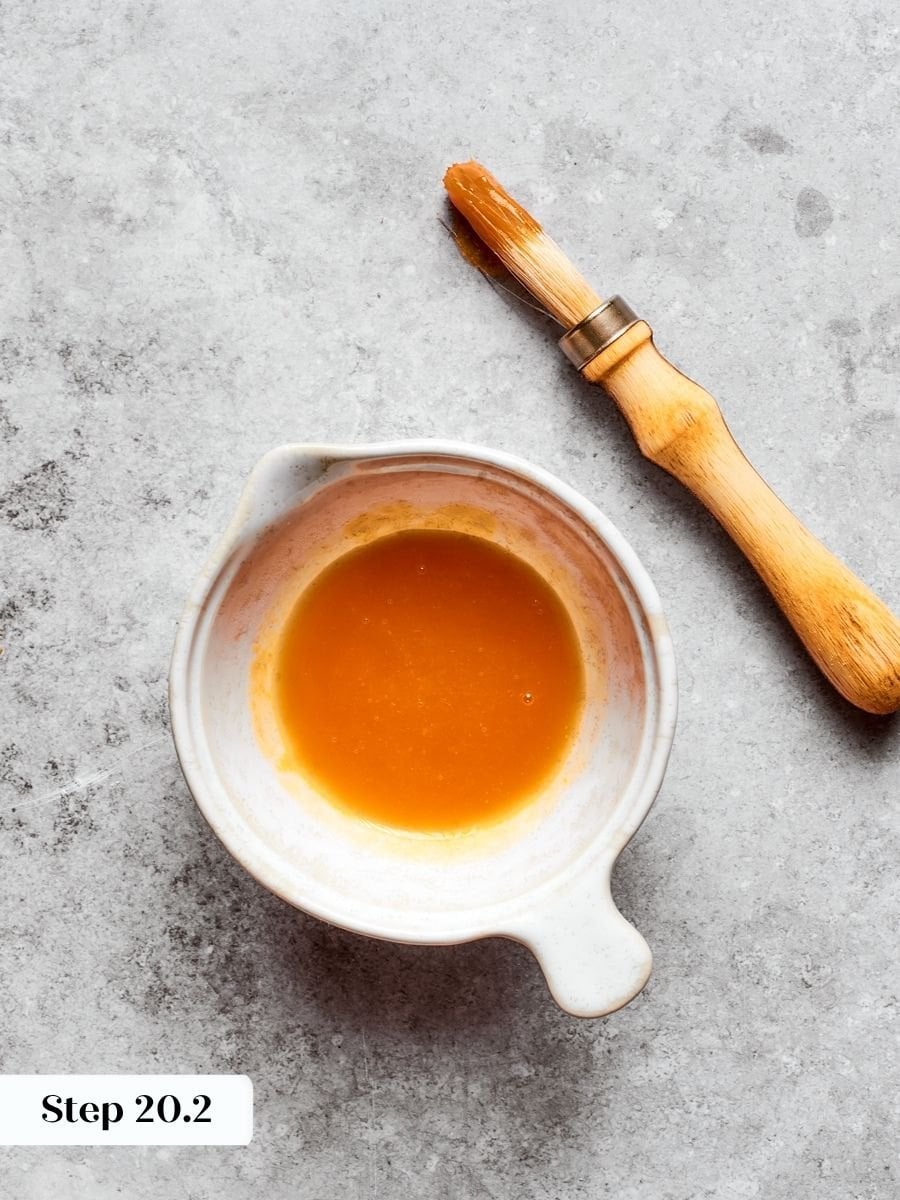
Step 20: Glaze with apricot nappage. In a small saucepot, combine 2 tablespoons of apricot jam or jelly with 2 tablespoons of water and bring to a boil. Whisk to smooth out any lumps, then brush the glaze in a thin, even layer over the fruit using a pastry brush. If your jam contains fruit pieces, strain them out before brushing so the surface stays clean and glossy. A different fruit jelly works here too, though apricot is the classic choice because its flavor is neutral and does not compete with the fruit on top and the natural pectin in apricots helps the glaze set. This layer gives the tart that brilliant, professional finish and helps lock in freshness if you need to store it overnight. (photos 24 & 25).
Step 21: Rest and serve. Serve the tart immediately or refrigerate for 30 minutes to 1 hour before slicing. That brief chill lets everything set up and gives you the cleanest, prettiest slices. Use a very sharp chef’s knife and cut with one confident downward stroke rather than sawing through the crust. (photos 26 & 27).
Chef Lindsey’s Recipe Tip
The single most important thing to understand about this tart is that it is an assembly of three distinct components, and each one must be fully cooled and at the correct temperature before the next layer goes on. Adding pastry cream to a warm tart shell softens the crust from within and causes the cream to weep, and arranging fruit on pastry cream that has not fully chilled means messy, unclean slices. Build patience into your timeline, and the final result will look and taste like something from a proper patisserie window.
Recipe FAQs
Yes, and the best approach is to make each component separately, then assemble the day you plan to serve it. The pâte sablée, baked almond cream shell, and pastry cream can all be made one to two days in advance and stored in the refrigerator. Once assembled and glazed with apricot nappage, the tart holds well overnight in the refrigerator, though the crust will be at its best the same day it is filled.
Store the assembled fruit tart, loosely covered, in the refrigerator for up to 1 day. The apricot nappage helps seal the fruit and keeps everything fresh, but beyond that first day the pastry cream can begin to soften the crust noticeably. For longer storage, keep the baked tart shell and pastry cream separate in the refrigerator and assemble just before serving.
The most common cause is not chilling the tart long enough before slicing. The pastry cream needs to be fully set so it holds its shape when the knife goes through. Give the assembled tart at least two hours in the refrigerator before cutting, and use a sharp knife wiped clean between slices.
Choose fruit that is ripe but still firm, so it holds its shape and does not release excess liquid onto the pastry cream. Berries, kiwi, and stone fruits all work beautifully, and the tart adapts naturally to whatever is best in season. For a dessert that highlights fruit in a different format, my Angel Food Cake is another way to let seasonal fruit take center stage.
Recommended Tart Recipes!
Pies and Tart Recipes
Coconut Mango Tart
Summer Dessert Recipes
Cherry Almond Tart
Pies and Tart Recipes
Puff Pastry Fruit Tart
Date Night
Chocolate Tarts
If you tried this recipe and loved it please leave a 🌟 star rating and let me know how it goes in the comments below. I love hearing from you; your comments make my day!
Fruit Tart Recipe
Ingredients
Pâte Sablée
- 2 cups all-purpose flour
- 1/2 cup granulated sugar
- ¼ teaspoon kosher salt
- 9 tablespoons unsalted butter
- 1 large whole egg
- 1 large egg yolk
Almond Cream
- 9 tablespoons butter room temperature
- 3/4 cups granulated sugar
- 1.5 large eggs beaten
- 1 1/4 cup almond flour
- 4 teaspoons cornstarch
Pastry Cream
- 2 cups whole milk
- ½ vanilla bean split and scraped
- 3/4 cup granulated sugar
- 1 large egg
- 2 egg yolks
- 5 tablespoons cornstarch
Assembly
- 275 g pâte sablée half recipe from above
- 100 g almond cream
- 10 g Grand Marnier kirsch, cognac or similar
- 250 g pastry cream about half recipe from above
- 3 cups fresh seasonal fruit cut as desired
- Apricot jam for nappage
Instructions
Make the pâte sablée
- In the bowl of a stand mixer fitted with the paddle attachment, combine flour, sugar, salt, and butter. Mix on low until no visible butter pieces remain and the mixture resembles sand.
- Whisk the egg and egg yolk together until fully combined, then add to the mixer and mix on low until a cohesive dough forms.
- Divide into two equal pieces (approximately 275 g each), flatten, wrap in plastic, and refrigerate at least 2 hours or overnight.
Make the pastry cream
- Line a baking sheet with plastic wrap. Combine milk, half the sugar, and the split and scraped vanilla bean in a medium saucepot and bring to a boil over medium-high heat.
- Meanwhile, whisk together the egg, egg yolks, remaining sugar, and cornstarch in a large bowl until lightened. Slowly pour the hot milk into the egg mixture while whisking constantly, then return the mixture to the pot.
- Whisk over medium heat until the cream comes to a full boil, boil for 1 minute, then scrape onto the prepared baking sheet. Spread flat, cover with plastic wrap, poke a few holes, and refrigerate for at least 1 hour or overnight.
Make the almond cream
- In the bowl of a stand mixer fitted with the paddle attachment, cream the softened butter and sugar until light and fluffy.
- With the mixer on medium-high, slowly add the beaten eggs in several additions. Add the almond flour followed by the cornstarch and mix until combined. Store at room temperature if using the same day, or refrigerate in an airtight container for up to one week.
Prepare the tart shell.
- Preheat the oven to 375°F conventional or 350°F convection. Roll one chilled piece of pâte sablée to about ⅛ inch thick on parchment, flouring your rolling pin as needed. Allow the dough to become fully pliable before rolling — it will crack if still cold. And make sure to only flour one side of the tart dough.
- Line a 10-inch tart ring or removable-bottom pan, letting the edges overlap, and chill for 15 minutes. Trim the excess with a sharp paring knife or rolling pin, then dock the bottom with a fork.
Bake the shell
- Spread 100 g almond cream in a thin, even layer over the docked tart base. Bake for 15 to 18 minutes until evenly browned and the almond cream feels set and slightly spongy when gently pressed. Cool completely, then remove the tart ring.
- Prepare the fruit. Peel if needed and slice the fruit thinly. Thin, even slices make the tart easier to cut cleanly and present more attractively.
Assemble the tart
- Whisk or beat the pastry cream until smooth, then whisk in 10 g Grand Marnier or chosen liqueur if using. Dollop the pastry cream over the cooled almond cream layer and spread evenly with a small offset spatula. Arrange the fruit attractively over the surface of the pastry cream.
- Glaze and serve. Heat 2 tablespoons apricot jam with 2 tablespoons water in a small pot, bring to a boil, and whisk smooth. Allow to cool slightly and brush a thin layer over the fruit. Refrigerate for 30 minutes to 1 hour before slicing with a sharp chef's knife. Serve the same day for best results.
Notes
Doneness cue: Pull the baked almond cream shell at the lower end of the time range. It is done when the surface is evenly golden and springs back lightly when pressed — not firm, not pulling away from the sides.
Make ahead: All three components can be made one to two days in advance and stored in the refrigerator. Assemble the day you plan to serve for the freshest result.
Storage: Once assembled, store loosely covered in the refrigerator for up to one day. For longer storage, keep the baked shell and pastry cream separate and assemble just before serving.
Nutrition
Before You Go
A crisp pastry shell, silky vanilla pastry cream, and fresh fruit make this tart one of the most satisfying things to pull from the oven and finish at the counter. If you want to keep exploring, browse more Pie & Tart Recipes or make this cherry almond tart with your extra almond cream!.








I made this for a dinner party and could not believe how professional it looked and tasted. Baking the almond cream directly in the shell before adding the pastry cream was a step I had never seen before, and it made such a difference in the overall texture. The crust stayed crisp even the next day, which never happens with tarts I have made before.
This is everything we hoped to hear! That almond cream and apricot nappage really set this tart apart! So glad it delivered at the dinner party! ~CLF team