
This post may contain affiliate links. Please read our disclosure policy.
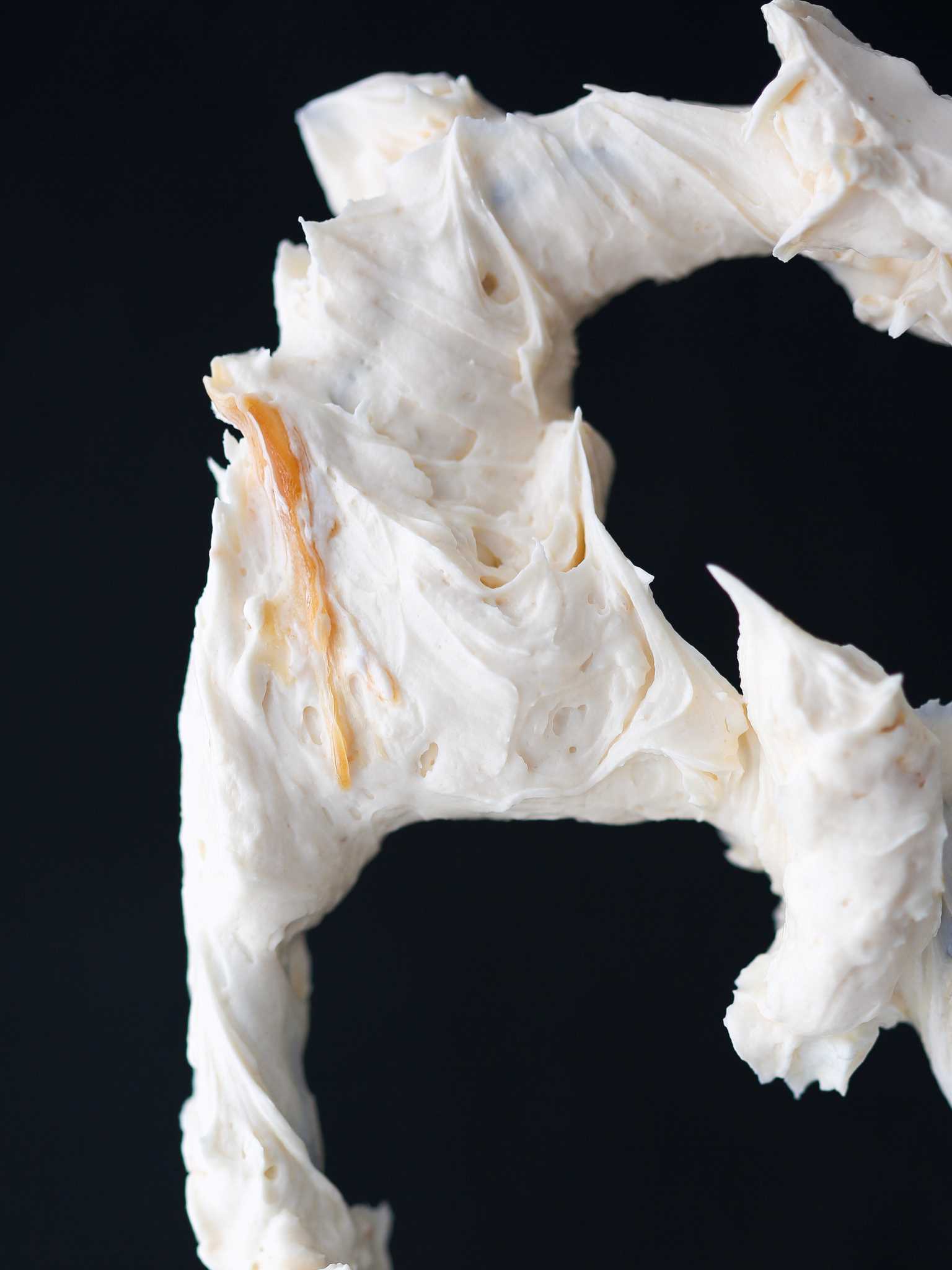
Caramel Swiss meringue buttercream is incredibly easy to make, perfectly sweetened, and has a light, silky texture. It is the perfect topping for cakes or cupcakes! Its silky texture makes it the best frosting to achieve that perfectly smooth coating on a layer cake.
A Quick Look At The Recipe
This is a brief summary of the recipe. Jump to the recipe to get the full details.
Jump to RecipePrep Time
30 minutes
Cook Time
15 minutes
Total Time
45 minutes
Servings
36 servings
Difficulty
Intermediate
Calories *
195 kcal per serving
Technique
Swiss meringue method: egg whites and sugar heated over a double boiler, whipped to stiff peaks, then butter and caramel sauce beaten in until silky.
Flavor Profile
Buttery, deeply caramelized, balanced sweetness, subtle vanilla.
* Based on nutrition panel
I made this caramel Swiss meringue buttercream for a birthday layer cake and it came out perfectly smooth on the first try. I was nervous when the mixture looked curdled after I added the butter, but I kept mixing and it came together exactly like you said it would. The caramel flavor is rich without being overwhelmingly sweet, which was exactly what I needed to balance the chocolate cake layers. ⭐⭐⭐⭐⭐
Sarah
Why This Recipe Works
- Swiss meringue base cuts the sweetness. American buttercream recipe relies on confectioners’ sugar for structure, which brings sweetness along with it. The meringue in this buttercream gives you the same stability without loading in extra sugar.
- Stable enough for layered cakes. The butter and meringue set solid when chilled, which means you can tier cakes with confidence. If your decorated cake needs to sit out for an hour or two, the meringue structure holds where a looser frosting would not. This lemon cake layered with this buttercream sounds just divine.
- Faster than Italian meringue buttercream. Unlike Italian meringue buttercream, which requires a hot sugar syrup and a stand mixer for safety, Swiss meringue can be made with a hand mixer. The process is more forgiving, and the timeline is shorter.
- Make-ahead and freezer-friendly. A larger batch keeps in the refrigerator or freezer until you need it. Bring it back to room temperature, re-whip, and it is ready to spread or pipe.
Table of Contents
- Why This Recipe Works
- Ingredients & Substitutions
- Variations on This Caramel Swiss Meringue Buttercream
- Professional Tips
- How to Make Caramel Swiss Meringue Buttercream
- Chef Lindsey’s Recipe Tip
- Recipe FAQs
- Easy Buttercream and Frosting Recipes
- Recommended Caramel Swiss Meringue Buttercream Recipes
- Caramel Swiss Meringue Buttercream Recipe
- Before You Go
I am generally a card-carrying member of the Italian Meringue Buttercream Club, but IMB can be a bit tricky with the timing of the meringue and the sugar syrup, and the temperature of the butter. When I’m feeling pressed for time, I will lean on my old friend Swiss Meringue Buttercream (SMB)
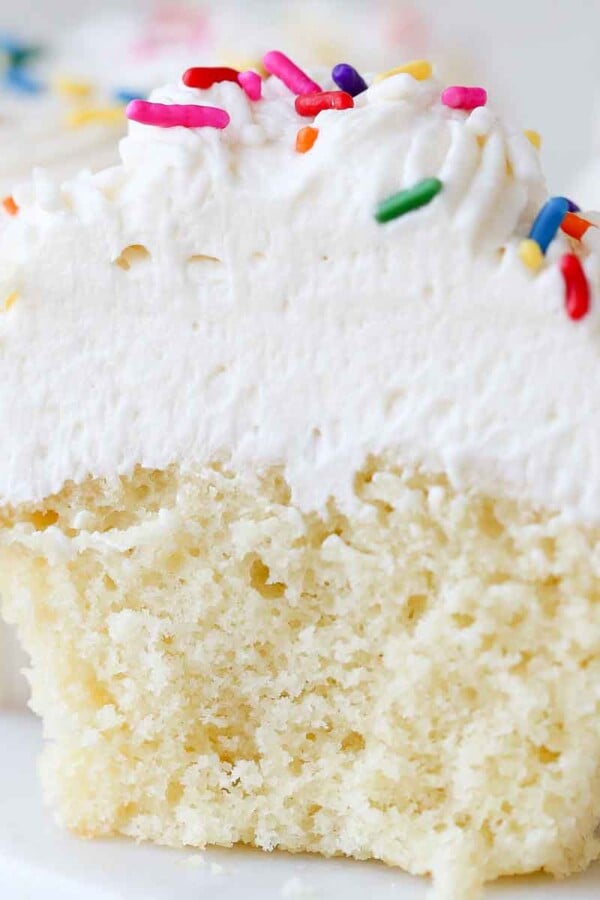
Use caramel Swiss meringue buttercream to frost classics like vanilla cupcakes or something playful like caramel apple cupcakes.
Ingredients & Substitutions

- Egg Whites: The egg whites are the structural foundation of this buttercream. Whipped with sugar, they build a glossy, stable foam that supports a high ratio of butter without collapsing or turning greasy.
- Granulated Sugar: Sugar dissolves into the egg whites over gentle heat, creating a cooked meringue that is safe to eat and structurally stable. The precise amount matters: too little, and the buttercream loses both sweetness and stability; too much, and it becomes cloying and less silky.
- Unsalted Butter: Butter transforms the meringue into a rich, smooth, pipeable buttercream. Using unsalted butter keeps salt levels fully in your control, and butter at the right temperature, cold but pliable at around 60 to 65°F, emulsifies gradually into the meringue rather than melting into it or causing it to curdle.
- Vanilla Extract: Vanilla rounds out the flavor and keeps the caramel from reading as one-note sweet. Add it after the meringue has cooled and the butter has fully emulsified to preserve its aroma.
- Salted Caramel Sauce: The salted caramel sauce is the primary flavor in this buttercream, so quality and consistency both matter. It must be thick, deeply caramelized, and completely cool before you add it. A warm or thin sauce will break the emulsion; a high-quality sauce with balanced salt is what makes the buttercream read as caramel-forward rather than just sweet.
See the recipe card for full information on ingredients and quantities.
Variations on This Caramel Swiss Meringue Buttercream
- Vanilla Swiss Meringue Buttercream. Follow the exact same method but omit the caramel sauce entirely; the result is the classic, clean-flavored base you can use for any layer cake, and my Swiss meringue buttercream post walks through every step of that version in detail.
- Lemon Caramel Buttercream. Swap 2 to 3 tablespoons of the caramel sauce for an equal amount of thick easy lemon curd, adding it at the same stage as the caramel; the tartness cuts through the richness and makes this version particularly good on a vanilla or you could make this lemon Swiss meringue buttercream!
- Change the flavor! Replace the caramel with melted chocolate like with this chocolate Swiss meringue buttercream, mixed berry jam or add any number of extracts. It really is the perfect base for any flavor!
Professional Tips
- Dissolve the sugar completely during the whipping. If undissolved sugar granules remain in the egg whites, the meringue will be gritty, and the emulsion can break once butter is added. Rub a small amount between your fingers: the mixture should feel completely smooth before you move the bowl to the mixer.
- Let the meringue cool before adding butter. The bowl should feel just barely warm to the touch, not hot. Adding butter to a too-warm meringue is the most common reason this buttercream turns soupy, and while it can usually be saved by chilling and re-whipping, patience at this stage avoids the problem entirely.
- Do not panic if the buttercream curdles or looks broken. This is completely normal and happens when the butter is slightly too cold or the temperature is uneven across the bowl. Keep the mixer running; the friction will warm and smooth it out. If it stays broken after several minutes, refrigerate the bowl for 20 minutes, then beat again.
- Add the caramel after the buttercream fully comes together. Pouring caramel sauce in before the emulsion is complete will destabilize it. Wait until the buttercream is smooth and silky, then stream in the cooled caramel with the mixer running on medium speed.
- Separate your eggs carefully! When making meringue, you don’t want any fat in the egg whites. The fat from the yolk or an unclean bowl will cause the meringue to never come to stiff peaks. So separate carefully and use those egg yolks to make caramel pastry cream or vanilla crème brûlée.
How to Make Caramel Swiss Meringue Buttercream
Use these steps to make perfect caramel Swiss meringue buttercream every time. Full measurements are in the recipe card below.
Whip egg whites and sugar
Step 1: Set up your double boiler. Fill a medium saucepan with about an inch of water and bring it to a gentle simmer. Nest your stand mixer bowl inside the pot to check the fit before you start — the bottom of the bowl should sit above the waterline, not touch it. This indirect heat is what gently cooks the egg whites without scrambling them.


Step 2: Whisk together the egg whites and sugar, then cook over the double boiler. Combine the egg whites and sugar in the stand mixer bowl and whisk them together before placing the bowl over the simmering water. Whisk constantly as the mixture heats — you are looking for 130°F on an instant-read thermometer, or until the sugar has completely dissolved and the mixture feels warm when you rub a small amount between your fingers. The mixture will start to feel lighter and slightly foamy as it approaches temperature, which is completely normal. (photo 1)
Step 3: Whip the meringue to stiff peaks. Transfer the bowl to the stand mixer and fit it with the whisk attachment. If you are working on a gas burner, use a kitchen towel to handle the bowl because it will be genuinely hot. Beat on high speed until the meringue forms stiff, glossy peaks and the outside of the bowl feels just slightly warm or neutral to the touch. (photo 2)
You want the meringue to cool down before the butter goes in — warm meringue will melt the butter on contact and leave you with a soup instead of a buttercream.
Add butter
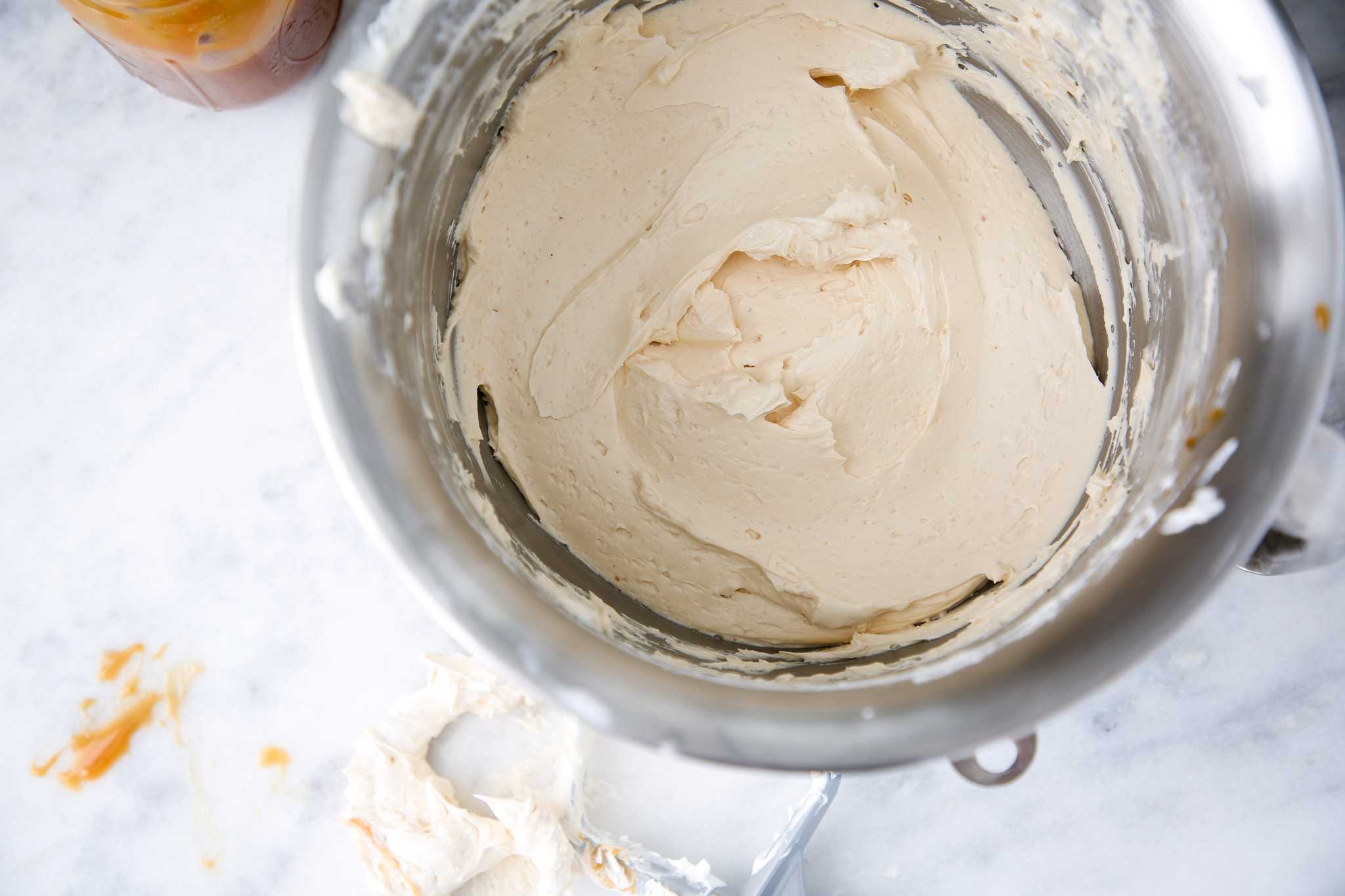
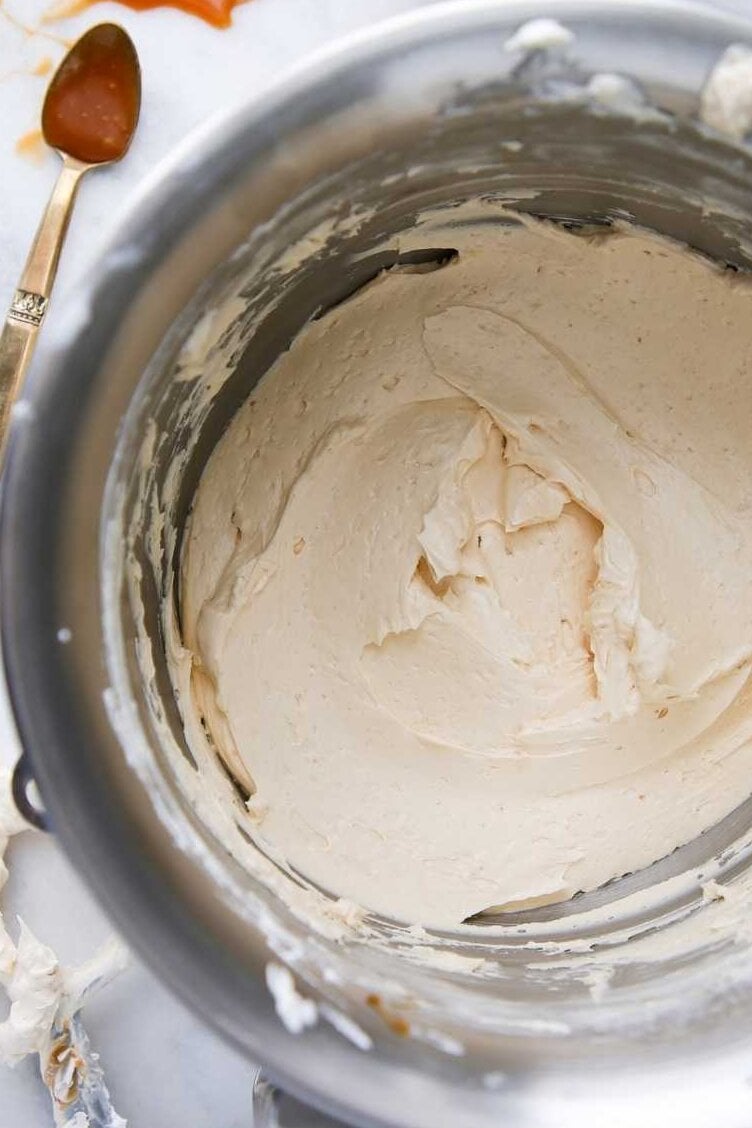
Step 4: Switch to the paddle and add the butter. Swap the whisk attachment for the paddle, then add all the butter at once. Beat on medium speed and be patient — the mixture will look curdled and broken at first. Keep beating and the butter will emulsify with the meringue into a silky, smooth buttercream. (photo 3 & 4)
If a few stubborn butter pieces refuse to incorporate, hold a kitchen torch briefly against the outside of the bowl to melt them. Move quickly and keep the flame moving — too much heat in one spot will melt the surrounding butter and you will not be able to recover it.
Step 5: Rescue a broken or soupy buttercream if needed. If your butter went in while the meringue was still too warm and the whole thing has turned to liquid, do not panic. Let the butter work in completely first — if you refrigerate it while there are still solid pieces, those will turn into chunks and you will have an uneven texture. Once everything is incorporated, move the bowl and paddle attachment to the refrigerator for 20 to 30 minutes, then return it to the mixer and continue beating. The cold firms everything back up and the emulsion comes together. The number one rule here is patience.
Add caramel
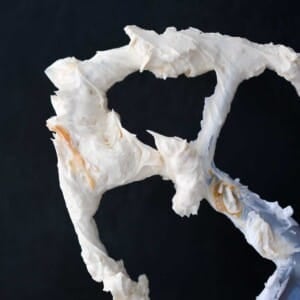
Step 6: Add the caramel and finish the buttercream. Once the buttercream is smooth and silky, add the caramel sauce and vanilla extract. Switch back to the whisk attachment and beat on high speed until the buttercream is light, fluffy, and evenly caramel-colored throughout. The finished buttercream should look airy and pale golden, hold a soft peak when you lift the whisk, and smell deeply of caramel.
Tip: You can make a larger batch ahead of time and store it in the refrigerator or freezer until you need it. Bring refrigerated buttercream back to room temperature and beat it briefly with the paddle attachment to restore the texture before using.
Step 7: Frost and finish your cake. Use the buttercream immediately for the smoothest application, or cover it tightly and set it aside at room temperature for up to a few hours. It holds up well in a warm room without breaking down, which makes it a reliable choice for layered cakes that need time to assemble and decorate. If you are working with multiple tiers, use cake straws or skewers to support the upper layers — even the most stable Swiss meringue buttercream will compress under the weight of stacked tiers and filling without that structural support.
Chef Lindsey’s Recipe Tip
Swiss meringue buttercream looks broken far more often than it actually is broken, and that distinction matters. If the mixture turns soupy after the butter goes in, the bowl is too warm: refrigerate it for 10 to 15 minutes, then beat again and it will come back together. If it looks curdled and chunky, the butter was too cold: keep the mixer running and the friction will smooth it out. The caramel is the last thing to add, and it should be fully cooled and thick before it touches the buttercream. A warm or thin caramel will unravel a perfectly built emulsion in seconds.
Recipe FAQs
Soupy buttercream almost always means the meringue was still too warm when the butter went in. Refrigerate the bowl for 10 to 15 minutes, then return it to the mixer and beat on medium-high until it comes back together. Curdled buttercream, on the other hand, usually means the butter was too cold: keep mixing, and the heat from the friction will smooth it out.
Yes, and it keeps well. Store it in an airtight container in the refrigerator for up to one week, or freeze it for up to three months. When you are ready to use it, bring it fully to room temperature and re-whip on medium-high speed until it is smooth and silky again.
Refrigerate it in a sealed container for up to one week. For longer storage, freeze it for up to three months, then thaw overnight in the refrigerator, bring to room temperature, and re-whip until smooth before using.
Swiss meringue buttercream is faster to make and has less margin for error, which makes it the better choice when you are working quickly or without a stand mixer. Italian meringue buttercream carries a higher sugar load in the syrup, which makes it slightly more stable in hot environments or under the weight of a tiered cake.
Undissolved sugar is the culprit. If the granules have not fully melted into the egg whites over the double boiler before you move to the mixer, the meringue will carry that grit into the finished buttercream. Rub a small amount of the heated mixture between your fingers before you start whipping: it should feel completely smooth, with no sandy texture at all.
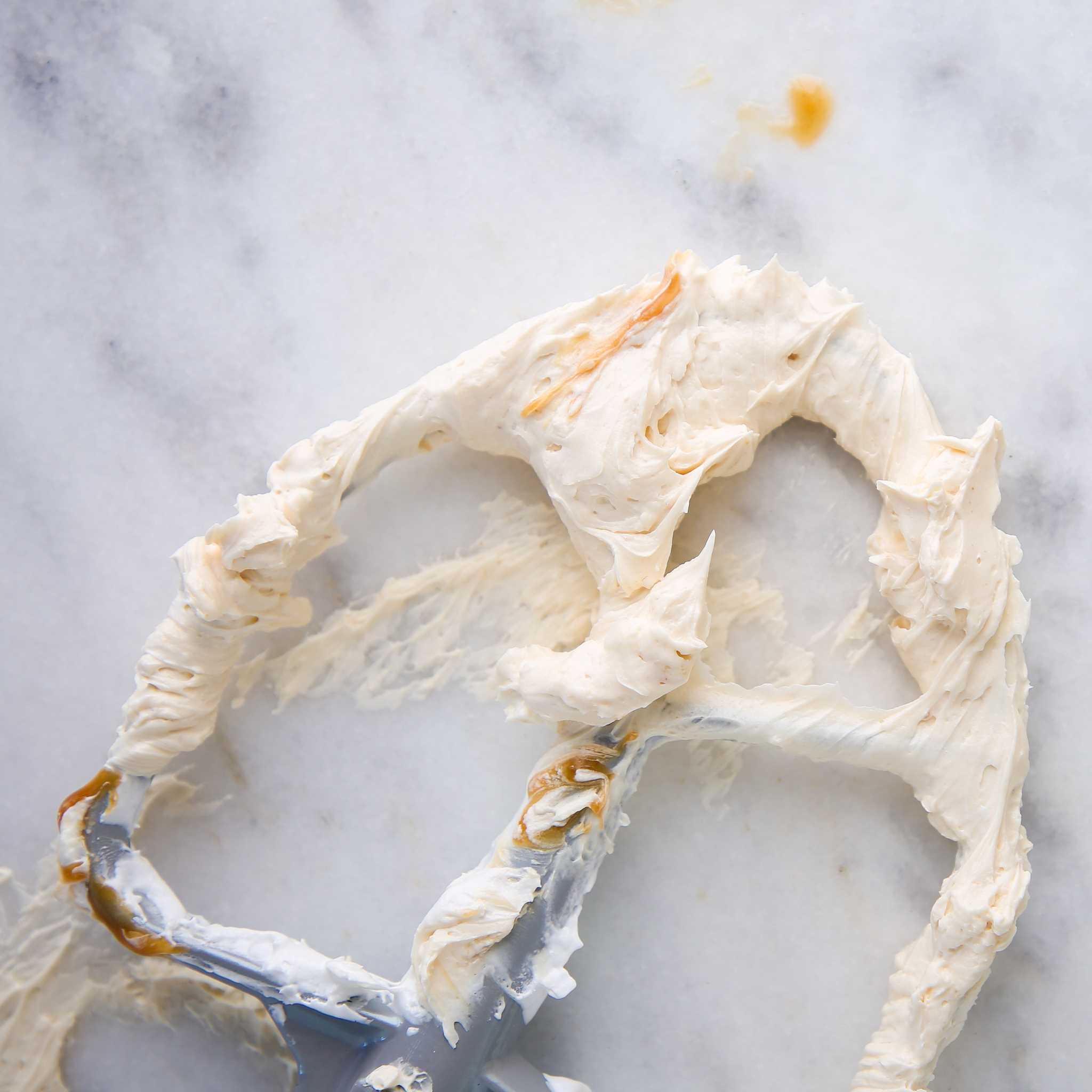
Easy Buttercream and Frosting Recipes
Easy Buttercream & Frosting Recipes
Peanut Butter Buttercream
Easy Buttercream & Frosting Recipes
Lemon Swiss Meringue Buttercream

Easy Buttercream & Frosting Recipes
Chocolate Cream Cheese Frosting
Easy Buttercream & Frosting Recipes
Chocolate Swiss Meringue Buttercream
If you tried this recipe and loved it please leave a 🌟 star rating and let me know how it goes in the comments below. I love hearing from you; your comments make my day!
Caramel Swiss Meringue Buttercream
Ingredients
- 5 egg whites
- 1 ¼ cups granulated sugar 285 g
- 2 cups unsalted butter 4 sticks, cold but pliable
- 2 teaspoons vanilla extract
- ¾ cup salted caramel sauce
Instructions
- Set up a double boiler by bringing about an inch of water to a bare simmer in a medium saucepan. The bowl of your stand mixer should nest inside without the water touching the bottom.
- Whisk the egg whites and granulated sugar together in the stand mixer bowl. Place the bowl over the simmering water and whisk constantly until the mixture reaches 130°F on an instant-read thermometer and feels completely smooth when rubbed between your fingers, with no trace of graininess.
- Transfer the bowl to the stand mixer and fit with the whisk attachment. Beat on high speed until the meringue reaches stiff, glossy peaks and the outside of the bowl feels cool to the touch.
- Switch to the paddle attachment. Add all the butter at once and beat on medium speed until the butter is fully incorporated and a smooth, silky buttercream forms. If a few small butter pieces remain stubborn, briefly warm the outside of the bowl with a kitchen torch, then continue mixing.
- If the buttercream turns soupy, continue mixing until all butter is incorporated, then refrigerate the bowl for 20 to 30 minutes and beat again until it comes together.
- Add the salted caramel sauce and vanilla extract. Switch back to the whisk attachment and beat on medium-high until the buttercream is light, fluffy, and fully combined.
Video
Notes
Caramel temperature: Add the caramel only after the buttercream is fully emulsified, and make sure it is completely cooled and thick before it goes in. A warm or thin caramel will break the emulsion.
Tiered cakes: The buttercream sets firm when chilled and can support tiered cakes, but always use cake straws or dowels to carry the structural weight of upper layers.
Storage: Store in an airtight container in the refrigerator for up to one week, or freeze for up to three months. Bring fully to room temperature and re-whip on medium-high until smooth before using.
Nutrition
Before You Go
If this caramel buttercream made it onto your list, you will find plenty more to explore. Browse my Buttercream & Frosting Recipes for what to make next, or these cake recipes to check out what to use the buttercream with!










I made this caramel Swiss meringue buttercream for a birthday layer cake and it came out perfectly smooth on the first try. I was nervous when the mixture looked curdled after I added the butter, but I kept mixing and it came together exactly like you said it would. The caramel flavor is rich without being overwhelmingly sweet, which was exactly what I needed to balance the chocolate cake layers.
Sarah, What a perfect cake for the occasion! So glad the caramel struck that rich-not-cloying balance against the chocolate layers! ~CLF team
Im making a chocolate stout cake. 2 9inch rounds cit in half. Thinking this might be a stable filling. It’s a fairly dense cake so I need a filling that won’t squeeze out. Finished outside with chocolate ganach. Do you think this will work? Also will there be enough filling with one receipe?
Hi Marcie! Yes, it should work well. Swiss meringue buttercream also firms in the fridge, which helps prevent squeezing out between layers. One batch makes about 1½ quarts (enough for a 3-layer 8-inch cake or 24–36 cupcakes), so it should be enough for filling your 9-inch cake layers. Happy baking!