
This post may contain affiliate links. Please read our disclosure policy.
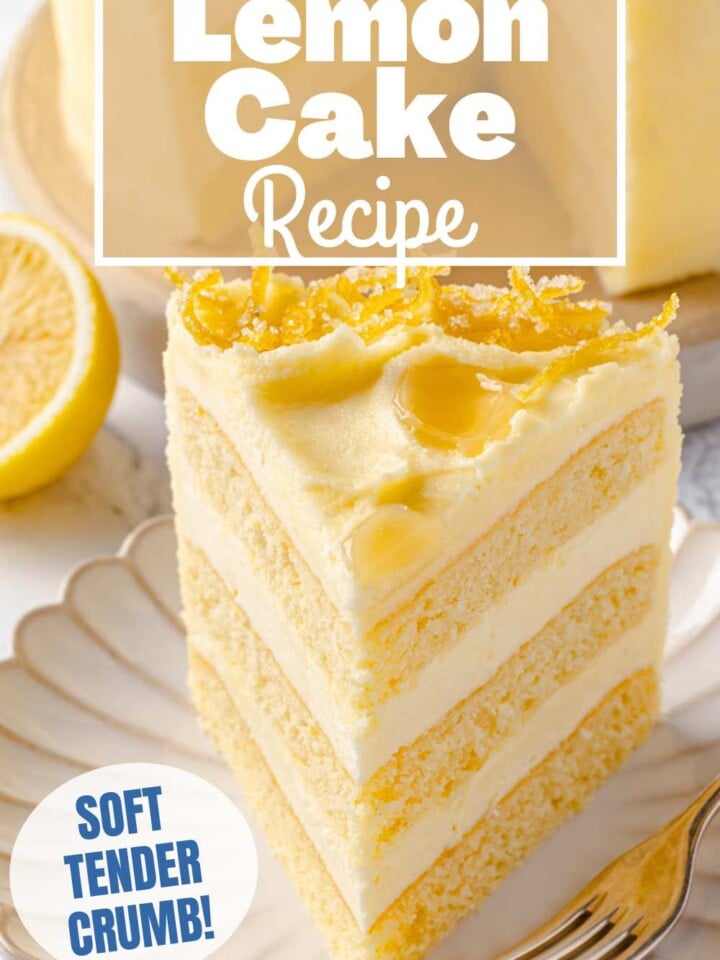
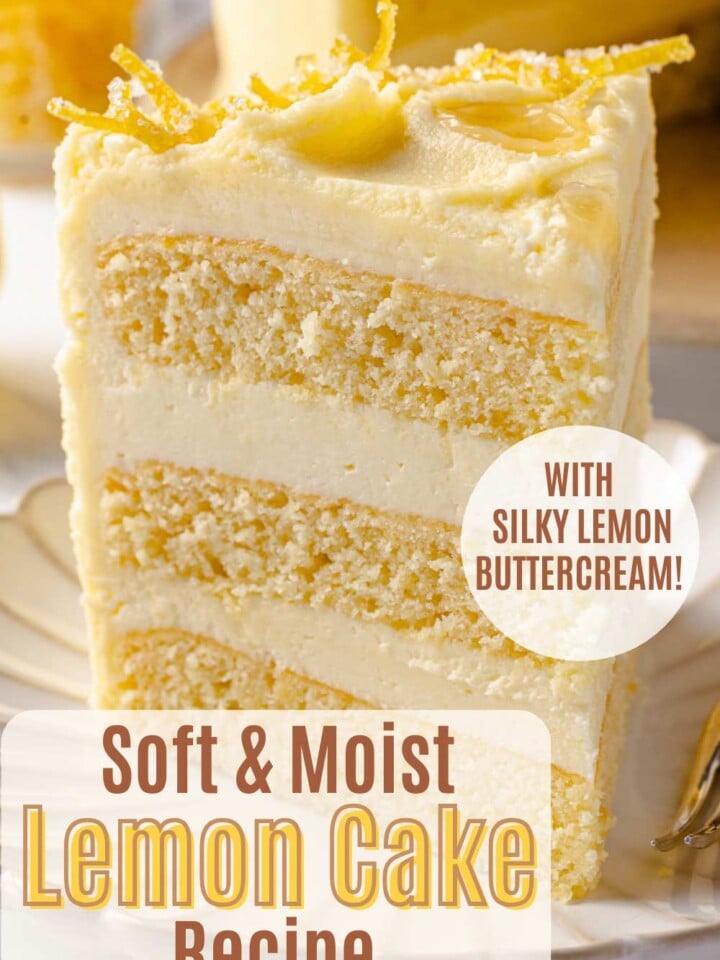
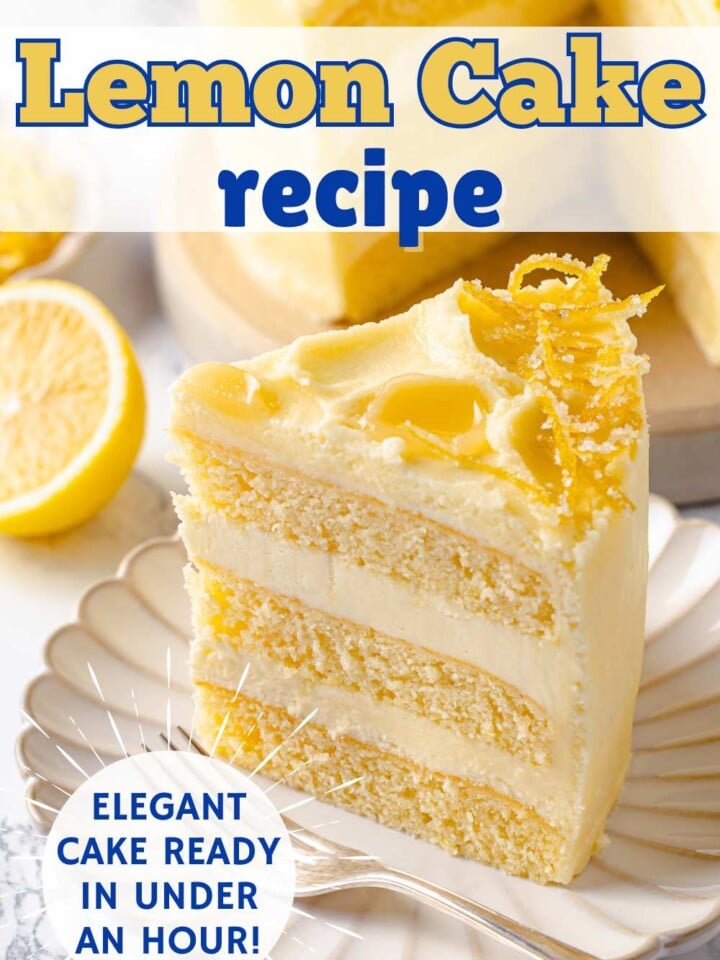
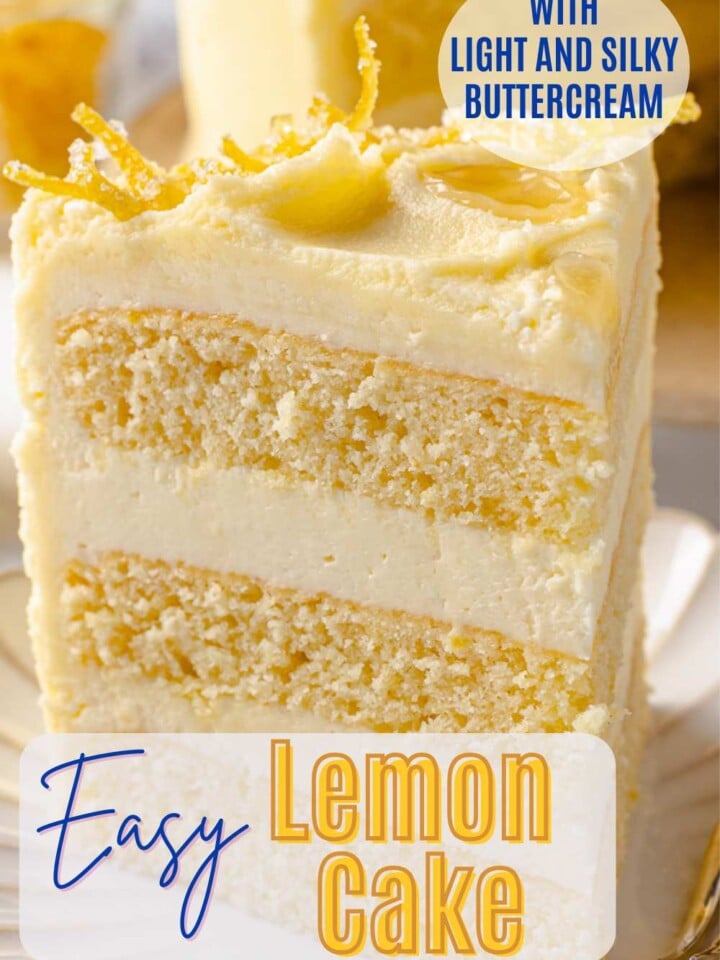
This Lemon Cake Recipe pairs soft lemon cake with silky lemon buttercream flavored by real lemon curd. It bakes quickly, tastes bakery-level, and avoids the sharpness or sweetness common in lemon cakes!
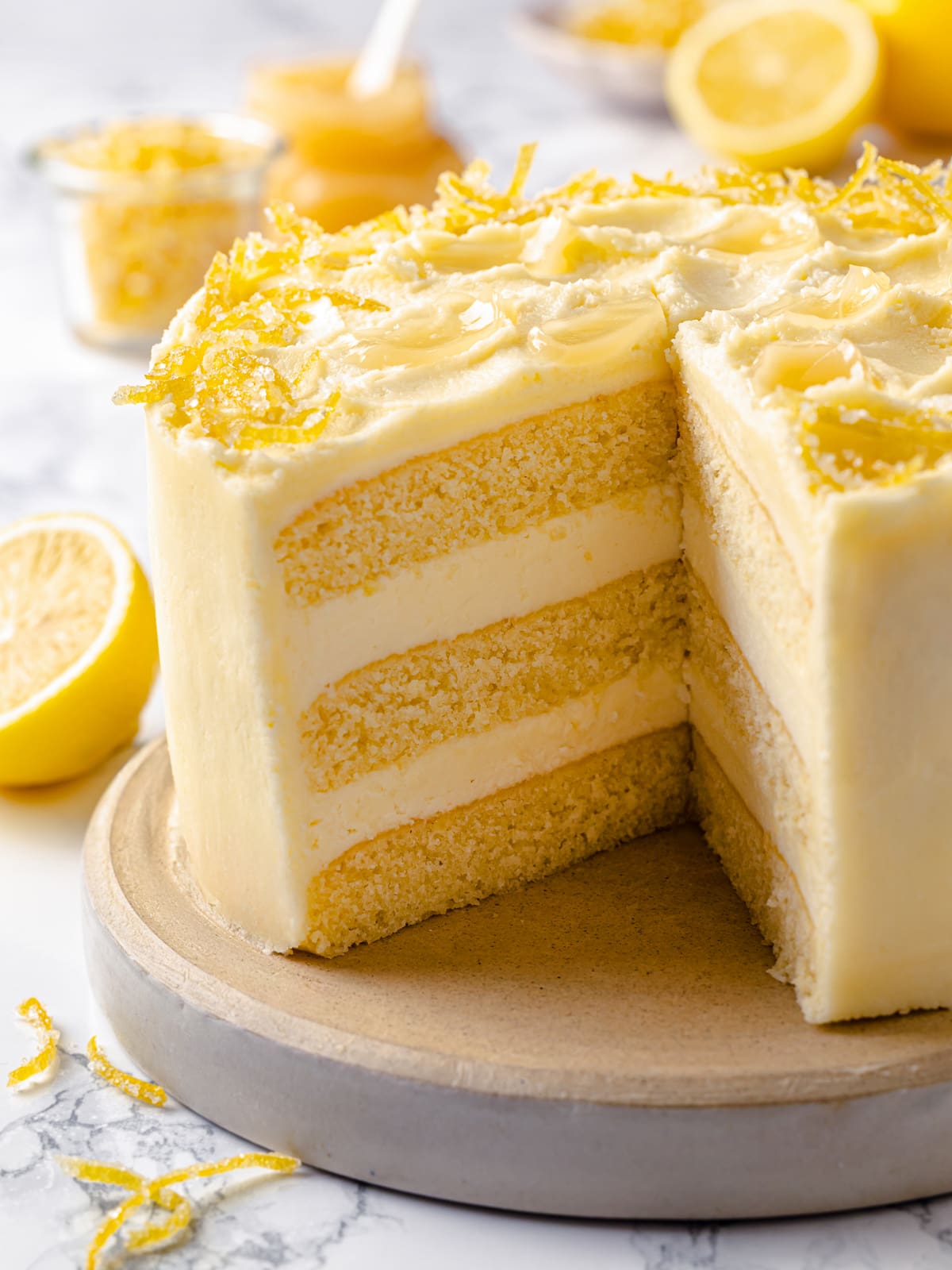

A Quick Look At The Recipe
This is a brief summary of the recipe. Jump to the recipe to get the full details.
Jump to RecipePrep Time
35 minutes
Cook Time
15 minutes
Total Time
50 minutes
Servings
16 servings
Difficulty
Intermediate (approachable with clear steps).
Calories *
543 kcal per serving
Technique
Creaming method for the cake; Swiss meringue buttercream finished with lemon curd.
Flavor Profile
Bright lemon, lightly tart, balanced sweetness, ultra-tender crumb.
* Based on nutrition panel
I loved the tip about rubbing the lemon zest into the sugar! It made the cake so fragrant before it even went into the oven. The buttercream was shockingly light for how lemony it was, and your timing cues for the meringue saved me from overcooking the whites!⭐⭐⭐⭐⭐
Lauren
Why This Recipe Works
- Bright but balanced lemon flavor. Lemon zest perfumes the sugar, while fresh lemon juice and buttermilk add clean acidity without bitterness. The result is a clean lemon flavor that tastes fresh in every bite!
- Exceptionally tender crumb. Cake flour and a lower baking temperature keep the layers soft and moist.
- Not-too-sweet frosting. Swiss meringue buttercream stays light and silky, while lemon curd adds flavor without breaking the emulsion.
- Professional flexibility. Works beautifully as a layer cake, sheet cake, or cupcakes with simple scaling.
Table of Contents
This lemon cake is meant to taste truly lemony without becoming sharp or overly sweet, which is exactly how I like lemon desserts. Working the zest into the sugar spreads the citrus oils evenly through the batter, softening the acidity and keeping the crumb tender. It’s the same approach I use in lemon olive oil cake, where the lemon flavor stays bright but calm.
For the buttercream, lemon curd replaces straight juice so the frosting stays smooth and stable. Acid can break a meringue-based buttercream, but easy lemon curd delivers bold lemon flavor while keeping the structure intact, a method I use again in my lemon cupcakes. The finished buttercream has the same light, balanced feel as my American flag cake, where the lemon frosting supports the cake instead of taking over!
Ingredients & Substitutions

- Cake Flour: Creates a finer, more tender crumb than all-purpose flour. If needed, you can substitute AP flour, but the texture will be slightly less delicate.
- Unsalted Butter: Provides richness and structure. Room temperature butter is essential for proper creaming.
- Granulated Sugar + Fresh Lemon Zest: Rubbing zest into the sugar releases aromatic lemon oils, infusing flavor evenly throughout the cake.
- Buttermilk: Adds moisture and subtle tang. You can substitute milk with a teaspoon of lemon juice, but the flavor will be flatter.
- Fresh Lemon Juice: Brightens the batter. Measure after juicing; acidity matters here.
- Egg Whites: Form the base of the Swiss meringue—clean, light, and stable.
- Lemon Curd: Adds concentrated lemon flavor without breaking the buttercream. Homemade or high-quality store-bought both work well.
See the recipe card below for full ingredients and quantities.
Variations on the Best Lemon Cake
- Fill with lemon curd. Pipe a buttercream dam and spread lemon curd between layers for extra tang.
- Make it vanilla-lemon. You can also frost with vanilla American buttercream or cream cheese frosting for a softer profile. Dust with confectioners’ sugar or finish with a simple vanilla or lemon glaze.
- Turn it into cupcakes. Scoop 54g batter per cupcake and bake about 18 minutes at 325°F convection. For a mixed dessert table, this cake pairs well with simpler bakes like carrot cake cupcakes, especially when serving a crowd!
- Different pan sizes. Bake as a ½-sheet cake (2.2 cm thick) for 15–18 minutes, or in a greased loaf pan at 325°F until set. This scratch lemon cake adapts easily, just adjust bake time!

Professional Tips
- Cream properly. Cream butter and sugar until the mixture lightens and the sugar granules begin to separate—this ensures lift and tenderness.
- Alternate carefully. Always begin and end with dry ingredients to avoid over-mixing.
- Watch the bake. The cake is done when the edges barely color and the top springs back lightly when pressed.
- Be patient with buttercream. Swiss meringue buttercream often looks broken before it comes together—keep mixing.
How to Make Lemon Cake
Use these steps to make a soft, tender lemon cake with balanced citrus flavor and a smooth, stable lemon Swiss meringue buttercream every time. Full ingredient amounts are listed in the recipe card below.
Step 1: Prepare the pans and oven. Preheat the oven to 325°F convection or 350°F conventional. Spray cake pans with nonstick spray and line the bottoms with parchment paper.
I used three 8-inch cake pans for thinner layers; two pans will give thicker layers with a slightly longer bake time.


Step 2: Infuse the sugar with lemon zest. In a small bowl, combine the granulated sugar and lemon zest. Massage the zest into the sugar with your fingertips until the mixture becomes fragrant and slightly damp (photo 1).
Step 3: Combine the dry ingredients. Sift together the cake flour, kosher salt, and baking powder onto parchment paper or into a large bowl. Set aside while you prepare the butter mixture (photo 2).
Step 4: Cream the butter and lemon sugar. In the bowl of a stand mixer fitted with the paddle attachment, cream the butter and lemon sugar on medium-low speed for 3–4 minutes, until the mixture lightens in color and the sugar granules begin to separate rather than look pasty (photo 3).


Step 5: Add the eggs gradually. Add the eggs one at a time, mixing on medium speed until fully incorporated before adding the next (photos 4 & 5).
Scrape down the bowl thoroughly after every other egg, paying special attention to the bottom where butter and sugar tend to hide.
Step 6: Alternate wet and dry ingredients. Reduce the mixer speed to low. Add the flour mixture in three additions, alternating with the buttermilk mixed with lemon juice in two additions, beginning and ending with the dry ingredients (photos 6-8).
Stop the mixer before the last streaks disappear and finish folding gently with a spatula to avoid overmixing.


Step 7: Divide and bake. Divide the lemon cake batter evenly between the prepared pans (about 380g per pan for three 8-inch layers) and smooth the tops. Bake for 15–18 minutes, until the edges are just lightly golden and the center springs back when gently pressed. Transfer the pans to a wire rack to cool slightly before turning out (photos 9 & 10).
How to Make Lemon Swiss Meringue Buttercream
Step 8: Heat the egg whites and sugar. Whisk the egg whites, granulated sugar, and kosher salt together in the bowl of a stand mixer. Set the bowl over a saucepan of gently simmering water, making sure the water does not touch the bowl (photo 11).
Step 9: Cook to dissolve the sugar. Whisk constantly until the mixture reaches 120–130°F and the sugar is fully dissolved. The mixture should feel warm to the touch and look slightly foamy and lighter in texture (photo 12).


Step 10: Whip the meringue. Transfer the bowl to the stand mixer fitted with the whisk attachment. Beat on high speed for 5–7 minutes, until stiff peaks form and the bowl is just slightly warm (photo 13).
Step 11: Incorporate the butter. Switch to the paddle attachment. Add the butter all at once and beat on medium speed, allowing the buttercream to emulsify fully (photos 14 & 15).
It may look broken or soupy before it comes together — keep mixing.


Step 12: Finish with lemon curd. Once smooth, add the lemon curd and switch back to the whisk attachment. Beat for 1–2 minutes until light, fluffy, and evenly combined (photos 16 & 17).
Assemble the Cake
Step 13: Fill, crumb coat, and finish. Place one cooled cake layer on a cake board or serving plate. Spread about 1 cup of buttercream evenly over the top (photos 18 & 19).
You can brush warm layers with a light lemon syrup for extra moisture and citrus punch.
Step 14: Repeat with remaining layers, placing the final layer upside down for a flat surface. Apply a thin crumb coat and chill in the refrigerator for at least 30 minutes before frosting the final coat.
Step 15: Serve at room temperature (photo 20).
Professional Chef Tip
For a plated dessert, a small spoonful of white chocolate mousse alongside the cake balances the citrus with gentle sweetness.
Recipe FAQs
One of the most reliable tricks is using zest for flavor instead of excess juice. Zest contains the aromatic oils that survive baking, while excess juice can thin the batter and weaken the cake’s structure. In this recipe, zest provides most of the lemon flavor, with juice added only for balance.
A lemon cake stays moist through proper fat content, gentle mixing, and controlled acidity. Butter, buttermilk, and cake flour all contribute to tenderness, while overbaking or excess lemon juice can make a cake dry. Bakeries rely on the same fundamentals—balanced formulas and precise baking times—not secret additives.
For this lemon cake recipe, regular Eureka or Lisbon lemons are the best choice. They have higher acidity and more assertive lemon flavor than Meyer lemons, which keeps the cake tasting bright even after baking. Meyer lemons are sweeter and less acidic, which can make the lemon flavor taste muted once combined with sugar and butter.

Recommended Lemon Cake Recipes
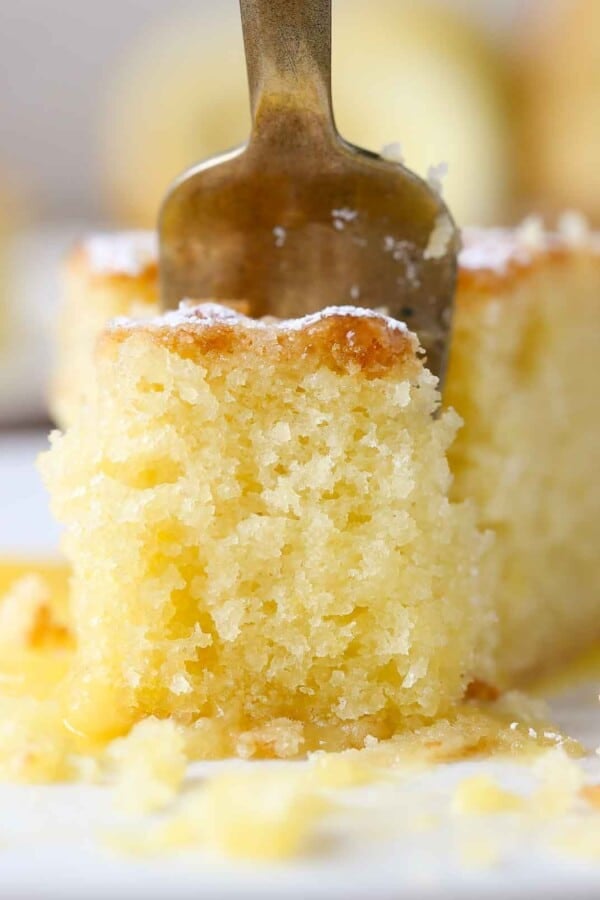
Date Night
Lemon Olive Oil Cake
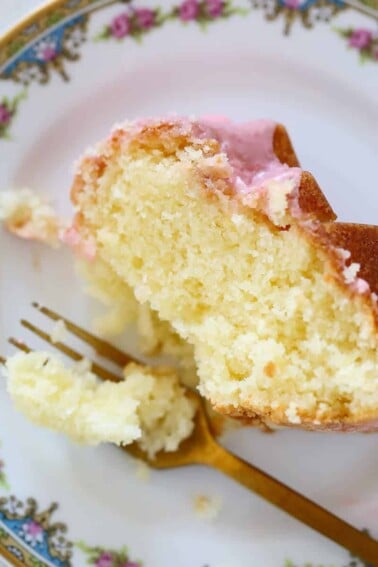
Cake Recipes
Lemon Pound Cake
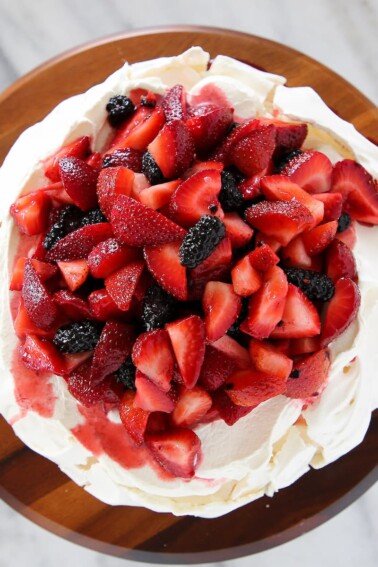
Summer Dessert Recipes
Lemon Berry Pavlova Cake
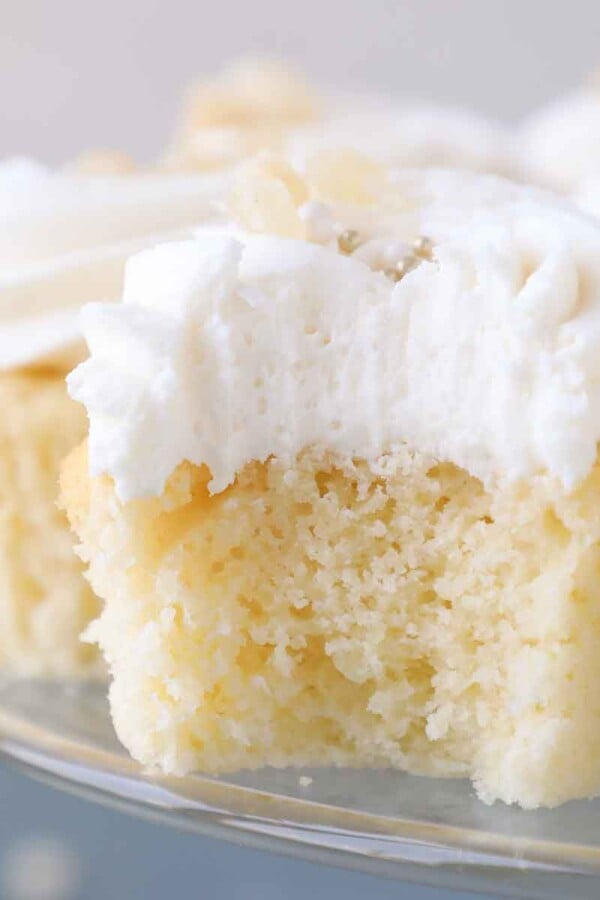
Cupcake Recipes
Lemon Cupcakes
If you tried this recipe and loved it please leave a 🌟 star rating and let me know how it goes in the comments below. I love hearing from you; your comments make my day!
Lemon Cake
Ingredients
For the Lemon Cake
- 2 ⅓ cups cake flour
- 1 teaspoon kosher salt
- 2 ½ teaspoons baking powder
- ¾ cup unsalted butter room temperature
- 1 ⅓ cups granulated sugar
- 2 lemons zested and juiced
- 3 large eggs
- ¾ cup low-fat buttermilk
For the Lemon Swiss Meringue Buttercream
- 5 egg whites
- 1 ¼ cups granulated sugar
- ¼ teaspoon kosher salt
- 2 cups unsalted butter cool but pliable
- 1 cup lemon curd prepared or store-bought
Instructions
Make the Lemon Cake
- Preheat the oven to 325°F convection or 350°F conventional. Spray cake pans with nonstick spray and line bottoms with parchment.
- In a small bowl, rub the lemon zest into the granulated sugar until fragrant and slightly damp.
- Sift together cake flour, kosher salt, and baking powder; set aside.
- In a stand mixer fitted with the paddle attachment, cream the butter and lemon sugar on medium-low speed for about 3–4 minutes, until lightened and the sugar granules look slightly separated.
- Add eggs one at a time, mixing on medium speed after each addition until fully incorporated. Scrape the bowl well after every other egg.
- Reduce mixer speed to low. Add the dry ingredients in three additions, alternating with the buttermilk mixed with lemon juice in two additions, beginning and ending with the dry ingredients. Mix just until combined.
- Remove the bowl from the mixer and fold once or twice with a spatula to ensure a smooth batter.
- Divide batter evenly between prepared pans (about 380g per 8-inch pan for 3 layers). Bake 15–18 minutes, until the edges are just lightly golden and the center springs back when gently pressed. Cool completely before frosting.
Make the Lemon Swiss Meringue Buttercream
- Bring about 1 inch of water to a simmer in a medium saucepan.
- Whisk egg whites, sugar, and salt together in the bowl of a stand mixer. Place the bowl over the simmering water (water should not touch the bowl) and whisk constantly until the mixture reaches 120–130°F and the sugar is fully dissolved.
- Transfer the bowl to the stand mixer fitted with the whisk attachment. Beat on high speed for 5–7 minutes, until stiff peaks form and the bowl is just slightly warm to the touch.
- Switch to the paddle attachment. Add the butter all at once and beat on medium speed until the buttercream comes together and looks smooth and silky. This can take several minutes and may look broken before it emulsifies.
- Add the lemon curd and switch back to the whisk attachment. Beat on medium-high speed for 1–2 minutes until light, fluffy, and evenly combined.
Assemble the Cake
- Place one cooled cake layer on a cake board or serving plate.
- Spread about 1 cup of buttercream evenly over the top.
- Repeat with remaining layers, placing the final layer upside down for a flat top.
- Apply a thin crumb coat over the cake and refrigerate for at least 30 minutes.
- Frost with remaining buttercream and finish as desired. Serve at room temperature.
Notes
- Yield: One 8–9 inch layer cake; ~1 ½ quarts buttercream
- Flavor Tip: Add more zest for extra lemon intensity.
- Storage: Frosted cake keeps 3 days refrigerated; freeze unfrosted layers up to 1 month.
Nutrition
Before You Go
I hope you enjoyed this bright, bakery-style lemon cake. If you’re in the mood for more chef-tested desserts, be sure to explore the rest of my cake recipes for your next bake!









I loved the tip about rubbing the lemon zest into the sugar! It made the cake so fragrant before it even went into the oven. The buttercream was shockingly light for how lemony it was, and your timing cues for the meringue saved me from overcooking the whites!