
This post may contain affiliate links. Please read our disclosure policy.
Crème anglaise is a foundational custard sauce every baker and dessert lover should have in their back pocket. Once you understand the technique, you will use it constantly.
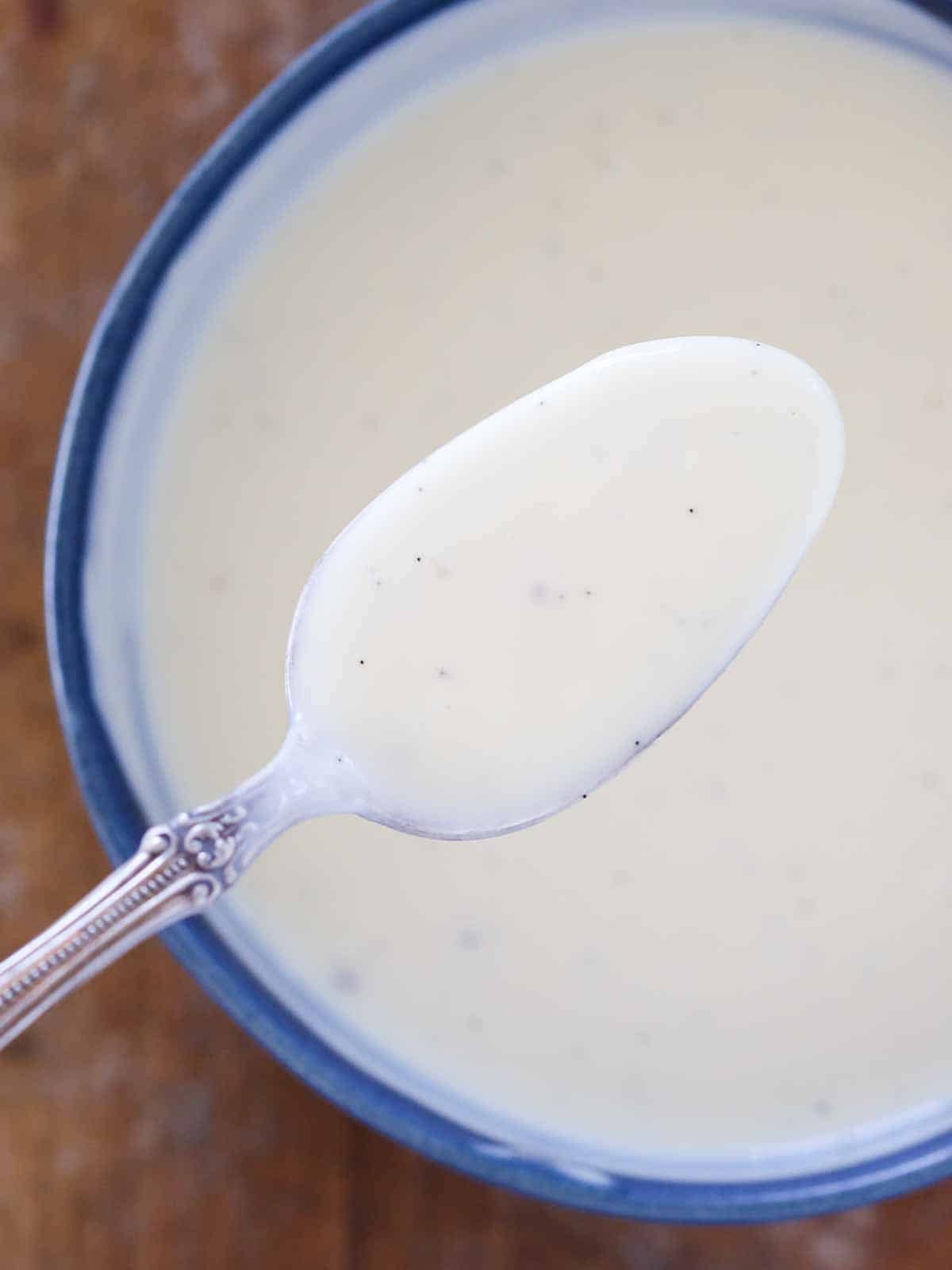

A Quick Look At The Recipe
This is a brief summary of the recipe. Jump to the recipe to get the full details.
Jump to RecipePrep Time
10 minutes
Cook Time
15 minutes
Chill Time
1 hour
Total Time
1 hour 25 minutes
Servings
20 servings
Difficulty
Intermediate
Calories *
71 kcal per serving
Technique
Temper egg yolks into a hot cream and milk base, then cook to 178°F while stirring constantly until the custard coats a spoon and holds a clean line.
Flavor Profile
Rich vanilla custard, lightly sweet with a silky cream finish
* Based on nutrition panel
I have attempted crème anglaise twice before with disastrous results, but following this recipe finally got me there. The tip about watching for a clean line on the back of the spoon made all the difference. My custard held the line at exactly 178°F and the texture was perfect. ⭐⭐⭐⭐⭐
Margaux
Why This Recipe Works
- The perfect consistency. This custard sauce’s consistency is no accident. It is the result of the right ratio of cream to milk and using whole eggs rather than egg yolks.
- Refined and perfected by a pastry chef. This is the exact recipe I used in countless desserts at Manhattan restaurants. I have made this in tiny batches and also in large batches yielding 16 quarts. It is perfect.
- The perfect vanilla flavor. I use a combination of vanilla beans and vanilla extract for the best vanilla custard. The scraped pods add a more complex flavor to the sauce. The right amount of sugar protects the eggs and milk mixture while cooking, enhances the vanilla flavor, and adds the right sweetness.
Table of Contents
- Why This Recipe Works
- Ingredients & Substitutions
- Variations on This Crème Anglaise (Vanilla Custard Sauce)
- Professional Tips
- How to Make Crème Anglaise (Vanilla Custard Sauce)
- Chef Lindsey’s Recipe Tip
- Recipe FAQs
- Recomended Custard Recipes
- Recommended Crème Anglaise Recipes
- Crème Anglaise Recipe
- Before You Go
Crème anglaise is a building block of classic French pastry. Just like its cousin crème patissière, it is incredibly versatile. It is an easy custard sauce that can be used as a sauce for cakes, cookies, tarts, and pies, and some classic French desserts like the floating island.
It is silky smooth and just the right amount of sweet! Add your favorite alcohol to make a fun dipping sauce for a cookie plate. It’s an easy addition to make any dessert feel special! For a deeper dive into the broader family of egg-based desserts, start with my custard recipes collection.
Ingredients & Substitutions
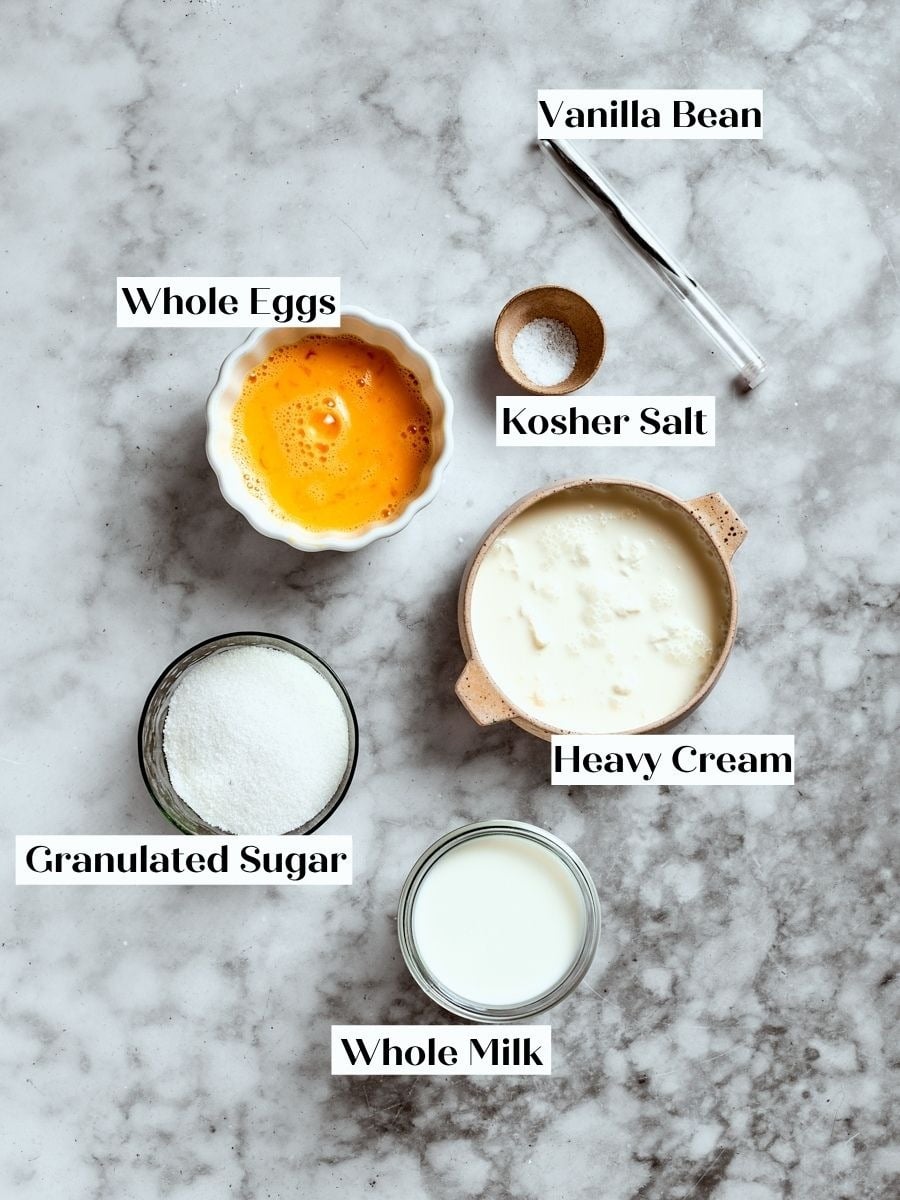
- Heavy Cream and Whole Milk: Don’t substitute low-fat milk or non-dairy alternatives here, as the fat content gives the finished sauce its body and silkiness.
- Granulated Sugar: Sweetens the custard and helps stabilize the egg proteins during cooking. Divide the sugar so part goes into the cream mixture and part gets whisked with the eggs, which I always do to keep the yolks from clumping before they hit the heat.
- Vanilla Bean: This is the single most critical ingredient in the flavor profile, so use a fresh, pliable bean rather than a dried-out one. Splitting and scraping the bean into the cream before heating lets the seeds fully infuse the fat, where the flavor compounds are most readily absorbed. For more flavoring with vanilla bean, check out this creme brulee pie!(coming soon!) If you don’t have a vanilla bean, stir in two teaspoons of pure vanilla extract off the heat, though the depth will be noticeably different.
- Whole Eggs: I use whole eggs for custard sauces because egg yolks alone aren’t necessary. Eggs simplify the recipe and give the sauce the perfect consistency.
See the recipe card for full information on ingredients and quantities.
Variations on This Crème Anglaise (Vanilla Custard Sauce)
- Chocolate Anglaise. Whisk chopped chocolate directly into the hot, strained custard and stir until fully melted and smooth: the residual heat is enough to melt most dark or milk chocolate without any additional cooking, just like when making this chocolate pastry cream. (coming soon!)
- Fruit-Flavored Anglaise. Stir a fruit puree into the finished, cooled sauce until combined. Quick Strawberry Jam works particularly well here, adding brightness without making the sauce too thin.
- Caramel Anglaise. Fold Salted Caramel Sauce into the cooled anglaise to taste, starting with a few tablespoons and adjusting from there.
- Spiked Anglaise. Stir a tablespoon or two of bourbon, rum, or Grand Marnier into the cooled sauce before serving: alcohol added to hot custard will cook off, so always add it after the sauce has chilled.
Professional Tips
- Whisk the eggs and sugar together as soon as the cream goes on the stove. Leaving sugar sitting on raw yolks for more than a minute or two will begin to cook them through a process called burning, leaving yellow specks in your finished sauce that no amount of straining will fully fix.
- Slow and steady tempering. Adding the hot cream too fast, or stopping to stir rather than whisking constantly, is the single most common reason anglaise scrambles. Pour in a slow, thin stream with one hand and whisk steadily with the other.
- Heat the custard after mixing. This differs from many other recipes, but cooking the custard over low heat to 178°F will not only make it safe to consume but also thicken it to the perfect sauce consistency.
- Chill it fast. Strain into a bowl set over an ice bath and stir occasionally to drop the temperature quickly enough to stop carryover cooking. A sauce left to cool slowly on the counter will keep thickening and can develop an off flavor from prolonged heat exposure.
How to Make Crème Anglaise (Vanilla Custard Sauce)
This recipe moves quickly once the eggs go in, so have your ice bath ready before you turn on the stove. Find further details and measurements in the recipe card below.
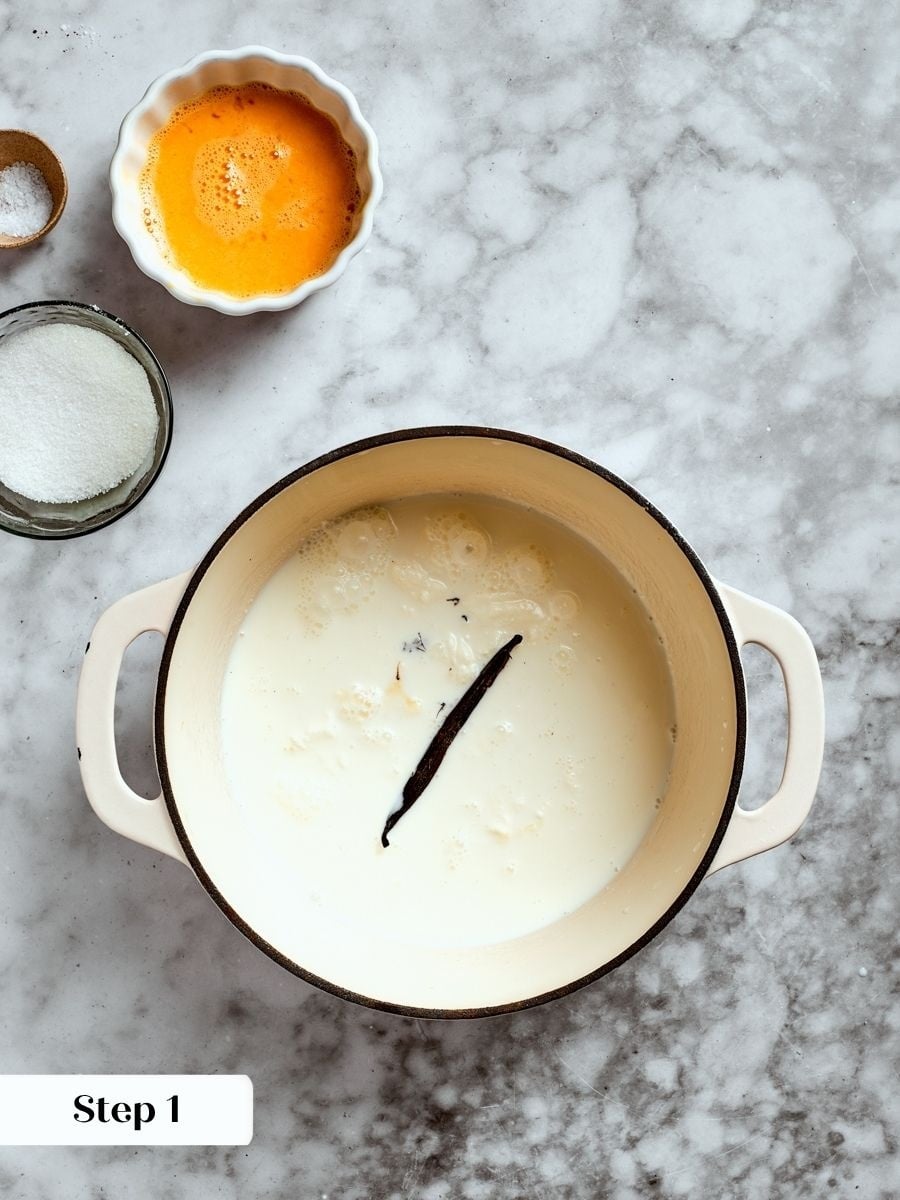
Step 1: Warm the cream, milk, sugar, salt, and vanilla. Combine the cream, milk, half the sugar, salt, and the split vanilla bean with its scraped seeds in a heavy-bottomed saucepot. Bring to a boil over medium heat, then remove from heat immediately.(photo 1)
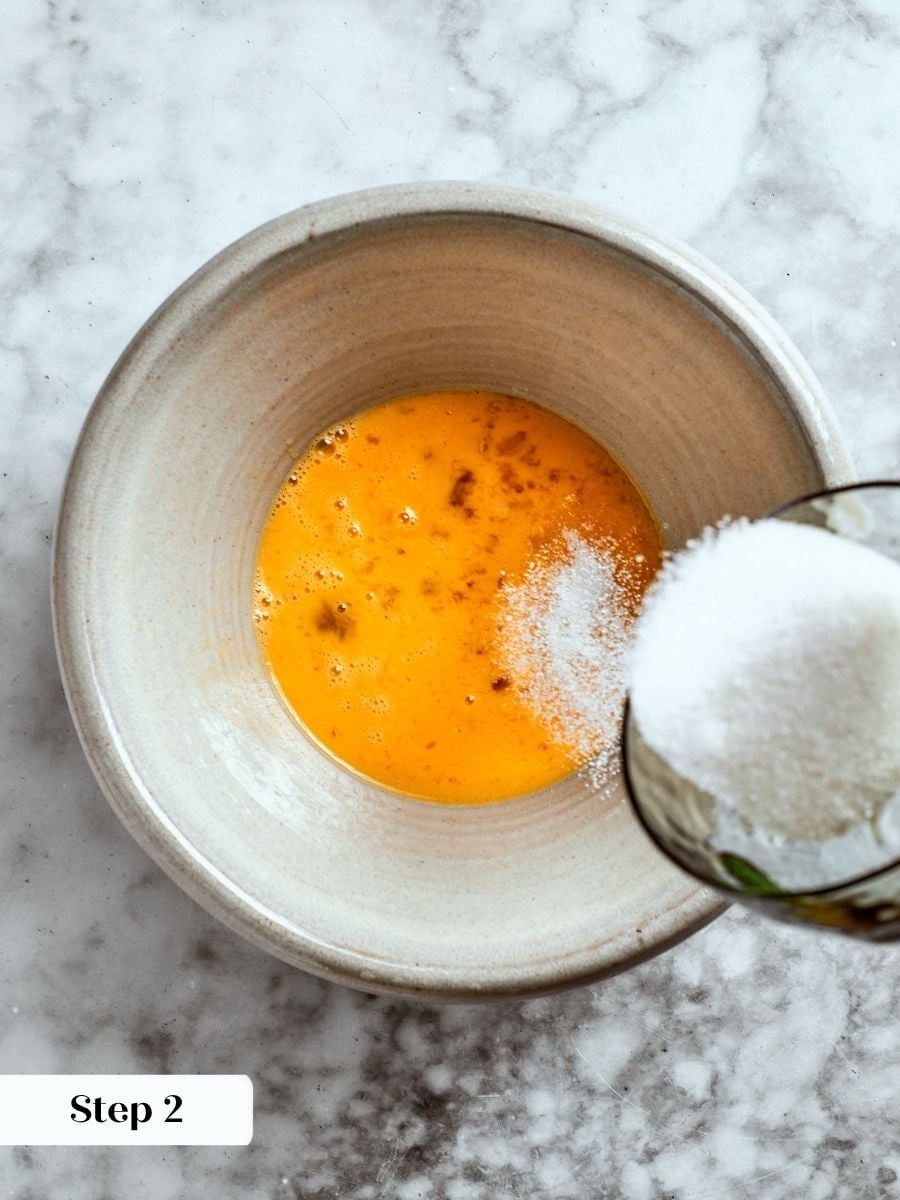
Step 2: Whisk the eggs and remaining sugar. While your cream mixture comes to temperature, whisk together the whole eggs and remaining sugar until the mixture lightens to a pale yellow and looks slightly thickened. Whisking the sugar into the eggs right away protects them from the sugar drawing out moisture and leaving streaky, partially cooked bits. (photo 2)
You do not have to divide the sugar evenly. Just eyeball it. The sugar in the milk mixture keeps it from scorching, and the sugar whisked with the eggs helps protect them against cooking when the boiling milk mixture is added.
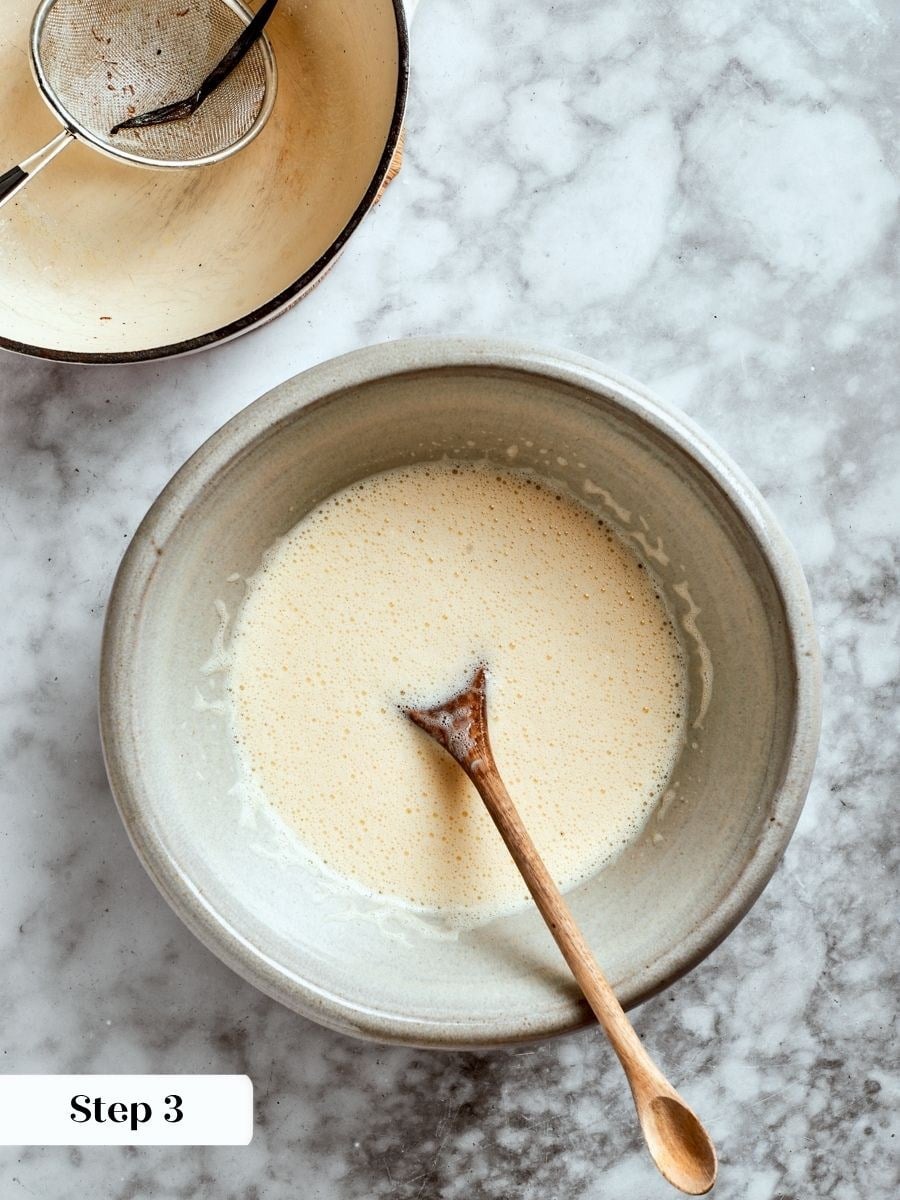
Step 3: Temper the hot cream into the eggs gradually. Ladle roughly a quarter of the hot cream mixture into the egg mixture in a slow, steady stream while whisking constantly. Repeat with another quarter of the cream, then pour the egg mixture back into the pot with the remaining cream. It will look thin and loose at this point, which is completely normal. (photo 3)
The point of going in two additions is to raise the egg temperature slowly enough that you get a smooth custard instead of scrambled eggs.
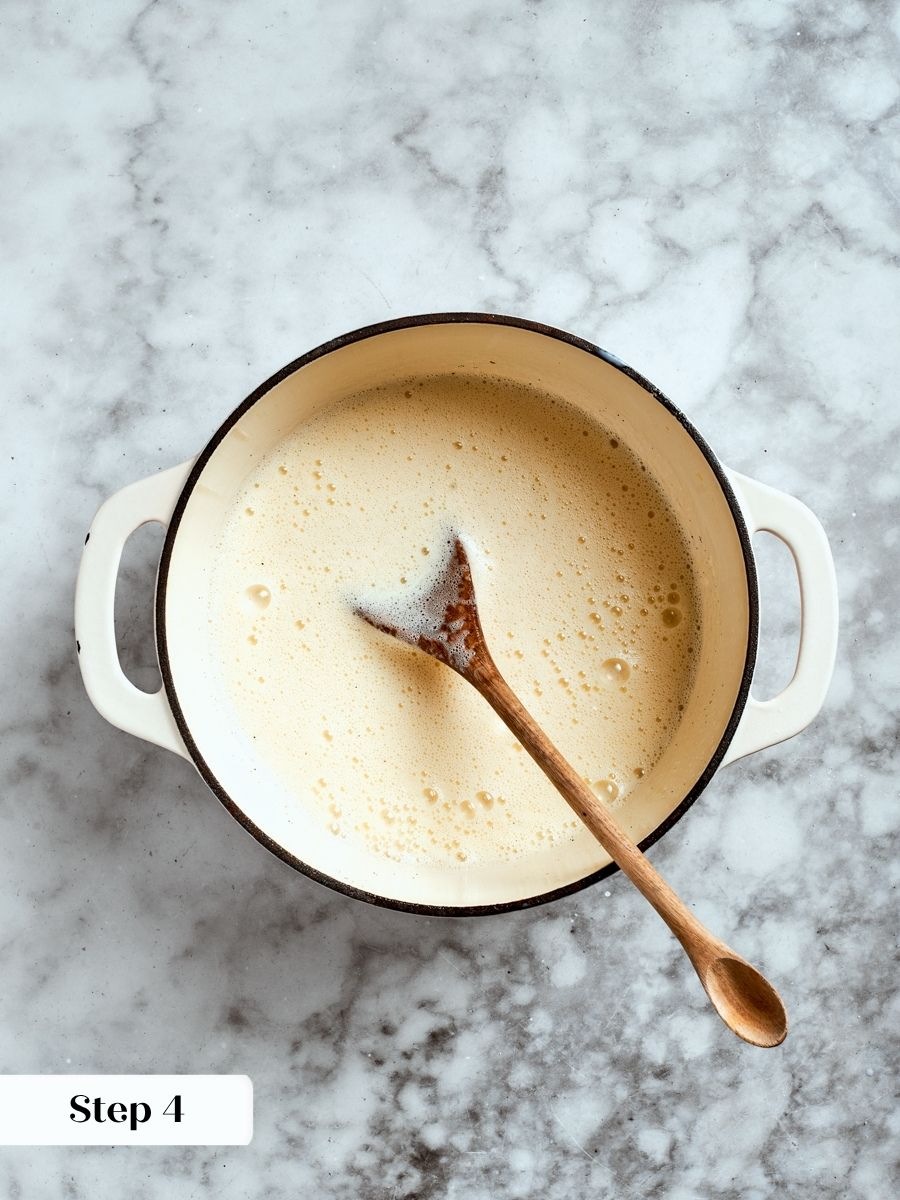
Step 4: Cook until nappant. Return the pot to medium-high heat and stir continuously with a wooden spoon or heatproof spatula, reaching into the corners and across the bottom of the pot. The custard will look very liquid for several minutes before it begins to thicken. You are looking for it to reach 178°F on an instant-read thermometer, or for the sauce to coat the back of a spoon and hold a clean line when you drag your finger through it just like when making easy lemon curd. (photo 4)
If your heat is too high and the custard starts to look curdled or grainy around the edges, pull it off the heat immediately and strain it. A quick blitz with an immersion blender can sometimes rescue a slightly broken anglaise, but a smooth result always comes from patient, constant stirring and not walking away from the pot.
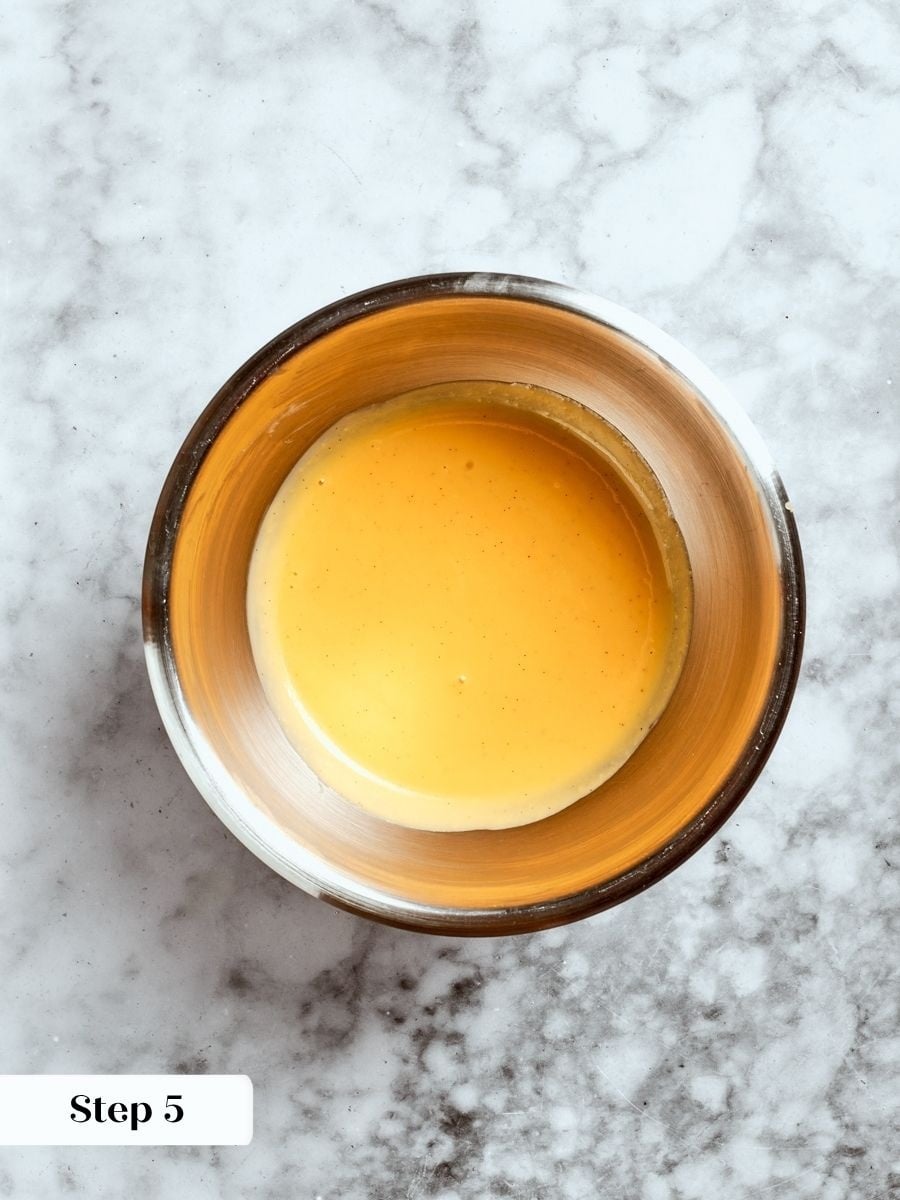
Step 5: Strain, cover, and chill in an ice bath. Pour the custard through a fine-mesh strainer into a clean bowl to remove the vanilla pods and any cooked egg bits. Press a piece of plastic wrap directly onto the custard surface to prevent a skin from forming, then set the bowl in an ice bath and stir occasionally until fully cooled.(photo 5)
Keep the ice bath ready before you start cooking so you can move the finished custard into it immediately and stop the carryover cooking.
Chef Lindsey’s Recipe Tip
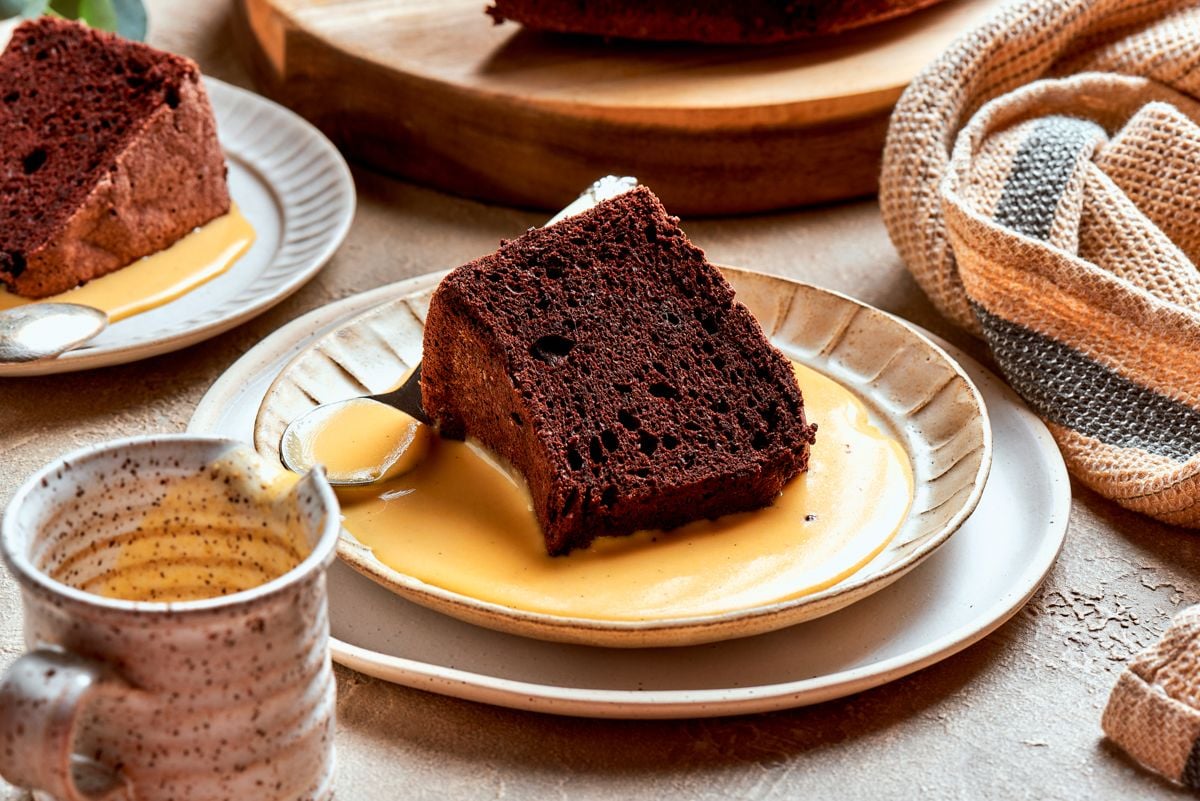
You don’t have to keep cooking the anglaise as long as you bring the milk mixture to a rolling boil right before tempering it into the eggs. It will be safe to consume, but the sauce will be looser. Still perfect to serve with this chocolate angel food cake!
Recipe FAQs
Crème anglaise is a pourable custard sauce served alongside cakes, tarts, and warm puddings. It pairs especially well with dense baked goods like Flourless Chocolate Cake, where the sauce cuts through the richness with its creamy, vanilla-forward flavor.
Stored in an airtight container with plastic wrap pressed directly against the surface, crème anglaise keeps in the refrigerator for up to 10 days. I do not recommend freezing it, as the emulsion breaks during thawing and the texture becomes grainy and separated.
Nappant is a French culinary term describing the point at which a sauce coats the back of a spoon and holds a clean line when you drag a finger through it. For crème anglaise, this happens at 178°F on an instant-read thermometer, which is the most reliable way to confirm doneness without guessing.
Both are vanilla custards built on egg yolks, cream, and sugar, but crème anglaise is a pourable sauce cooked on the stovetop, while crème brûlée is a baked, set custard with a firm texture and caramelized sugar crust. The cooking method and egg-to-liquid ratio determine the final consistency.
Crème anglaise is a natural companion for warm, dense desserts where a sauce adds contrast in both temperature and texture. It is particularly good pooled beneath a slice of Chocolate Pound Cake or spooned over any fruit-forward upside-down cake.

Recomended Custard Recipes
Custard Recipes
Caramel Pastry Cream

Custard Recipes
Rice Pudding Recipe
Date Night
Butterscotch Pudding
Custard Recipes
Crème Caramel
If you tried this recipe and loved it please leave a 🌟 star rating and let me know how it goes in the comments below. I love hearing from you; your comments make my day!
Crème Anglaise
Ingredients
- 2 cups heavy cream — divided
- 2 cups whole milk
- 1 cup granulated sugar
- ½ teaspoon kosher salt
- 1 vanilla bean — split and scraped
- 5 large whole eggs
Instructions
- Combine cream, milk, half the sugar, salt, and the vanilla bean seeds and pod in a heavy-bottomed saucepan. Bring to a boil over medium heat, then remove from heat.
- While the milk mixture comes to a boil, whisk together the eggs and remaining sugar until the mixture lightens to a pale yellow.
- Slowly whisk one-quarter of the hot cream mixture into the eggs to temper, then repeat with another quarter. Pour the tempered egg mixture back into the pot with the remaining cream.
- Return the pot to medium-high heat, stirring constantly, until the custard reaches 178°F on an instant-read thermometer and coats the back of a spoon. To confirm doneness, run a finger across the back of a spoon coated with custard: if the line holds and does not run, the anglaise is nappant.
- Strain the custard through a fine-mesh sieve into a bowl. Press a sheet of plastic wrap directly against the surface to prevent a skin from forming, then cool the bowl over an ice bath before refrigerating.
Video
Notes
Doneness Cue: The custard is ready when it reads 178°F on an instant-read thermometer and holds a clean line when you drag a finger through a thin layer on the back of a wooden spoon.
Storage: Store in an airtight container with plastic wrap pressed directly against the surface in the refrigerator for up to 10 days. Freezing is not recommended, as the emulsion breaks during thawing.
Make Ahead: Crème anglaise can be made up to 10 days in advance and kept refrigerated. Reheat gently over low heat with constant stirring, or serve chilled directly from the refrigerator.
Nutrition
Before You Go
This poured custard sauce is one of those foundational recipes that quietly makes everything around it better, and I hope you reach for it often. For more recipes to pair it with, browse my Dessert Recipes or try this homemade vanilla pudding recipe next!










Hi Lindsey, what can I sub the egg with? Thank you!!!
Amy, Unfortunately eggs are the heart of crème anglaise — they are what thickens and emulsifies the sauce through the tempering process, so there isn’t a substitute that would produce the same result. Without eggs, what you’d have is sweetened cream, not a custard sauce! If you need an egg-free alternative, a cornstarch-thickened vanilla sauce would be a completely different recipe but could give you a similar pourable, creamy result. ~CLF Team
Just made this to go with some honey poached pears and it is delicious! Thanks for the recipe!
Hi Kate! That sounds incredible! Honey-poached pears and crème anglaise are such a perfect pair!
This was easy and delicious. Compliments from our visiting French guests!
Hi Soraya! I’m so happy to hear that, right from the source! Thanks for coming back to let me know!
Can I use vanilla extract in place of vanilla beans?
Absolutely, Scott! I would add the vanilla extract after you finish cooking and before you cool the anglaise. Start with 1 teaspoon, taste, and go from there! ~Lindsey
Thank you so much for the response. I’m making the sauce tonight for a gathering tomorrow and am looking forward to ladling it over fried cinnamon apples and brown sugar mini cakes.
Hi Scott! I’m so happy to hear that, I know it’ll be a hit!
Thank you for the recipe and information about Creme Anglaise. I will be trying it soon to use with crepes that I make.
That sounds wonderful, Kathy! Let met know how it goes!