
This post may contain affiliate links. Please read our disclosure policy.
This Crisco Pie Crust Recipe is tender, flakey and easy! A professional pastry chef’s foolproof 3 ingredient pie crust recipe! It won’t shrink or be tough!


A Quick Look At The Recipe
This is a brief summary of the recipe. Jump to the recipe to get the full details.
Jump to RecipePrep Time
15 minutes
Total Time
15 minutes
Servings
12 Slices
Difficulty
Easy
Calories *
85 kcal per serving
Technique
Cut frozen shortening flour, then add cold water, chill, and roll.
Flavor Profile
Neutral, tender, and lightly savory with a flaky open crumb
* Based on nutrition panel
I have made pie crust for years and always struggled with shrinkage and toughness. Freezing the Crisco first made all the difference. The dough came together so quickly and rolled out without a single crack. This is the only recipe I will use from now on. ⭐⭐⭐⭐⭐
Karen
Why This Recipe Works
- Frozen shortening creates maximum flakiness. Cold fat cuts into flour without fully blending, leaving distinct pockets that steam and separate during baking. Frozen Crisco holds its structure longer than cold butter, giving you more time to work before the fat softens.
- Shortening’s higher fat content means more tenderness. Unlike butter, Crisco is 100% fat with no water or milk solids. That ratio produces a crust that is exceptionally tender and less prone to shrinking.
- Resting the dough relaxes the gluten. After mixing, the dough needs time in the refrigerator to let the hydrated gluten strands settle. Rolling immediately leads to shrinkage. Resting leads to a crust that holds its shape in the pan.
Table of Contents
This easy Crisco pie crust recipe first made its appearance in 2013 on this peach pie recipe, and has since become one of my favorite pie crusts. It is tender, crumbly, and flaky. The shortening makes it easy to work with and the perfect crust for a novice baker.
You could use it instead of this all-butter pie crust in this mixed berry pie, or easy pumpkin pie. It would also be delicious in place of the almond flour pie crust in this strawberry rhubarb pie. Make a large batch and store it in the freezer so baking is easy as pie!

Ingredients & Substitutions

- All-Purpose Flour: The base of the crust, providing structure without making it tough. Pastry flour works as a substitute and yields a slightly more tender result, though I always use all-purpose because it is easier to roll without tearing.
- Crisco Vegetable Shortening: This is the most critical ingredient in the recipe. Shortening is 100% fat, which is what gives this crust its distinct tenderness and flakiness. I freeze the Crisco before using it, which is non-negotiable for me, because frozen shortening stays in discrete pieces during mixing rather than blending fully into the flour, and those fat pockets are exactly what creates flaky layers in the finished crust.
See the recipe card for full information on ingredients and quantities.
Variations on This Crisco Pie Crust Recipe
- Spiced Crust. Add warm spices such as cinnamon, ginger, or cardamom directly to the flour mixture before cutting in the shortening. Start with half a teaspoon and adjust from there: spiced crust pairs especially well with apple, pear, or pumpkin pie fillings.
- Citrus Zest Crust. Work finely grated lemon, orange, or lime zest into the flour with your fingertips before adding the shortening, which blooms the oils and distributes the flavor evenly through the dough. One teaspoon of zest is enough to make the flavor noticeable without competing with the filling.
- Add some acid. Some recipes use acid to help prevent gluten development. Like how I use vodka in this vodka pie crust. Apple cider vinegar works the same; substitute a tablespoon or 2 for its weight in water.
Professional Tips
- Keep the Crisco frozen. I store my Crisco shortening in the freezer. It is still soft and pliable when frozen, which makes measuring and mixing easier.
- Measuring Crisco two ways. If you have a tub of Crisco, simply use a silicone spatula to press it into a measuring cup, then scoop it out directly onto your measured flour mixture. The sticks of Crisco make it easy to measure, then cube, but precision is not necessary.
- Avoid overworking & be delicate. Even though shortening crusts are less likely to shrink than all-butter pie crusts, still handle them gently for the most tender, flaky result.
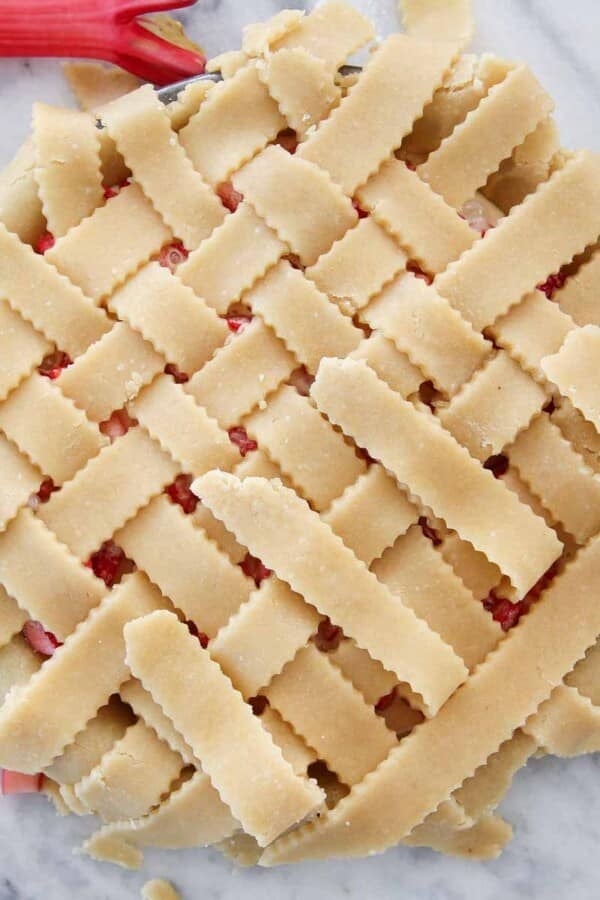
- Use this crust for any double-crust or lattice application. Shortening crust holds decorative edges and woven tops better than an all-butter dough because it stays pliable longer. For a visual guide, my lattice pie crust tutorial walks you through the full technique step by step.
How to Make Crisco Pie Crust Recipe
Use these instructions to make the perfect Crisco Pie Crust every time! Find more details and measurements in the recipe card below.
Step 1: In a medium bowl, mix flour and salt. Cut the shortening into cubes and add it to the flour mixture.
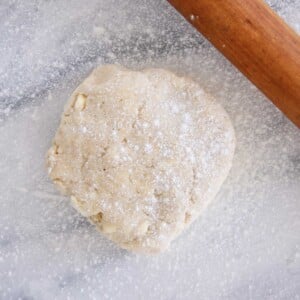
Step 2: Cut the shortening into the flour with a pastry blender, bench scraper or in the bowl of a stand mixer fitted with the paddle attachment until the mixture resembles coarse crumbs. Look for a mixture that resembles rough, uneven crumbs with no visible pieces of shortening remaining. (photo 1 & 2)
Unlike an all-butter crust, you do not need to leave visible fat streaks here. The shortening distributes more evenly than butter, and the crumb stage without visible fat is exactly what you want to see.


Step 3: Add ice water one tablespoon at a time until the dough holds together. Drizzle the water in one tablespoon at a time, blending with a fork after each addition.
Step 4: Stop adding water the moment the dough holds together when you press a pinch of it between your fingers, and it is no longer crumbly — the dough should look shaggy and rough, not smooth or wet, which is completely normal at this stage.
Overworking or overwatering the dough is the main reason Crisco crusts turn out tough rather than tender.


Step 5: Divide and chill the dough. For two single-crust pies, split the dough evenly in half. For a double-crust pie, divide it into two pieces: roughly two-thirds for the bottom crust and one-third for the top. Shape each piece into a flat disk, wrap tightly, and refrigerate for at least 30 minutes before rolling.
The rest period lets the flour hydrate fully and firms the shortening back up so the dough rolls cleanly.
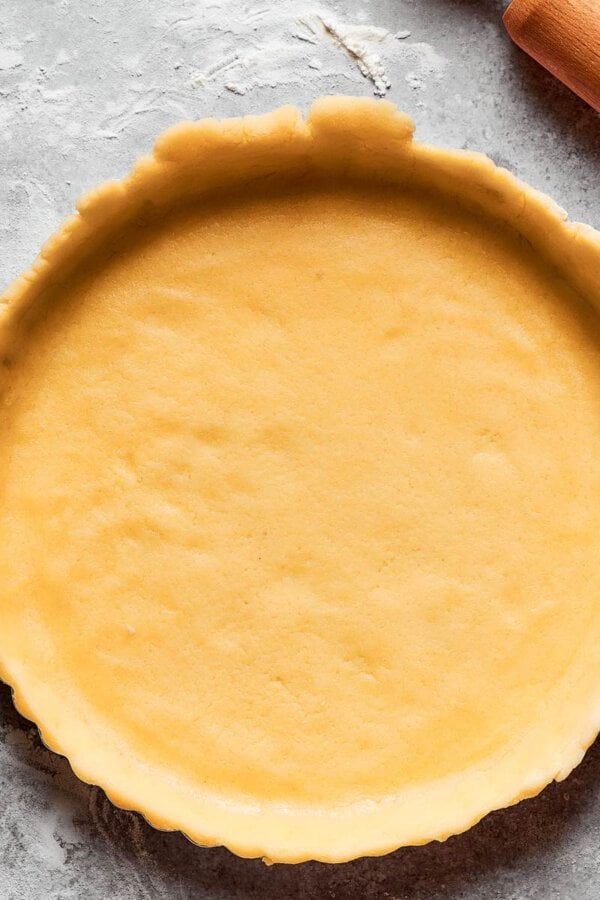
Step 6: Roll the chilled dough to ⅛ inch thickness. On a lightly floured surface, roll the dough from the center outward in all directions, rotating the disk a quarter turn after every few passes to keep it even. Aim for a roughly 12-inch circle for a standard 9-inch pie dish. The dough should feel firm and slightly cool under your hands — if it starts to feel soft or sticky, slide it onto a sheet pan and refrigerate it for 10 minutes before continuing.
Shortening-based dough is more forgiving than butter dough when it comes to cracking. If the edges split as you roll, press them back together with your fingers and keep going much like a pate sablee.
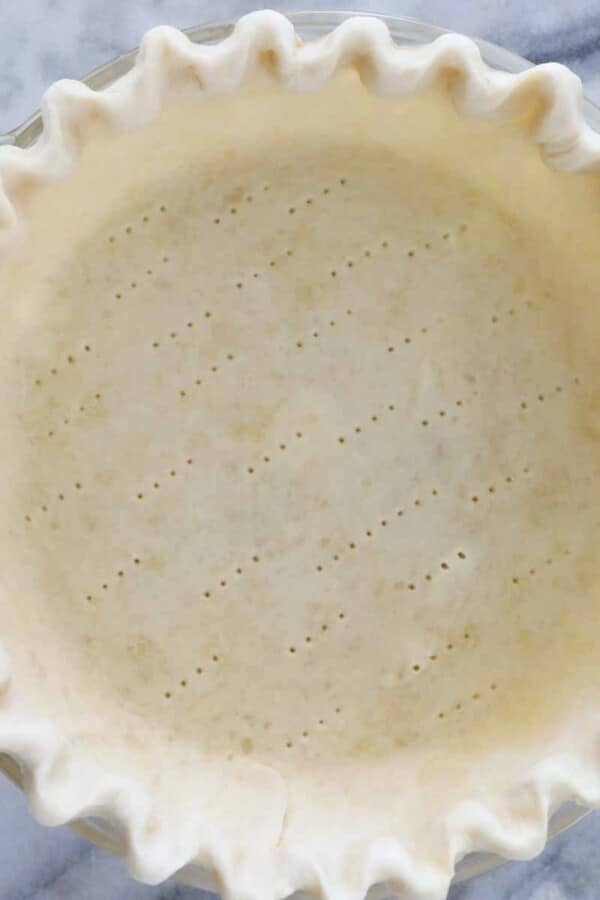
Step 7: Line the pie dish immediately. Fold the rolled dough in half, transfer it to the pie dish, and gently unfold it, easing it into the corners without stretching. I line the dish immediately rather than chilling the rolled dough first, because Crisco dough handles and transfers much more cooperatively at this stage than an all-butter crust does — it does not need that extra cold rest to stay in shape.
Step 8: Finish the edges and chill or fill. If you are making a double-crust pie, leave the bottom crust overhanging the rim and refrigerate the lined dish while you roll the top crust. If you are making a single-crust pie, fold the overhanging dough under itself so it sits flush with the rim, then crimp decoratively. The dough crimps cleanly and holds its shape well, which I love — it is one of the places where shortening crust genuinely has an advantage over butter.
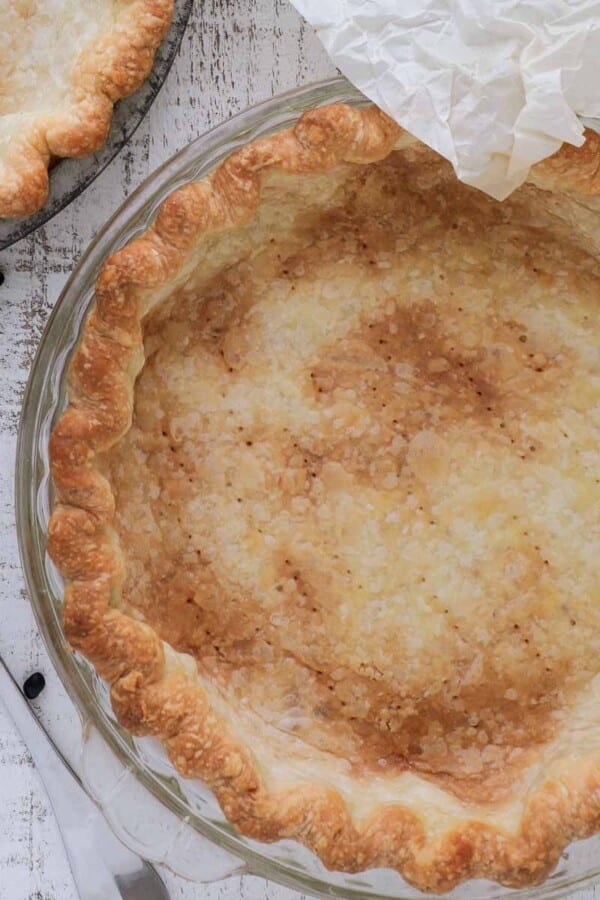
For a blind-baked single crust, dock the bottom all over with a fork, line with parchment, fill with pie weights or dried beans, and bake at 375°F convection or 400°F conventional for 15 to 20 minutes until the edges are set and just starting to color. Remove the weights and parchment and bake for another 5 to 8 minutes until the bottom looks dry and pale golden. Let the crust cool completely before filling.


Chef Lindsey’s Recipe Tip
If your kitchen is particularly warm, chill your mixing bowl and pastry blender in the freezer for 10 minutes before you begin. Cold tools slow how quickly body heat transfers to the shortening during mixing, keeping the fat in discrete pieces longer and giving you a more consistently tender result with no extra effort.

Recipe FAQs
Shortening and butter have different fat and moisture levels. It is not a good idea to simply replace all of the shortening with butter in pie crust. Instead, find a recipe that calls for both or use this all-butter pie crust recipe instead.
This crust works well with virtually any filling, from fruit pies to custard to cream pies. It holds its shape through double-crust and lattice applications, making it a strong choice for a juicy blueberry pie or any other wet filling that needs a crust that will not turn soggy.
Store unbaked dough in the refrigerator for up to 3 days or in the freezer for up to 2 months, tightly wrapped. Store a baked crust at room temperature for up to a week or frozen for up to 2 months.
The two most common causes are overworking the dough after adding water and adding too much water in the first place. Stop mixing as soon as the dough holds together when pressed, and add water one tablespoon at a time until it just comes together.
Pies to Make with Crisco Pie Crust!

Pies and Tart Recipes
Strawberry Rhubarb Pie
Pies and Tart Recipes
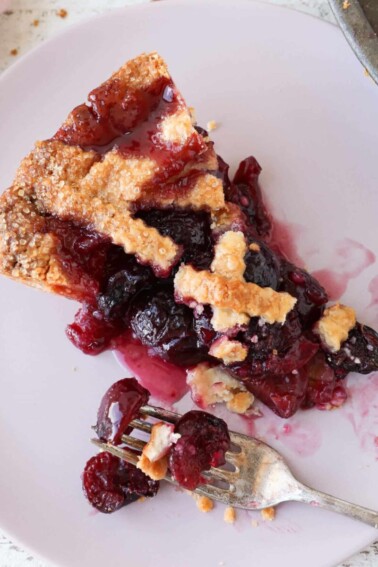
Cherry Pie

Pies and Tart Recipes
Easy Pumpkin Pie

Pies and Tart Recipes
Shoofly Pie Recipe
If you tried this recipe and loved it please leave a 🌟 star rating and let me know how it goes in the comments below. I love hearing from you; your comments make my day!
Crisco Pie Crust
Ingredients
- 2 ¼ cups all-purpose flour — or pastry flour
- 1 teaspoon kosher salt
- 14 tablespoons Crisco vegetable shortening — frozen 14 T = ¾ cup + 2 Tbsp
- ⅓ cup water — ice cold
Instructions
- In a medium bowl, mix flour and salt. Cut frozen shortening into cubes or spoon into chunks and add to the flour mixture.
- Cut the shortening into the flour with a pastry blender, bench scraper, or in the bowl of a stand mixer fitted with the paddle attachment until the mixture resembles coarse crumbs with no visible shortening remaining.
- Add cold water one tablespoon at a time, blending with a fork after each addition, until the dough just holds together when pressed and is no longer crumbly.
- For two single crust pies, split the dough in half. For a double crust pie, split the dough into two-thirds and one-third portions. Wrap tightly and refrigerate for at least 30 minutes before rolling.
- Roll the chilled dough to one-eighth inch thickness and line a pie dish directly. This dough is easier to transfer and line immediately rather than chilling it first after rolling.
- Either chill the lined pie tin if proceeding with a double crust pie, or roll under the edges and crimp decoratively for a single crust.
Notes
Technique: Use frozen Crisco shortening for the most tender crust. Cold fat stays in discrete pieces longer during mixing, which is what produces the tender, open crumb.
Storage: Store prepared, unbaked pie crust in the refrigerator for up to 3 days or in the freezer for up to 2 months, tightly wrapped. Store a baked crust at room temperature for up to a week or frozen for up to 2 months.
Variations: Add spices or citrus zest to the flour mixture for an easy flavor variation.
Nutrition
Before You Go
This shortening-based crust is one of those reliable foundations that makes everything from fruit pies to custard tarts easier to pull off. If you want to keep going, browse my Pie and Tart Recipes or make this banana cream pie!










I have made pie crust for years and always struggled with shrinkage and toughness. Freezing the Crisco first made all the difference. The dough came together so quickly and rolled out without a single crack. This is the only recipe I will use from now on.
Thank you for taking the time to share these comments always make our day! ~CLF Team
Hi
How do I adjust this recipe for a 10 inch pie pan.
How much do I need to do a double crust pie.
Thank you!
Great questions! Good news on the double crust — one batch of this recipe already makes enough for a 9-inch double crust pie, so no adjustments needed there! Just split the dough 2/3 for the bottom and 1/3 for the top as the recipe suggests.
For a 10-inch pan, a general estimate, scaling up by about 25% should give you enough dough to work with comfortably. Happy baking! 🥧 ~CLF team
I learned I could freeze Crisco. I always keep it in the refrigerator
Haha! It’s the little things 🙂 Happy baking
It would have been nice to include temp and time for blind baking, I did find it in the comments because someone else also missed that information.
Hi Tamara! That is such fair feedback! Blind baking instructions do live in a dedicated post on the site — there’s a full step-by-step guide at cheflindseyfarr.com/how-to-blind-bake-pie-crust/ with all the temp and timing details. I can absolutely see how that should be easier to find from this page, and I appreciate you flagging it! You can also find baking instructions in the pie recipes. Happy Baking! ~CLF team