
This post may contain affiliate links. Please read our disclosure policy.
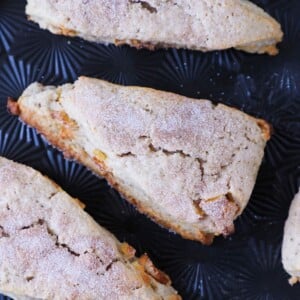
Lemon scones with a true British crumb and bold citrus flavor. Chilled dough, cold butter, and a generous amount of lemon zest and juice make them a perfect and bright scone.


A Quick Look At The Recipe
This is a brief summary of the recipe. Jump to the recipe to get the full details.
Jump to RecipePrep Time
20 minutes
Cook Time
25 minutes
Chill Time
3 hours
Total Time
3 hours 45 minutes
Servings
12 scones
Difficulty
Intermediate
Calories *
257 kcal per serving
Technique
Cut-in butter method; chill, roll, cut, chill, brush with heavy cream and sugar, and bake!
Flavor Profile
Bright lemon, buttery, lightly sweet, crunchy sparkling sugar.
* Based on nutrition panel
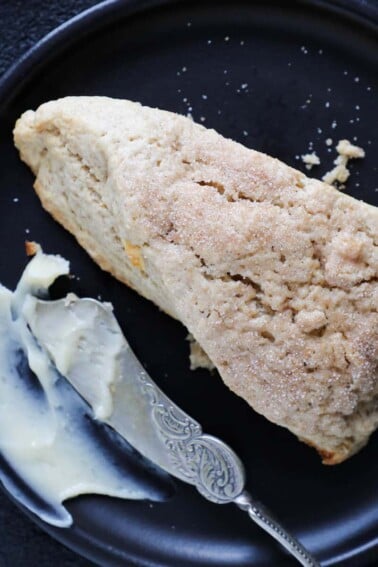
I made these last weekend, and the tip about keeping the butter cold made such a difference. My scones came out with that dense, crumbly texture I have been chasing for years, and the lemon flavor came through in every bite. The sparkling sugar on top added just the right crunch. These are on permanent rotation. ⭐⭐⭐⭐⭐
Lauren
Why This Recipe Works
- British-style crumb, not crumbly. These scones have a slightly dense, melt-in-your-mouth interior with crunchy edges and a soft, moist center. That texture comes entirely from cold butter, a chilled dough, and careful handling at every stage.
- Prominent lemon flavor in every bite. Zesting the lemon directly into the sugar before mixing releases the essential oils, distributing bright citrus flavor throughout the dough rather than leaving it concentrated in one spot.
- Sparkling sugar finish. The coarse sugar on top adds a satisfying crunch that contrasts with the soft interior. It also caramelizes slightly at the edges during baking!
- Make-ahead and freezer-friendly. The shaped, unbaked scones go straight from the freezer to the oven, so you can have fresh scones without making dough from scratch every time.
Table of Contents
The key to these lemon scones is almost entirely in the method. Cold butter, a light hand, and proper chilling are what separate a tender, melt-in-your-mouth scone from a dense, dry one.
These are the scones I reach for when I want serious lemon flavor without fuss. Zesting the lemon into the sugar makes all the difference in the flavor, like with this lemon olive oil cake and these lemon blondies! Be sure to check out my easy lemon curd and lemon meringue pie for more bright lemon desserts.
Ingredients & Substitutions
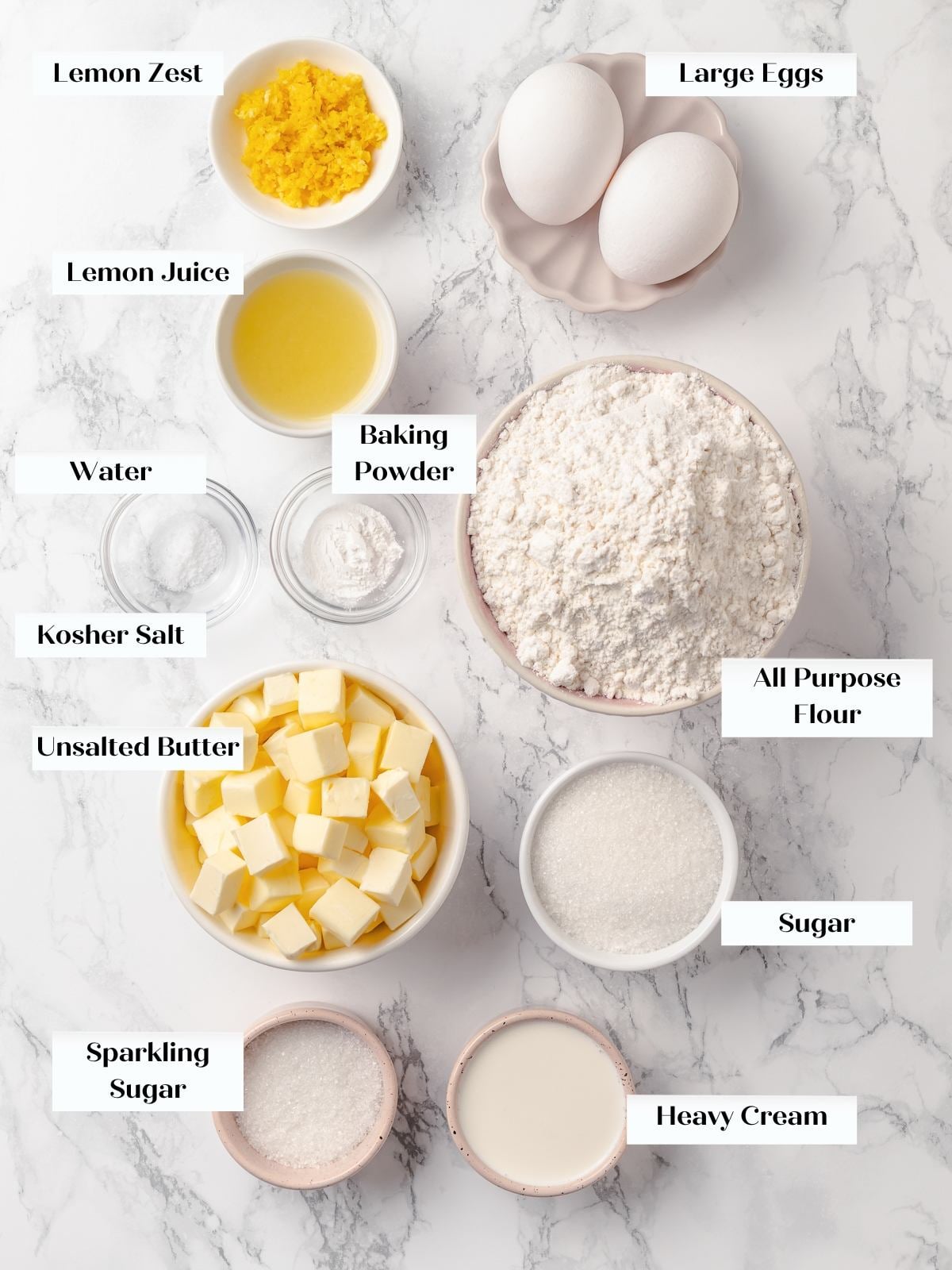
- All-Purpose Flour: Provides the structure that holds these scones together without making them tough. You could also use pastry flour for extra cheap insurance. Weighing the flour using a kitchen scale is the only way to guarantee consistent results.
- Granulated Sugar: Sugar adds moisture, aids in browning, and balances the sharpness of the lemon.
- Fresh Lemon Zest: Fresh lemon zest imparts a bold, bright lemon flavor throughout the dough. Zest the lemon directly over the bowl of sugar so it can absorb the oils and use only the yellow layer, avoiding adding the white pith, which can add a bitter flavor.
- Kosher Salt
- Baking Powder
- Unsalted Butter: Make sure your butter is cubed and cold from the fridge before mixing. Butter shortens the gluten strands as it coats them during the mixing process. This prevents them from forming a strong network that would result in overly tough scones just like with my apple scones.
- Whole Eggs
- Heavy Cream (in the dough): Cream adds fat, which tenderizes the crumb and ensures even browning. Its higher fat content compared to milk keeps the dough rich without making it too wet.
- Fresh Lemon Juice: Lemon juice reinforces the citrus flavor and adds a slight tang that balances the richness of the butter and cream. Its acidity subtly tightens the gluten network, helping the scones hold their shape while still tasting bright.
- White Sparkling Sugar (for finishing): It creates a crunchy crust that contrasts with the soft interior.
- Heavy Cream (for finishing): Brushing the scones with cream before baking promotes even, golden browning and helps the sparkling sugar adhere. The surface fat also contributes to a slightly crisp, glossy top crust.
See the recipe card for full information on ingredients and quantities.
Variations on These Lemon Scones
- Add a Glaze. Skip the sparkling sugar and finish with a simple lemon glaze instead, or use the strawberry glaze from my lemon pound cake.
- Experiment with mix-ins: You can add fresh fruit to these scones as I do with my strawberry scones and blueberry scones, or you could add some white chocolate chips, like with these raspberry white chocolate scones or dried blueberries!
- Change the citrus. You know what sounds delightful?! A scone made with key limes or blood oranges! Just swap in the zest and juice of your favorite citrus!
- Change the shape. Cut these scones into triangles like these carrot cake scones or circles like these cinnamon scones! You could even do a rustic cut; just be sure to bake similar-sized pieces together to prevent overbaking.

Professional Tips
- Cut the butter in completely. No visible butter pieces should remain in the dough. You don’t want those flaky layers like with homemade buttermilk biscuits; you want a tender, dense crumb.
- Chill and freeze the dough. Chilling before rolling and freezing the shaped scones for at least one hour before baking are not optional steps. The cold temperature keeps the gluten from developing and the butter solid, ensuring a tender scone.
- Bake uniform sizes together. If your scones vary in size, sort them onto separate sheets and bake in batches. Overbaked scones are dry, and there is no recovering from that.
- Blend or whisk the wet ingredients well. Thoroughly blending the egg, heavy cream, and lemon juice helps the wet ingredients incorporate more quickly when added to the dry ingredients, which means less mixing time and less gluten development!
How to Make Lemon Scones
Follow the instructions below and move through each step with intention, do not rush the chill time, and you will get perfect lemon scones every time!
Make Lemon Scone Dough
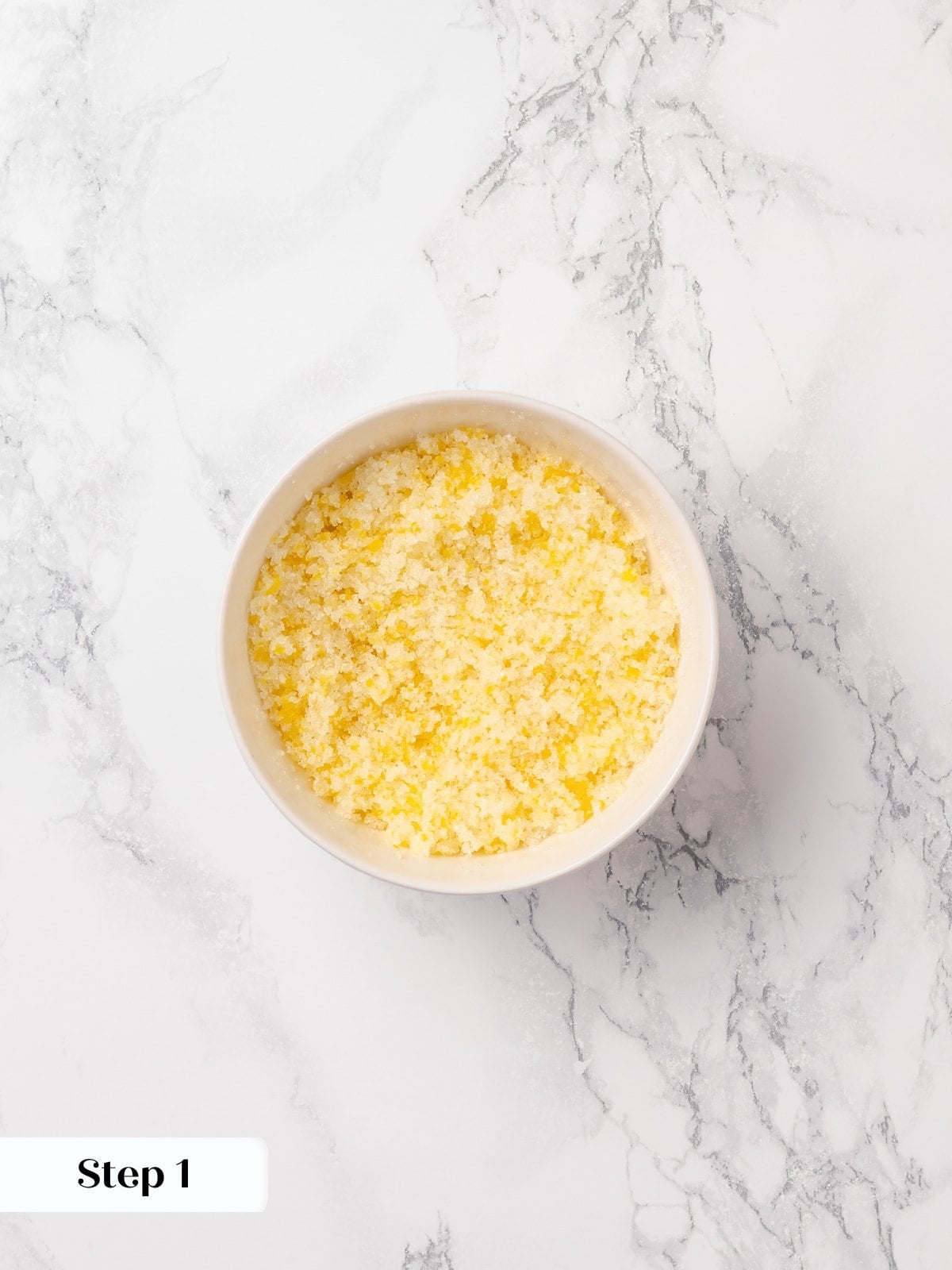
Step 1: Zest the lemon directly into the granulated sugar. Zest the lemon into the sugar and use your fingers to rub them together until the sugar is fragrant. (photo 1)
The longer this mixture sits, the more the citrus oils infuse the sugar, so if you have time, let it rest while you gather the remaining ingredients, or do this the night before and store it in the fridge.
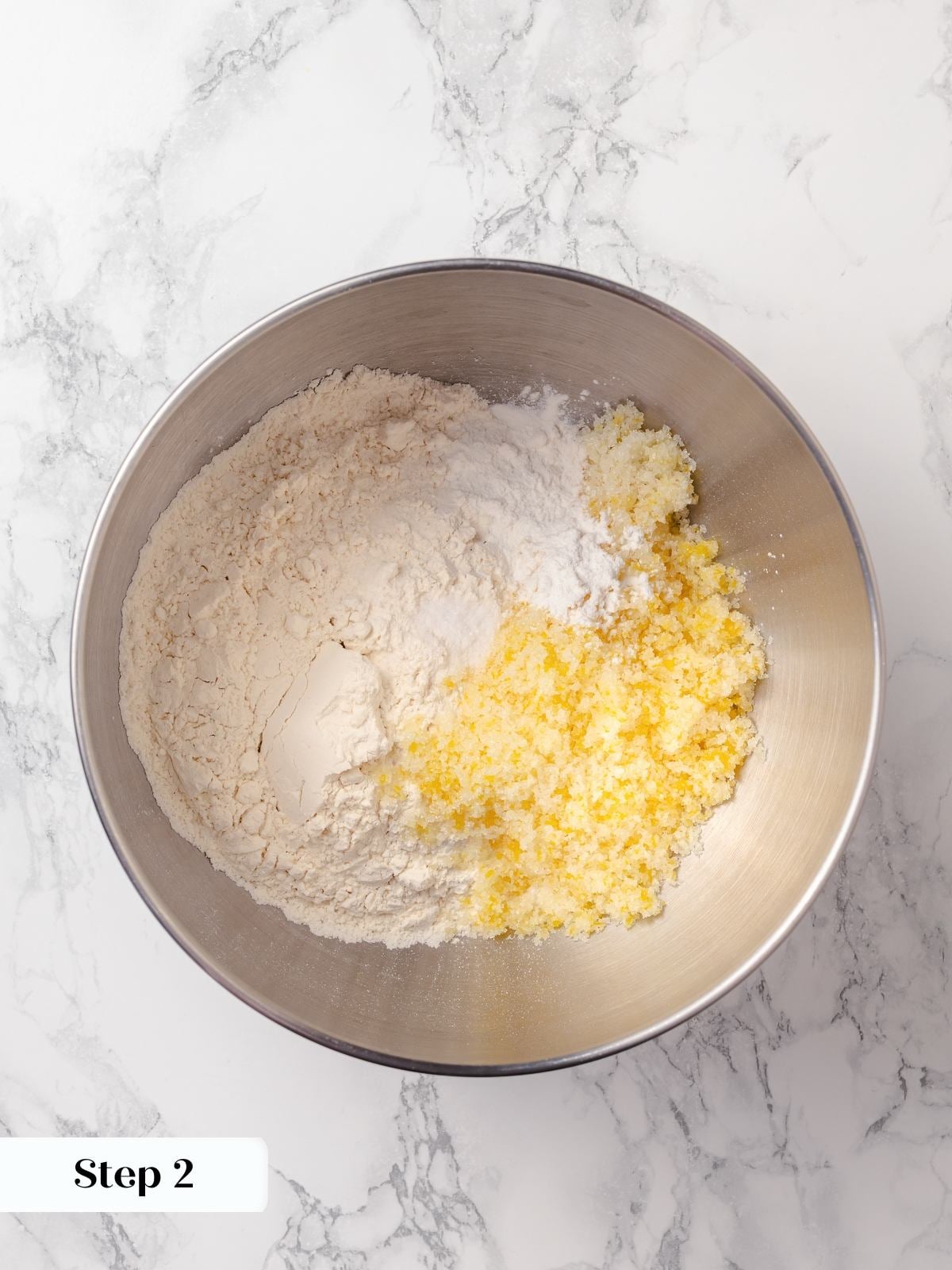
Step 2: Combine the dry ingredients in the stand mixer. In the stand mixer fitted with the paddle attachment, add the flour, lemon sugar, salt, and baking powder to the bowl, and mix on low speed. (photo 2)
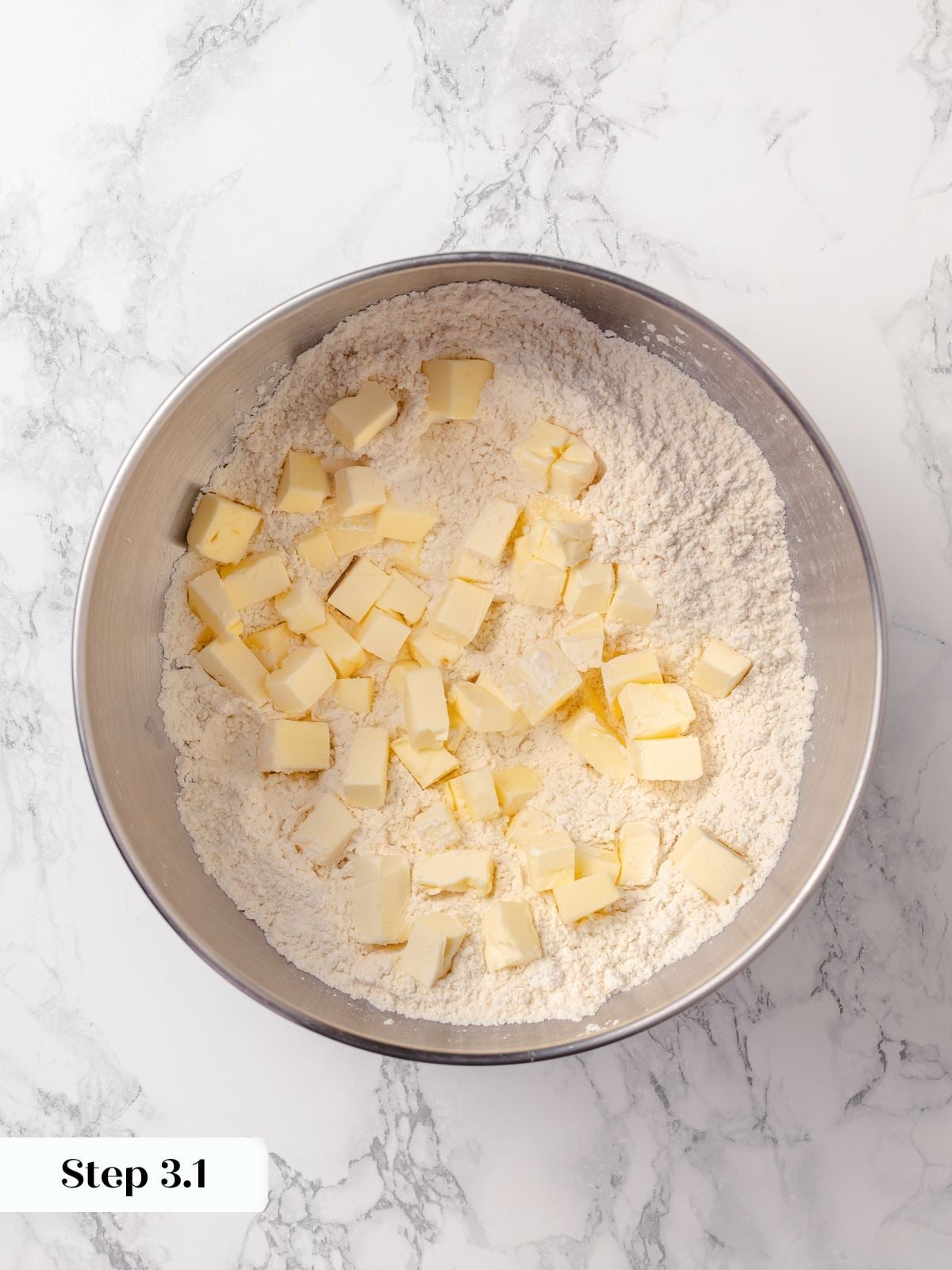
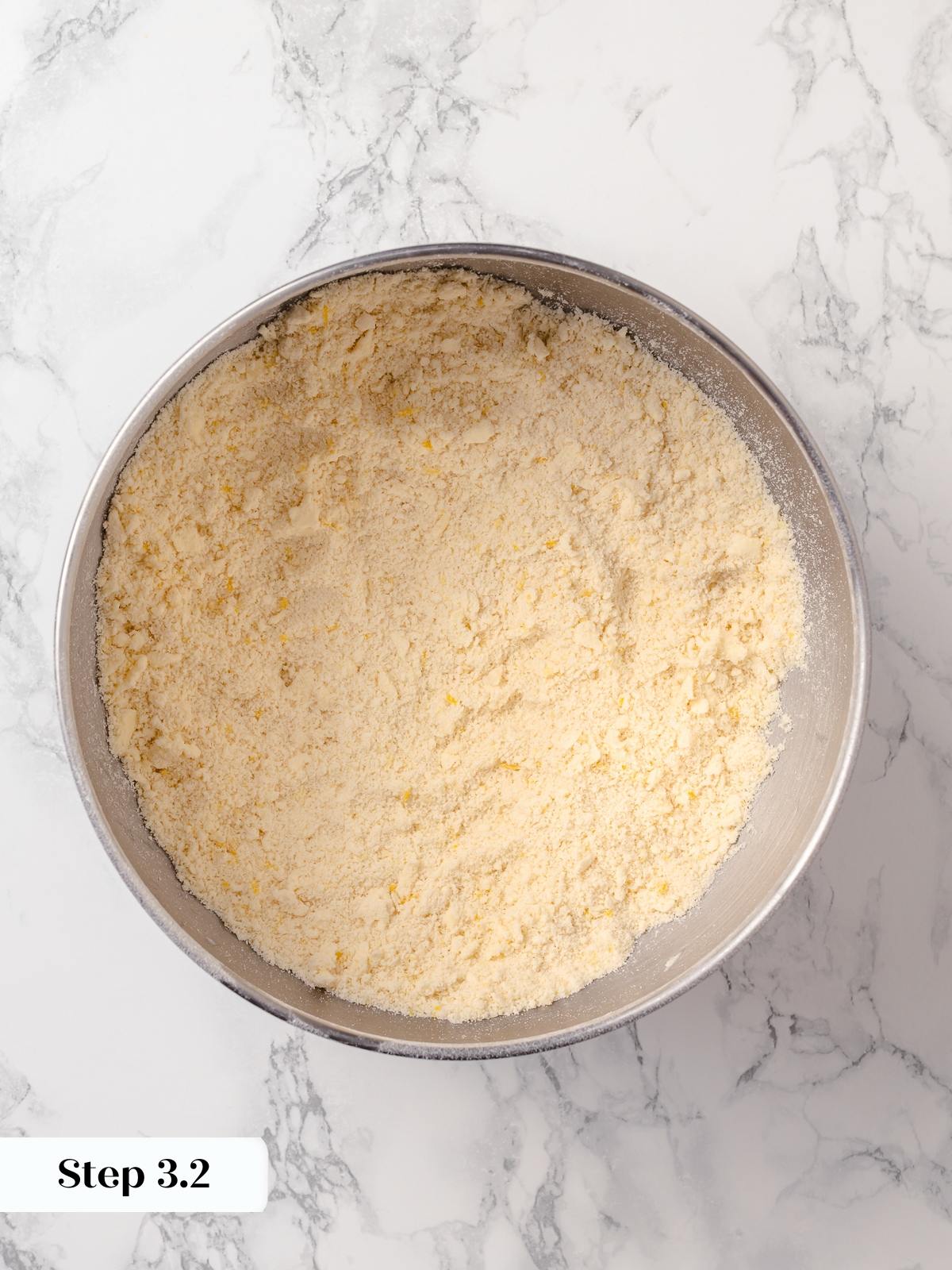
Step 3: Cut in the cold butter. Add the butter and mix on low speed until no visible pieces remain and the mixture resembles wet sand. Stop the mixer and run your hands through the bowl to check for any large pieces of butter at the bottom. (photo 3 & 4 below).
You want the butter fully incorporated. Coating the flour in fat before the liquid inhibits gluten formation, which is exactly what gives these scones their tender, melt-in-your-mouth texture.
Step 4: Whisk the wet ingredients together in a separate bowl. Combine the eggs and heavy cream in a medium bowl, whisking vigorously until completely smooth and uniform. Add the lemon juice right before you pour the mixture into the dough. (photo 5).
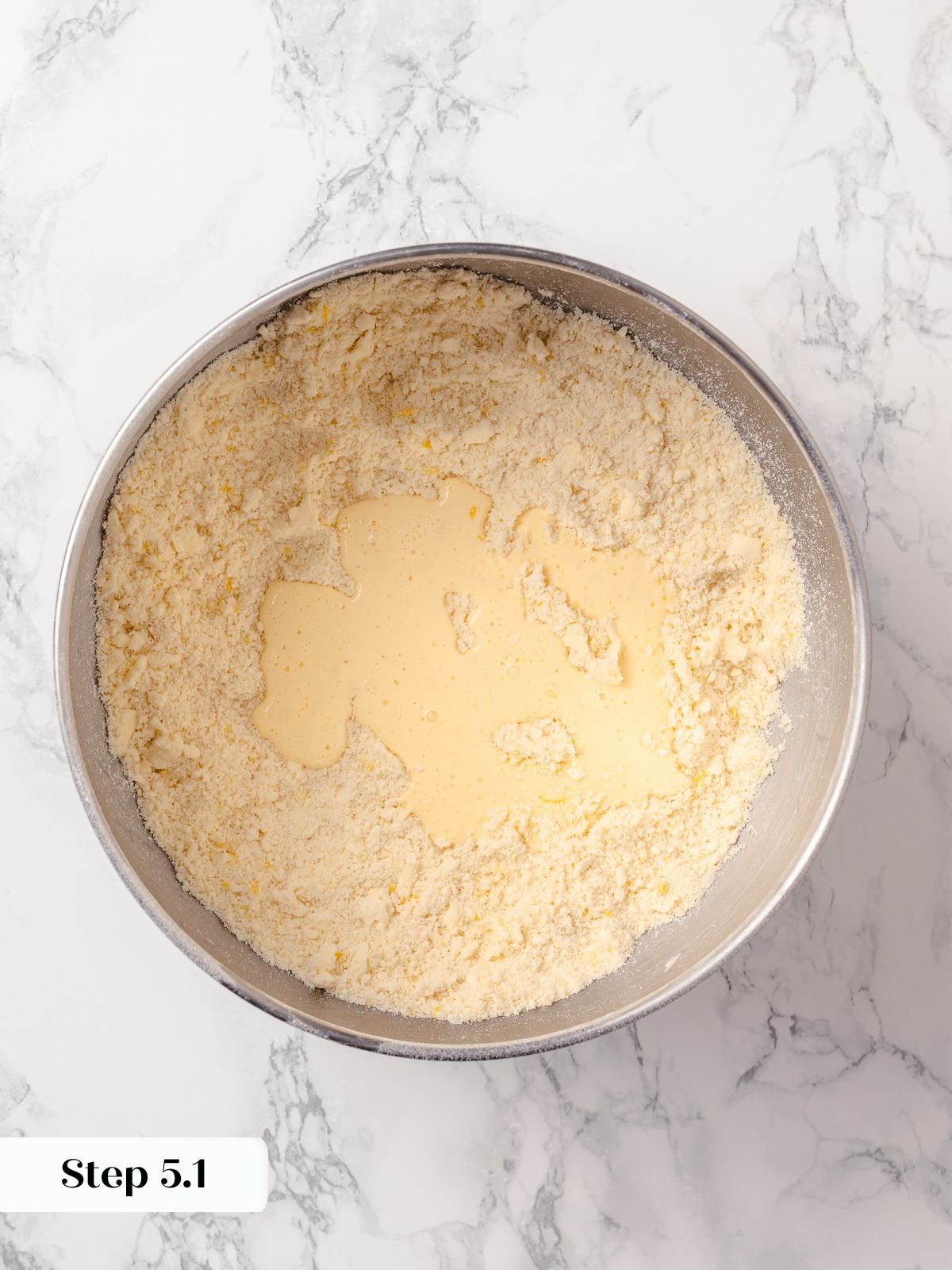
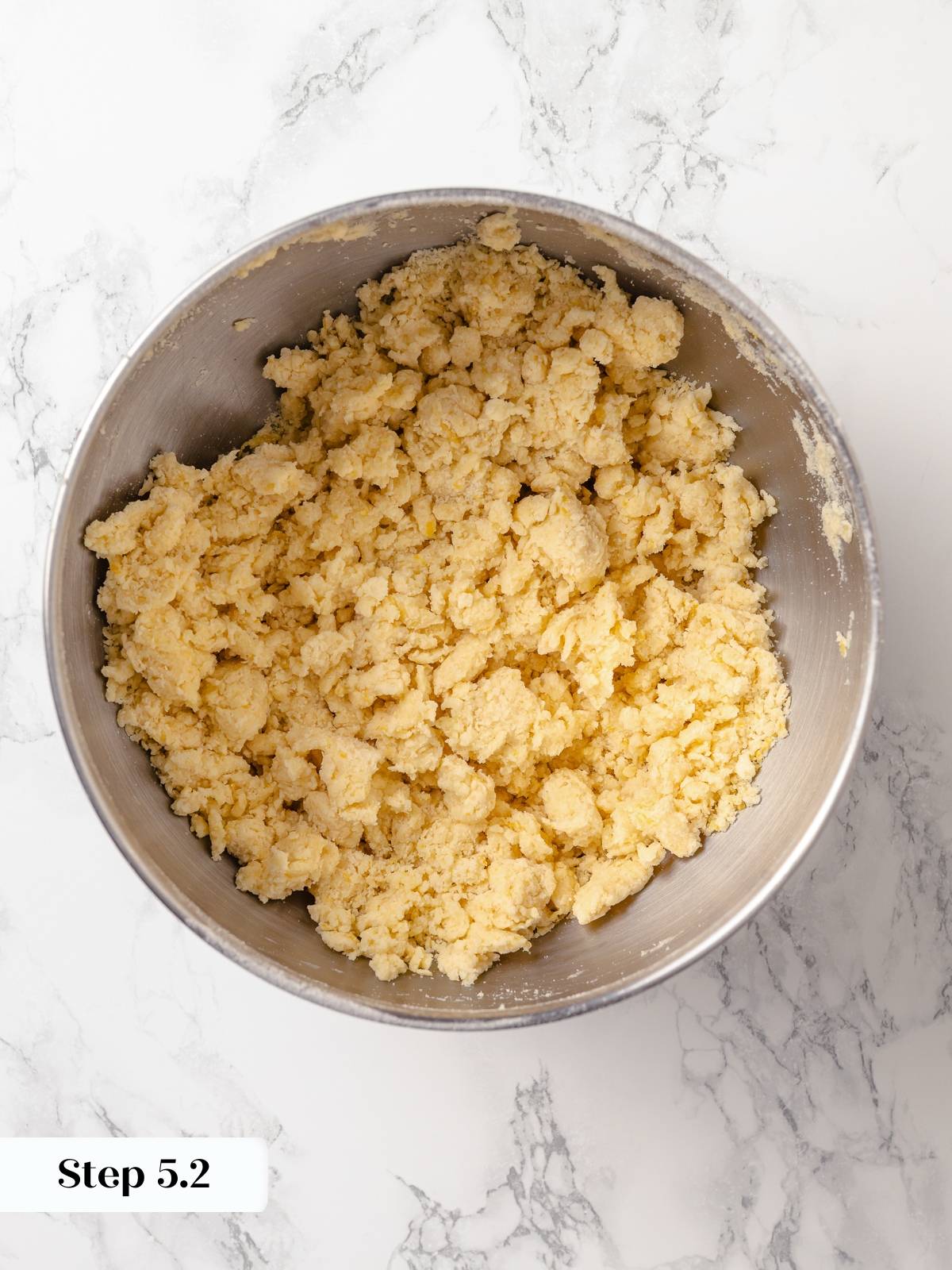
Step 5: Add the wet ingredients to the dry. With the mixer on low, slowly pour in the cream mixture and mix just until the dough comes together. It will look shaggy and a little rough at the edges. Stop the moment you no longer see dry flour at the bottom of the bowl. (photos 6 & 7 below)
Chill, Roll, Cut, and Bake!
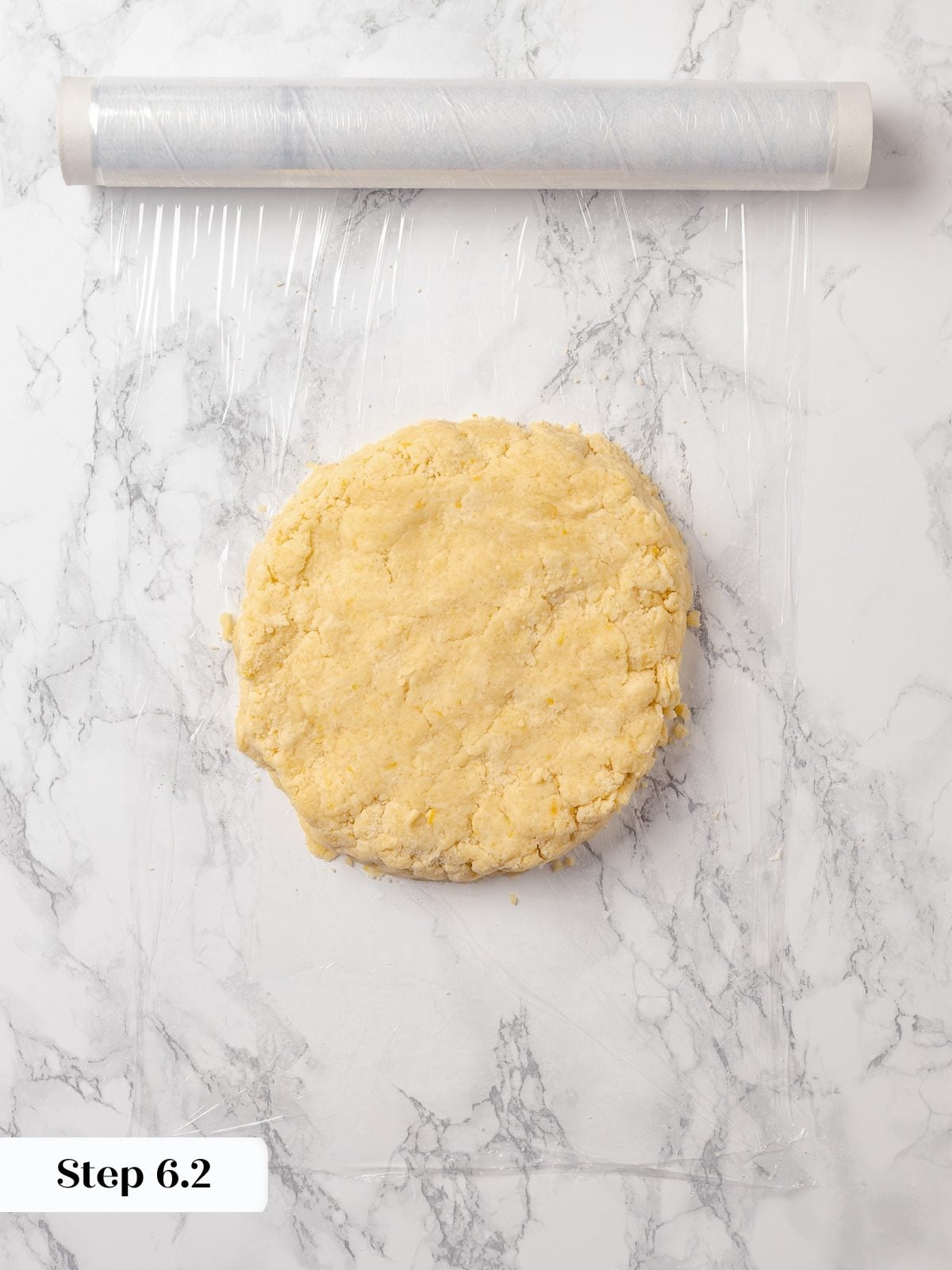
Step 6: Press the dough into a disk and refrigerate. Scrape the dough and any loose pieces onto a sheet of plastic wrap. Gently squeeze and press it into a rough disk, flatten it slightly, then wrap it tightly and refrigerate for 2 hours. This allows the butter to firm back up and the dough to hydrate evenly, making rolling and cutting much cleaner. (photos 8, 9 &10)

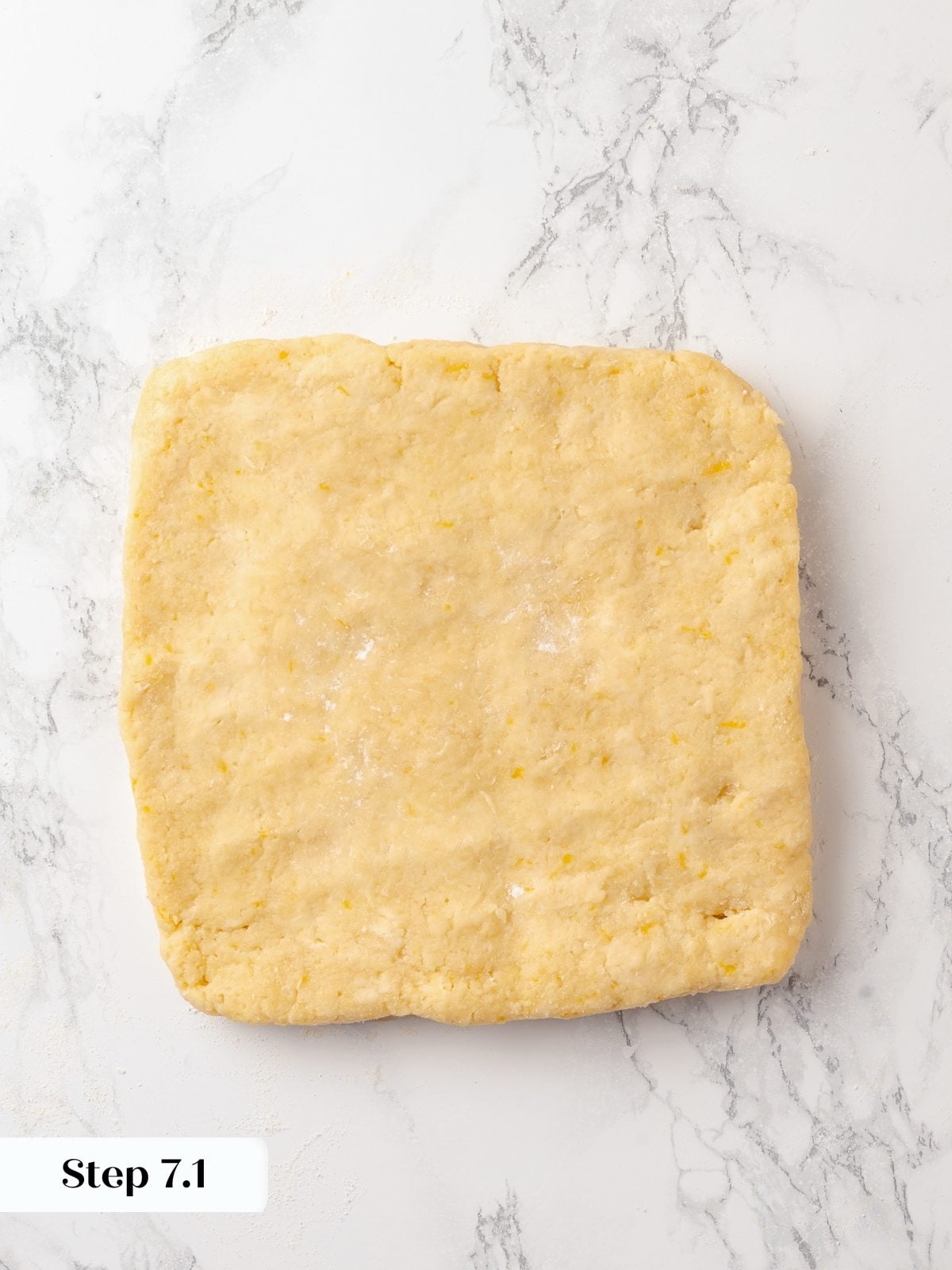
Step 7: Roll and cut the scones. Unwrap the chilled dough and roll it to ½ inch thickness with a rolling pin, or press it out with your hands if you prefer. (photo 11).
Step 8: Freeze the cut scones. Place the cut scones on a parchment-lined baking sheet about 2 inches apart. Wrap the tray well in plastic wrap and freeze for at least 1 hour, or overnight. (photo 12)
For uniform scones, roll into a 6-inch square, divide each side in half to create four 3-inch squares, then cut each square diagonally to form triangles.
For more rustic scones, press the dough into a circle and cut 12 triangles.
Step 9: Brush with cream and top with sparkling sugar. Preheat the oven to 325°F convection or 350°F conventional. Brush 2 to 3 frozen scones at a time with heavy cream, then immediately sprinkle with white sparkling sugar before moving to the next set. The cream freezes quickly on the cold dough, so work in small groups or the sugar will not stick. (photo 13)
Step 10: Bake. Bake for 20 to 25 minutes. The edges will be golden brown, and the centers will be puffed with small cracks, providing slight resistance when pressed gently. (photo 14)
That gentle resistance is your cue: the scones should not feel hollow or hard, but they should not give way completely either. Mine consistently hit 24 minutes, but start checking early because overbaked scones are genuinely sad, and there is no recovering them.
Step 11: Cool completely. Leave the scones on the pan and let them cool fully before serving. The interior continues to set as they cool, and cutting into them too early gives you a gummy crumb that doesn’t reflect the texture at all. Once cooled, the edges stay crisp, and the interior is soft, moist, and buttery, which is exactly what you are after!


Chef Lindsey’s Recipe Tip
The method matters more than any single ingredient in this recipe, and the step most cooks rush is the butter. Every visible piece of butter needs to be fully worked in before the wet ingredients are added. Not pea-sized, not almond-sized, fully incorporated into the flour until the mixture resembles coarse, damp sand. This is what gives these scones their British crumb: dense and moist through the center.
Recipe FAQs
The texture comes almost entirely from the cold butter being cut in completely, and the dough is chilled before and after shaping. Skipping or shortening the chill time is the most common reason scones bake up cakey or greasy rather than dense and melt-in-your-mouth. Try to handle the dough as little as possible once the wet ingredients are added. This is when the gluten starts to develop, and we aren’t making potato bread.
Up to one week for the best rise. Much like the best snickerdoodle recipe, there is a reaction happening between the lemon juice and the baking powder. This means these lemon scones are less suitable for long-term freezer storage before baking than, for example, my chocolate chip scones. Using baking powder rather than baking soda slows this process, but after about a week, there will be noticeably less puff during baking.
Baked scones keep at room temperature, wrapped well, for up to 2 days. For longer storage, freeze the baked scones for up to 1 month and let them come to room temperature before serving.
Overbaking is the most common culprit. Start checking at 20 minutes and pull the scones the moment the edges are golden and the centers feel just set. Baking unevenly sized scones together is another common cause, since smaller scones finish well before the larger ones.

More Bright Lemon Recipes
Easy Buttercream & Frosting Recipes
Lemon Swiss Meringue Buttercream

Custard Recipes
Easy Lemon Curd
Date Night
Lemon Olive Oil Cake
Cake Recipes
Lemon Cake Recipe
If you tried this recipe and loved it please leave a 🌟 star rating and let me know how it goes in the comments below. I love hearing from you; your comments make my day!
Lemon Scones
Ingredients
- 2 ½ cups all-purpose flour
- ½ cup granulated sugar
- 2 lemons zested
- ¼ teaspoon kosher salt
- 1 teaspoon baking powder
- ¾ cup unsalted butter cold, cubed
- 2 large eggs
- ¼ cup heavy cream
- 3 tablespoons lemon juice
- Heavy cream for finishing
- White sparkling sugar for finishing
Instructions
- Zest the lemons directly into the granulated sugar and set aside. The longer this sits, the more pronounced the lemon flavor will be.
- In the bowl of a stand mixer fitted with the paddle attachment, combine the flour, lemon sugar, salt, and baking powder. Mix on low just to distribute.
- Add the cold cubed butter and mix on low until fully incorporated and the mixture resembles coarse, damp sand with no visible butter pieces remaining. Run your hands through the bowl to check.
- In a separate bowl, whisk the eggs and heavy cream until smooth. Add the lemon juice immediately before adding to the dough.
- With the mixer on low, slowly pour in the cream mixture and mix until just incorporated. Do not overmix.
- Scrape the dough onto plastic wrap, press into a disk, wrap tightly, and refrigerate for 2 hours.
- Roll or press the dough to ½ inch thickness. For uniform scones, roll into a 6-inch square, divide into four 3-inch squares, and cut each diagonally into triangles. For rustic scones, press into a circle and cut 12 triangles. Place on a parchment-lined baking sheet, wrap in plastic wrap, and freeze for at least 1 hour or overnight.
- Preheat the oven to 325°F convection or 350°F conventional.
- Brush the frozen scones with heavy cream and sprinkle immediately with sparkling sugar, working 2 to 3 scones at a time so the cream does not freeze before the sugar goes on.
- Bake for 20 to 25 minutes, starting to check at 20 minutes, until the edges are golden and the centers feel just set. Cool completely on the baking sheet.
Notes
Doneness: Start checking at 20 minutes. Pull the scones when the edges are golden, and the centers feel just set. Overbaked scones are dry, and no one wants a dry scone.
Freezer storage (unbaked): Freeze for up to 1 week for the best scones! Bake directly from frozen without thawing.
Storage (baked): Store wrapped at room temperature for up to 2 days, or freeze baked scones for up to 1 month. Let it come to room temperature before serving.
Nutrition
Before You Go
If you are looking for more lemon recipes, be sure to check out my lemon cake recipe or these lemon poppy seed muffins, or browse all my favorite breakfast recipes for what to bake next!









I made these last weekend, and the tip about keeping the butter cold made such a difference. My scones came out with that dense, crumbly texture I have been chasing for years, and the lemon flavor came through in every bite. The sparkling sugar on top added just the right crunch. These are on permanent rotation.